


Cancer, unfortunately, is not always confined to the primary tumour. Malignant cells can break away from it, enter the bloodstream or lymph and form new foci in other organs – metastases. They represent a huge danger, as they affect vital organs, cause severe symptoms and significantly worsen the quality of life of patients. Treatment of metastases is a difficult task. However, it is quite feasible thanks to the development of modern methods. One of them is radiation therapy. In recent years, significant progress has been made in this field, especially in foreign countries. Clinics have advanced equipment that allows for highly accurate and safe irradiation. New technologies such as 3D conformal radiotherapy, IMRT, IGRT, stereotactic radiosurgery, brachytherapy and others make it possible not only to effectively destroy metastases but also to minimise the impact on healthy tissues.
Read this article to learn how radiotherapy is performed, how effective it is for metastases, doctors’ recommendations and other useful information.
How is radiotherapy used in cancer treatment?
Radiotherapy aims to destroy the tumour without damaging healthy tissues and organs.
Radiation therapy is effective for almost any type of cancer, including metastases. It helps to destroy tumours in various organs, even those that are difficult to treat surgically. It can be used both independently and in combination with other treatment methods (surgery, chemotherapy, immune and targeted therapy).
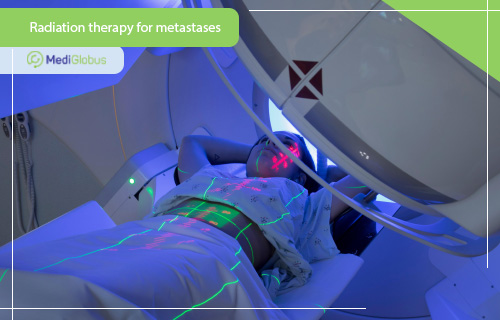
Radiation therapy for metastases is used to:
 reduce the size of metastatic foci;
slow down and stop the growth of secondary tumours;
prepare for surgical intervention;
eliminate residual tumour cells after surgery to prevent recurrence;
alleviate symptoms caused by metastases;
provide palliative care for patients with end-stage cancer.
Contraindications to radiotherapy
pregnancy;
acute infectious diseases;
severe comorbidities;
some blood disorders;
kin diseases in the area of irradiation;
infancy.
The decision to use radiotherapy in the presence of contraindications is made by the doctor individually, after a careful assessment of the benefit-risk ratio.
To organise treatment for stage 4 cancer with metastases, please contact MediGlobus. We are ready to help you find the best clinic, make an appointment with an oncologist without a long waiting list and organise travel. Contact our specialist by clicking the button below.
Types of radiotherapy
In modern medicine, 2 main types of radiotherapy can be used in the treatment of metastases: external beam therapy and internal beam therapy. The choice of method depends on the location of tumours, their size and number, the general condition of the patient, the presence of concomitant diseases, and the expected effect of treatment. In most cases, radiotherapy is used in combination with other treatment methods. This helps to maximise the effect and improve the patient’s prognosis.
External Beam Radiation Therapy (EBRT)

EBRT is the most common type of radiotherapy. This method uses a linear accelerator – a machine that directs beams of high-energy radiation (X-rays, electrons or protons) at the tumour.
Modern accelerator models are highly precise. They affect the tumour without damaging the healthy tissue.
External radiotherapy is most often used if the cancer has metastasised to the bones, brain, lungs and other organs.
The main types of external radiation:
3D conformal radiation therapy (3D-CRT). Uses CT scans and computer software to create a three-dimensional model of the tumour. In this way, the machine precisely directs beams of radiation at the cancerous mass, minimising the impact on healthy tissue.
Intensity Modulated Radiation Therapy (IMRT). An advanced form of radiotherapy that uses multiple beams of radiation at different intensities. Provides a higher dose of radiation to the tumour and a lower dose to healthy tissue.
Image-guided radiation therapy (IGRT). Before each treatment, an X-ray or CT scan is taken to precisely fix the position of the tumour. This ensures even greater precision in the irradiation.
Proton therapy. Uses protons instead of X-rays. Protons can deliver the same dose of radiation to the tumour with less strain on healthy tissue. It is particularly effective in treating tumours close to nerve structures and organs.
Stereotactic radiosurgery (SRS). High doses of radiation are focused to target small brain tumours. An example of SRS is Gamma Knife, which is the removal of a neoplasm without surgery.
Stereotactic body radiation therapy (SBRT). Like the previous option, it uses high doses of focused radiation to remove the tumour, which destroys the tumour or organ metastases with high precision. CyberKnife is one such method of stereotactic radiosurgery.
Intraoperative radiotherapy (IORT). It is conducted directly during the surgical removal of the tumour. After the tumour is removed, IORT destroys the remaining cancer cells that cannot be surgically removed.
Internal radiation therapy
The main forms of internal radiation therapy:
Brachytherapy. The introduction of a solid radioactive source inside or near the tumour. The source emits radiation over a short distance and destroys cancer cells. Implants can release low doses of radiation for long periods or high doses for short periods. Some implants are temporary, while others stay in the body permanently but stop emitting radiation over time. It is used to treat small tumours or metastases in the head, neck, breast, cervix, uterus or prostate.
Systemic therapy. This is a treatment method in which a radioactive drug is injected into the patient’s body, which circulates through the blood and accumulates in the tumour and metastases. The drug may be taken orally or administered through a vein. Examples of systemic radiotherapy are radionuclide therapy (radioimmunotherapy), radioiodotherapy, etc.

Find out more from your MediGlobus coordinator about how to organise a trip for radiotherapy in a foreign clinic. Click on the button below and leave your contact details.
 Read:
Read: Radiotherapy for metastases in different organs
At stage 4 of cancer, metastases can form in any organs and tissues of the body, but most often they affect:
liver;
bone;
lungs;
brain.
Metastases to the liver
Radiation therapy helps control the growth of liver metastases. Radiation is given if the neoplasms cannot be surgically removed or if they are too large to use ablation.
Intensity-modulated radiation therapy (IMRT) or stereotactic body radiation therapy (SBRT) are used for liver metastases.
IMRT uses beams of radiation of different intensities that adjust to the shape of the tumour. Using sophisticated software and three-dimensional CT images, doctors can precisely target the radiation to the cancerous tissue, reducing damage to surrounding healthy tissue.
In stereotactic radiotherapy, the doctor implants tiny markers into the tumour, which are then captured using CT scans to direct the radiation precisely at the tumour.
Lung metastases
Radiotherapy is recommended for patients with lung metastases for whom surgery is contraindicated. Modern technology allows radiation to be precisely targeted at tumours, minimising damage to healthy tissue.
Stereotactic radiosurgery and stereotactic body radiation therapy have become alternatives to surgery for some patients with lung metastases. Sophisticated techniques are used to precisely target the radiation to the organ during the motion produced by breathing. For example, the leading cancer centres use 4D CT scans, real-time tracking of tumour movement using the CyberKnife system, and navigation using cone beam CT to do this.
External beam radiation therapy is often used to treat patients with lung metastases for palliative care (reducing pain or opening the airway to facilitate breathing). Modern linear accelerators direct the radiation with high precision, so the therapy is suitable for most cancer patients.
Brachytherapy is also used in palliative care. It is performed to make breathing easier if a tumour blocks one of the airways. In this procedure, a thin tube containing radioactive material is inserted into the tumour for a short period.
Bone metastases
At stage 4 of cancer, bone metastases cause severe pain, fractures, spinal cord compression, and organ dysfunction, which significantly reduces the patient’s quality of life. To combat such symptoms, doctors most often resort to radiotherapy. It can be effective when pain symptoms are not amenable to medication. Depending on the specific situation, radiotherapy may be administered as a single large dose or several smaller doses spread over several sessions.
For bone metastases, the following methods are used:
Intensity-modulated radiotherapy uses beams of radiation of varying intensities that follow the shape of the tumour with millimetre precision, minimising damage to healthy tissue.
Stereotactic body radiotherapy uses highly focused fields of radiation to deliver large doses of radiation in fewer treatments. This technique combines high precision with minimal impact on surrounding healthy tissue.
Radiopharmaceuticals. This method of internal radiotherapy is recommended for patients with multiple bone metastases. A radiopharmaceutical containing radioactive material is administered through a vein. The drug accumulates in the bones and irradiates the metastases from within.
Metastases in the brain
The following radiotherapy techniques may be used to treat brain metastases:
Whole brain radiation
In this case, radiation is applied to the entire brain to destroy tumour cells. The course of treatment usually consists of 10-15 sessions given over several weeks.
Stereotactic radiosurgery
Involves the use of several beams of radiation, each of which is not particularly powerful on its own, but the point where all the beams converge – the tumour in the brain – receives a very large dose of radiation to destroy the tumour cells. Radiosurgery is usually performed in a single session, and doctors can treat multiple foci in a single procedure.

How to prepare for a radiation session for metastasis therapy
Before starting the procedure, a consultation with a radiation oncologist is carried out. At this meeting, you should discuss treatment goals and expected results, and learn about possible side effects and methods to prevent them.
Before starting radiation therapy in foreign clinics, a preliminary simulation of radiation therapy is carried out. This stage includes creating a treatment plan, selecting the type and dose of radiation, determining the location of the tumour and the position of the body during radiation, and markings on the body to determine the location of the radiation. A team of specialists conducts detailed treatment planning based on the individual characteristics of the tumour and the patient’s condition.
This approach can dramatically improve the accuracy, effectiveness and safety of radiation treatment.
Radiation therapy process
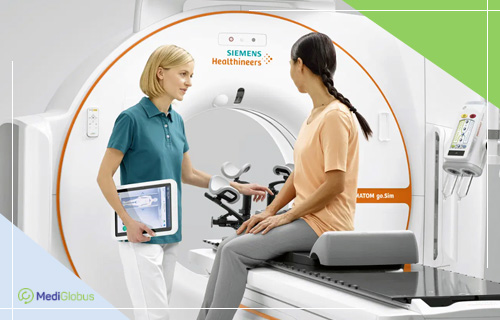
External beam radiation therapy | A machine called a linear accelerator is used, which generates and directs beams of radiation at the tumour. The patient sits on a table and the machine rotates around them, providing precise radiation from different angles. The procedure is painless and resembles an X-ray. It does not require hospitalisation and is usually performed 5 days a week for several weeks. A radiation session lasts 10-30 minutes. During the procedure, the patient remains in contact with the staff via video and audio communication. |
Stereotactic radiosurgery | Stereotactic radiosurgery is a type of high-precision irradiation of the tumour using a special machine. It can be used as a stand-alone method or in combination with other treatments. It is often performed on an outpatient basis. The procedure is painless, but local anaesthesia may be required. If the tumour in the brain is irradiated, a special design is attached to the head, which allows the doctors to direct the rays to the desired area. 1 to 5 treatments are usually sufficient to achieve the therapeutic effect. |
Brachytherapy | Radioactive implants are inserted into the body without surgery or with surgery. The length of time the implant remains in the body can be from a few minutes to several days. In some cases, the implants remain permanently. The radioactive radiation from the implants is painless but can be dangerous to others. Therefore, you may have to stay in the hospital for a few days before the implant is removed. Permanent implants are safe for others, but it may be necessary to temporarily limit contact with children and pregnant women as a precautionary measure. |
Systemic radiotherapy | Radioactive substances in the form of injections, capsules, or oral solutions enter the bloodstream and travel throughout the body, affecting cancer cells. The patient may be radioactive for several days after treatment. Therefore, hospitalisation is likely to be required until the radiation levels are reduced. After discharge, the patient will be advised on how to keep those around them safe. |
What side effects are possible after radiation for metastases?
Possible side effects of radiotherapy for metastases depending on the area of radiation:
| Part of the body that is irradiated | Possible side effects |
|---|---|
| Brain | Fatigue, hair loss, memory or concentration problems, nausea and vomiting, skin changes, headache, blurred vision |
| Mammary glands | Fatigue, hair loss, skin changes, swelling, soreness |
| Chest | Fatigue, hair loss, skin changes, throat problems, cough, shortness of breath |
| Head and neck | Fatigue, hair loss, oral mucosa problems, skin changes, changes in taste, throat problems, decreased thyroid activity |
| Pelvis | Diarrhoea, fatigue, hair loss, nausea and vomiting, sexual function and fertility problems, skin changes, bladder and urinary problems |
| Rectum | Diarrhoea, fatigue, hair loss, sexual function and fertility problems, skin changes, bladder and urinary problems |
| Stomach and abdomen | Diarrhoea, fatigue, hair loss, nausea and vomiting, skin changes, bladder and urinary problems |
If you experience severe discomfort from the side effects of radiotherapy, you should see your doctor. He will prescribe appropriate treatment or adjust the current therapy to reduce negative manifestations.
To mitigate the side effects after radiotherapy, the following is recommended:
When in pain, take painkillers recommended by your doctor.
Proper skin care. Avoid the use of soaps and other harsh skin care products in the radiation area. Use mild hypoallergenic products and moisturising creams.
Follow your doctor’s recommendations regarding diet. It may be necessary to temporarily restrict certain foods to reduce stomach and intestinal discomfort.
Do moderate exercise, if possible, to maintain general health. However, you should avoid strenuous exercise, especially in the first few days after the procedure.
Seek support from a psychologist or counsellor for stress or anxiety related to treatment and side effects.
Visit your doctor regularly to monitor your health and assess possible changes.
Is it possible to cure metastases with radiation therapy?
Radiation therapy is an effective cancer treatment that can be used at different stages of the disease, including stage 4 and metastases. The treatment can significantly improve the quality of life and prolong survival for patients with metastases.
Whether stage 4 cancer with metastases is curable and how effective radiation therapy will be depends on the type and stage of the tumour, the size, location and number of metastases, the patient’s health status, and the tumour’s sensitivity to radiation.
Studies show that different types of radiation therapy can be highly effective for different localisations of metastases:
Radiation therapy is effective in relieving pain caused by bone metastases. According to research published in Federal Practitioner, 60%-80% of patients feel relief from bone pain, and about 30%-40% get rid of the pain completely.
Radiation therapy for brain metastases effectively reduces symptoms and improves patients’ quality of life. Partial or complete reduction of metastases is achieved in 60% of cases. Whole brain radiation therapy improves basic neurological function and prevents the progression of symptoms. For patients with a favourable prognosis who have solitary metastases and good functional status, the addition of surgery or radiosurgery to radiation is associated with improved overall survival and reduced risk of recurrence in the brain region.
According to the Annals of Palliative Medicine, radiation therapy for lung metastases is good at managing a variety of symptoms, such as hemoptysis, coughing, airway obstruction and pain. Most patients feel relief after standard radiotherapy, but it is very common for symptoms to return after 6 and 12 months. In contrast, stereotactic radiotherapy shows better results in preventing recurrence and maintaining symptomatic relief, making it the preferred choice for many patients.
Stereotactic radiotherapy does well in treating liver metastases in patients with colorectal and non-colorectal cancer for whom surgery is not appropriate. The study showed that 94% of patients achieved control of tumours in the liver 1 year after therapy. Patients tolerate the treatment well with minimal side effects. Fatigue is felt by about 19% of patients and nausea by 10% (data from the Hong Kong Medical Journal).
Radiation therapy clinics abroad
Choosing a clinic abroad to undergo radiotherapy is a serious decision that requires careful consideration and analysis. MediGlobus recommends that when choosing a clinic, you consider:
the clinic’s reputation and experience in the field of radiotherapy;
availability of modern equipment and advanced technologies;
the qualifications of doctors and medical staff.
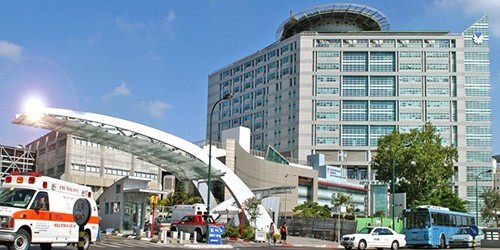
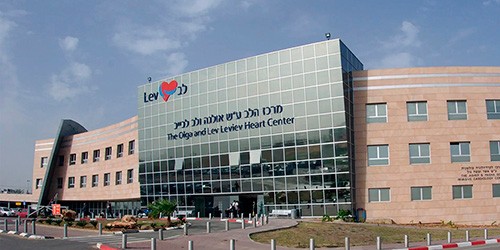
Here are a few clinics abroad that offer radiation therapy with international standards:






Cost of radiation therapy to treat metastases
| Radiation therapy | Brachytherapy | |
|---|---|---|
| Turkey | from $3,500 | from $5,000 |
| Czech Republic | from €3,000 | from €4,000 |
| Israel | from $6,000 | from $10,000 |
| South Korea | from $4,000 | from $4,000 |
| Spain | from €5,000 | from €6,000 |
A MediGlobus specialist will help you choose a clinic for treatment, taking into account the specifics of the disease, wishes and budget of the patient. Leave your contacts and wait for a call from a coordinator.
Summary
Radiation therapy is a treatment method that uses high-energy beams of radiation to destroy cancer cells. For metastases, it is used to shrink tumours, relieve pain and improve patient’s quality of life. Radiation therapy can be effective if it has metastasised to the bones, lungs, liver, and brain.
Radiation therapy can be external and internal. External radiation therapy is the most common and includes techniques such as 3D conformal therapy, intensity-modulated radiation therapy, and stereotactic radiosurgery. Internal radiation therapy uses techniques such as brachytherapy, where a radioactive source is placed near the tumour; or systemic radiotherapy, where a radioactive drug is administered into the body via a pill or injection. Both therapies aim to reduce the size of tumours and metastases and relieve symptoms.
For metastases to the liver and lungs, intensity-modulated radiotherapy or stereotactic body radiotherapy is used to target the tumour precisely, minimising damage to healthy tissue. For bone metastases, radiation therapy can help reduce pain and control tumour growth. Brain metastases are treated with whole-brain irradiation or stereotactic radiosurgery, which destroys tumour cells with high precision.
Before starting radiation therapy, the patient has a consultation with a radiation oncologist to discuss treatment goals, expected results and possible side effects. In foreign clinics, a pre-simulation of the radiation therapy is performed, which includes creating a treatment plan and determining the exact location of the tumour. This stage also involves marking the body for the exact direction of radiation. This careful planning helps improve the accuracy, effectiveness and safety of the treatment.
A variety of side effects are possible with radiotherapy, depending on the area of radiation. For example, radiation to the brain can cause fatigue, hair loss, memory and concentration problems, as well as headaches and skin changes. In the case of radiation to the stomach and abdomen, diarrhoea, weakness, nausea, vomiting, and bladder and urinary problems may occur.
To mitigate side effects, it is important to follow your doctor’s recommendations. This may include taking painkillers, taking proper skin care, following a special diet, exercising moderately and seeking psychological support if necessary. Regular consultations with your doctor will help you monitor your health and respond to any changes promptly.
In the case of bone metastases, between 60% and 80% of patients achieve significant pain relief. In cases of brain metastases, radiation therapy demonstrates partial or complete tumour shrinkage in 60% of cases, improving neurological function and preventing the progression of symptoms. Stereotactic radiotherapy effectively controls liver metastases in patients for whom surgery is not appropriate.
The Liv, Koç, Ichilov, Sheba, Quironsalud, Teknon, Navarra and Motol medical centres are among the recommended clinics that provide radiotherapy services with international standards.
Radiation therapy is an effective tool in the fight against cancer, even in its final stages. Contact MediGlobus to travel for treatment as soon as possible. We will help you organise your trip and accompany you until you are discharged from the hospital.

Sources:
- 1. Federal Practitioner
- 2. Radiation Therapy to Treat Cancer – National Cancer Institute
- 3. American Cancer Society
- 4. Radiotherapy – NHS
- 5. Annals of Palliative Medicine
- 6. Hong Kong Medical Journal