NEEDS SUPPORT?
Call me back

Leave your phone number and our Medical Coordinator will contact you

Leave your phone number and our Medical Coordinator will contact you

Clínica Universidad de Navarra
The specialists of the MEDIGLOBUS Support Team will help you to get an individual Treatment Plan with a Price Quote.

Clínica Universidad de Navarra

Pamplona, Spain

Clinic Review

Clínica Universidad de Navarra

The University Clinic of Navarra is the best private hospital in Spain. 95% of patients remained completely satisfied with the treatment received here.

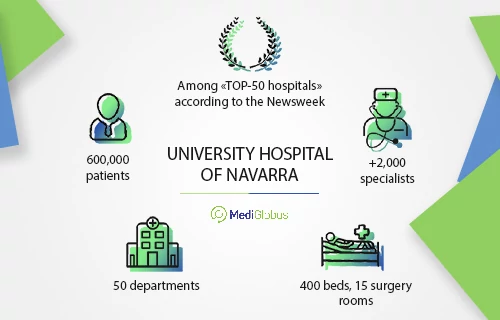
The hospital opened in 1962. During the existence of the clinic, more than 600,000 patients from all over the world have got rid of chronic and acute diseases with the help of its specialists.

The advantage of the clinic is its connection to the Medical Faculty of the University of Navarra. The clinic has a strong research focus and is working on the discovery of new treatments and the improvement of existing ones. This has enabled it to achieve an unparalleled success rate in the treatment of the most complex diseases.

In 1991, a successful heart transplant was performed for a 2-month-old baby who was born with a rapidly progressing tumor of the heart.

Structure of the clinic

The clinic covers an area of more than 75,000 square metres. The various specialist centres are located here, and there is close and rapid cooperation between them. It is the constant link between the clinic’s units, each of which is focused on achieving maximum results in a particular area, that has made it possible to achieve unique results in providing personalised medical care for patients with any problem.

Here, all of the world’s medical facilities are concentrated in one place, so the patient doesn’t have to spend time travelling and waiting in queues.

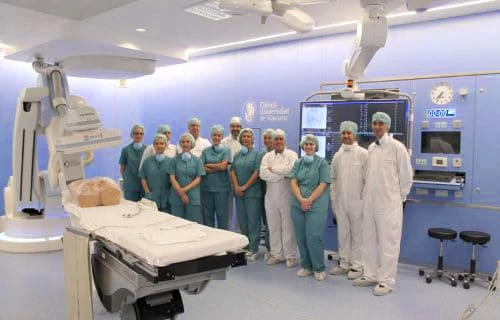
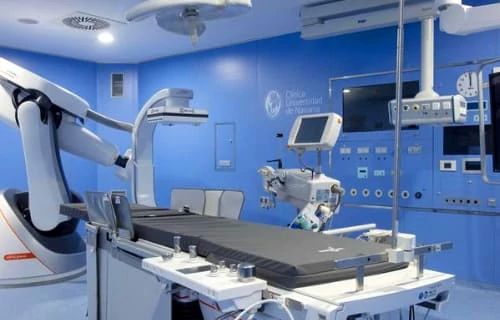
The University Hospital of Navarra has 50 specialist departments and 10 specialist centres. The hospital has a capacity of 400 patients. There are 15 high-tech operating theatres, an adult and a paediatric intensive care unit. The hospital employs over 2,000 specialists.

Clínica Universidad de Navarra

Clinic achievements

The Navarra hospital provides medical assistance in accordance with international quality standards. In 2004, the hospital was accredited by the Joint Commission International. Only those clinics that effectively use advanced methods of treatment, have access to innovative drugs, are equipped with new generation equipment, and have a high level of patient satisfaction receive this quality mark. In 2020, the clinic was re-accredited for the sixth consecutive year.

Among the other awards in the clinic are:

  • Company Business Reputation Monitor (2020);
  • Best private hospital in Spain (2019);
  • Social commitment during the MERCO coronavirus pandemic;
  • Diario Médico Best Idea 2019 award;
  • AEMED accreditation – Radiopharmaceutical Laboratory;
  • Centre of Excellence in Obesity Surgery;
  • Centre of Excellence in Oncology and Palliative Care Integration;
  • ABC Salud awards for work in R+D+i;
  • Best medical facility of the decade;
  • Best Spanish Private Hospital (OCU, 2012);
  • In 2020, the hospital was named one of the top 50 hospitals in the world by the prestigious American magazine Newsweek. It is also ranked 35th among the world’s best cancer centres by the World’s Best Specialised Hospitals.
  • In 2019, El Monitor de Reputación Sanitaria, an independent organisation, recognised the University Hospital of Navarra as the best in Spain in 17 areas.

Technical equipment for the clinic

The priority of the Navarra Hospital is to lead the way in terms of new technologies and treatments. This is why the hospital regularly invests heavily in equipment upgrades as well as the introduction of innovative technologies. The clinic was one of the first in Spain to purchase new versions of diagnostic and treatment devices.

Among the advanced technologies available at the Uniclinic of Navarra:

  • ABBI – uses a rotating circular knife and a thin, heated electric wire to remove a large cylinder of compaction in the chest;
  • SPECT-CT – a type of scan in nuclear medicine in which images from two different types of scan are combined together.
  • da Vinci robotic surgery – a method of carrying out minimally invasive surgery by means of a reliable medical robot;
  • Gamma camera – a device for SPECT imaging;
  • HIFU chemotherapy is a treatment that uses high-frequency sound waves to destroy cancer cells;
  • MRI 3 Tesla is one of the most accurate as well as safe methods of imaging tissue and internal organs;
  • Bod Pod – a system that uses air currents to measure a person’s internal body characteristics: body weight and volume, percentage of muscle and fat, and lung volume;

The clinic’s specialities

The Hospital of Navarra is multidisciplinary cente that specializes in certain areas:

  • cancer treatment,
  • neurosurgery,
  • general surgery,
  • bariatric surgery.

The Hospital of Navarra is a pioneer in the field of medical technology. Specialists from all over the world come here for their expertise.

The hospital has unique knowledge and expertise in procedures such as:

  • Yttrium-90 isotope radioembolisation in hepatology,
  • surgery for obesity,
  • placement of cochlear implants in otorhinolaryngology,
  • adult stem cell transplantation for various diseases.

Navarra Hospital is recognised as a leading Centre for Bariatric Surgery and certified by the European Accreditation Council.

Features of a stay at the University Hospital of Navarra in Pamplona

Among the services available to patients at the Uniclinic of Navarra in Pamplona:

  • Accommodation in the clinic for the patient and accompanying person;
  • Parking;
  • 24/7 cafeteria;
  • Servired, Mastercard, 4B and Euro6000 ATMs;
  • Chaplaincy (spiritual/religious support);
  • Free Luggage Carriage;
  • Free transport and accommodation booking services;
  • Bookshop and gift shop;
  • Free Wi-FI for all clinic patients.

Features of the Clinic

Diagnostis at the Uniclinic of Navarra

The Navarra Clinic in Spain has made great strides in diagnosing the body’s work as accurately as possible. Thousands of patients come to this clinic to have their health checked. More than 60,000 such checks have been carried out at the Navarra Clinic’s specialised Diagnostic Centre. The hospital has more than 30 years’ experience in the field of diagnostics.

A check-up examination is a comprehensive and personalised medical diagnostic complex for people who have no symptoms but want to monitor their health, as well as for those who have symptoms and want to assess the effects of illness on other organs. A full check-up diagnosis takes less than 24 hours. The clinic provides different diagnostic packages, depending on gender, age and the presence of certain diseases or a predisposition to them in the patient.

The most popular check-up packages at Uniclinica Navarra are:

Clínica Universidad de Navarra
  • General check-up;
  • Genetic Diagnostics;
  • Cardiology check-up;
  • Cancer check-up;
  • Sports assessment/stress test.
Basic check-up
10 laboratory tests
Consultation with a mammologist/proctologist
Hormone analysis
Echocardiogram, diabetes test

Get a free consultation

Treatment of cancer in Spanish clinic University Hospital of Navarra

Clínica Universidad de Navarra

Laboratory methods for diagnosing cancer include: general clinical blood and urine tests, biochemical blood tests, proteinograms, immunohistochemical tests.

For cancer treatment, leading Spanish specialists perform pre-surgery course of chemotherapy, which helps reduce the tumour size and prevent metastases into healthy tissues and organs. For this purpose, special cytostatic preparations are used, which stop the development and spread of cancer cells.

Surgery for a malignant tumour is organ-preserving. In cases of severe cancer, advanced cancer and lack of timely treatment, surgeons resort to removing the tumour affected area and then replace it with an implant.

After surgery, the Navarra Hospital offers post-operative chemotherapy and radiotherapy. This helps to kill the remaining cancer cells, prevent metastases and prevent recurrences.

Navarra Hospital provides effective treatment for osteosarcoma, a malignant bone tumour. In order to accurately diagnose the disease, specialists at Navarra Hospital perform:

Oncological check-up
Blood test for oncological markers
Biopsy
CT/MRI/PET CT
Consultation with an oncologist

Get a free consultation

  • Scintigraphy of the bones (osteo scintigraphy) is a study of the metabolism of bone tissue with the help of radiopharmaceuticals (RFPs) that accumulate in the bones of the skeleton. The procedure allows to reveal pathologies in the bones at the initial stage – before the appearance of clinical and radiological signs.
  • Radiography, which allows to detect lesions of bone tissue, false joints or pathological fractures.
  • CT and MRI diagnostics – a comprehensive examination of the patient with the help of advanced tomographs makes it possible to determine the exact location of the tumor, its shape, size, speed of development and the degree of damage to healthy tissues and organs.

Treatment of breast cancer

The Navarra Cancer Center has achieved outstanding success in the treatment of breast cancer. Leading Spanish doctors at the hospital managed to cure breast cancer in more than 4,000 patients. The oncological center of the clinic is characterized by quick diagnosis of the patient and the speed of establishing an accurate diagnosis. Within 24 hours the patient undergoes all necessary research. And less than 72 hours later – gets an effective treatment regimen.

Annually more than 10,000 diagnostic procedures are performed at the Cancer Center of the Navarra Hospital. To confirm the diagnosis or if there is a suspicion of breast cancer, patients are assigned to carry out magnetic resonance imaging (MRI). This method of diagnosis is the most safe for healthy tissues and organs of the patient, since it is carried out without X-rays, in contrast to mammography. It also allows to accurately determine the size of the tumor, its location and speed of development.

Mastectomy
MRI, breast ultrasound
Consultation with oncologist, mammologist
Breast surgery
Rehabilitation after surgery

Get a free consultation

MRI studies use contrast (gadolinium – hypoallergenic coloring substance), which is used to detect the smallest changes in the tumor, as it makes it possible to visualize the vasculature of the mammary gland. Examination without contrast is performed to determine tissue density and study the structure of the mammary glands.

For the diagnostics of breast cancer, doctors use:

  • Gamma Camera,
  • ULTRASOUND 4D,
  • PET lab,
  • Micro-PET,
  • MRI 3 Tesla,
  • 64-slice CT,
  • Gamma Knife,
  • CyberKnife,
  • tomotherapy unit,
  • brachytherapy, and more.

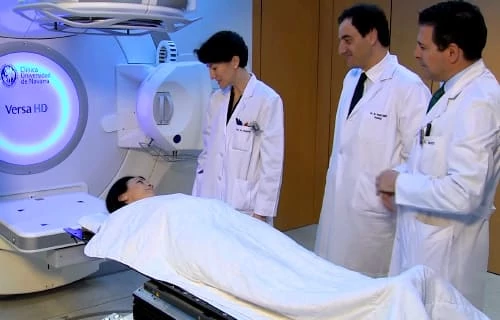
In 2014, the Navarra Hospital purchased and started using the Elekta Versa HD advanced linear accelerator for the first time in Spain. The main advantages of the equipment include a treatment speed ten times faster than that of any conventional accelerator, as well as a reduced number of sessions. The Elekta Versa HD provides greater accuracy of irradiation thanks to the 4D image, thus avoiding risks to healthy organs and tissues as much as possible.

The Hospital of Navarra is the only one in Spain to treat advanced liver cancer, especially inoperable tumours, using a unique procedure: radioembolisation with Yttrium-90 microspheres. By using this method in conjunction with chemotherapy, it is possible to control the progression of the disease in 90% of cases and reduce the likelihood of further metastases. The clinic has also achieved unique results in the treatment of breast cancer.

For the treatment of breast cancer, this is where the treatment is prescribed:

  • Surgical removal of malignant formation with subsequent reconstruction of the breast;
  • Radiation therapy with the help of advanced linear accelerators, which minimize the effect of irradiation on healthy tissues and organs of the patient;
  • Chemotherapy with innovative drugs and maintenance therapy, which helps to better cope with side effects;
  • Treatment with immunotherapy which hinders the growth and further development of cancer cells.

Oncohaematology at the University Hospital of Navarra

The University Hospital of Navarra specialises in cutting-edge technologies for the treatment of oncohematological diseases, such as:

  • Haematopoietic stem cell transplantation;
  • CAR-T therapy;
  • Dendritic cell therapy;
  • Treatment with activated lymphocytes.
Bone marrow transplantation
Finding a donor
Bone marrow biopsy
Bone marrow transplant surgery
3 month inpatient rehabilitation

Get a free consultation

Patients from all over the world come to this clinic for treatment of diseases such as myeloma, lymphoma, monoclonal gammopathies, anaemia, venous thromboembolism, etc.

Diseases are diagnosed quickly and reliably thanks to the laboratory, which cooperates with CIMA LAB Diagnostics. Patients from all over the world send their test results to the laboratory for an accurate diagnosis.

Clinical trials are carried out in the haematology department, which leads to the approval of new medications for the treatment of diseases. Among these drugs is daratumumab, which is used in the treatment of multiple myeloma.

The University Hospital’s blood bank is certified by the Committee for Accreditation of Transfusion (CAT) and has state-of-the-art technology for storing and manufacturing blood products.

The University Hospital of Navarra also performs bone marrow transplants for adults and children. The doctor in charge of the department, Prof. Rifond Rock, is a specialist with more than 28 years of experience and a graduate of the prestigious University of Cantabria. After the transplant, patients are placed in sterile rooms with HEPA filters, where they will be cared for by professional nurses until the patient’s immunity is restored.

Da Vinci surgery at the University Hospital of Navarra

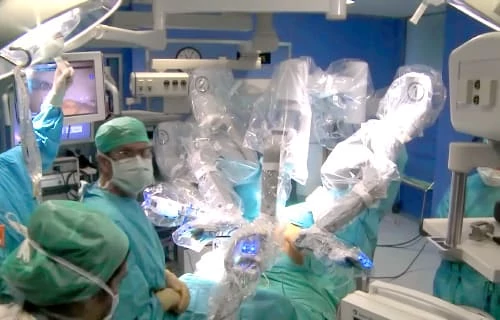
Navarra uses robotic technology to treat cancer and other conditions that require surgery. The use of the da Vinci robot can reduce the patient’s recovery time by 40%, reduce the need for blood transfusions by 25% and increase the precision of the operation by more than 12 times.

The clinic has been carrying out such operations for 8 years. The robotic intervention is carried out by 2 experienced surgeons, assisted by 3 nurses. At the Uniclinico Navarra, the da Vinci robot is used not only to carry out radical prostatectomy for the surgical treatment of prostate cancer, but also to treat obstructive sleep apnoea. The specialists at the Hospital were the first in Spain to use robotic technology to treat this disease.

The Navarra Hospital is also the first hospital in Spain to carry out robotic surgery for throat cancer, as well as thyroid cancer. Robotic technology is also used in gynaecology, general surgery, cardio-thoracic surgery, paediatric surgery, otorhinolaryngology and even neurosurgery.

Clínica Universidad de Navarra

Neurosurgery department of the University Hospital of Navarra in Spain

Clínica Universidad de Navarra

Diagnosis and treatment of acute and chronic diseases of the central and peripheral nervous system, as well as diseases of the brain and spinal cord are handled in the hospital Navarra.

For the harmless and successful removal of the brain tumor, clinic specialists use a fluorescent microscope. It allows clear identification of the malignant neoplasm and completely remove it in 83% of patients.

Special neuronavigation systems are used during all surgeries, which allow you to have complete control of the surgical procedure and prevent damage to important areas of the brain.

In 2009, in the neurosurgical department of Navarra for the first time in the country started treatment of the most aggressive brain tumor (glioblastoma multiforme) with personalized cellular vaccines.

To treat Parkinson’s disease, deep brain stimulation is carried out here. Deep brain stimulation is a method of treatment that aims to suppress the activity of the brain areas responsible for the symptoms of the disease.

The procedure involves surgical implantation of special electrodes in certain areas of the brain. These electrodes produce electrical impulses that regulate brain function impairments, affect certain cells and chemicals in it. Electrodes keep working capacity in the body from 3 to 5 years. Then they are easily replaced with new ones.

Deep brain stimulation is effective for all the main symptoms of Parkinson’s disease – such as tremors, slowed movements, stiffness of muscles, and – problems with walking and balance keeping. In more than 70% of patients with Parkinson’s disease there is a significant reduction in symptoms after the procedure and a reduction in the dose of drugs.

Removal of a brain tumour
Consultation with an oncologist/neurosurgeon
Comprehensive examination
Tumour resection
Early rehabilitation

Get a free consultation

Cardiac surgery at the University Hospital of Navarra

The Department of Cardiac Surgery at the Hospital Navarra has been in operation for more than 50 years. It is a pioneer in sophisticated procedures and innovative techniques.

The University Hospital of Navarra is the first hospital in Spain to carry out the following procedures:

  • Heart and Lung Complex Transplantation (1985);
  • Dynamic Cardiomyoplasty (1987);
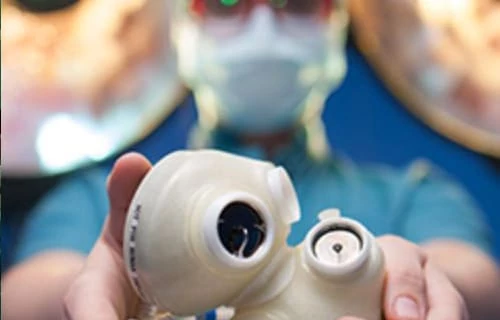
  • Implantation of a fully artificial heart (2016).

In a heart transplant at the University Hospital of Navarra, the survival rate of the organ in the first year is 90% and 75% in five years. The surgery is minimally invasive and the intensive rehabilitation reduces the hospital stay by 7-10 days.

Clínica Universidad de Navarra

The clinic uses the HeartPort technique, in which the heart is accessed through small lateral incisions, allowing for a rapid recovery and avoiding major scars.

Implantation of an internal defibrillator is a procedure that is performed in patients at risk of arrhythmia. In the event of a sudden cardiac arrest, this device will be able to restart the heart itself. The clinic has a remote defibrillator management system which sends information to the doctor regarding the patient’s condition on a daily basis.

The Navarra Hospital also often performs a coronary bypass surgery. It is performed if the normal supply of blood to the heart is obstructed or damaged. When this happens, the doctor takes a blood vessel from another part of the body – most often the leg – and transfers it to the heart. This surgery is indicated for coronary heart disease, angina and acute myocardial infarction.

Other procedures that the University Hospital of Navarra specialises in include:

  • Coronary surgery;
  • Heart valve surgery;
  • Thoracic aortic surgery;
  • Atrial fibrillation surgery;
  • Heart failure surgery;
  • etc.

Bariatric surgery department of the Navarra University Hospital

Clínica Universidad de Navarra

The hospital specialists help to get rid of excess weight of patients with the help of innovative methods that meet the international standards of quality and safety in the field of medicine. The Center for Bariatric Surgery Navarra is certified by the European Society for the Study of Obesity and the International Federation of Bariatric Surgery.

To diagnose patients in the clinic, an advanced Bod-Pod technology and special calorie expenditure estimates are used. Bod-Pod allows you to determine the percentage of body fat of the patient and % of weight without fat (bones, muscles, internal organs and water).

This method is considered the “gold standard” for measuring body fat. The test is of great diagnostic value, because the concept of obesity refers to the excess fat content in the patient’s body, not its weight. After diagnosis, doctors select the appropriate treatment program:

  • Program #1 – for patients without complications;
  • Program #2 – for patients with cardiovascular risk factors;
  • Program #3 – for patients with concomitant complications;
  • Program #4 – complex, for patients with signs of bariatric or metabolic surgery.

Testimonials (1)

Average clinic rating
  • 5
Bruce
Age: 39

This clinic has a well developed center for treatment of Osteosarcoma as our uncle was treated here for this condition even after being refused by some other medical facilities.

Certificates

Center of Excellence in Metabolic and Bariatric Surgery from the Surgical Review
International Federation for the Surgery of Obesity and Metabolic Disorders Certificate
Joint Commission International
Turkish Academy of Esthetic Dentistry (EDAD) Certificate
World's Best Hospitals by Newsweek

Doctors

Head of the Haematopoietic Transplantation Unit at the University Clinic of Navarra.
Dr Rifón Roca qualified at the University of Cantabria (1985) and the University of Navarra (1992). He is a specialist in haematology and haemotherapy. He also undertook training at the Haematopoietic Transplantation Unit of the University of Nebraska Medical Centre (USA).He is an associate professor in the Department of Haematology and has supervised four PhD theses.He is the author of six book chapters on his speciality and more than 50 articles in national and international scientific journals.
Doctor's speciality: leukaemia, myelodysplastic syndrome and bone marrow transplantation.
Проф. Хосе Рифон Рока
José Rifón Roca
Experience: Over 28 years
Oncohematology
Specialist on radiotherapeutic oncology at the University Clinic of Navarra.Engaged in radiosurgery, stereotactic cranial radiotherapy, radiotherapy with intensive modulation (IMRT).
He directs the program of special radiotherapeutic technologies, as well as its integration into multidisciplinary cancer treatment programs.The doctor participates in research and clinical trials that combine radiotherapy with new molecular drugs in different types of tumors.
Specialization of the doctor: stereotactic cranial radiotherapy, radiotherapy with intensive modulation (IMRT).
Dr. Javier Aristu Mendióroz
Javier Aristu Mendióroz
Experience: 25 years
Oncology
Dr. José Manuel Aramendía Beitia is one of the leading specialists of medical oncology at the University Clinic of Navarra. Participated in two research projects funded by government agencies as a collaborating researcher.
He also participated in 7 clinical trials of breast cancer, gynecology and brain tumors, of which in 3 he was the main searcher. He was in the academic group of breast cancer research SOLTI.Reviewer of the magazine Hospital Pharmacy.
Specialization of the doctor: brain tumors, breast cancer, female oncological diseases.
Dr. José Manuel Aramendía Beitia
José Manuel Aramendía Beitia
Experience: 23 years
Oncology
Co-director of the Gynecology and Obstetrics Department since 2016 at the University Clinic of Navarra.
He is a member of the editorial board of several scientific journals in the field of obstetrics and gynecology ("Ultrasound in Obstetrics and Gynecology", Ian Donald, School Journal of Ultrasound in Obstetrics and Gynecology, World Journal of Radiology) and a reviewer for leading specialized journals "Human Reproduction", "Fertility and sterility », the American Journal of Obstetrics, gynecology, gynecologic oncology, Oncology Lande, the international journal on gynecological cancer, ultrasound in obstetrics and gynecology, ma uritas, gynecological endocrinology and the magazine "Interior breeding and genetics" and others.
Specialization of the doctor: Ultrasound of high resolution in obstetrics and general gynecology, prenatal diagnosis and oncological gynecology (cervical, endometrial and ovarian cancer).
Dr. Juan Luis Alcázar Zambrano
Juan Luis Alcázar Zambrano
Experience: 28 years
Obstetrics and gynecology

Location of the Clinic

Av. de Pío XII, 36, 31008 Pamplona, Navarra
The University Clinic of Navarra is located in Pamplona, a 10-15 minute drive from the airport.
Spain
Spain

Similar clinics

Girin Plastic Surgery Clinic

Lienjang Plastic Surgery and Dermatology Clinic

Medicana Ataköy Hospital

Leave us a Review


    Successful
    This email already registered, please resend form

    Leave your request

    Благодарим за обращение.

    Наши координаторы обрабатывают
    вашу заявку.