


25% of metastases are found in the liver. This organ often becomes a target for cancer cells because of its rich blood supply and the presence of humoral factors that favour their growth. Treatment of liver metastases depends on the type of cancer from which the secondary tumours have formed.
The achievements of modern medicine in foreign clinics give hope for a favourable prognosis. From this article, you can learn how and with what success liver metastases are treated in foreign clinics. You can get to one of them with the help of MediGlobus.
What are liver metastases?
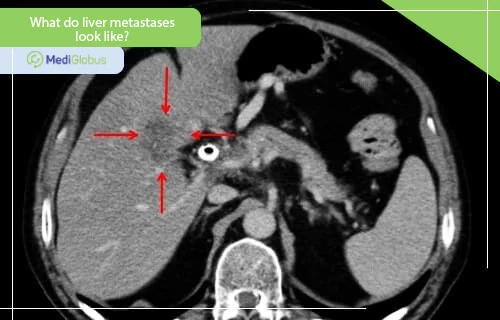
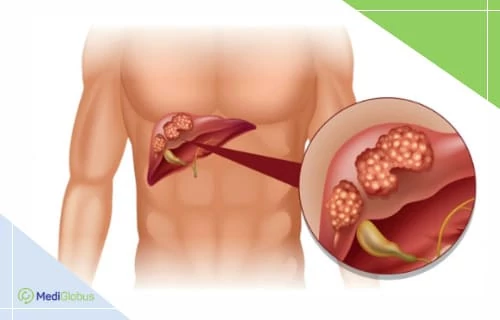
Metastases in the liver occur when the cancer has reached stage 4. These are cells from the primary tumour that have travelled through the blood vessels to the liver and sprouted in it. Most often, liver metastases form in colorectal cancer and rectal cancer. They also occur in people with cancers of the breast, oesophagus, stomach, pancreas, lung, kidney and skin.
About 20-25% of colorectal cancer patients have metastases to the liver, according to data published on the National Library of Medicine, the official US government website.
According to Onur Yaprak, a professor in the organ transplantation department of Medipol University Hospital, most cancers that develop in the liver are malignant cells arising from metastasis. Secondary oncology of the liver forms 20 times more often than cancer from the cells of the organ itself.
Pathology affects men more than women and is predominantly diagnosed in patients who are over 50 years of age. 90% of liver metastases are present as multiple tumours. More than three-quarters of patients with liver metastases have lesions in both lobes of the organ.

Treatment of liver metastases abroad
Effective therapy for liver metastases requires the expertise of a whole team of doctors who are experienced in treating this disease. Such care is available in foreign cancer centres, which our team can arrange. Submit your requests by clicking on the “Book an appointment” button
What to do in case of liver metastases?
Liver metastases are no reason for giving up. Compared to other organs, they lend themselves well to treatment. In many cases, doctors can effectively stop their growth, giving the patient a few more months or even years of life. In addition, removing the metastases can get rid of the negative symptoms that cause them.
It is important for cancer patients who have been diagnosed with liver metastases to get support from their loved ones. Working with a counsellor or going to a support group where they can talk to other patients with the same diagnosis can help. This will aid in finding the strength to continue treatment.
Can liver metastases disappear?
Yes, in some cases, it is possible to achieve with treatment. Such situations are seen in the treatment of colorectal cancer with liver metastases. According to the US National Institutes of Health website, 5-38% of patients who receive preoperative systemic therapy (chemical and/or biological anticancer drugs) have liver metastases disappear.
What can liver metastases be confused with?
Liver metastases do not have specific imaging manifestations. The preferred method of detecting such malignant foci is computed tomography (CT). However, even this examination can give erroneous results, because metastases often look almost identical to other liver lesions (e.g. small cysts). A biopsy is usually required to confirm the diagnosis.
How to diagnose liver metastases?
Liver metastases do not have specific symptoms, so they are difficult to diagnose without a thorough examination by a doctor. Sometimes patients complain of abdominal pain, loss of appetite, fever, swollen legs, and jaundice; but some patients are asymptomatic. Patients who have cancer with a high risk of metastases should have check-ups every 3 to 5 months to detect neoplasms in time.
It is important to distinguish liver metastases from benign tumours. Also, when planning treatment, it is necessary to know the exact number and location of formations. For this purpose, doctors prescribe:
ULTRASOUND
With the help of ultrasound, doctors examine the portal and hepatic veins and find out whether the tumour has grown into other parts of the body. Also, this method allows the medical team to effectively distinguish benign neoplasms from malignant ones.
MRI and CT
Imaging techniques are used to obtain detailed images of the liver, gallbladder, bile ducts, lymph nodes and other internal organs. MRI is usually more sensitive to liver metastases than CT. However, this type of tumour can look different, so sometimes the use of more than one examination method is justified.
PET-CT
Before PET-CT, a small amount of radioactive sugar is injected into the patient. It is absorbed more actively by the cancerous tissues, making them visible on the scan. This method is useful in detecting the exact size and location of metastases.
Biopsy
Laboratory analysis of the tumour allows the medical team to reliably determine the type and degree of malignancy of cells, thus – distinguishing liver metastases from other carcinomas and benign formations. Depending on the location of the tumour, the biopsy can be performed laparoscopically, i.e. without open surgery.
In addition, the isolation of tumour cells allows for their genetic analysis and the selection of the most effective medical drugs.
Can liver metastases be confused with haemangioma?
Liver tumours can easily be confused with each other by a specialist who has little experience in diagnosing these diseases. MediGlobus can help you get expert opinions from the world’s leading oncologists. To do so, click on the “Get a second opinion” button and we will help you arrange a diagnosis at a trusted cancer centre
How to deal with liver metastases?
There are several options currently available for the therapy of liver metastases. In most cases, treatment will be palliative. This means that it will be used to control the symptoms of cancer and prolong life, but is unlikely to lead to a cure. The choice of methods usually depends on:
 The age and general health of the person;
the size, location and number of metastatic tumours;
the location and type of primary cancer;
the types of therapies the patient has received in the past.
Treatment of liver metastases with a combination of surgery and chemotherapy has the highest survival rate. The specific treatment protocol depends on the type of primary cancer, as different cell types respond differently to drugs.

Treatment of liver metastases without surgery
Chemotherapy
Chemotherapy is a type of drug treatment that can kill cancer cells. It targets tissues that grow and multiply quickly.
Radiation therapy
Radiation therapy uses high-energy radiation to kill cancer cells and shrink tumours.
Radiofrequency ablation
Radiofrequency ablation is a procedure that uses an electric current to destroy cancer cells.
BRM therapy
BRM therapy uses antibodies, growth factors, and vaccines to boost or repair the immune system. This helps fight cancer. BRM therapy does not have the usual side effects as with other cancer treatments and is well tolerated in most cases.
Targeted therapy
Targeted therapy kills cancer cells, but does so more precisely than chemotherapy. Targeted therapy leaves healthy cells untouched.
Hormone therapy
Hormone therapy can slow or stop the growth of certain types of tumours that depend on hormones, such as breast and prostate cancer.
Treatment of liver metastases abroad
Foreign clinics use modern therapy protocols, and they also offer treatment methods that are not yet available in most countries. MediGlobus can recommend clinics where you can save 20-30% without compromising the quality of treatment. Leave your application by clicking the button below
Surgery for liver metastases
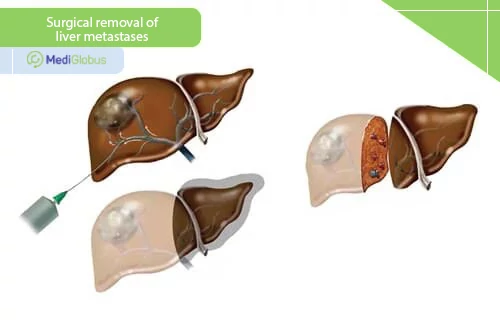
According to the National Library of Medicine, surgical resection remains the “gold standard” for treating liver metastases. Clinical guidelines recommend doctors leave at least 40% of the liver if cirrhosis is present, 30% if liver dysfunction is mild to moderate, and 20% if the organ is healthy.
To increase the success rate of surgery, the doctors use:
4-6 months of chemotherapy;
portal vein embolisation;
two-stage liver resection.
An observational study at the Asan Clinic in Korea showed that preoperative chemotherapy increased the three-year disease-free survival rate from 20,4% to 31,7%.
How long do people with liver metastases live?
The effectiveness of treatment depends on the location of the original cancer and how far it has spread. In a small number of cases, surgery to remove liver tumours can lead to a cure. This is usually only possible in patients with certain types of tumours (e.g. colorectal cancer) with a limited number of liver tumours. About 20% of patients manage to completely cure their cancer after such surgery.
According to data reported in the Annals of Surgery, the best prognosis is seen in patients:
Without primary lymph node metastases;
With a single tumour in the liver measuring less than 5 cm;
With CEA levels < 200 ng/ml;
With a disease-free period of more than 1 year.

Where are liver metastases treated?








Doctors who specialise in the treatment of liver tumours
Professor Meltem Topalgökçeli
Leading clinical oncologist at the Liv Vadistanbul Clinic. She specialises in the treatment of gastrointestinal, ovarian, and breast tumours, as well as malignant tumours of the female reproductive system. She treats patients with advanced cancer with metastasis to the liver. The doctor’s work experience exceeds 20 years.
Dr Tahsin Özatlı
A top Turkish oncologist with more than 20 years of experience. He practises at Liv Istinia University Hospital. The doctor provides therapy for lung, breast, and GI oncology (including tumours that have metastasised to the liver). He specialises in immunotherapy, targeted therapy, chemotherapy, etc.
Liver metastases – is there a chance?
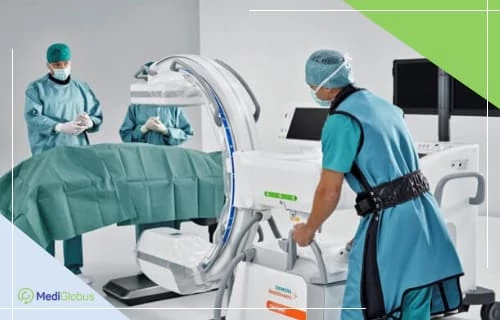
In most cases, cancer that has spread to the liver is not curable. However, the treatments described above can help to reduce the number of tumours, increase life expectancy and relieve symptoms.
The most common problems that patients with liver metastases deal with are fatigue and loss of appetite. The medical team can help adapt to this life, with medication and physiotherapy. Advice from other cancer patients on how to better cope with negative symptoms in everyday life can also be helpful. Liver metastases rarely cause severe pain and in such cases, painkillers are prescribed.
What diet helps cancer patients with liver metastases?
Metastatic lesion of the liver is a secondary cancer. Therefore, the nutrition of patients with malignant cells spreading to this organ is similar to that indicated for patients with primary liver cancer. According to the National Library of Medicine, proper nutrition plays an important role in survival prognosis.
People with liver metastases need to normalise their nutritional metabolism. They need to get enough macro- and micronutrients, vitamins, amino acids and other nutrients with food. The diet should be balanced and contain vegetables, fruits, lean meats and fish, as well as whole-grain and fermented milk products, nuts, etc. Such a diet can improve liver function.
At the same time, cancer patients with liver metastases should avoid alcohol, excessively fatty food (fast food) and other “unhealthy” products. It is also important to limit the consumption of desserts.

Patient testimonial
Yoav Hadas was 47 years old when he was diagnosed with stage 4 pancreatic cancer. He was initially scheduled for Whipple’s surgery, but it could not be performed. During the intervention, metastases in the liver were discovered. It was decided not to proceed with the procedure. Surgery would have been ineffective in such a case.
Thanks to his wife, Yoav did not give up. They applied to several clinics, to several specialists. They could only recommend standard chemotherapy. But this would not have saved the situation much, nor would it have improved their survival prognosis.
Finally, Yoav managed to find the right doctor. She sent him for genetic testing and prescribed eight courses of chemo. When the test showed that the man was a carrier of the BRCA 2 mutation, he was told he could participate in one of the clinical trials for the biologic drug olaparib.
The treatment worked. Control CT scans demonstrated that the tumour was shrinking and the liver metastases were going away. More than five years have passed since then. Yoav has no signs of the disease. He continues to take his medication and maintains a healthy lifestyle.
 The story is published on the PanCAN – Pancreatic Cancer Action Network website.
Summary
Liver metastases are cells from a stage 4 primary tumour that has travelled to the liver via blood vessels and have germinated in the liver. Liver metastases occur most often in rectal and colorectal cancers.
It is important for cancer patients who have been diagnosed with metastases to get support from others and loved ones. Working with a counsellor or going to a support group where they can talk to other patients with the same diagnosis can help.
Ultrasound, MRI, CT, PET-CT and biopsy are used to diagnose liver metastases.
The most effective treatment for tumour metastases is a combination of surgery along with accompanying treatment: chemotherapy, radiation therapy, targeted therapy, and BRM therapy. Some tumours can also be removed with radiofrequency ablation.
In most cases, treatment for patients with liver metastases will be palliative. The average five-year survival rate is 11%.
Palliative care can extend a patient’s life by months. Treatment for liver metastases is available in advanced cancer centres in Turkey, Israel, Spain, Germany and Korea.

Sources:
- 1. Memorial Sloan-Kettering Cancer Centre on liver metastasis
- 2. University of California San Francisco on liver metastases
- 3. American Society of Oncology
- 4. Melbourne University Department of Radiology
- 5. University of Tennessee-Nashville
- 6. Journal of Medicine
- 7. Annals of Surgery Journal
- 8. National Library of Medicine
- 9. U.S. National Institutes of Health
- 10. Medscape Web Resource
- 11. US National Institutes of Health
- 12. Annals of Surgery Journal”
- 13. Pancreatic Cancer Action Network (PanCAN)
- 14. Medipol Medical Group