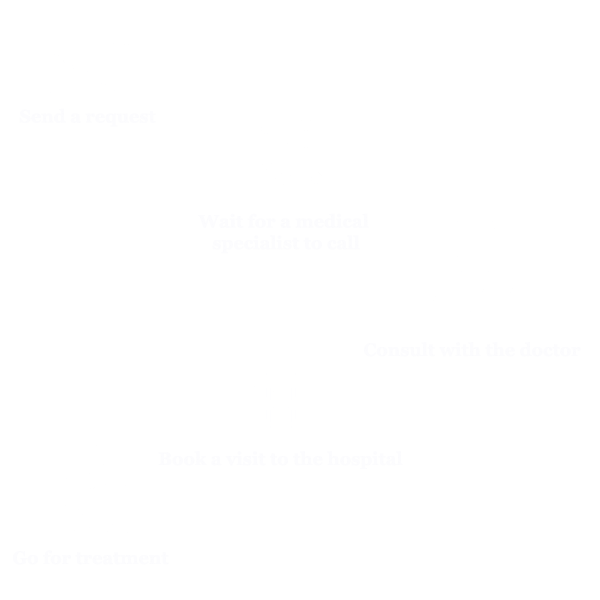



1. What is osteoarthritis of the spine? |
2. Diagnosis of the disease |
3. Disease treatment |
4. Recovery from spine surgery |
5. Leading foreign clinics |
Osteoarthritis of the spine is a chronic degenerative joint disease. As it progresses, patients experience increased pain and stiffness. The disease is most commonly diagnosed in the elderly. Untreated, it can lead to disability. Conservative and surgical methods of treatment are available abroad. These quickly return the patient to an active and pain-free life. To learn what options for arthritis treatment are the most effective and where you can receive it – read our article.

Listen to the article:
What is osteoarthritis of the spine?
Osteoarthritis of the spine involves the gradual destruction of the joints and surrounding tissues of the spinal column. It develops due to damage to the cartilage of the articular surfaces. It occurs due to the following causes:
 spinal injuries,
heavy physical exertion,
congenital anomalies of the spinal column,
excessive body weight,
metabolic and circulatory disorders,
age-related changes.

The main symptom is swelling and pain in the affected area. At first, the pain is temporary and only increases with physical exertion. It then becomes permanent and occurs without any triggering factors. Patients also show the following symptoms:
numbness in the extremities,
frequent headaches,
cracking in the spine when turning the body,
dizziness,
general malaise.
Osteoarthritis of the spine is dangerous because the destruction of cartilage is accompanied by damage to other structural elements of the spinal column. The integrity of joint capsules, ligaments, muscles and discs is compromised.
What methods are used abroad to diagnose osteoarthritis of the spine?
If osteoarthritis of the spine is suspected, the patient should see a neurologist or orthopaedist. The doctor will carry out a physical examination and refer the patient for further tests. X-rays, CT or MRI scans and laboratory tests usually suffice for an accurate diagnosis. Visualisation methods make it possible to detect damage to the intervertebral discs and joints as well as the narrowing of the regions where the spinal nerves exit and the formation of bone spurs.
Foreign clinics have state-of-the-art equipment for the precise detection of spinal osteoarthritis: last-generation MRI and CT units. Long-term experience of foreign doctors prevents errors in diagnosis. To get checked abroad, leave an application.
Treatment options for osteoarthritis of the spine
Treatment for osteoarthritis of the spine largely depends on the severity of the disease, the age of the patient and the extent to which the symptoms of the disease affect daily life. It is not possible to reverse the degenerative damage to the joints, but it is possible to slow down or stop the progression of the disease. To prevent further damage to the intervertebral joints, treatment is prescribed:
medication therapy with steroids and non-steroidal anti-inflammatory drugs, analgesics;
physical therapy and exercise to relieve muscle spasms and increase the range of motion in the spine;
percutaneous electrical nerve stimulation (PENS) – applying electrical impulses to the affected area;
lifestyle changes: losing excess weight, avoiding lifting weights, maintaining correct posture, etc.
radiofrequency ablation – exposure of the affected joint and nerve to radiofrequency energy;
surgery to decompress nerve roots and stabilise the vertebrae.
Treatment of osteoarthritis of the cervical vertebrae

Cervical osteoarthritis or uncovertebral arthritis is one of the most common forms of the condition. This is because the cervical vertebrae are the most mobile. They allow the head to rotate in different directions. People often experience instability in this area of the spine, which leads to the development of various pathologies, including osteoarthritis.
Treatment for cervical osteoarthritis depends on the severity of the symptoms and how much they affect the patient’s quality of life. In most cases, non-surgical treatment is sufficient to combat the disease.
Patients are prescribed anti-inflammatory medication, nerve blocks, exercise therapy, physiotherapy and radiofrequency ablation. The latter involves a minimally invasive procedure in which heat from the needle tip creates damage to small nerves. This makes it possible to affect the damaged joint.
RFA prevents the nerves from transmitting pain signals to the brain. It provides longer-term relief than nerve blocks or joint injections. Symptoms of the disease recede for 1-2 years, and in some cases even longer.
In cases where the pain worsens and conservative treatment of arthritis of the intervertebral joints in the neck does not produce the desired effect within 2 to 4 months, surgery is indicated. The main types of surgery are:
Anterior cervical discectomy and spondylodesis
During surgery, the doctor accesses the affected joint through the front of the neck. He removes the deformed disc. It is then replaced with an implant. This maintains the height of the vertebral column and allows the cervical nerve roots to pass unhindered.
Posterior cervical laminectomy
The surgeon accesses the cervical spine from the back of the neck. He removes the lamina and spinous process. This is to make room for the spinal cord and reduce pressure on it. This surgery is combined with spondylodesis to maintain the stability of the spinal column.
Treatment options for arthritis of the thoracic spine
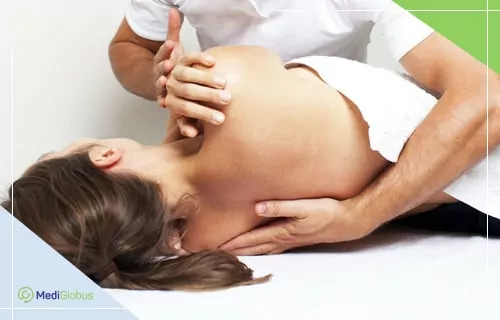
The thoracic spine connects directly to the rib cage and protects key organs such as the heart, lungs and liver. The thoracic vertebrae are less mobile than the cervical or lumbar vertebrae. They are less often affected by osteoarthritis.
If a degenerative change occurs in the thoracic spine, anti-inflammatory medication, steroid injections into the facet joint under ultrasound or CT scanning, physiotherapy and RFA are recommended.
Surgical treatment is indicated for patients with persistent pain, vertebral instability or compressed nerve roots. These operations include laminectomy, spondylodesis and replacement of the affected disc with an implant.
Treatment of osteoarthritis of the lumbosacral spine
Lumbar osteoarthritis affects around 30% of men and 28% of women aged 50-65 years. Initial treatment involves taking corticosteroids and non-steroidal anti-inflammatory drugs. Injections of steroids into the affected area are also possible. Some patients are prescribed anti-rheumatic drugs.
Cold and heat compresses provide pain relief in osteoarthritis of the lumbar spine. They reduce swelling, improve blood flow, and relieve muscle spasms. LFC and physiotherapy are recommended in conjunction with the compresses.
Severe cases are treated by spinal fusion surgery – pondylodesis. During a fusion operation, the affected vertebrae are fused. This prevents the facet joints from moving and injuring the spine.
Vertebral fusion surgery reduces pain by improving the stability of a certain segment of the vertebral column. This procedure does not require extensive incisions. Minimally invasive access and endoscopy allow the spine to be stabilised through incisions no longer than 3 cm in length.
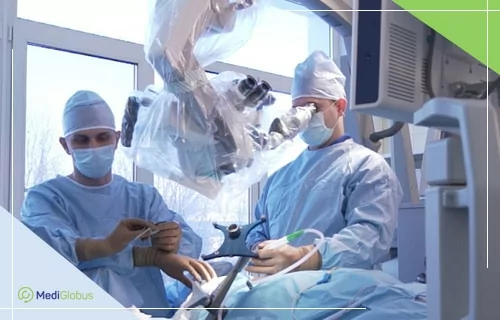
Patients with osteoarthritis of the lumbar spine may also undergo:
laminectomy – removal of part of a vertebra to increase space for spinal nerves and relieve symptoms.
facetectomy – resection of part of the facet joint to remove the bone spurs that are compressing the nerves.
Recovery from surgery for osteoarthritis of the spine

Rehabilitation after spinal osteoarthritis surgery takes 4 to 6 weeks. During this period, the patient will need to wear a special corset and avoid heavy physical work, sharp turns, and falls. He or she will also require pain medication, physiotherapy, and light physical exercises.
Maximal level of mobility and functionality of the vertebrae is achieved 3-6 months after the surgery.
The patient may return to a normal life after 4-6 weeks. If his or her work involves intense physical exertion, lifting heavy objects or other strenuous activities, it is not possible to begin work at least 12 weeks after surgery.
Where can I find treatment for osteoarthritis of the spine abroad?






Summary
Osteoarthritis of the spine is the destruction of cartilage in the joints and discs of the spinal column. The disease is chronic and progresses over time. It is most commonly diagnosed in people over the age of 40. Osteoarthritis of the spine causes stiffness or pain in the back. As the degenerative process progresses, weakness or numbness in the extremities, dizziness and general malaise occur. The severity of symptoms usually decreases when the person is lying down.
X-rays, CT scans and MRIs are used to diagnose the condition. These examinations allow the assessment of bone damage, bone spurs and cartilage loss in the joints. Patients are also scheduled for joint fluid biopsies and laboratory tests.
Treatment of spinal osteoarthritis is tailored to the severity of the problem, the age of the patient and the presence of related diseases. In the initial stages, pain medication, injections of steroids into the joint, physiotherapy, physical therapy and radiofrequency ablation are prescribed. In severe cases, surgery is recommended.
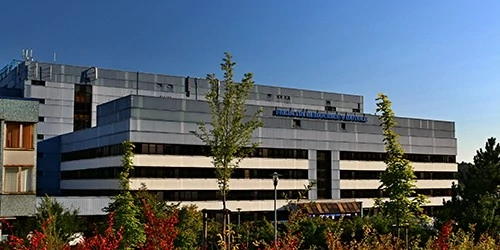
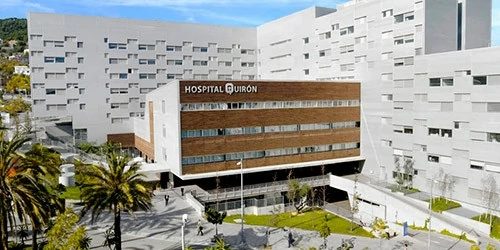
To cope with this disease patients often apply to clinics in Turkey, Austria, Spain, and the Czech Republic. Particularly popular among medical tourists are: Koç, Medicana, Motol, Döbling, Quironsalud in Barcelona and Navarra University Hospital.
To choose the right clinic for your spinal arthritis surgery abroad, contact the coordinating doctors at MediGlobus. Our experts will select the best medical centre and doctor. They will take care of travel arrangements and will be in touch with the patient 24/7.