


Intestinal cancer is a malignant process that develops in the intestines. According to the World Health Organisation, the disease ranks third in terms of prevalence. In 2020, the pathology was detected in more than 1,9 million people. The disease is divided into subtypes, depending on the location of the tumour in the organ. In this article, MediGlobus specialists will discuss the types of bowel cancer and methods of treating the disease.
Types of intestinal cancer
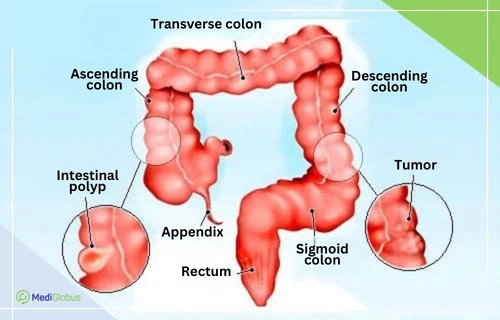
Intestinal cancer is divided into:
- sigmoid colon cancer;
- colon cancer;
- rectal and anal canal cancer.
Intestinal cancer is the third most common cancer among men and the second most common among women.
Small intestine cancer is divided into:
- duodenal cancer;
- thin intestine cancer;
- ileum tumours.
About 10% of cases of cancer of the alimentary tract are tumours of the small intestine.
The prognosis and treatment options for bowel cancer vary depending on the location of the tumour. In addition, doctors check for metastases in nearby organs such as the liver, lungs, peritoneum, etc. The WHO identifies five methods of treatment for such tumours: surgery, chemotherapy, radiotherapy, immunotherapy, and targeted drugs. Depending on the characteristics of the disease, these methods are combined to achieve the best results.
Rare forms of intestinal cancer include:
- squamous cell carcinoma;
- carcinoid tumour;
- sarcoma;
- lymphoma;
- melanoma.
Five out of ten patients with intestinal cancer have inherited a genetic predisposition to this disease from their parents. You can undergo genetic testing for hereditary cancer at leading foreign clinics. Modern laboratories can quickly provide reliable results, and experienced oncologists can advise you on how to reduce your risk of developing the disease.
Treatment of colon cancer
Surgery for colon and sigmoid colon cancer
According to Cancer Research UK, surgery is the main treatment for bowel cancer. It helps to remove the tumour and affected tissue. Surgery is performed using an open method (through one large incision), laparoscopically (through small incisions) or using a robotic system. The extent and technology of the procedure depend on the stage of the cancer and the size of the tumour.
Treatment of colon and sigmoid colon cancer in stages 1-2 is performed using segmental resection of the intestine. During this operation, the doctor removes the affected part of the organ. The healthy ends are sutured back together, and the intestine continues to function normally. The site of the artificial connection between the parts of the intestine is called an anastomosis.

Intestinal surgery is most often performed in two stages. After removing the affected part of the intestine, a temporary colostomy is performed on the patient. This is an operation during which the end of the intestine is brought out through the skin. After recovery, the colostomy is removed and the parts of the intestine are connected by an anastomosis. Only in some cases do doctors recommend the formation of a permanent colostomy and suturing of the operated intestine. It all depends on the location of the tumour and the possible risks.
For the treatment of stage 3 cancer, the scope of the operation is increased. In this case, a hemicolectomy is performed. The surgeon removes half of the colon that is affected by the tumour. This radical intervention helps to remove most of the affected tissue and prevent recurrence of the disease. The parts of the intestine are connected by an anastomosis. Radical surgery may also be prescribed for the treatment of rapidly progressing tumours. These include, for example, signet ring cell carcinoma of the intestine. Palliative surgery is used to treat stage 4 intestinal cancer. It helps to remove part of the tumour to relieve symptoms.
Tumour removal with the da Vinci robot
Foreign clinics offer the possibility of robot-assisted surgery for the treatment of intestinal cancer. Such procedures are more precise and less traumatic than open surgery. Patients tolerate them more easily. Contact MediGlobus coordinators, and we will tell you which clinics remove intestinal tumours using the Da Vinci robot.
 Read:
Read: Rectal and anal canal cancer treatment
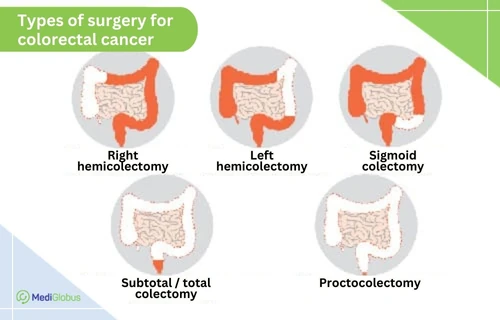
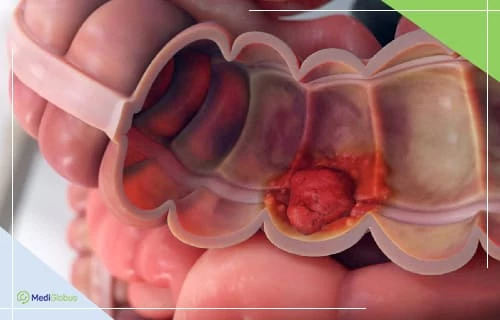
In rectal cancer, the surgeon removes the affected part of the organ and surrounding tissue. In the early stages, it is possible to operate endoscopically through the anus. For larger tumours, the affected tissue is removed using an open procedure.
The surgical approach also depends on how far the tumour is from the anal canal. The doctor may remove only the rectum or part of it along with the anal canal. In the first case, the ends of the intestine are connected by an anastomosis. After such an operation, the patient’s natural bowel function is restored. In the second case, doctors form a permanent colostomy to remove waste products.
Chemotherapy is used as an adjunctive treatment for rectal cancer. It is used to shrink the tumour before surgery or to remove metastases after surgery. The drugs are administered through a vein or hepatic artery. In cases of inoperable tumours, doctors prescribe targeted drugs. These are biological drugs that bind to the tumour and block its growth.
Radiation therapy for colon cancer
Radiation therapy is used in the later stages of colon cancer. It is most often prescribed for inoperable tumours. Radiotherapy helps to reduce the tumour and eliminate the symptoms of the disease.
For colorectal cancer, stereotactic surgery or intensity-modulated radiation therapy (IMRT) is used. These technologies help to adjust the rays so that they affect the tumour without affecting healthy organs.
If the bowel cancer is operable, intraoperative radiotherapy is used. The abdominal cavity is irradiated directly during surgery. This helps to kill cancer cells in the bowel and lymph nodes without affecting healthy tissue.
Cancer Research UK also recommends two types of internal radiation therapy for colorectal cancer: high-dose-rate (HDR) brachytherapy and contact X-ray brachytherapy (Papillon). During treatment, the radiation source is placed through a tube into the rectum in proximity to the tumour. This way, the tumour gets the most radiation, and healthy tissue is hardly exposed to it. The procedure takes up to 15 minutes, after which the radioactive source is removed. You might need a few treatment sessions to get the therapeutic effect.
Modern radiotherapy equipment used in foreign clinics has a beam accuracy of less than 1 mm. This reduces the amount of radiation exposure to healthy tissue, resulting in fewer side effects. You can undergo advanced radiation therapy for bowel cancer with MediGlobus. Contact us by clicking the button below.
How is small intestine cancer treated?
Treatment of duodenal cancer
The main method of treating duodenal cancer is surgery. The type and extent of the procedure depend on the type of tumour and its location. Chemotherapy, radiation therapy, and targeted drugs are adjunctive methods. They are combined with surgical treatment to improve the outcome.
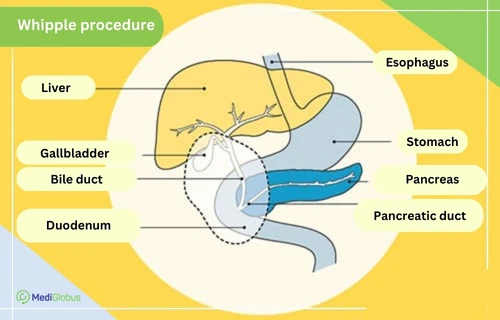
The main methods of surgical treatment for duodenal cancer are bowel resection and Whipple’s operation.
- Intestinal resection is a surgical procedure during which doctors remove the affected part of the organ and lymph nodes. This procedure is indicated in the early stages of small intestine cancer.
- The Whipple procedure is radical. It is indicated in stages 2-3 of the disease, when the tumour has metastasised. During the operation, the patient’s duodenum, part of the pancreas, part of the stomach and the gallbladder are removed.
The Whipple procedure is considered one of the most complex in gastroenterology. It should only be performed in reputable clinics with experienced surgical teams and departments that specialise in gastroenterological tumours.
Treatment of cancer of the small intestine and ileum
When diagnosing cancer of the small intestine and ileum, surgeons perform a segmental resection of the damaged parts of the intestine. In the case of cancer of the jejunum, the segment containing the tumour is removed. If the neoplasm is located in the ileum, the tumour and part of the large intestine are removed. The doctor can choose the surgical approach after a comprehensive examination and staging of the disease.
For the treatment of small intestine cancer, chemotherapy is used in stages 2-3 to combat metastases and reduce the tumour before surgery. Doctors prescribe systemic chemotherapy or HIPEC — hyperthermic intraperitoneal chemotherapy. The HIPEC procedure involves the introduction of heated drugs into the abdominal cavity during surgery. This helps to kill cancer cells in the peritoneum without affecting the entire body.
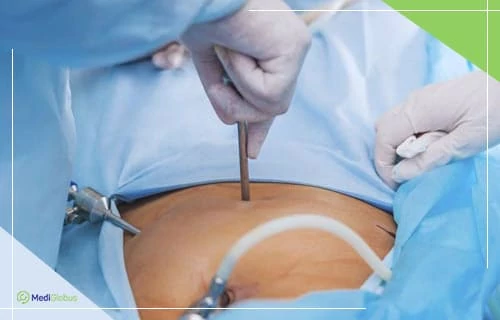
Systemic radiotherapy is also used to treat small intestine cancer. Radiation helps fight tumour metastases to other organs. In the later stages, radiotherapy is prescribed to shrink the tumour and improve the patient’s condition.
How is stage 4 small intestine cancer treated?
In the later stages of small intestine cancer, palliative treatment is given without surgery. This is aimed at improving the quality of life and relieving symptoms. Doctors use a combination of chemotherapy, radiotherapy and targeted drugs. The choice of method depends on the nature of the tumour and the patient’s well-being.
In some cases, palliative surgery on the small intestine is indicated. It is necessary to remove part of the tumour, restore normal functioning of the gastrointestinal tract and reduce the burden on the body.
Treatment of advanced bowel cancer with immune and targeted therapy
Targeted drugs can distinguish cancer cells from healthy cells, allowing them to attack and destroy them more effectively. Immune therapy drugs work by boosting the body’s immune system so that it can fight the disease more successfully. Treatment helps to reduce tumours and prolong life even in the most advanced stages of cancer.
Can bowel cancer be cured – prognosis
The prognosis for bowel cancer survival depends on the stage of the disease, its location, the patient’s general condition and the presence of concomitant pathologies. According to data from the American Society of Clinical Oncology (ASCO), the survival prognosis for bowel cancer is as follows:
- if the cancer has not spread beyond the intestinal wall, the 5-year relative survival rate is 91%;
- if the cancer has spread to surrounding tissues or lymph nodes, the 5-year survival rate is 73%;
- if the cancer has spread to distant parts of the body, the 5-year relative survival rate is 14%.
For patients with metastases in the lungs or liver, surgical removal of these tumours can significantly improve survival. In addition, overall survival rates for specific forms of bowel cancer are also important:
For colon cancer:
- at the localised stage — 91%;
- when spread to nearby tissues or organs — 72%;
- when distant metastases are present — 13%.
For rectal cancer:
- at the localised stage — 90%;
- when spread to nearby tissues or organs — 74%;
- when distant metastases are present — 17%.
Cost of bowel cancer treatment
The price of bowel cancer treatment depends on several factors: the type and stage of cancer, treatment methods, and length of hospitalisation. The cost of treatment also varies from country to country. For example, treatment in Turkey and South Korea will be cheaper than in hospitals in Europe and Israel.
Turkey
| Surgical removal of the tumor | from $12,000 |
| Radiation therapy | from $6,500 |
| Chemotherapy | from $1,500 |
| Targeted therapy | from $2,900 |
| Oncology Check-Up | from $2,000 |
South Korea
| Surgical removal of the tumor | from $16,000 |
| Radiation therapy | from $8,000 |
| Chemotherapy | from $2,500 |
| Targeted therapy | from $4,000 |
| Oncology Check-Up | from $2,700 |
Germany
| Surgical removal of the tumor | from €15,000 |
| Radiation therapy | from €8,000 |
| Chemotherapy | from €3,200 |
| Targeted therapy | from €6,000 |
| Oncology Check-Up | from €3,500 |
Austria
| Surgical removal of the tumor | from €19,000 |
| Radiation therapy | from €8,000 |
| Chemotherapy | from €3,000 |
| Targeted therapy | from €5,000 |
| Oncology Check-Up | from €5,000 |
Spain
| Surgical removal of the tumor | from €17,000 |
| Radiation therapy | from €9,000 |
| Chemotherapy | from €2,500 |
| Targeted therapy | from €3,500 |
| Oncology Check-Up | from €3,500 |
Israel
| Surgical removal of the tumor | from $20,000 |
| Radiation therapy | from $10,000 |
| Chemotherapy | from $3,500 |
| Targeted therapy | from $4,500 |
| Oncology Check-Up | from $4,000 |
Ask a MediGlobus medical expert how to treat bowel cancer, how much it will cost, and where to go for surgery. Book a free consultation on our website by clicking the button below.
Where to go to treat bowel cancer?
Medicana Clinic (Turkey)

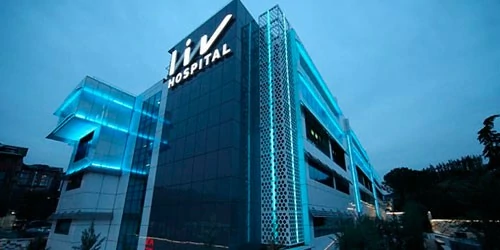
Liv Clinic (Turkey)
Koç Clinic (Turkey)

Cologne University Clinic (Germany)

Vienna Private Clinic (Austria)

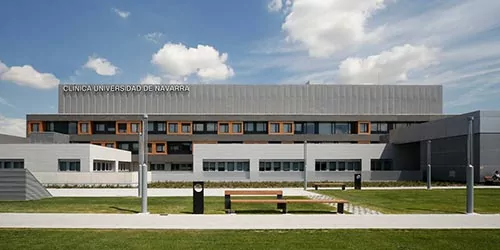
Navarra Clinic in Madrid (Spain)
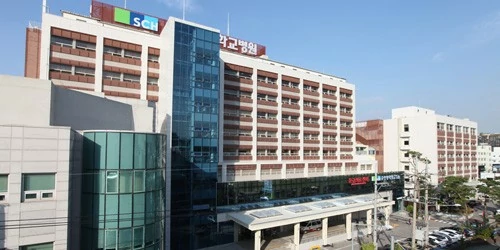
SoonChunHyang Hospital (South Korea)
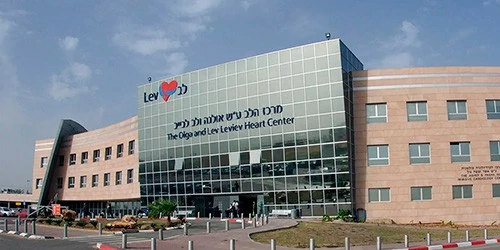
Sheba Medical Centre (Israel)
Melanie’s story about her battle with bowel cancer
At the age of 60, Melanie decided to undergo a preventive examination for bowel cancer, as she was experiencing pain and discomfort in her abdomen. A colonoscopy revealed a tumour in her bowel. Fortunately, the cancer had not spread beyond the intestinal walls, so during the operation, surgeons were able to completely remove the tumour and all associated lymph nodes. They also managed to avoid performing a colostomy. The woman is now undergoing chemotherapy to prevent a recurrence of the disease. Doctors are optimistic and confident that Melanie will make a full recovery.
“We can play our part in recognising that something is wrong with our gut and seek help at a much earlier stage, when there is a chance of recovery,’ says Melanie. ‘If you feel that something is wrong with your body, don’t put off seeing a doctor until tomorrow. In rare cases, it may turn out to be cancer, but it’s always better to deal with the problem before it becomes life-threatening.”
(story from Bowel Cancer UK)

Foreign clinics offer check-up services for the diagnosis of cancer. The examination takes only 1-2 days. The results, with detailed comments and recommendations from the doctor, are given to you immediately or sent by email. You can book a diagnostic check-up through MediGlobus. We will select a clinic, book an appointment with a doctor and help you organise your trip.
Summary
- Surgery is the main method of treating bowel cancer. It helps to remove the tumour and affected tissue. The extent of the procedure depends on the stage of the cancer and the size of the tumour. Depending on the characteristics of the disease, a partial resection of the bowel or radical removal of the organ is performed.
- In 80% of cases, adenocarcinoma is the cause of bowel cancer. The prognosis for treatment of this disease is positive: in the early stages, patient survival rates are 72-91%.
- Chemotherapy is used before surgery to reduce the tumour or after surgery to prevent recurrence and metastasis. Therapy can be systemic or intraperitoneal.
- Radiation therapy is used in the later stages of bowel cancer. It is most often prescribed for inoperable tumours. Radiotherapy helps to reduce the tumour and eliminate the symptoms of the disease.
- In the later stages of small intestine cancer, palliative treatment is given without surgery. It’s meant to improve the quality of life and get rid of symptoms. Targeted and immune therapies are also used in advanced stages to help patients feel better and live longer.
- Five-year survival rates for intestinal cancer vary depending on the stage of the disease: 91% in the localised stage and 14% in the presence of distant metastases.
To consult about treatment and find the best hospital and doctor, contact the specialists at MediGlobus by clicking the button below.