


1. Benefits of palliative care |
2. Indications for this type of care |
3. Options for supportive care |
4. Leading clinics |
Palliative care does not aim to eliminate cancer but to maximise the length and quality of the patient’s life. It provides substantial relief to a person in the terminal stages of the disease. It makes it possible to live a normal life without pain or discomfort. Read about what palliative care for cancer patients abroad involves, what the benefits are and where you can get these services in the article below.

Listen to the article:
Benefits of palliative care abroad
 Leading cancer centres take a holistic approach to addressing the problems of terminally ill patients and their caretakers. A multidisciplinary team of specialists provides a wide range of medical services. This allows pain and other symptoms to be alleviated so that the patient and their family can live a normal life in these circumstances.
A new generation of medicines is available abroad that can combat the symptoms without causing severe side effects. Such medicines improve the patient’s well-being and do not harm their body.
In foreign hospitals, palliative care is supervised by internationally renowned professors with many years of experience. They develop personalised therapy programmes for each patient, which are tailored to their needs as closely as possible.
Supportive treatment for people with advanced cancer in such hospitals involves a professional psychologist. This specialist helps the patient and their loved ones to cope with the situation and live life to the fullest. He or she shows you how to deal with the fears and anxieties caused by the seriousness of the illness.
 Read:
Read: When is palliative care needed?
Palliative treatment is required for patients with advanced malignant tumours which can be rapidly fatal if left untreated. This type of medical service is also needed for people who have tried all possible cancer treatments but did not get better.
Palliative care can be prescribed for all types of cancer, such as lung, gastrointestinal, brain, breast, prostate, skin, bone, etc. It can stabilise the patient’s condition and slow down the growth of the tumour or even reduce its volume.
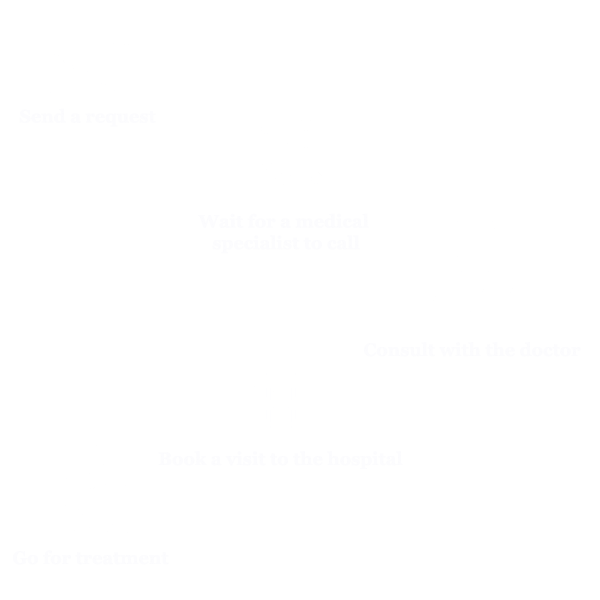
To find out more about whether a patient is suitable for palliative care, where best to get it and how much it will cost, fill in the feedback form and wait for our coordinator to call. We will try to answer all of your medical questions.
Methods of palliative care for cancer
Palliative care should be provided as a package of treatments that, when combined in the right way, have the best therapeutic effect. A palliative care programme is developed for each patient individually. Some of the key medical services available for treating terminal cancer include:
surgery,
chemotherapy,
radiation,
immune therapy,
targeted therapy,
hormone therapy.
Palliative surgery for cancer
The main aim of palliative cancer surgery is to reduce or eliminate pain that cannot be managed by any other means. The appropriateness of the intervention is determined on a case-by-case basis. Surgery is often indicated for terminal cancers of the colon, pancreas, oesophagus, stomach, cervix, ovaries, etc. It involves the partial removal of the primary neoplasm or metastases.
Only the foci that cause pain and other severe symptoms should be resected, in particular, if they cause:
difficulty swallowing,
obstruction of the stomach,
massive bleeding,
intestinal perforation,
incontinence of urine or faeces,
formation of ulcers in the axilla,
intestinal obstruction,
rectovaginal fistulas.
There are many different types of palliative care surgeries, most of which are performed minimally invasively (using laparoscopes, microsurgical instruments and robotic systems). The gentle surgical technique is easier for the patient to tolerate. It is not always possible, however, to perform minimally invasive surgery. This applies to those patients who need an amputation or extensive excision of a locally recurrent tumour.
Palliative radiotherapy

The possibility of using external or internal irradiation of a malignant tumour depends on its type, area and degree of spread. The method is often used for cancer of the respiratory system, bowel or head and neck.
Palliative radiotherapy is not aimed at curing cancer, so patients are given lower ‘safe’ doses of radiation. This allows treatment to take place without many side effects. Treatment courses are short. A patient undergoes no more than 10 sessions, usually 2-4.
Palliative radiation aims to control or prevent the symptoms of the disease. For example, it is prescribed in cases of the spinal cord and nerve compression in different areas of the body, bone pain caused by metastases, and when an organ lumen is blocked by a large tumour.
Palliative chemotherapy
In 95% of cases of metastatic cancer, chemotherapy cannot completely cure it. Nevertheless, it can help to shrink the tumour and “soften” or eliminate the unpleasant symptoms of the disease. In these situations, it is worth talking about palliative chemotherapy.
Approximately 30% of patients who receive maintenance treatment with chemo respond well to it. Their tumour stops growing or shrinks slightly in size. The response to chemotherapy lasts for an average of 3-12 months.
It takes 1-2 full cycles of treatment, each lasting 3-4 weeks, to wait for results from chemotherapy. If the tumour responds to the treatment, the patient may be advised to continue using the drugs until cancer stops growing or the patient develops side effects.
Palliative immune, hormonal and targeted therapies

Immune, hormonal and targeted drugs are prescribed for advanced tumours of the brain, genitourinary system, bone, etc. They have a more targeted effect on cancer cells than chemotherapy and are not as harmful to the body. The use of one drug or another depends on the type of malignancy and its location.
Supportive treatment with targeted, immune and hormonal drugs can be administered as intramuscular injections, intravenous injections or orally (pills). The duration of therapy varies from patient to patient.
Palliative targeted and immune therapies are successful in 80% of cases. They can prolong a patient’s life by months, and in some cases years. Hormonal drugs also have similar success rates in the supportive treatment of breast, cervical, ovarian and prostate cancers.
Which clinics provide palliative care abroad?






Summary
Supportive treatment involves stabilising and improving the well-being of the cancer patient. All methods used for palliative care aim to increase the patient’s comfort and prolong life. Surgical interventions, radiotherapy, chemotherapy, targeted drugs, immune supplements and hormones are used for this purpose.
Palliative surgery makes it possible to remove part of the tumour while alleviating the symptoms. It can slow down the progression of the disease and prolong the patient’s life. Palliative surgery is most often indicated for cancer of the stomach, rectum, pancreas, breast, etc.
Palliative radiotherapy is not indicated for all types of cancer. It is recommended for patients with advanced cancer of the lungs, intestines, stomach, brain, etc. Generally, 2-4 sessions are needed to achieve the therapeutic effect. A maximum of 10 sessions may be prescribed.
Supportive chemotherapy can be used for many types of cancer. It lasts from three months to a year and in some cases longer. The choice of drugs for treatment is individual for each patient.
Targeted, immune and hormonal drugs are often prescribed for stage 3 and 4 cancers. They do not cause severe complications and are successful in their task. These drugs slow down the progression of the tumour and alleviate the symptoms.
To go for palliative cancer treatment abroad, click on the button below and fill in the feedback form. We will assist you with organising a medical trip to one of the best clinics abroad.