


1. What does coronarography involve? |
2. Surgical techniques |
3. Contraindications |
4. Complications |
5. Cost of coronary angiography |
6. Leading clinics |
Coronarography is a minimally invasive examination and a “gold standard” for detecting coronary heart disease (CHD), heart failure, and other heart diseases. This method implements X-ray diagnostics with a contrast dye. It makes it possible to accurately determine the nature, localization, and narrowing of the coronary arteries. The procedure can also be used for therapeutic purposes. Although coronarography is generally safe and has no explicit age restrictions, the risk of complications is higher in older patients. Read more about this method and the specifics of its usage in older patients in our article.

Listen to the article:
What is coronarography?
Coronarography is a common medical procedure that involves the use of a contrast agent and X-rays to assess the condition of the heart vessels. It allows doctors to see the locations and extent of narrowings and blockages in the coronary arteries.
The procedure can be considered safe for patients of different ages. This is confirmed by a study from the American College of Cardiology in San Diego.
According to results published in the New England Journal of Medicine, despite higher risks of complications, coronary angiography in heart attack patients over age 80 generally improves the prognosis of disease course and survival.
The study involved 458 elderly patients with chest pain or a heart attack history. They were divided into two groups. The first underwent coronarography to assess the condition of the heart and develop the best course of treatment (prescribed medications, angioplasty, stenting, or bypass surgery); the second received conservative therapy to reduce cardiovascular risk without performing any invasive tests.
After a year and a half of follow-up, it was found that patients who underwent coronary angiography had a 47% lower risk of death, heart attack, and stroke than patients who did not undergo this examination. They were also less likely to require other additional invasive interventions on the heart and coronary arteries.
Ask the coordinating physicians of the international medical platform MediGlobus about the details of preparing and performing coronary angiography abroad. We will also help you to find the best clinic and doctor for the examination.
How does coronary angiography work?
Coronary angiography is a painless procedure. It does not require general anaesthesia, since local anaesthesia is sufficient. The examination takes 20-40 minutes. During this time, the patient is conscious and, if necessary, follows the doctor’s instructions (for example, takes deep breaths and exhales).
Coronary angiography uses an X-ray. It is done to study the patient’s coronary arteries and discover how narrow they are. An angiogram can help the doctor determine if the patient needs treatment, such as an angioplasty or stent, coronary artery bypass grafting (CABG), or drug therapy.
During the procedure, the surgeon makes a puncture in the femoral or radial artery, through which a special catheter is inserted. A radiopaque agent is then injected into the vascular cavity. This is needed to clearly visualize the arteries of the heart and accurately detect any abnormalities. The patient is also given beta-adrenoblockers and nitroglycerin. These medications are needed to dilate the blood vessels by 20-40%.
Then a CT scan of the patient’s cardiovascular system is performed on a 64-slice CT scanner. This machine takes many images in different projections.
Tomograms clearly show the condition of the heart and vessels in real-time. This allows almost 100% accuracy in identifying the sites of stenosis, fat deposition or calcification on the arterial walls. After the procedure, the catheter is removed and a tight dressing is applied to the puncture site.
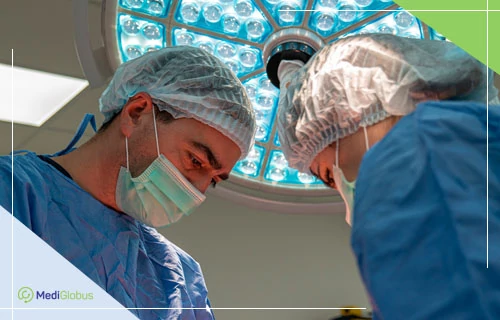
If pathology is found during coronary angiography that requires immediate correction, the doctor may perform surgery, such as coronary stenting or bypass surgery, immediately after the examination.
Once the coronary angiography is completed, the patient is transferred to the post-operative room. Here he or she stays for several hours. The aftercare period requires rest and staying in a horizontal position. In addition, a high fluid intake immediately after the procedure is recommended. This speeds up the procedure of washing out the contrasting agent from the body. The patient can go home the same day after a diagnostic coronarography or 1-2 days after a therapeutic one.
Contraindications to CT coronarography
Based on this information, one can conclude that elderly people are not contraindicated to the procedure. However, their general state and the presence of concomitant pathologies are taken into account.
Coronary angiography is not recommended in the presence of peptic ulcer disease, decompensated heart failure, acute myocardial infarction and renal failure. The procedure is also not performed if the patient has a history of severe anaphylactic reaction to iodine-containing contrast agents.
Relative contraindications to CT coronarography include:
 intolerance to nitroglycerin or drugs that slow the heart rhythm,
severe aortic stenosis,
infectious pathologies in the acute period,
decompensated diabetes mellitus,
bronchospastic disorders.
 Read:
Read: What are coronarography risks in the elderly?
Coronary angiography, like any other invasive procedure, can cause complications. Elderly patients are more prone to the risks of developing adverse effects. Therefore, the examination should be performed in a responsible and balanced manner. Coronary angiography done in a specialized centre by a highly qualified specialist reduces the occurrence of complications nearly to zero.
Possible complications:
skin allergic reactions (urticaria or itching),
infection,
damage to a blood vessel,
impaired kidney function,
arrhythmia,
fluid accumulation around the heart,
bleeding or bruising at the puncture site,
heart attack.
Abroad, the likelihood of side effects is evaluated by the treating physician. In some cases, correcting the patient’s general condition minimizes the risk of complications.
What is the cost of coronarography abroad?
The price of coronarography abroad is determined by many criteria. Firstly, it is influenced by the level of the medical centre. Secondly, the price depends on the doctor’s qualifications. Thirdly, the cost of coronarography of the heart and vessels varies according to the country’s pricing policy. Approximate prices for performing this procedure abroad are given in the table below:
| Clinic | Cost |
|---|---|
| Medistate Clinic | from $1,300 |
| Liv Hospital Network | from $2,000 |
| Biruni University Hospital | from $1,000 |
| Teknon Medical Center | from €3,000 |
| Navarra University Hospital | from €2,900 |
| SoonChunHyang Hospital | from $3,000 |
| Ichilov Medical Center | from $2,700 |
Where can I get CT coronarography abroad?
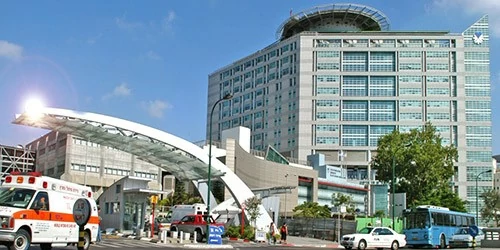
To undergo heart diagnostics, patients often go to medical institutions in Turkey, Spain, Israel, South Korea and other countries with a developed healthcare systems. Among such clinics, the most popular are:





Summary
Coronary angiography is a minimally invasive procedure that helps detect various coronary artery abnormalities. It is indicated for coronary heart disease, heart failure, angina pectoris, etc. The examination can be performed on elderly patients, including people over 80 years of age.
Coronarography is contraindicated if a person has a history of severe allergic reactions to the contrast agent. It is also cautiously performed in patients with severe aortic stenosis, decompensated diabetes mellitus, and bronchospastic pathologies.
X-ray examination of coronary arteries is performed under local anaesthesia. It lasts 20-40 minutes. During the procedure, a contrast agent is injected into the patient with a catheter, and then a CT scan of the heart vessels is performed.
For coronary CT scans abroad, patients mainly choose Turkish, Spanish, Israeli and Korean medical centres. These include the following institutions: Medistate, Liv, Sourasky, SoonChunHyang, Teknon, Uniclinic of Navarra and Biruni.
The cost of coronary angiography abroad depends on the level of the clinic, the doctor’s qualifications, the country’s pricing policy, and other criteria. The approximate starting price for this procedure in Turkey is $1,000, in Spain it is €2,900, in Israel and South Korea $2,700 and $3,000 respectively.
To go for coronary angiography in one of the best clinics abroad, click on the button below and fill out the feedback form. We will contact you as soon as possible and help you with all your medical issues!

Sources:
- American College of Cardiology
- National Library of Medicine
- Medical News Today
- National Health Service, NHS
- American College of Cardiology Foundation