


Cardiovascular disease (CVD) is the leading cause of death worldwide. In its 2023 report, the World Heart Federation announced that 20,5 million people died from cardiovascular disease in 2021, accounting for about one-third of all deaths. Ischemic heart disease was the leading cause of premature death in 146 countries for men and 98 countries for women. Central Europe, Eastern Europe and Central Asia have the highest CVD mortality rates. North Africa and the Middle East rank second in terms of mortality. These statistics are not intended to scare anyone. Their purpose is to make each of us think about our lifestyle. But what should someone who is already facing this disease do? Let’s take a look at what modern medicine is capable of…
What are the main causes of cardiovascular disease?
According to a report by the World Heart Federation, in 2021, the main causes of CVD and deaths from it were:
- high blood pressure (10,8 million deaths);
- air pollution (4,8 million deaths);
- high cholesterol (3,8 million deaths);
- smoking (3,0 million deaths);
- for high blood glucose levels (2,3 million deaths);
- for being overweight (2,0 million deaths);
- for low physical activity (397,000 deaths).
Modern diagnosis of heart disease
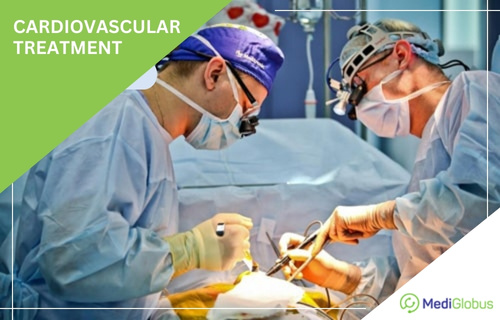
Coronary angiography has been the gold standard for diagnosing the condition of the coronary arteries of the heart for many years.
This procedure involves inserting catheters into the aorta through the femoral or radial artery, through which a contrast agent is injected and recorded by a special camera.
The algorithm for performing coronary angiography has not changed. However, whereas it used to be purely a diagnostic procedure, today the best clinics in the world, if necessary, diagnose the arteries and immediately perform a stent placement procedure — coronary artery stenting.
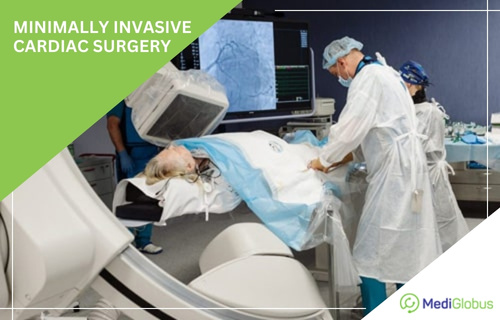
Special hybrid operating rooms are available in clinics for this purpose. Minimally invasive procedures are performed in these rooms under medical imaging guidance, which allows small parts of the body, such as thin vessels in the heart muscle, to be viewed.
The changes also apply to MR angiography, a group of methods based on magnetic resonance imaging (MRI) for imaging blood vessels. Thanks to the development of high-speed multispiral computed tomography scanners, it is now possible to perform non-invasive diagnostics of arteries without hospitalising the patient. Moreover, the latest development in this field of diagnostics is 4D dynamic MR angiography. This method allows the arterial and venous phases of blood flow to be separated with visualisation of its dynamics (namely, speed). Changes in blood flow velocity can indicate a variety of significant pathologies.

 Read:
Read: Robotic surgery in cardiology
Most heart surgeries today are still performed using sternotomy (incision of the sternum). However, the world’s best clinics now offer minimally invasive cardiac surgery, which includes various procedures performed through small, low-trauma incisions.
These incisions are approximately 7-10 cm long, compared to traditional incisions of 20-25 cm. In order to perform ultra-precise surgical procedures through such small incisions, a robotic system such as the Da Vinci Robot is used.
Two of the robot’s instrument arms are inserted into small holes in the patient’s chest. The surgeon sits at a console and uses a fibre optic camera to view the heart in 3D.
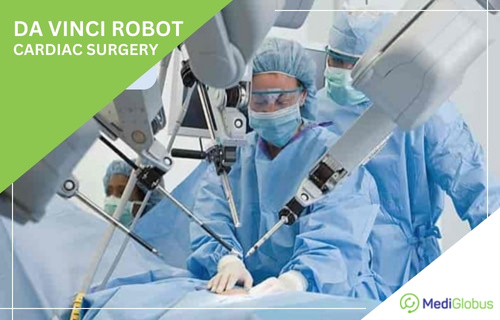
The specialist’s movements are transmitted to the robot’s ‘arms,’ which perform all the necessary manipulations. The da Vinci robot allows for a greater degree of freedom and precision than traditional instruments. In addition, an advanced camera provides a magnified, high-resolution, full-colour three-dimensional view of the heart.
Minimally invasive surgery offers many advantages over standard approaches: less trauma to the chest tissue, smaller incisions and scars, reduced risk of infection, less blood loss, reduced pain and faster recovery after surgery (2-3 times faster).
The length of hospital stay after minimally invasive surgery is reduced to 3-5 days, compared to a minimum of one week in a medical facility after traditional cardiovascular surgery. After such procedures, the patient is not restricted from driving a car or lifting weights over 2 kg.
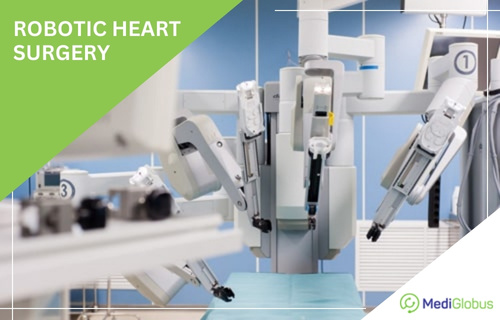
With the help of the Da Vinci Robot, it is possible to perform:
- replacement of the mitral and tricuspid valves;
- repair of atrial septal defect;
- surgical ablation for atrial fibrillation (‘maze’);
- left atrial myxoma surgery;
- biventricular epicardial pacemaker implantation.
Minimally invasive heart valve replacement
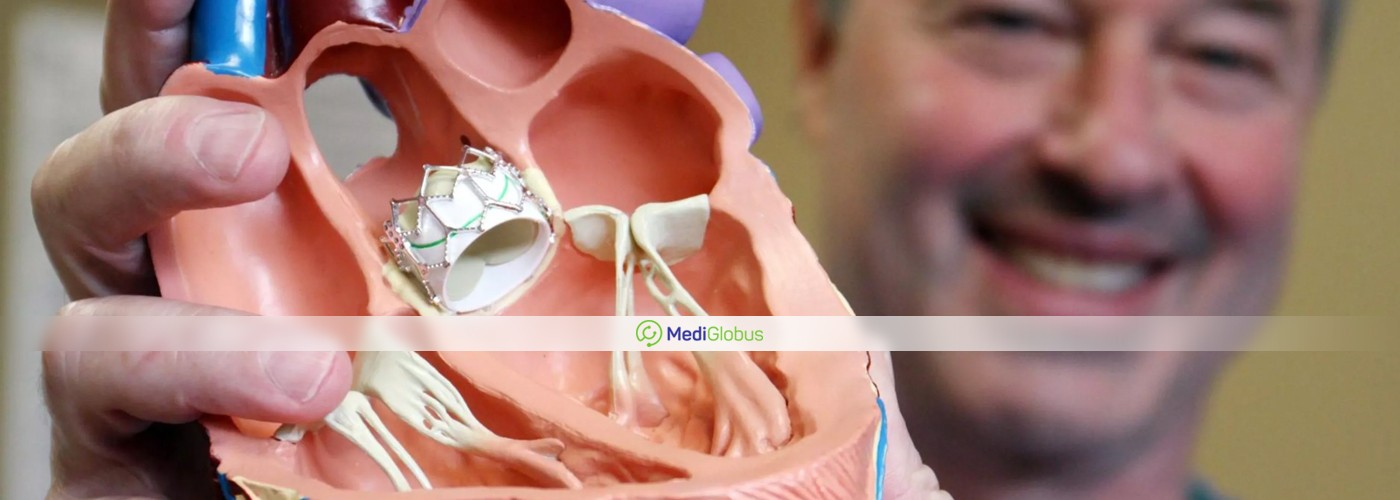
Just ten years ago, elderly or seriously ill patients who needed heart valve replacement had little to hope for. They risked not surviving the operation. In recent years, the world has learned about the minimally invasive TAVI valve replacement method. This involves using a catheter to place a new valve in the heart. The operation does not require connection to a heart-lung machine. This means that the procedure carries significantly fewer risks for all patient groups.
TAVI heart valve replacements |
|
| Get a free consultation |
Coronary artery bypass grafting on a beating heart
Coronary artery bypass grafting accounts for 60-70% of all cardiac surgery procedures. This is an operation performed under general anaesthesia, which involves connecting the patient to a cardiopulmonary bypass machine. It is necessary when the arteries supplying blood to the heart tissue are narrowed or blocked. Bypass surgery reduces the risk of serious complications in people with obstructive coronary artery disease and ischaemic heart disease. The procedure is also used in emergencies, such as a severe heart attack.
However, as we have already established, some cardiac surgery procedures can now be performed ‘off-pump’, i.e. without connecting the patient to a machine. One such operation is called OPCAB. The procedure uses special stabilisers to reduce the vibrations of the beating heart during coronary artery bypass grafting. With OPCAB surgery, there is a lower risk of intraoperative bleeding and renal complications. Moreover, by not using a heart-lung machine, the risk of stroke is significantly reduced.
During bypass surgery, blood vessels from another part of the body are used. They are connected to the blood vessels above and below the narrowed artery. This allows the narrowed or blocked coronary arteries to be bypassed. Depending on the severity and number of blockages, one or more blood vessels are used. Doctors mainly use arteries from the arm or chest or veins from the legs.
Laser transmyocardial revascularisation
This is an innovative procedure that has become an alternative to coronary artery bypass grafting for patients who, for certain reasons, are contraindicated for bypass surgery, balloon angioplasty or stenting.
Laser transmyocardial revascularisation involves stimulating the growth of new blood vessels in the heart, which improves blood supply to the heart muscle.
Using a modern laser, tiny channels up to 1 mm in diameter are created in the thickness of the myocardium, which helps to improve oxygen exchange. After 2-4 months, these channels close, but the effect of the procedure remains. This technique does not require the patient to be connected to a cardiopulmonary bypass system.
Cardio Check-Up
Today, cardiac surgery has made significant progress compared to what it was 5-10 years ago. However, the main secret to heart and vascular health remains unchanged: a healthy lifestyle, disease prevention, and timely diagnosis. Leading clinics around the world offer patients comprehensive screening programmes for the prevention and early detection of heart disease. A cardiology check-up is a diagnostic procedure that allows you to assess the current state of your cardiovascular system in a short period of time, usually 1 to 2 days. It includes a variety of tests, such as blood tests to determine cholesterol and other indicators, blood pressure measurement, electrocardiography to assess cardiac activity, and other examinations. This procedure helps to identify risks and prevent the development of cardiovascular diseases, as well as to develop a prevention or treatment plan.
Summary
- Cardiovascular disease is the leading cause of death worldwide. According to estimates by experts from the World Heart Federation, 20,5 million people died from cardiovascular disease in 2021, accounting for about one-third of all deaths.
- Coronary angiography is the gold standard for diagnosing the condition of the coronary arteries of the heart. This procedure involves inserting catheters into the aorta through the femoral or radial artery, through which a contrast agent is injected and recorded by a special camera.
- Minimally invasive cardiac surgery is already available in the best clinics in the world. It includes various operations performed through small, low-trauma incisions. These incisions are approximately 7-10 cm long, compared to traditional incisions of 20-25 cm.
- In order to perform ultra-precise surgical procedures through such small incisions, doctors use the da Vinci robotic system. It allows for a higher degree of freedom and precision than when using traditional instruments.
- Coronary artery bypass grafting accounts for about 70% of all cardiac surgery procedures. The operation is performed under general anaesthesia. It involves connecting the patient to a cardiopulmonary bypass machine. However, it is possible to perform bypass surgery without connecting to a ventilator. This type of surgery is called OPCAB. Special stabilisers are used to perform the procedure. They reduce the fluctuations of the beating heart during coronary artery bypass grafting.
- Laser transmyocardial revascularisation involves stimulating the growth of new blood vessels in the heart. Using a modern laser, pinpoint channels up to 1 mm in size are created in the thickness of the myocardium. These openings improve oxygen exchange. After 2-4 months, the channels close, but the effect of the procedure remains.
For more information on the treatment of cardiovascular diseases abroad, please contact the coordinators of the MediGlobus international platform. Our specialists will help you choose a clinic and doctor. They will organise your medical trip as soon as possible. Contact us!

Source:
- World Heart Federation
- National Library of Medicine
- American Society of Anesthesiologists
- American Heart Association
- The Annals of The Royal College of Surgeons of England
- American College of Cardiology Foundation
- What is TAVR? – American Heart Association
- E-Journal of Cardiology Practice – Volume 5
- Transmyocardial Laser Revascularization – Medscape