


Osteochondroma is the most common benign bone tumour diagnosed in children and young people. Most often, the neoplasm appears between the ages of 10 and 25. This pathology accounts for up to 50% of all benign tumours and approximately 9% of all bone tissue neoplasms (according to the journal In Vivo). Without treatment, osteochondroma can cause pain, lead to bone deformation, and, in rare cases, become malignant. Read the article to find out what osteochondroma is, what methods of treating this disease are available abroad, and how they are tolerated by children.
What is osteochondroma?
Osteochondroma – is a benign bone tumour. It develops during the period of active growth of the skeletal system. As the child grows older, the osteochondroma increases in size. When skeletal development stops, the neoplasm also stops growing.
Osteochondromas most often occur on the lower extremities — the femur and tibia, as well as the foot and pelvis. Around 20% of tumours affect the upper extremities — the scapula and humerus. Osteochondromas on the ribs, frontal bone, or spine are extremely rare.
| The exact cause of the disease is unknown. The likelihood of its development is the same in both men and women. According to the American Academy of Orthopaedic Surgeons, the formation of some osteochondromas is associated with a mutation in the EXT1 gene. In addition, 70% of patients with multiple tumours have a hereditary form of the disease. Since scientists still do not know why osteochondromas develop, there is currently no way to prevent their development. |
Types of osteochondromas
Osteochondromas can develop as a single tumour (osseochondral exostosis) or as multiple tumours (multiple osteochondromatosis). Single osteochondromas become malignant in 1% of patients. Cancer develops in 5-25% of multiple bone lesions.
Symptoms of osteochondroma
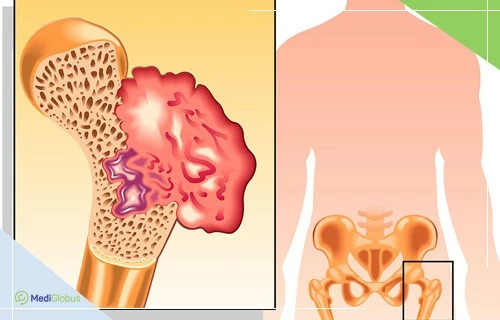
Osteochondromas form on the surface of the bone near the growing end – the growth plate. They look like hard bumps near the joints. In many cases, single tumours do not cause any symptoms. The neoplasm may become noticeable when it reaches a significant size. The symptoms of multiple osteochondromatosis are no different from those of osteochondral exostosis, except that in the former case, they are more pronounced.
The American Academy of Orthopaedic Surgeons identifies the following as the most common manifestations of the disease:
- painless lump near the joint;
- pain and swelling in the affected bone area;
- numbness and tingling in the limb;
- limited joint mobility;
- damage to the blood vessels in the limb;
- blood clot formation.
The main clinical signs and symptoms of malignant osteochondroma include pain, swelling, and a significant increase in the size of the affected bone.
 Read:
Read: Diagnosis of osteochondroma
A series of tests is recommended for the diagnosis of osteochondroma, including X-ray, CT, MRI and biopsy. X-rays provide a clear image of the bone and visualise the tumour. For more accurate visualisation of the neoplasm, computed tomography (CT) or magnetic resonance imaging (MRI) is prescribed. These scans provide detailed information about pathological changes not only in the bone but also in the soft tissues. MRI is used to search for cartilage tissue on the surface of the tumour. This sign indicates the onset of the oncological process.
Some cases may require a biopsy of the neoplasm. This makes it possible to determine the type of tumour. During a biopsy, a sample of tumour tissue is taken and examined under a microscope.
Osteochondroma is diagnosed in foreign clinics using the latest generation of equipment. This makes it possible to make an accurate diagnosis and begin treatment as quickly as possible. Contact a MediGlobus specialist to choose a clinic and make an appointment with a doctor. To do this, leave your contact details by clicking on the button below.
Methods of treating osteochondroma in children
According to the American Academy of Orthopaedic Surgeons, in most cases, osteochondromas do not require any treatment. However, for cosmetic or functional reasons, the tumour may need to be removed.
When choosing a surgical technique, the orthopaedic surgeon will first consider minimally invasive surgery. This allows the growth to be removed without significant damage to healthy tissue. After surgery to remove a small benign osteochondroma, the defect is invisible.
Large osteochondromas cannot be removed using minimally invasive techniques. In this case, extensive surgery is required — osteotomy. This operation involves cutting the bone tissue and removing the pathological formations.
Sometimes tumours are removed along with bone fragments. If a bone defect appears after the operation, it is filled with medical cement or an autograft — the patient’s own bone tissue.
Limb amputation is an extreme measure for treating osteochondroma. After such an operation, the patient is recommended to undergo prosthetics. The damaged bone area is restored using implants, the shape of which fully corresponds to the patient’s anatomy. To achieve maximum compatibility, computer modelling is performed abroad — a three-dimensional model of the bone and prosthesis is created.
If a child needs prosthetics, doctors use special prostheses. They are self-regulating and extend as the bone grows. Because of this, the patient will need no additional surgery to replace the prosthesis.
In the case of malignant osteochondromas, surgical intervention is the main method of solving this problem. As a rule, extensive local excision with preservation of the limbs is sufficient to achieve maximum results. To remove residual cancerous tissue and reduce the risk of recurrence, the patient undergoes radiation therapy or chemotherapy.
Recovery after osteochondroma removal
After osteochondroma removal, bed rest is recommended for the first 7 days of the postoperative period. The leg should be kept in an elevated position, for example, by placing a pillow under it. After the operation, the doctor may prescribe physiotherapy to restore muscle and joint mobility. Full recovery usually takes about 6 weeks.
Prognosis for the treatment of osteochondroma in childrenAccording to information from the journal In Vivo, osteochondromas have a favourable prognosis. Patients completely recover after surgery for benign tumours. The likelihood of recurrence decreases with complete resection of the tumour and is approximately 2%. Malignant transformation occurs in 1% of patients with a single osteochondroma and in 10% of patients with multiple osteochondromatosis. In cases of cancerous bone lesions, surgery can achieve sustained remission or complete cure in 70-90% of cases. Metastases are found in 3-7% of patients. They are usually located in the lungs. |
You can find out about the treatment of osteochondroma in children on an online forum. However, it is quite difficult to find reliable and up-to-date information on such resources. Contact the medical experts at MediGlobus. Leave your contact details, and our specialist will call you back and provide you with information about the treatment of the disease, clinics and doctors completely free of charge. With our help, you will be able to go for treatment as soon as possible!
Where to treat osteochondroma abroad?
Turkey, South Korea, Spain, Israel, and Germany are the top destinations for treating osteochondroma. Clinics in these countries are particularly popular with foreign patients. They have everything necessary for the successful removal of bone tumours with minimal bone defects. Complications after such interventions occur in less than 5% of cases.
Treatment of osteochondroma in Turkey
Turkey is a leading destination for medical tourism. Every year, around 2 million patients from all over the world come there. Clinics in this country are often sought out for the treatment of malignant and benign neoplasms, including osteochondroma. Popular medical centres are:
Acıbadem Taksim Hospital

Liv Hospital Clinic
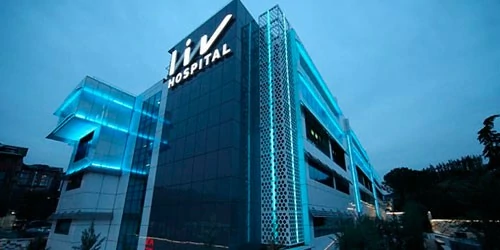
The Orthopaedics and Traumatology Department at Acıbadem Taksim effectively treats tumours of the musculoskeletal system. More than 80% of osteochondroma removal operations are performed there using minimally invasive techniques. Doctors are able to completely remove the pathological neoplasm and preserve the limb.
The Orthopaedics and Traumatology Centre at Liv Hospital is the only medical facility in Turkey that cooperates with the European Society of Spinal Surgeons. They use advanced robotics models that allow them to perform operations safely for patients.
Review of osteochondroma treatment in Turkey
Clinic: Liv Clinic Ankara
Procedure: Osteochondroma removal
Patient’s age: 25 years old
Patient from: Vinnytsia
Alexander: ‘I had an osteochondroma removed from my collarbone at the Liv Ankara Clinic. The operation went well. The bone defect was replaced with an autograft. Now I am completely healthy.’
Clinic: Acıbadem Taksim Clinic
Procedure: Removal of osteochondroma
Patient’s age: 17 years old
Patient from: Kyiv
Margarita: ‘My daughter underwent surgery to remove an osteochondroma of the temporal bone at Acıbadem Taksim Hospital. There were no complications. Now the tumour is gone. I am happy with the result.’

Osteochondroma treatment in Spain
The Spanish healthcare system ranks 7th in the world in terms of patient care quality. Top European orthopaedic surgeons, neurosurgeons and neurosurgeons practise here. Among them is Professor Ramon Cugat, a leading specialist in the treatment of musculoskeletal disorders at the Quirón Barcelona clinic. The doctor has over 35 years of experience.
For the surgical treatment of osteochondroma in Spain, patients prefer hospitals in the Quirónsalud network. For example:
Quirónsalud Barcelona Clinic
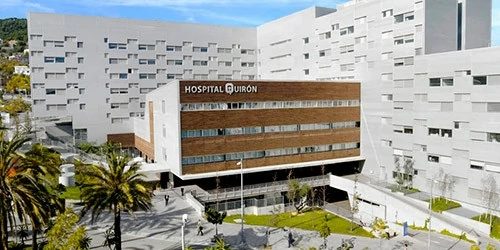
Teknon Clinic
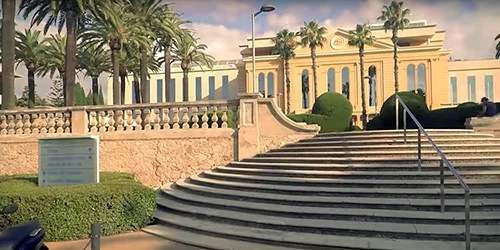
The Quirónsalud Barcelona Clinic is home to the Baselga Cancer Institute. Here, various types of cancer are treated, including malignant osteochondroma. The tumour is successfully removed in 90% of patients.
Approximately 2,000 patients have been treated for bone cancer at the Teknon medical centre. More than 80% of patients have been able to keep their limbs. According to the clinic’s statistics, the survival rate of patients after treatment for this type of cancer is 70%.
Treatment of osteochondroma in Israel
Israel has been ranked among the healthiest countries in the world by Forbes magazine. Every year, more than 45,000 foreigners receive treatment there, most of whom come for cancer therapy and to combat orthopaedic pathologies.
Among the country’s leading medical centres in the field of musculoskeletal disorders treatment, the following stand out:
Hadassah Clinic
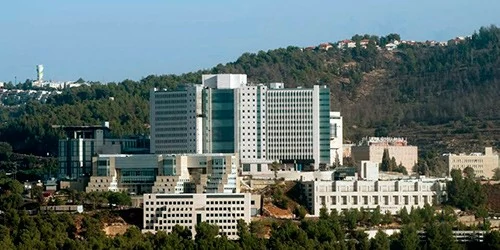
Ichilov Clinic
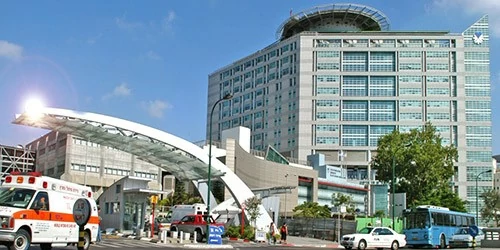
The Hadassah Orthopaedic and Traumatology Centre, in collaboration with the Paediatric Surgery Centre, treats osteochondroma in children. Most operations are performed using minimally invasive techniques. This reduces trauma to healthy tissue and shortens recovery time. The hospital uses stem cells to build bone tissue.
Neurosurgeons at the Ichilov Clinic perform more than 1,000 procedures for bone cancer annually. Approximately 90% of interventions are performed with limb preservation. Patients with malignant osteochondroma are treated by Professor Ofer Merimsky. He is ranked among the best doctors in Israel by Forbes magazine.
Reviews of osteochondroma surgery in Israel
Clinic: Ichilov Clinic
Procedure: Removal of osteochondroma
Patient’s age: 28
Patient from: Varna
Nikolay: ‘I was diagnosed with osteochondroma of the fibula. The tumour caused vascular disorders. It had to be removed. The bone defect was replaced with medical cement. There were no complications after treatment. Thank you to the medical staff at Ichilov Hospital.’
Clinic: Hadassah Clinic
Procedure: Removal of osteochondroma
Patient’s age: 22
Patient from: Odessa
Kristina: ‘I had surgery for osteochondroma of the radius at the Hadassah Clinic in Israel. I want to note that, for some reason, I had a hard time coming out of anaesthesia, but overall the operation was successful. There were no serious complications after the resection of the neoplasm. The osteochondroma is gone.’
Osteochondroma surgery in Germany
Oncological surgery, as well as orthopaedics and traumatology, are the most promising and rapidly developing areas of medical tourism in Germany. Innovative technologies for treating various pathologies of the musculoskeletal system are available here. In German clinics, the rate of medical errors is less than 0,3%.
To remove osteochondroma, many patients from foreign countries come to such large medical centres in Germany as:
Recht der Isar Clinic
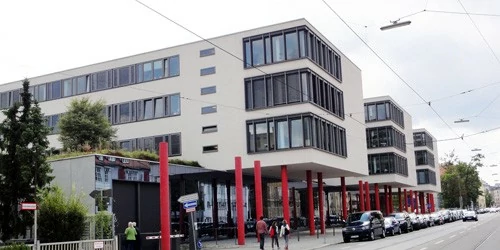
Ludwig Maximilian Clinic
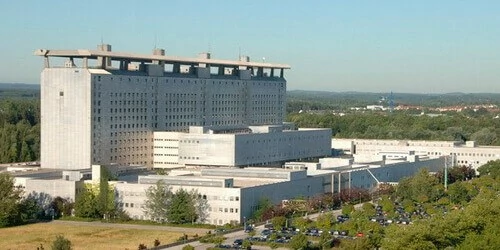
The treatment of benign and malignant osteochondromas at the Recht der Isar Hospital is carried out by an interdisciplinary team of doctors consisting of oncological surgeons, neurosurgeons, orthopaedists, radiologists and chemotherapists. Each patient receives a personalised treatment programme.
At the Ludwig Maximilian Clinic, most osteochondromas are removed surgically, which involves deep resection of the neoplasm along with part of the healthy bone tissue and synovial membrane. If a bone defect is formed, it is successfully replaced with bone cement or an autograft.
Osteochondroma removal in South Korea
South Korea is the undisputed leader in orthopaedics and traumatology in terms of innovation and new developments. Organ-preserving surgery and robotic techniques are practised here. The country has medical centres that are considered to be among the most high-tech in the world. Osteochondroma is successfully treated at SoonChunHyang Hospital and Anam Clinic.
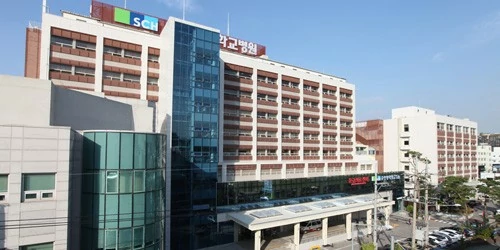
SoonChunHyang Hospital
Anam Clinic
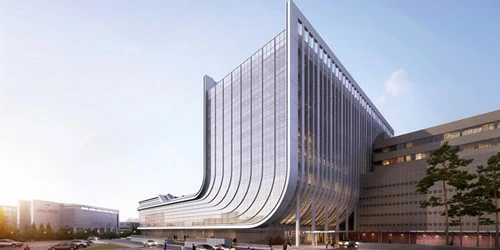
The SoonChunHyang Department of Orthopaedics and Traumatology provides a full range of services for the treatment of diseases of the musculoskeletal system. Orthopaedic surgeons with over 20 years of experience practise here.
Anam Hospital at Korea University performs more than 3,000 surgical procedures on the musculoskeletal system every year. The clinic has an international-level sports medicine centre.
Reviews of osteochondroma treatment in Korea
Clinic: Anam Clinic
Procedure: Osteochondroma removal
Patient’s age: 25
Anna: ‘I recommend Anam Clinic. I had surgery here for osteochondroma on my leg. I have nothing bad to say about the doctors or the quality of service. Everything went well!’
Clinic: SoonChunHyang Hospital
Procedure: Removal of osteochondroma
Patient’s age: 21
Nadezhda: “An excellent clinic and professional doctors. I had surgery for osteochondroma of the left femur. There were some complications in the postoperative period, but now I am fine and healthy!”
Cost of osteochondroma surgery
The cost of osteochondroma removal depends on the technique used, the extent of the surgery, and the location of the tumour. The price is also influenced by the level of the medical centre and the qualifications of the doctor. Osteochondroma surgery is cheapest in Turkey and South Korea. The approximate cost of this procedure abroad is:
| Turkey | from $13,000 |
| South Korea | from $16,000 |
| Israel | from $20,000 |
| Spain | from €17,000 |
| Germany | from €16,000 |
Summary
- Osteochondroma is a benign bone tumour. It develops during the period of active bone growth. Tumours can be single or multiple. In many cases, single tumours do not cause any symptoms. They become noticeable when they reach a significant size.
- In most cases, osteochondromas do not require any treatment. However, for cosmetic or functional reasons, the tumour may be removed. When choosing a surgical technique, the orthopaedic surgeon will first consider minimally invasive surgery. This allows the neoplasm to be removed without significant damage to healthy tissue.
- The disease responds well to treatment. Almost all patients with benign tumours recover. The probability of recurrence is 2%.
- Turkey, South Korea, Spain, Israel and Germany are the priority destinations for the treatment of osteochondroma. Clinics in these countries are particularly popular with foreign patients.
- The cost of osteochondroma removal depends on the technique used, as well as the extent of the operation and the location of the tumour. The price is influenced by the level of the medical centre and the qualifications of the doctor. Osteochondroma surgery is cheapest in Turkish and Korean medical centres. The average cost of surgery abroad is $17,000.
To arrange treatment for osteochondroma abroad, please contact the coordinating doctors at the MediGlobus international medical platform. Submit your request and we will contact you as soon as possible!