


Follicular lymphoma is a type of blood cancer. The tumour is one of the most common slow-growing non-Hodgkin lymphomas. It accounts for more than 20% of all lymphomas in adults. Since such neoplasms do not manifest themselves for a long time, by the time of diagnosis, they have progressed significantly, developing to stage 3 or 4. Advanced methods of treating follicular lymphoma are available abroad. This allows even the most severely ill patients to achieve sustained remission and successfully control the disease for many years.
Follicular lymphoma – symptoms and causes
Follicular lymphoma – is a common type of slow-growing non-Hodgkin lymphoma that develops from B cells. The choice of treatment programme is based on the stage of the disease and the patient’s health. To combat the disease, doctors use modern chemotherapy drugs, immunotherapy, targeted therapy, radiotherapy, and bone marrow transplants. A combination of several methods gives a better chance of long-term remission.
The first and main symptom of follicular lymphoma is enlarged lymph nodes in the neck, armpits, and groin. The lymph nodes are painless on palpation. However, when they become significantly enlarged, patients experience difficulty breathing, lower back pain, and a feeling of tightness in the neck. After taking antibiotics, the lymph nodes do not shrink, and the patient’s condition gradually worsens.
Other signs of follicular lymphoma may not appear for a long time. As the disease progresses, patients complain of general weakness, rapid fatigue, sweating, nausea, and weight loss.
Taysel Phillips (MD, Associate Professor in the Department of Haematology and Oncology at the University of Michigan Rogel Cancer Centre, USA) on the symptoms of follicular lymphoma: “… the few patients who have symptoms at the moment of diagnosis present with a classic picture of the disease: fever, night sweats, possibly abdominal discomfort, and weight loss. It is very rare to encounter a patient with all of these signs; more often, patients come in complaining of fatigue. But enlarged lymph nodes are one of the key signs.”
Causes of the disease
The causes of the disease are unknown. Triggering factors include autoimmune diseases, acute viral infections, and gene mutations. Oncopathology is most often diagnosed in people over 60 years of age. Women are predominantly affected.
Approximately 1 in 2 people with follicular lymphoma have cancer cells in their bone marrow at the time of diagnosis. This can lead to:
- anaemia — a decrease in the number of red blood cells, causing fatigue and shortness of breath;
- thrombocytopenia — a decrease in the number of platelets, causing bruising and bleeding;
- neutropenia — a decrease in white blood cell count, making a person more susceptible to infections.
With follicular lymphoma, symptoms are often mild or absent. At the slightest suspicion of a pathological process, it is recommended to consult an experienced doctor for diagnosis. MediGlobus offers certified clinics that operate in accordance with international standards. Examinations are carried out using modern equipment, which guarantees an accurate diagnosis and, therefore, the most optimal treatment.
 Read:
Stages of follicular lymphoma
| Stage 1 | Only one lymph node area or one lymphatic structure is affected. There are no symptoms. |
| Stage 2 | Two or more lymph node areas or structures are affected. The lymph nodes are enlarged. There are no pronounced symptoms. |
| Stage 3 | Several areas or structures of the lymph nodes are affected. Patients experience fever, loss of appetite and increased sweating. |
| Stage 4 | The tumour has spread not only to the lymph nodes, but also to several organs, including the liver, lungs and bone marrow. |
Diagnosis of follicular lymphoma
In some cases, the entire lymph node is removed. This procedure involves minimally invasive surgery, which is performed under local anaesthesia.
The biopsy sample is examined by an experienced pathologist. They check the lymphoma cells for the presence of certain proteins and genetic changes. This makes it possible to make an accurate diagnosis and choose the most effective treatment programme.

Other tests may be required to assess the type, grade and stage of the disease, such as PET-CT, MRI, CT, laboratory tests, etc.
Methods of treating follicular lymphoma

Approximately one in five patients is diagnosed at an early stage. Radiation therapy is used to combat these tumours — high-energy rays that slow down or stop the growth of cancer cells. A course of radiotherapy takes several weeks. The patient receives small doses of radiation daily, which allows for maximum effect and minimises the undesirable consequences of irradiation.
Early cancer treatment does not always improve overall survival. If the patient has no symptoms and the disease does not affect vital organs, ‘active monitoring’ is recommended. This approach allows for safe delay of the treatment and avoids the side effects of cancer treatment for as long as possible.
Even in stages 3 and 4, follicular lymphoma is treatable. People with advanced stages of the disease receive chemotherapy and monoclonal antibodies. Chemotherapy drugs are administered intravenously. The duration of chemotherapy is 4-6 months. Several anticancer drugs may be used simultaneously.
The drug Rituximab is used for monoclonal antibody therapy. It has fewer long-term risks and is well tolerated by elderly people.
Chemotherapy and antibodies are also used in combination. This is called chemoimmunotherapy. If the tumour responds well to this treatment, the patient is prescribed maintenance therapy. This involves antibody injections every 2 months for 2 years.
The duration of remission after successful treatment of follicular lymphoma varies from patient to patient. In some people, the disease does not return for 2-5 years, while others require earlier treatment. Recurrent follicular lymphomas are treated in the same way as tumours that are difficult to treat with cancer therapy. To combat these pathologies, a combination of several methods is indicated: chemotherapy, targeted therapy, radiation, and BMT.
Among the main options for treatment are:
- Bone marrow transplantation (BMT) – in follicular non-Hodgkin’s lymphomas, more than 90% of all bone marrow transplants are autologous. This is a transplant of the patient’s own cells, taken before the start of high-dose chemotherapy.
- Radioimmunotherapy – the use of antibodies to deliver radiation to tumour cells. This reduces the amount of radiation that reaches healthy tissue.
Blood Cancer UK recommendsLymphoma treatment can pose certain risks to fertility. Therefore, if a patient plans to have children in the future, it is recommended that they discuss this issue with their doctor before starting treatment. For men undergoing treatment for follicular lymphoma, there is a high risk to their fertility. In such cases, it is recommended to freeze and store sperm, which will preserve the ability to conceive. In women, the risk to fertility is low, but it may increase with age. This is because some treatments lead to early menopause. Women are also advised to freeze and store eggs, embryos (fertilised eggs) or ovarian tissue before starting treatment. |
Testing new methods of cancer treatment for follicular lymphoma
According to the Lymphoma Research Foundation, treatment for follicular lymphoma can produce varying results over time, and what worked initially may lose its effectiveness. Therefore, it is important to keep an eye on new methods and experimental therapies in order to adapt the approach to managing the disease.
Innovative treatments for follicular lymphoma are being actively developed and tested abroad. New types of therapy allow the disease to be treated more effectively and with fewer side effects. The following methods are undergoing or have already undergone clinical trials:

- Antibody conjugates as a ‘targeted’ use of chemo drugs. The antibody attaches to a protein on the surface of tumour cells and carries the anti-cancer drug directly to the neoplasm without damaging healthy organs. At present, some drugs have undergone clinical trials. The FDA has approved Brentuximab Vedotin (Adcetris) for the treatment of follicular lymphoma. Loncastuximab Tesirine (Zynlonta) is also among the recommended drugs.
- Bispecific antibodies (bsAbs) are a new type of immunotherapy drug that can recognise two different targets on the surface of cancer cells. This allows them to recognise and destroy abnormal cells even more effectively. Currently, the drugs mosunetuzumab-axgb (Lunsumio) and epcoritamab-bisp (Epkinly) have been approved.
- Cell signal blockers are targeted drugs that block signals sent by affected B cells. These drugs help stop cancer cells from dividing without interfering with the normal function of lymphocytes. Approved drugs include Opdivo and Keytruda.
- CAR-T therapy involves genetically modifying the patient’s own immune cells. T-cells are initially taken from the patient and then modified in a laboratory so that they can effectively recognise and destroy lymphoma cells. Four types of CAR-T therapy drugs have already been approved.
- Drugs that block proteins associated with certain genetic changes in tumour cells.
How long do patients with follicular lymphoma live?
Taysel Phillips, MD, Associate Professor in the Department of Haematology and Oncology at the University of Michigan Rogel Cancer Centre, USA:
‘This is a disease in which, if all goes well, patients live as long as they would have lived if they had not been diagnosed with follicular lymphoma.’
According to the American Society of Clinical Oncology, the survival rate of patients with non-Hodgkin’s lymphoma depends on several factors: age, stage of the disease, overall health, and the presence of metastases. The more advanced the cancer, the worse the prognosis. However, the tumour grows slowly, and some people may not need treatment for many years. Chemotherapy and radiotherapy offer the best prognosis for cancer treatment. Most cases of follicular lymphoma are incurable, but the average survival rate in the later stages of the disease is about 20 years. The average survival rate for patients is 87–97%. For stage 4 follicular lymphoma, the 5-year survival rate is about 86%.
Leading specialists in the treatment of follicular lymphoma abroad
Professor Emili Montserrat
A world-renowned oncohaematologist. He is an expert in the diagnosis and treatment of lymphomas for the World Health Organisation. He practises at the Teknon Clinic in Spain. The doctor has over 49 years of experience.
Professor Bertram Glass
Head of the Centre for Oncology and Bone Marrow Transplantation at the Helios Berlin-Buch Clinic. He specialises in the treatment of cancer of the blood and lymphatic system. The doctor has over 25 years of experience.
Professor Emre Tekgündüz
An oncohematologist at the Bahçelievler Memorial Clinic, who has been practising for over 20 years. He specialises in bone marrow transplantation for recurrent lymphomas.
Professor Eldad Dan
Oncologist-haematologist at Rambam Hospital in Israel. He is the head of the Blood Bank at the medical centre. The doctor is one of the leading specialists in the treatment of lymphoma in the country. He has been practising for over 30 years.
Where is malignant follicular lymphoma treated?
- Memorial Hospital Network in Turkey;
- Fuda Cancer Centre in China;
- SoonChunHyang Hospital in South Korea;
- Rambam Medical Centre in Israel;
- Helios Hospital in Germany;
- Teknon Clinic in Spain;
- Liv Hospital clinic chain in Turkey;
- Samsung Medical Center in South Korea;
- Ludwig Maximilian University Hospital in Germany;
- Sheba Hospital in Israel;
- Quirónsalud Madrid Clinic in Spain;
- Motol Hospital in the Czech Republic.
Follicular lymphoma — patient reviews of treatment abroad
Clinic: Samsung
Procedure: Treatment of follicular lymphoma
Patient’s age: 65 years old
Patient from: Odessa
Valentina: “My mother was treated for B-cell follicular lymphoma in Korea, at the Samsung Clinic. We underwent a course of chemotherapy together with antibodies. Now we have achieved remission. The disease has not returned for over a year…“
Clinic: Antalya Memorial
Procedure: Treatment of follicular lymphoma
Patient’s age: 65 years old
Patient from: Kyiv
Oleg: “After unsuccessful treatment of follicular lymphoma in my home country, I decided to go abroad. I read many positive reviews about treatment at the Memorial Antalya Clinic. That’s where I went. After high-dose chemotherapy, I underwent bone marrow transplantation here. Now the disease has receded, and I hope it will stay that way for a long time.”
Summary
- Follicular lymphoma is a type of blood cancer. The tumour is one of the most common slow-growing non-Hodgkin lymphomas. It accounts for more than 20% of all lymphomas in adults. Since such neoplasms do not manifest themselves for a long time, by the time of diagnosis, they have progressed significantly, developing to stage 3 or 4.
- About 30% of follicular lymphomas have no symptoms — they are detected during the diagnosis of other diseases. The most common method of detecting this pathology is biopsy — the collection of cells from the affected lymph node for examination under a microscope.
- Treatment of the disease involves the use of chemotherapy, immunotherapy, targeted therapy, radiation therapy, and bone marrow transplantation (BMT).
- Most cases of non-Hodgkin’s follicular lymphoma are incurable, but the average survival rate in the late stages of the disease is about 20 years.
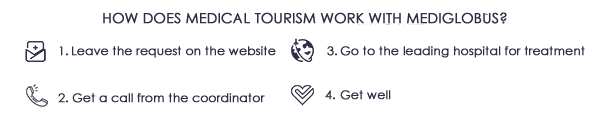
To organise treatment for follicular lymphoma abroad, contact the specialists at the MediGlobus international medical platform. Leave a request and we will respond as soon as possible.