


Bones grow and change as a child matures, but sometimes abnormalities occur. An aneurysmal bone cyst is one such anomaly. A bone cyst is a benign tumour that is mainly diagnosed in patients between the ages of 10 and 20. It can occur in the bones of the arms, legs, torso or skull, but is most commonly found in the knee, spine and pelvis.
Aneurysmal bone cysts consist of blood-filled spaces of various sizes separated by connective tissue. The initial stages of the disease are asymptomatic. The tumour can grow aggressively, locally destroying the bone and increasing the risk of pathological fracture, therefore requiring immediate treatment.
Abroad, children with this pathology are treated with safe but effective surgical methods or effective non-surgical approaches. In this article, you will learn about the diagnosis and treatment of aneurysmal bone cysts, as well as where to go for treatment for this disease.
Causes of aneurysmal bone cysts
The exact causes of this condition are not fully understood. However, several assumptions and factors may be associated with its development:
- presence of other benign bone tumours;
- bone tissue development disorders;
- trauma;
- hormonal changes;
- inflammatory processes;
- genetic factors.
Symptoms of an aneurysmal cyst
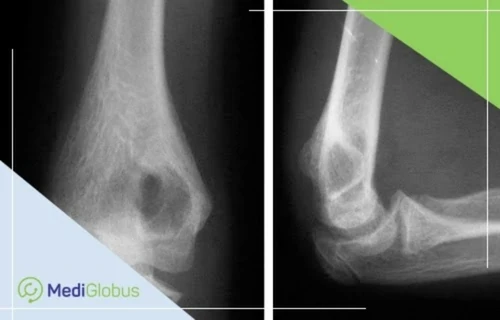
As the tumour grows, patients experience the following symptoms:
- pain and swelling;
- deformation of the affected bone;
- burning sensation in the area of the neoplasm;
- reduced range of motion, weakness or stiffness;
- neurological disorders in cases of spinal aneurysmal cysts;
- frequent bone fractures with tumours.
Abroad, doctors treat aneurysmal cysts using surgical and non-surgical methods, as well as a multidisciplinary approach. This means that each case is reviewed by experts from different fields (surgeon, orthopaedist, etc.), after which the doctors develop an individual treatment plan.
What are the different types of aneurysmal bone cysts?
Aneurysmal bone cysts are usually divided into two categories: intraosseous and extraosseous. Intraosseous ABCs can deform the bone but do not extend beyond its boundaries. Extraosseous cysts spread beyond the bone into adjacent soft connective tissues. Both types can cause pain and swelling, and in rare cases, fractures at the site of bone damage. Aneurysmal bone cysts do not usually resolve on their own and require urgent treatment.
How is an aneurysmal bone cyst diagnosed in a child abroad?
The first step in planning treatment for a child with an aneurysmal cyst is to make an accurate diagnosis. To do this, the doctor prescribes a series of tests to help determine the type of cyst, its size and location. These tests may include:
- physical examination;
- X-ray — determines the size of the cyst and identifies the risk of fracture;
- magnetic resonance imaging (MRI) — creates detailed images of the bone in which the cyst is located;
- computed tomography — used in some cases to obtain a clearer image of the bone lesion;
- biopsy — analysis of a tissue sample collected from the cyst through a needle. Helps to gather complete information about the type of cyst.
We recommend going abroad for accurate diagnostics of a suspected aneurysmal bone cyst. Using modern methods, the doctors there will examine the child and make an accurate diagnosis as quickly as possible. Click on the button below for more details.
 Read:
Read: Features of aneurysmal cyst treatment in foreign hospitals
Curettage and bone grafting
The most common treatment for bone cysts is surgery. There are three main surgical approaches:
| Intraosseous curettage | First, the surgeon removes the contents of the aneurysmal cyst from the cavity using a special instrument called a curette. To remove any remaining tumour fragments, the site is treated with a drill, laser, hydrogen peroxide, liquid nitrogen or phenol. This reduces the likelihood of recurrence. The space is then filled with a bone graft or cement, which helps to strengthen the bone. The graft is made from the patient’s own bone tissue, taken from healthy bone. The artificial substitute consists of calcium and other minerals that promote the rapid formation of new bone tissue. In some cases, it may be necessary to strengthen the bone with screws or plates, as well as apply a cast, splint or braces. |
| Intraosseous resection | This method is similar to curettage. First, the surgeon makes a wide opening in the bone wall of the lesion and removes the contents of the cyst while preserving most of the surrounding bone. After that, a bone graft or other material is inserted into the lesion to strengthen the bone. After intraosseous resection, adjuvant therapy methods are also used to prevent recurrence, such as high-speed drilling, argon beam coagulation, phenol, and cryotherapy. |
| Block resection or wide resection | This method involves the complete removal of the aneurysmal cyst along with a large amount of bone tissue. The surgeon decides on block resection, taking into account the risks and benefits of the procedure, especially for operations near joints. Since this method has a significant impact on functionality, it is used for recurrent cases when other methods prove ineffective. |
The choice of a specific method depends on the size of the cyst, its location, the extent of damage to the surrounding bone, and the individual characteristics of the patient.
Sclerotherapy
This is a non-surgical method of treating aneurysmal bone cysts. Instead of surgically removing the cyst, doctors inject special chemicals into it, which helps to reduce its size. This method has proven itself as an alternative to standard surgery.
Radiotherapy
Radiotherapy is useful as adjuvant therapy for recurrent aneurysmal bone cysts. However, the procedure carries risks associated with radiation therapy, including the possibility of developing radiation sarcoma. The benefits and risks must be carefully weighed before treatment is administered.
Selective arterial embolisation (SAE)
Selective arterial embolisation is a medical procedure used to block or reduce the blood supply to certain vascular formations or tumours. In the context of aneurysmal bone cysts, SEA can be used as an adjunctive or primary treatment, especially in cases where surgery is associated with high risks or may cause serious complications. Up to 40% of patients receiving primary SEA treatment may require repeat embolisation.
New treatment methods include:
- Drug therapy using monoclonal antibodies. This area is of interest for research and development. Monoclonal antibody therapy is considered an alternative for non-surgical candidates. Research in this area is focused on developing effective and safe drugs to control the growth and recurrence of aneurysmal bone cysts.
- Curopsy. This is a new treatment for aneurysmal bone cysts. It is a minimally invasive procedure designed as a less traumatic alternative to traditional surgical treatment. The procedure involves a percutaneous biopsy under general anaesthesia using a core needle and instruments to obtain material. Curopsy aims to destroy the internal architecture of the cyst, thereby stimulating its healing. This method is considered less painful for patients.
- Percutaneous administration of doxycycline. This is a method of treating aneurysmal bone cysts, in which the antibiotic doxycycline is injected directly into the cyst through the skin. Doxycycline stops the growth of the neoplasm. The procedure is performed under imaging guidance to ensure that the drug is delivered precisely into the cyst. This method aims to improve healing and reduce the likelihood of recurrence.
- Bisphosphonate therapy. Bisphosphonates slow the growth of the cyst and help strengthen bones. Reports on the treatment of symptomatic inoperable benign bone tumours indicate varying degrees of bone tissue repair and pain relief.
- RANKL inhibition and the role of denosumab. This is a method of treating aneurysmal bone cysts that blocks the processes responsible for bone destruction. Denosumab helps reduce the activity of abnormal cells. The therapy is used to reduce the risk of cyst recurrence, helping to restore affected areas and improve symptoms. Studies show a reduction in tumour size, a decrease in the need for surgical intervention, and pain relief in patients.
Results of treatment for aneurysmal bone cysts
Surgical removal of aneurysmal bone cysts leads to a cure, but recurrence is possible in 20% of cases. Recurrence of the cyst occurs within the first year after removal. Patients are regularly examined for recurrence for 5 years after surgery.

Advantages of treating aneurysmal bone cysts abroad
| Accurate diagnosis | Modern CT/MRI machines help to accurately determine the size and location of the cyst. The entire process of examining the patient’s body usually takes no more than 1-3 days. |
| Experienced doctors | Only specialists who have proven their professionalism are allowed to work in foreign hospitals. Many orthopaedists and surgeons are world-renowned for their achievements. |
| Proven treatment methods | The treatment plan includes modern and effective treatment methods, as well as the latest generation of drugs, which have fewer side effects. |
| Round-the-clock support from a coordinating doctor | When travelling abroad for treatment, you will be in constant contact with a MediGlobus representative and the medical staff of your chosen clinic. |
Where is aneurysmal bone cyst treatment performed abroad?
The disease is treated in many medical centres around the world, but most often patients go to hospitals in Turkey, Israel, Spain, and South Korea. Below, we will discuss each country in more detail:
Aneurysmal cyst therapy in Turkey
Treatment of bone cysts in Turkey is the most optimal in terms of price/quality ratio. In Turkish hospitals, patients are treated in accordance with international medical standards, and the cost of services is approximately 30-40% lower than in similar clinics in Spain or Israel. At the same time, you will find many experienced specialists in Turkey. For example, Professor Cagatay Ozturk, a spinal surgeon, works at the Liv Clinic. He treats benign spinal tumours, including aneurysmal cysts. Professor Ozturk performs minimally invasive spinal surgery, which reduces recovery time and possible complications. Popular medical centres in Turkey that treat bone cysts:
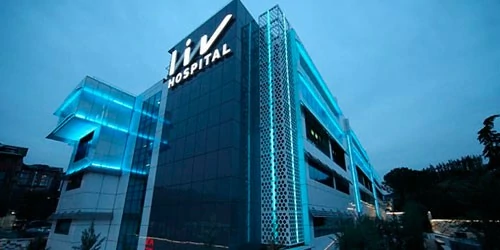
Liv Clinic
Memorial Bahçelievler Clinic

Orthopaedics and traumatology are among the leading areas of expertise at Liv Hospital clinics. That is why doctors at Liv Medical Centres actively use minimally invasive treatment methods and robotic technology to perform operations.
The Memorial Bahçelievler Clinic has a spinal surgery department where doctors treat tumours and injuries. This is where patients most often come for treatment of spinal bone cysts. Doctors at Memorial Bahçelievler perform more than 400 such procedures per year.
Treatment of aneurysmal bone cysts in Israeli clinics
Treatment of bone tumours in Israel is carried out using a variety of conservative and surgical methods. When drawing up a treatment plan, Israeli doctors adhere to international protocols, taking into account the patient’s personal characteristics. The priority method of treating cysts in children is conservative therapy, as in this case, it is extremely important not to disrupt normal bone development. However, in the event of pathological fractures, the tumour is removed using a minimally invasive surgical method. Popular clinics where aneurysmal bone cysts are treated:
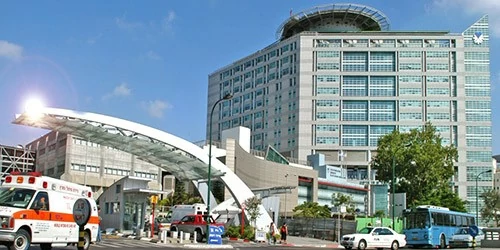
Ichilov Medical Centre
Assuta Clinic
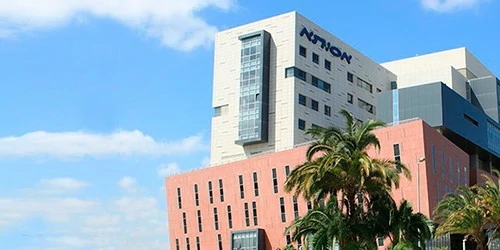
Ichilov Hospital has already performed more than 1,800 successful classical surgical procedures and more than 1,200 operations using the Da Vinci robot. Conservative therapy at the Ichilov Clinic has resulted in recovery for 82% of patients.
Bone cyst therapy at Assuta Clinic is performed by Israel’s best specialists. The hospital uses advanced techniques and modern equipment, which allows patients to be cured in 90% of cases while maintaining a high quality of life.
Treatment of aneurysmal bone cysts in South Korean hospitals
South Korean medicine is considered one of the most advanced and innovative in the world. All hospitals that accept foreign patients are equipped with modern equipment, including PET-CT scanners, Da Vinci surgical robots, and more. Musculoskeletal disorders are treated here with consideration for each patient’s individual characteristics. South Korean hospitals where you can go for bone cyst treatment:
SoonChunHyang Hospital
Anam Clinic

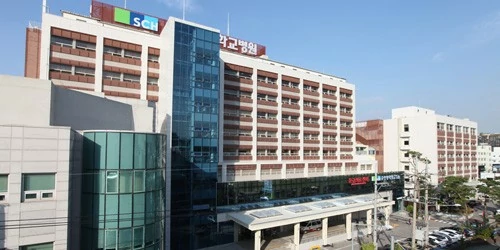
SoonChunHyang University Hospital is a multidisciplinary clinic accredited by the Ministry of Health. All modern treatments for aneurysmal bone cysts are available here, including minimally invasive surgery and sclerotherapy.
Doctors at the Anam Medical Centre perform more than 3,000 musculoskeletal surgeries annually, including bone cyst surgery. The clinic is equipped with the latest Da Vinci Xi model and also practises non-surgical treatment of spinal pathologies using specialised injections.
Treatment of bone cysts in Spanish medical centres
Spanish medicine ranks 7th in the world in terms of the quality of services provided. There are more than a thousand high-level public and private medical centres operating there. Some of the leading hospitals with advanced orthopaedic departments are the University Hospital of Navarra, the Teknon Medical Centre and the Quirónsalud Madrid Hospital. These clinics are leaders in Spanish healthcare and are accredited by the international JCI commission.
Teknon Clinic

Navarra University Clinic
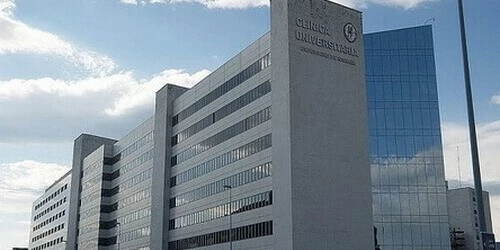
Teknon is a multidisciplinary medical centre in Barcelona, a stronghold of Spanish medical achievements. Dr Ferran Montserrat Ramon, Spain’s top orthopaedic surgeon, practises at Teknon. The doctor has over 35 years of experience. He trained at the best centres in America and France.
Navarra University Clinic is considered one of the most technologically advanced and prestigious hospitals in Spain. It was at this medical centre that Eduardo Fernández ‘Dedi’, striker for the Osasuna football team, underwent successful surgery for a benign cyst on his femur.
Summary
- An aneurysmal cyst is a benign tumour that is mainly diagnosed in patients aged 10 to 20 years. It can occur in the bones of the arms, legs, torso or skull, but is most commonly found in the knee, spine and pelvis.
- Abroad, doctors treat aneurysmal cysts using surgical and non-surgical methods, as well as a multidisciplinary approach.
Bone cysts are diagnosed using a series of tests that help determine the type of cyst, its size and location. Tests may include: physical examination, MRI/CT scan, biopsy. - Treatment of cysts may include curettage, bone grafting, sclerotherapy, cryotherapy, and electrocoagulation.
- Surgical removal of aneurysmal bone cysts leads to a cure, but recurrence is possible in 20% of cases. Cysts tend to reappear within the first year after removal. Patients are regularly examined for recurrence for 5 years after surgery.
- The disease is treated in many medical centres around the world, but most often patients go to clinics in Turkey, Israel, Spain and South Korea.
- Popular clinics where bone cysts are treated include the Israeli clinics Ichilov and Assuta, the Spanish hospitals Teknon and Navarra, the Turkish medical centres Liv Hospital and Memorial Bahçelievler, and the SoonChunHyang and Anam hospitals in South Korea.
If your child has been diagnosed with a bone cyst and you need help choosing a treatment, clinic or doctor, contact a MediGlobus medical coordinator for assistance. Our specialist will help you arrange a consultation with a doctor and prepare for your trip to the clinic free of charge. Leave a request via the ‘Get a free consultation’ button, and we will contact you shortly!