


A meniscus injury is one of the most common knee injuries, occurring in 12-14% of the population. Conservative therapy can partially relieve a person from pain and discomfort, but as the tissue degenerates, the symptoms will only get worse. According to a ten-year study conducted by the medical journal Knee, 85% of patients who suffered from a meniscus injury will require surgery during their lifetime. From this article, you can learn about the most effective and safest methods of knee meniscectomy.

Listen to the article:
What is a meniscectomy?

An arthroscopic meniscectomy is an orthopaedic operation to partially or completely remove the meniscus and treat injuries to the knee. It provides relief from pain, mobility loss, and “clicking” in the joint caused by disease or injury. Usually, this surgery is successful and does not cause any complications, and allows 78-88% of patients to get rid of the symptoms of injury. In foreign orthopaedic centres, meniscectomy is almost always performed in a minimally invasive manner using arthroscopy.
In cases where the meniscus injury is minor, or located in vascularized areas, conservative therapy or meniscus repair surgery is recommended instead of a meniscectomy. With these approaches, more tissue is preserved and the risk of subsequent arthritis is not increased. Reconstructive surgery is also performed arthroscopically and is primarily recommended for patients under 30 years of age.
Meniscectomy is usually performed under general anaesthesia and lasts from 20 minutes to an hour, depending on the complexity of the surgery. In most cases, patients do not need to be hospitalized and can go home the same day once they have recovered from anaesthesia.
Meniscus transplants are also performed in foreign clinics. This surgery uses donor or artificial tissue to replace the damaged part of the knee. This avoids the subsequent development of pain and arthritis, the risk of which exists with a conventional meniscectomy. On average, grafts last 12 to 15 years for patients, although they may not cause problems for longer.
In 98% of cases, meniscectomy proceeds without serious complications. In the first weeks, you should expect some pain and discomfort, from which cold compresses, medications prescribed by the doctor and light physical therapy will help. Rarer complications include:
 Infections and bleeding;
Thrombus formation;
Damage to blood vessels or nerve vessels;
Development of arthritis 10-15 years after surgery.
APPOINTMENT FOR AN ORTHOPEDIC CONSULTATION
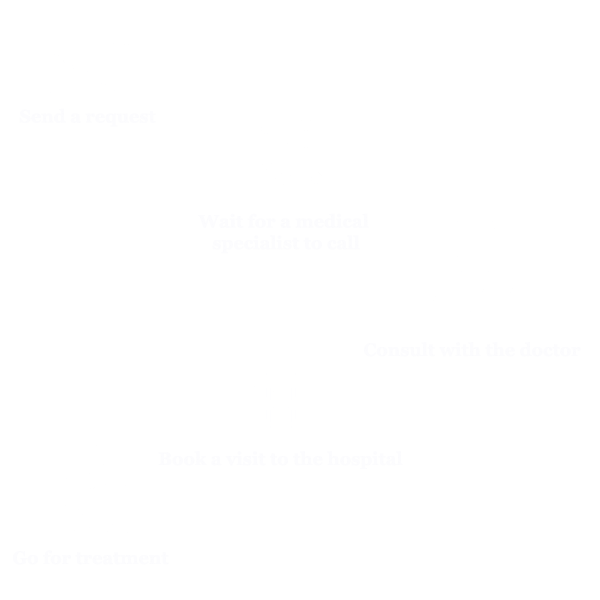
A precise treatment plan can only be drawn up after a thorough diagnosis and examination by a qualified orthopaedic specialist. The coordinating physicians at MediGlobus will advise you on which international doctors have extensive experience in treating meniscus injuries. For more information and to get an individual consultation quote, please leave a request on our website by clicking on the button below
What diseases may require a meniscectomy?
Meniscectomy is performed on patients with traumatic or degenerative meniscus injuries. The former is most common in professional athletes, and the latter – is in the elderly.
Risk factors that increase the chance of developing degenerative meniscus disease include:
Age over 60;
Male sex;
Work involving frequent crouching or squatting;
Regular stair climbing of more than 30 flights of stairs;
Sitting for less than 2 hours a day;
Waiting more than 12 months between meniscus injury and doctor’s appointment.

Among the symptoms with which patients go to doctors:
Pain, sensitivity, swelling, and numbness in the knee area;
Clicks and blockages in the joint;
Inability to fully bend and straighten the knee;
Worsening of symptoms when bending or shifting weight towards the knee.
The degree of damage to the organ influences which method of treatment is preferred.
Small cracks of a degenerative nature do not require surgery and usually respond well to conservative treatment. It includes sufficient rest, physical therapy, reduction of stress on the joint and taking nonsteroidal anti-inflammatory drugs.
The superficial part of the meniscus, called the “red zone,” has a good blood supply. Injuries located there can in most cases be treated with reconstructive arthroscopy.
Partial or total meniscectomy is performed to treat injuries in the “white zone” of the meniscus, which receives little blood and heals less well on its own. Surgery is indicated in cases where pain does not respond well to medication and significantly limits the patient’s life.
In addition, when choosing a treatment plan, the patient’s age, the presence of comorbidities, the characteristics of the meniscus injury (age, stability, and nature of the tear), and the patient’s compliance with the prescribed therapy regimen are taken into account.
Meniscus repair surgery tends to be more effective for people under the age of 30, who have it within two months of injury. People over 30 are less likely to have a successful surgical repair because the connective tissue begins to weaken as they age.
Meniscus transplantation is recommended for these groups of people:
Under 55 years of age;
Unable to have a reconstructive arthroscopy;
Have had a meniscectomy in the past in which more than half of the organ was removed;
Have no symptoms of arthritis or only primary signs of the disease;
Have healthy knee ligaments;
Are not overweight.
In other cases, meniscus transplantation may not be effective, and if there is severe pain and limited mobility, the doctor will recommend knee arthroplasty.
What happens if a meniscus injury goes untreated?
The outcome depends on how extensive the injury was. For minor meniscus tears, young patients can recover on their own, as long as they stay in bed and avoid stress on the painful knee. However, if a person fails to see a doctor with a serious injury, a “blockage” of the knee may occur. This is a condition in which the person is almost completely unable to extend or flex the joint. This condition does not go away on its own and is considered an indication of a meniscectomy. Without proper treatment, which needs to be done within a few months, an inflamed meniscus can damage the cartilage tissue of the knee, which is a more serious ailment. Postponing surgery can also lead to muscle atrophy and joint contracture, which will compromise the restoration of normal function.
MediGlobus can help you find a clinic and arrange treatment of meniscus injuries abroad free of charge. We will help you to compare treatment packages of different clinics and choose the most favourable in terms of budget, quality of treatment and level of service. All consultations with MediGlobus medical coordinators are free.
What are the differences between arthroscopic and conventional meniscectomy?
Arthroscopic meniscectomy:
Requires two to three small keyhole-sized incisions;
Less blood loss and faster recovery;
Ability to leave the hospital the same day.
Open meniscectomy:
The surgeon makes one large incision along with the knee;
The best view of the tissues;
The method is considered outdated in foreign clinics.

In arthroscopic surgery, the orthopaedic surgeon makes three small incisions less than 5 mm in diameter just below the kneecap. Through one of these, an arthroscope is inserted. It is a medical device that allows for minimally invasive manipulation and visibility of what is happening inside the knee. A sterile saline solution, which facilitates the surgeon’s vision and mobility, is inserted through the other portal; and instruments are inserted through the third.
The surgeon examines the entire inner surface of the knee, including the patella, the ends of the femur and leg bones, the meniscus, and the cruciate ligaments. The doctor identifies the tear and probes with a small hook where it begins and ends and how mobile it is. The torn fragment is then excised and removed. The edge of the remaining meniscus is shaved smoothly along with any “chunky” sliding cartilage. The knee is then re-examined to make sure there are no other abnormalities. Finally, the knee is flushed with additional saline, the portals are closed with a single suture, and a long-acting anaesthetic is injected into the joint.
Arthroscopic meniscectomy of the knee can take anywhere from 20 minutes to an hour, depending on the complexity of the procedure. This surgery is considered safe even for elderly patients.
In open surgery, all the same manipulations are performed, but through the dissection of the knee tissue. In this case, the patient will be left with a large scar and will require a longer hospital stay.
Rehabilitation after meniscectomy
Most patients after meniscectomy can return to work or study in “sedentary mode” as early as 3-5 days after surgery. You can return to driving after 2 weeks, and to physical activity, including sports, after 4-6 weeks. The latter is recommended only when the quadriceps muscle strength of the affected leg is at least 80% of that of a healthy limb. Admission to sports competitions is possible only after the muscle strength in the affected limb is at least 90%.
Rehabilitation after a meniscectomy of the knee can be aggressive because the anatomical structures can tolerate moderate postoperative physical activity. Treatment consists of ice-ultrasound therapy, friction massage, joint mobilization, calf raises, steps, extensor exercises, and cycling. Exercise in the pool may benefit, but only after the tissues have properly healed to prevent infection from developing.
Rehabilitation after arthroscopic meniscectomy takes place in three stages:
The first stage (1-10 days) | The goals of treatment at this stage are to reduce inflammation, restore range of motion, and neuromuscular re-education of the quadriceps. Long arc quadriceps extension, short arc quadriceps extension, hamstring extension, cycling/vibration training and leg presses are recommended. |
The second stage (10-28 days) | The second stage involves a gradual return to normal functionality and mobility of the knee. Exercises are performed to strengthen the leg muscles and restore mobility and endurance of the joint. These may include knee extension with resistance, partial squats, step progressions, toe raises, and functional training. |
Stage 3 (4-7 weeks) | The third phase of rehabilitation after meniscectomy involves a gradual return to normal exercise. Exercises are aimed at returning to normal strength and endurance and include dynamic one-leg stands, plyometric exercises, running, and athletic training. |
All exercises performed during recovery from orthopaedic surgery must be supervised or authorized by a rehabilitation therapist. It is important not to put too much strain on the structures that are recovering and to be guided by the patient’s well-being..
Also, in the first two weeks after a knee meniscectomy, you should wear compression socks to avoid blood clots.
Some patients complain about a “clicking” sound in the knee after an arthroscopic meniscectomy. This symptom is not an indication that the surgery was not successful, but is caused by residual saline solution in the joint. After some time, the fluid will be absorbed by the tissues on its own, and the discomfort will pass. To accelerate this process, a physiotherapist may recommend certain exercises.
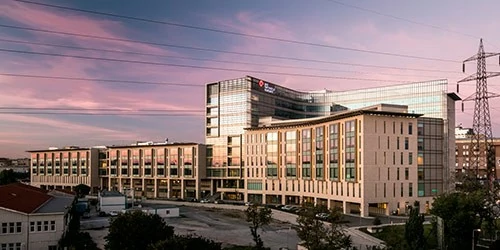
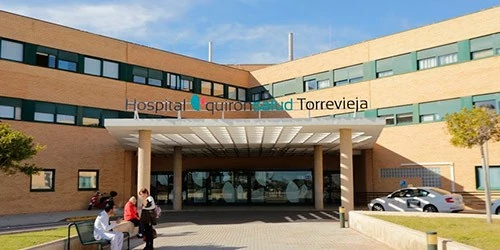
Which clinics perform arthroscopic meniscectomy with high quality?






Price of arthroscopic meniscectomy abroad
| Country | Cost |
|---|---|
| The Czech Republic | from €4,800 |
| Poland | from €2,900 |
| Turkey | from $6,000 |
| Spain | from €8,600 |
Patient feedback on arthroscopic meniscectomy
 Where was it performed: Malvazinky Clinic
 What procedure: Arthroscopic meniscectomy with meniscus transplantation
 Patient’s age: 34 years
 The patient is from: Odessa
Eugene: “I’ve been a runner since I was in high school. One day I felt a sharp pain in my knee, so much so that I could neither bend it nor sit down. Strangely enough, it did not happen while running and I don’t remember any particular injury that preceded it. I went for a consultation at the Malvazinky clinic, where the doctors prescribed X-rays and MRI scans of my knee. I was very worried that I would have to give up sports, but the doctor calmed me down and promised me that after the operation and rehabilitation I would be able to return to my usual way of life. I had a surgical meniscus arthroscopy with a transplant and a biological implant. In the first few days after the surgery, I had a little pain, but I soon recovered. Since then almost a year has passed. Now I feel great.”
Resume
Arthroscopic meniscectomy of the knee is a minimally invasive operation that is performed for meniscus injuries. It has a favourable prognosis and is well tolerated by most patients, even at an old age.
Depending on the degree of meniscus damage, the doctor may recommend conservative therapy, reconstructive surgery, partial or total meniscectomy, or meniscus transplantation. Patients under 30 years of age are indicated with less invasive interventions.
Almost all meniscus repair or removal operations abroad are performed arthroscopically. This method leaves only 2-3 small scars and does not require hospitalization.
The cost of arthroscopic meniscectomy abroad starts at $2,900. The most popular clinics in this area include medical centres in the Czech Republic, Poland, Turkey, Germany and Israel.
BOOK FOR MENISCECTOMY ABROAD
The international MediGlobus platform assists patients in organizing treatment abroad: selection of clinics and doctors, documentation and flight arrangements, transfers, search for interpreters, and accommodation reservations. Moreover, we will always stay in touch with you and help you to solve any questions arising during your stay abroad.
Sources:
- 1. Knee: Epidemiology of athletic knee injuries A 10-year study
- 2. University of Michigan Health System (UMHS)
- 3. Arthroscopy: Complications in arthroscopic surgery performed by experienced arthroscopists