


Surgery remains the most effective treatment for liver cancer, and so far the only way to completely eradicate the disease. However, the European Society of Medical Oncology (ESMO) indicates that only 80% of patients meet the criteria for surgery. So what should the rest do?
One answer to this question is radioembolization with Yttrium-90 microspheres, also known as SIRT therapy. The method is popular because of its high efficacy and wide indications, including being safe for the elderly.
Read about how liver radioembolization works, what treatment results you can expect, and which foreign clinics you can go to for this procedure in our article.

Listen to the article:
What is radioembolization of the liver and how does it work?
Radioembolization is a type of brachytherapy (radiation therapy with internal sources) that uses tiny microspheres (0,55 mm in diameter). It is used to treat many types of cancer, in particular – liver cancer. It is a minimally invasive outpatient procedure. Radioembolization is easily tolerated by the patient and does not require hospitalization.
The doctor inserts microspheres filled with Yttrium-90, a radioactive substance, through a catheter into the hepatic artery, which will transport them to the tumour. This element is characterized by a very shallow penetration depth of about 2,5 mm and a short half-life (64,2 hours). Because of this, irradiation affects only the tumour, destroying cancerous cells and shrinking the neoplasm. Healthy liver cells remain unaffected, which gives radioembolization a significant advantage over external radiation therapy. Because of this, the amount of radiation used in radioembolization of the liver can be up to 30 times higher than in conventional radiotherapy.

Radioembolization with Yttrium-90 microspheres is FDA-approved for the treatment of primary and secondary liver cancer, particularly hepatocellular carcinoma and metastatic colorectal carcinoma. In addition, it is also used to treat patients with cholangiocarcinoma, melanoma, renal cell carcinoma, breast cancer and lung cancer, as well as metastatic neuroendocrine tumours.
 The lower toxicity of radioembolization causes fewer side effects, and the use of higher doses of radiation gives a stronger anti-tumour effect.
This makes the procedure safe for more patients, including those over the age of 75.
In addition, this method is suitable for treating tumours that are irregularly shaped or have no clear edge, which includes many liver carcinomas – something that is virtually impossible with external radiation therapy.
Finally, radioembolization of the liver shows effectiveness in cases where other treatments – such as chemotherapy and chemoembolization – have not shown the expected effect.
Despite all this, in most cases, radioembolization with microspheres is not sufficient to completely cure liver cancer. Depending on the patient’s response to treatment, this method can have one of two effects: palliative, which alleviates symptoms and prolongs life; or adjuvant, which reduces the tumor to a size at which surgery can be performed to completely remove the cancer
Two types of microspheres can be used for the radioembolization of liver tumours – glass-based and resin-based. Both have approximately the same rate of efficacy.
Treatment of liver cancer by SIRT therapy is done as follows:
First Step | Before treatment, the patient must undergo diagnostic procedures, including CT and/or MRI scans and extensive tests of liver and kidney functions to make sure the procedure will be safe. Many clinics consider 18F-fluorodeoxyglucose PET-CT to be the “gold standard diagnostic” before this procedure, which will also be done to monitor the effectiveness of the radioembolization. |
Step Two | Before radioembolization of the liver, angiography (imaging of the vessels through which the microspheres will be transported) is also mandatory. It is important for doctors not only to clearly understand the anatomical structure of the patient’s organ but also to exclude the possibility that blood flow will carry the microspheres to other organs – in particular the stomach, intestines or bladder. To avoid this, a minimally invasive procedure called spiral embolization can be performed – it will temporarily stop the blood flow in a given area. |
Step Three | The medical team, which includes a radio-oncologist and an interventional radiologist, draws up an individualized treatment plan for the cancer patient, including the exact dosage of the microspheres and the route of delivery. |
Steop Four | At the beginning of the radioembolization itself, the patient will be given an IV and, if necessary, anaesthesia will be administered (for children, for example). A catheter will then be inserted into the femoral artery, through which the doctor will direct the Yttrium-90 microspheres to the tumour in the liver. This step takes place under the control of X-rays, so the doctor can clearly see all the vessels of the liver and deliver the medicine accurately to the target. |
Step Five | The tumour is irradiated continuously for the next month. The patient will need to undergo imaging studies every 3 months to monitor the progress of tumour shrinkage. |
 Read:
Read: Indications for radioembolization of the liver
Radioembolization of a liver tumour with Yttrium-90 microspheres can be prescribed if the doctors are:
Unable to perform surgical removal of the tumour;
Unable to perform a liver transplant;
Unable to perform RFA (radiofrequency ablation) of the liver;
Or following a poor response to chemotherapy and targeted therapies.
At the same time, the patient must meet the following criteria:
The liver function is preserved;
Adequate functional status according to the ECOG scale;
Bilirubin level less than 2 mg/dL;
Albumin level less than 3 mg/dL;
AST/ALT level less than 5;
PT/PTT without endogenous severe impairment;
CHE without endogenous severe impairment;
Tumour with predominance in the liver;
Life expectancy greater than 3 months;
Tolerability of angiography.
The procedure also has several contraindications. Among them are:
End-stage liver cirrhosis; последней стадии;
Inability to embolize vessels leading to the GI tract;
Risk of irradiation of the lungs with microspheres;
Significant extrahepatic pathology.
Will radioembolization of the liver be good for me?
If you have your test results, you can send them to us for consultation. Our coordinating physicians will refer them to an experienced cancer centre that can make individualized recommendations about the best treatment plan. Click the button below and attach the necessary files to the form.
Efficacy of radioembolization of liver tumours with Yttrium-90

According to data distributed by the Radiological Society of North America, approximately 70-95% of patients can expect to improve after treatment of primary liver tumours with Yttrium-90 microspheres. Depending on the type and stage of the tumour, patients can expect the tumour to stop growing or shrink. In the latter case, there is a chance that the cancer can be reduced to a size that allows surgery.
Liver metastases also show good susceptibility to SIRT therapy. Up to 95% of patients with colorectal oncology and 97% of those with neuroendocrine tumours benefit from this treatment.
Radioembolization of the liver also has a positive effect on the life expectancy of cancer patients, increasing it by an interval of 5 to 43 months – depending on the patient’s response to treatment. A prospective study conducted at Northwestern University (Illinois) also showed an improvement in the quality of life for cancer patients after SIRT therapy compared to chemoembolization.
Side effects of SIRT therapy
Approximately 60% of patients develop what is called “post-embolization syndrome”. However, it can be partially controlled with medications to allow the patients to remain more functional. Choosing an adequate dose of irradiating agent also guarantees a milder course of therapy, which is why patients are advised to contact an experienced oncology centre for this treatment.
The main symptoms that patients experience are:
Nausea;
Vomiting;
Pain in the upper abdomen;
Body Fever;
Fatigue;
Weight Loss.
The side effects usually go away on their own about 5 days after radioembolization.
Consult a Physician
Contact the MediGlobus coordinating doctors and we will answer all of your questions about liver cancer treatment at any stage and provide free assistance in arranging treatment abroad at any clinic that interests you. Click the button below to make an appointment.
Cost of radioembolization of the liver abroad
The exact cost of liver cancer treatment may depend on the clinic and the severity of your particular case. If you contact our coordinating physicians for a free consultation, we can give you an accurate cost estimate and help you find the best hospital for value for money. Approximate price for radioembolization of the liver in 2023:
| Country | Cost |
|---|---|
 Turkey Turkey | from $13,000 |
 Spain Spain | from €15,000 |
 South Korea South Korea | from $16,000 |
Where does radioembolization with Yttrium microspheres take place?
Liv Clinic
Read about the clinic →
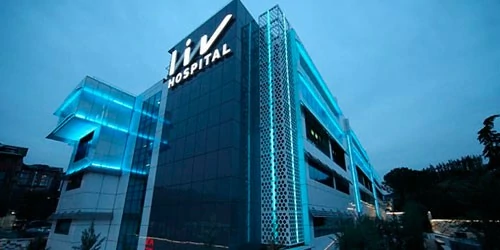
Liv Clinic Network is one of the most progressive clinics in the country that offers the most advanced treatment with modern equipment. The hospital has a high survival rate for liver cancer patients and is certified by the prestigious JCI organization.
Medipol Hospital
Read about the clinic →
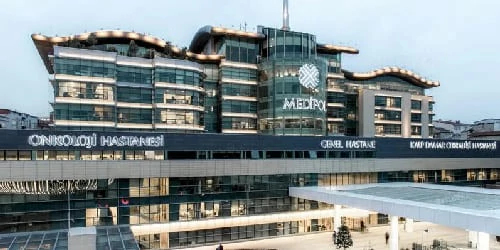
Doctors at Medipol Clinics have extensive experience in brachytherapy of malignant tumours and provide individualized treatment for each cancer patient. The centre is JCI certified and has many different awards.
Navarra University Hospital
Read about the clinic →

This hospital is considered one of the best cancer centres in Europe for the radioembolization of liver tumours. The Hepatology Department holds the prestigious award from Monitor Reputación Sanitaria for 2022. The doctors boast that they manage to help more than 90% of the patients with liver cancer.
Teknon Clinic
Read about the clinic →p>

Teknon Hospital has received six JCI awards and has been named one of the best hospitals for medical tourism by the International Medical Travel Journal. It provides comprehensive and attentive patient care 24/7.
SoonChunHyang Hospital
Read about the clinic →

SoonChunHyang is one of the most prestigious multidisciplinary hospitals in South Korea. It is certified by both international organizations (JCI) and national healthcare quality management systems (MOHW, KFDA, MND).
Severance Clinic
Read about the clinic →

The Severance Medical Center is Korea’s No. 1 medical tourism destination. Cancer patients are offered comprehensive care and individualized treatment plans using the most advanced technology and medications. The hospital has received numerous awards including JMAC, KC-WCI, and AAMCF.
Summary
Radioembolization with Yttrium-90 microspheres, also known as SIRT therapy, is a very effective method of treating inoperable liver tumours (both primary and secondary). The method stops the growth of the tumour or shrinks it in 70-95% of cases, prolongs the patient’s life and improves its quality.
During radioembolization, the doctor places tiny microspheres filled with the radioactive substance called Yttrium into the liver. The limited effect allows cancer to be irradiated with doses of radiation that are 30 times more powerful than during external radiotherapy.
Some patients may be indicated for surgery or a kidney transplant after successful SIRT therapy.
MediGlobus, an international medical tourism platform, recommends radioembolization of the liver in Spain, Turkey and South Korea. The starting price for this procedure is $13,000.
Write to the MediGlobus coordinators right now and we will help you with choosing a clinic and organizing your treatment. We will give you free advice on medical tourism, and help with all organizational issues. All you have to do is to click the button below and fill out an application..

Sources:
- 1. Journal of Gastrointestinal Oncology: Radioembolization with Yttrium-90 microspheres for patients with unresectable hepatocellular carcinoma
- 2. Seminars in Nuclear Medicine: Radioembolization of Liver Tumors With Yittrium-90 Microspheres
- 3. Radioembolization (Y90)
- 4. American Gastroenterological Association: Increased quality of life among hepatocellular carcinoma patients treated with radioembolization, compared with chemoembolization