


Optic nerve gliomas are slow-growing tumours that develop in children. Vision loss is the first sign of the disease. For this reason, it is most often detected in children during routine eye examinations. Such a diagnosis frightens both children and parents. Fortunately, thanks to advances in medicine, optic nerve cancer in children can be completely cured without long-term side effects. Read our article to learn about optic nerve tumours, how they are diagnosed and treated, and what the prognosis is for children.
What is optic nerve glioma?
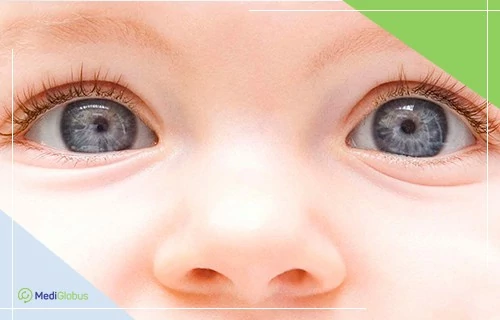
Optic nerve glioma is a benign tumour of the second pair of cranial nerves, which transmit images from the eyes to the brain. The disease leads to vision impairment, headaches, hormonal disorders and, in rare cases, blindness. Optic nerve glioma is a childhood disease – in 75% of cases, it is diagnosed in patients under the age of 10. In 30% of children with this diagnosis, type 1 neurofibromatosis is also detected. In rare cases, optic nerve tumours develop in adults.
Optic nerve gliomas are oncological diseases. These are slow-growing tumours that do not threaten the child’s life. In clinics abroad, they can be completely cured without side effects that could affect the child’s development.
Optic nerve glioma — symptoms and causes
The disease is genetic in nature. Small tumours do not have any pronounced symptoms. Tumours larger than 3 centimetres press on the optic nerve and cause the following symptoms:
- decreased vision in one or both eyes;
- involuntary head shaking;
- nystagmus — uncontrolled rapid eye movements.
The visual and endocrine systems are located close to each other. Therefore, a tumour in the optic nerve can also cause hormonal disorders:
- drowsiness;
- loss or increase in appetite;
- developmental delay.
Complete loss of vision due to glioma occurs in only 5% of patients.
Types of optic nerve gliomas
Depending on the number of affected structures, doctors divide optic nerve tumours into three types:
- glioma, which has spread only to the optic nerve;
- glioma of the chiasm and optic nerve;
- hypothalamic glioma.
An optic nerve tumour is considered the least harmful. It is the least aggressive and can be completely cured while preserving vision. When the tumour reaches the optic nerve crossroads — the chiasm — it is more difficult to save the child’s vision. Hypothalamic tumours reach the diencephalon and affect the endocrine system. These patients have the most pronounced symptoms of the disease. They may include developmental delay, puberty disorders and other hormonal dysfunctions, and in rare cases, hydrocephalus.
Please submit a request for a free consultation if you have any questions about the treatment of optic nerve glioma.
Diagnostics of optic nerve glioma abroad
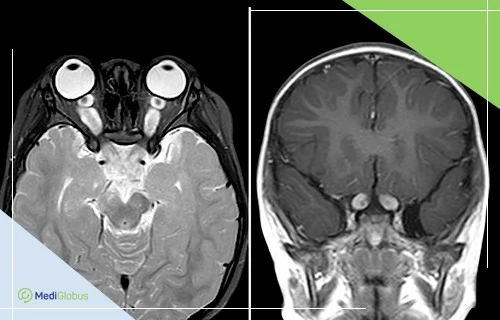
MRI is used to detect optic nerve glioma. Magnetic resonance imaging produces detailed, high-quality images of brain structures. MRI scans do not use radiation, so the procedure is completely safe for children of any age.
Computed tomography is also used to diagnose the disease, but it is less accurate. Its advantage is its low cost. X-rays are used for patients with neurofibromatosis.
 Read:
Read: What should parents do if their child is diagnosed with an optic nerve glioma?
- First and foremost, it is important not to give in to despair. An optic nerve tumour is a non-malignant cancer and can be cured. You need to gather information about the disease and how and in which clinics it is treated.
- The child is also struggling with this diagnosis, and during this period, parental love and support are especially important. It is important that the child continues to feel protected and can share their experiences and fears with their parents. For psychological support, you can read stories of children who have defeated cancer and cured optic nerve tumours. This will give hope for recovery and motivate them to fight the disease.
- Before starting treatment, you can sign up for an online consultation with a foreign doctor or obtain a treatment programme and individual cost estimate from the clinic. Parents can also contact the MediGlobus international platform for a free consultation and ask more questions about treatment and prognosis for their child.

Treatment of optic nerve glioma in children
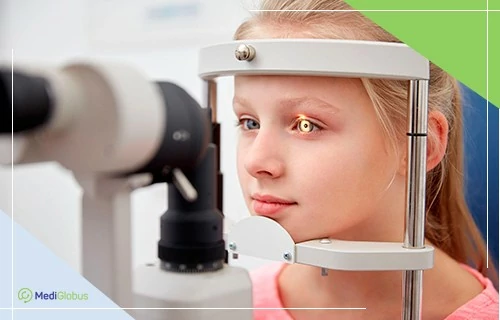
Treatment of tumours is usually accompanied by side effects. For this reason, doctors prefer a watchful waiting approach. Optic nerve cancer develops slowly and has periods of inactivity when it does not grow in size. These periods can last from 2 months to several years. If the child’s vision does not deteriorate and there are no symptoms, then surgical treatment is not required. To monitor the manifestations of the disease, it is necessary to visit an oncologist and ophthalmologist 1-2 times a year.
Decreased vision is the main sign of tumour growth. In this case, doctors resort to active treatment. Optic nerve glioma is treated with chemotherapy, radiation therapy, and surgery.
Chemotherapy is prescribed for children under 3 years of age. This treatment is the safest and causes fewer side effects than other alternatives. According to Brain Tumour Research, the effectiveness of most chemotherapy drugs and their combinations ranges from 50% to 70%. The choice of specific drugs depends on the patient’s age, the characteristics of the disease, and the symptoms.
Radiation therapy effectively eliminates optic nerve glioma, but has long-term side effects. Clinics abroad use a special type of treatment called fractionated stereotactic radiation therapy (FSRT). Compared to traditional methods, FRST does not have a negative impact on the child’s physical and mental development.
Surgery is the preferred treatment method. Removal of the optic nerve tumour will completely cure the cancer and preserve vision. However, this is a very complex operation that requires considerable experience and skill on the part of the surgeon. Foreign clinics use stereotactic surgery to remove brain tumours. Leading clinics, such as Acıbadem in Turkey or Teknon in Spain, are equipped with hybrid operating rooms where brain glioma removal surgeries are performed under CT or MRI guidance.
If the tumour cannot be completely removed, doctors use a complex approach. They combine surgery with courses of chemotherapy. This strategy destroys the remaining cancer cells in the brain and increases the duration of remission.
Diagnosis and treatment of optic nerve glioma in children with neurofibromatosis
Optic nerve glioma in neurofibromatosis is found in 30% of children. These tumours develop slowly and asymptomatically. They almost never affect visual acuity. They can be detected using X-rays of the eye sockets, computed tomography, and MRI. In most cases, doctors prefer to monitor the growth of the tumour. To do this, the child needs to be brought to an ophthalmologist for an examination at least once a year.
Treatment prognosis for children with optic nerve glioma
“Optic nerve gliomas have the most favourable survival rates compared to other brain tumours”.
Brain Tumour Foundation of Canada
When treated with radiotherapy alone, the 10-year survival rate of patients varies from 70 to 90%. This means that 90 out of 100 children live for more than 10 years without symptoms of the disease. In 81% of children, vision is restored.
A combination of chemotherapy and surgery is the most effective treatment. Between 94 and 100% of children survive for 5 years after such treatment. If the tumour has not spread to the chiasm — the intersection of the optic nerves — then 90% of children can have their vision saved.
| According to information provided by the National Library of Medicine, with a wait-and-see approach, observation of 80% of patients reveals initial vision deterioration, followed, however, by stabilisation. It is important to understand that stable vision does not always guarantee tumour stability, as disease progression can occur even in patients with preserved vision. Despite this, long-term studies show a favourable prognosis with conservative observation without intervention. |
What to do after recovery – doctors’ recommendations
After the child has undergone treatment and overcome the disease, it is necessary to support their physical and mental health.
During the first 6 months, the doctor prescribes regular check-ups for the child to make sure that the disease has completely receded. For 2-3 years, you will need to visit an ophthalmologist every six months, and after 4-5 years from the moment of recovery, once a year.
If the treatment was carried out with chemotherapy or radiation therapy, the child will be offered wellness therapy to reduce the side effects of cancer treatment.
Due to the illness, the child will miss many classes at school. They will be able to resume their usual studies 3-6 months after recovery, when their vision has returned. Until then, parents can transfer their child to homeschooling using special programmes. Details can be obtained from the school administration.
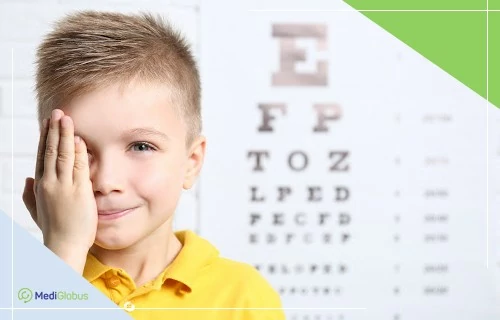
The disease also affects the child’s self-esteem and their relationships with friends and classmates. They may become withdrawn, reluctant to socialise, and feel different from everyone else. In this case, a paediatric psychologist can help. This specialist will also give parents recommendations on how to support their child after therapy.
How much does treatment for optic nerve glioma cost?
The cost of treatment depends on the severity of the disease, the country, and the clinic’s pricing policy. Turkey, India, South Korea, and China are the most affordable countries for patients on a limited budget. Here, you can receive high-quality medical services at prices that are 20-40% lower than in European clinics. Medical centres in Spain and Germany offer treatment at higher prices. However, parents have the opportunity to make an appointment with world-renowned oncologists who can help their child. Israel and the United Kingdom are the most expensive countries for optic nerve cancer treatment. The approximate prices for the main diagnostic and therapeutic procedures are shown in the table.
| Magnetic resonance tomography | from $600 |
| Computed tomography | from $350 |
| Chemotherapy | from $1,500 |
| Surgical removal of the tumor | from $10,000 |
You can get an individual treatment cost by contacting the clinic through our coordinators. To do this, click on the button below and leave a request for a free consultation. After that, our coordinator will call you back and provide all the necessary information.
Where to treat optic nerve glioma abroad?
For reliable and safe services, you should contact multidisciplinary centres in Turkey, Spain, Germany, Israel, the Czech Republic, and South Korea.
Memorial Şişli Hospital
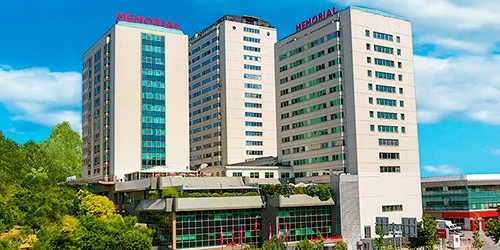
Memorial Şişli Hospital
The Turkish hospital is a member of the American Hospital Association (AHA), which allows it to adopt the latest methods and technologies for treating eye cancer. The clinic’s modern equipment includes a 64-slice CT scanner for accurate diagnosis of head tumours and a CUSA laser for irradiating gliomas in hard-to-reach areas.
Rechts der Isar Clinic
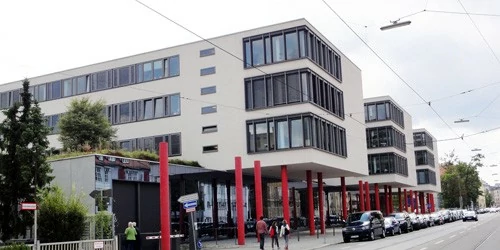
Rechts der Isar Clinic
The German clinic has the most modern ‘North’ surgery centre in Europe. This makes it possible to safely remove tumours in hard-to-reach areas without risk to the child. The hospital is also equipped with SRT linear accelerators for radiation therapy for children.
Quirónsalud Torrevieja Clinic
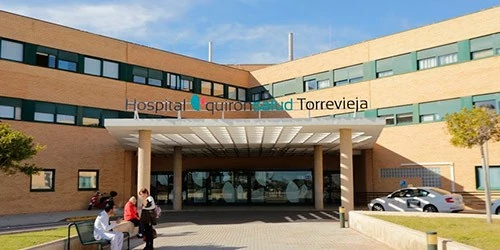
Quirónsalud Torrevieja Clinic
The hospital is ranked among the top 20 clinics in Spain for the quality of cancer treatment. Patients are treated here according to a programme developed by one of Europe’s most renowned oncologists, Dr Antonio Brugarolas. Quirónsalud Torrevieja is one of the few clinics in Europe where it is possible to develop individualised targeted therapy drugs for children. This is the most effective and safest treatment for paediatric gliomas among all existing treatments.
Sheba Medical Centre
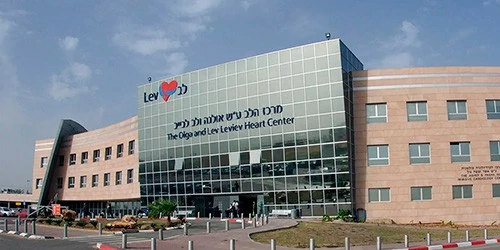
Sheba Medical Centre
The Israeli hospital has a children’s clinic, Safra, which treats children with optic nerve tumours at any stage. Patients are offered comprehensive treatment, highly-qualified doctors and the support of child psychologists. The centre also offers the development of personalised drugs to fight cancer.
Asan Clinic

Asan Clinic
The Asan Korean Centre for Paediatric Oncology and Haematology successfully treats young patients with optic nerve glioma. The clinic has achieved a nearly 100% survival rate for children. They perform gentle chemotherapy, FSRT radiotherapy, and minimally invasive surgery with neuronavigation. Parents also appreciate the caring and warm attitude of the staff towards children.
Motol Clinic
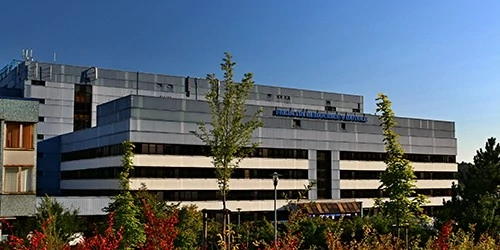
Motol Clinic
The Czech hospital has a paediatric neurosurgery department that successfully removes brain tumours in patients under the age of 18. One of the most famous cases is the life-saving treatment of a girl with rhabdomyosarcoma of the eye. Czech doctors managed not only to completely cure the patient, but also to preserve her vision.
Little Rock Star – Caitlin’s story of optic nerve glioma treatment
When Caitlin was 3 years old, she was diagnosed with optic nerve glioma. Since the tumour was not life-threatening, her doctor decided to closely monitor any changes rather than start treatment immediately.
As part of the active surveillance plan, the girl underwent regular eye exams and MRIs.
For two years, the disease did not progress, but during one of the exams, it was discovered that the tumour had grown.
‘The doctors said that the tumour had grown significantly and that we needed to discuss treatment options,’ recalls Caitlin’s mother.
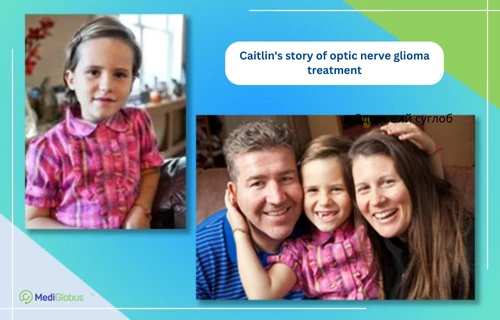
The girl was only five years old when she was prescribed a 64-week course of chemotherapy. Her parents were very worried about how their family would cope with all the challenges. However, at every doctor’s appointment, Caitlin was cheerful and playful, which brought positivity and hope for successful treatment. The girl bravely coped with all the difficulties that occur during chemotherapy — nausea, weakness, and hair loss. She even continued to go to school with the other children.
“During her hospitalisation, the doctors and nurses did everything they could to make her treatment as comfortable and easy as possible,” recalls Caitlin’s mother. “To make the time in the hospital go faster, Caitlin liked to keep herself busy. She went to a theatre club for children and took part in art projects – all while she was hooked up to a chemotherapy drip.”
The support of friends and classmates played a very important role. Caitlin’s mother recalls that when her daughter’s hair fell out and she had to wear a hat to school, all her classmates came to class wearing pink bandanas and baseball caps as a sign of support for their classmate. ‘We received so much support from our friends and neighbours, and it made a huge difference.”
As expected, the treatment worked and the tumour shrank to its original size and stopped growing. Most importantly, her vision remains unchanged. Caitlin now has an MRI scan every three months.
“Our daughter is very strong; she has overcome all the challenges,” Caitlin’s father says proudly. “She plays on two weekly football teams and performs in a dance troupe, and the treatment has never prevented her from participating.”
No wonder the doctors call their little patient a real rock star, and we completely agree with them!
Summary
- Optic nerve glioma is a benign tumour of the second pair of cranial nerves. The disease occurs in children – more than 90% of patients with this diagnosis are under 20 years of age.
- Patients with glioma experience vision impairment. If the tumour affects the hypothalamus, patients experience endocrine system disorders, such as drowsiness, headaches, developmental delays, and uncontrollable appetite.
- Magnetic resonance imaging is the most reliable way to diagnose optic nerve cancer. CT and X-rays are less accurate diagnostic methods.
- Removal of optic nerve glioma is the only way to cure this type of cancer. If complete resection is not possible, the child is prescribed courses of chemotherapy and radiotherapy. Fractional stereotactic radiotherapy (FRST) is considered the safest for children with this diagnosis.
- Children with type 1 neurofibromatosis have an increased risk of developing optic nerve glioma. The tumour is found in 30% of children. It is usually asymptomatic, and doctors monitor its development.
- The prognosis after treatment of optic nerve glioma abroad is favourable. Between 90 and 100% of children live for more than 10 years without recurrence of the disease. In 81% of children, vision is fully restored within 6 months after recovery.
- Treatment for this disease is available at the Memorial Şişli Clinic in Turkey, the Chaim Sheba Medical Centre in Israel, the Quirónsalud Torrevieja Clinic in Spain, the Asan Hospital in South Korea, the Rechts der Isar Clinic in Germany, and the Motol Hospital in the Czech Republic.
- The cost of diagnosis and treatment will vary from country to country, with the most affordable prices found in clinics in Turkey, India, South Korea, and China. Approximate prices for MRI diagnostics start at $600, and CT scans start at $350. A course of chemotherapy abroad will cost $1,500, and surgery will cost from $10,000.
Submit a request to MediGlobus medical coordinators for a free consultation. We can tell you more about the diagnosis and treatment of optic nerve glioma, help you choose a clinic and doctor that fits your budget, and organise your medical trip.