


Paranasal sinus cancer is a rare type of head and neck tumour. It affects hollow bone cavities located near the nose. The disease needs to be diagnosed and treated as soon as possible, as it can cause serious functional disorders and cosmetic defects, as well as death. How this disease is treated abroad and how effective it is – read our article.

Listen to the article:
How does paranasal sinus cancer manifest itself?

Malignant tumours of the nose and paranasal sinuses account for approximately 2% of all head and neck cancers. The prevalence of the pathology among men and women is in the same proportion. The disease predominantly affects people over 50 years of age.
Squamous cell carcinoma is the most common type of paranasal sinus cancer. This type of malignancy forms in the thin squamous cells lining the inside of the sinuses and nasal cavity.
Besides it, malignant neoplasms of the paranasal sinuses can be adenocarcinomas, carcinomas, sarcomas, lymphomas, and melanomas. However, such tumours are much less common.
In most cases, the disease is discovered because of the problems it causes. Detection of this neoplasm in people without symptoms is rare and usually accidental (when tests are done to diagnose other medical problems). Symptoms of sinus cancer include:
 nasal congestion that does not go away after blowing your nose,
nasal bleeding,
decreased sense of smell,
swelling and numbness of the face,
increased nasal mucus secretion,
nasal pain that radiates to the cheek, eye, or ear,
enlarged lymph nodes in the neck,
headache,
constant lacrimation,
visual impairment.
Diagnostic procedures for paranasal sinus cancer involve a physical exam, laboratory tests, and a series of imaging tests. For an accurate diagnosis, a biopsy – taking a tissue sample of the tumour – is necessary. Patients may also have an MRI and CT scan of the head or a PET-CT.
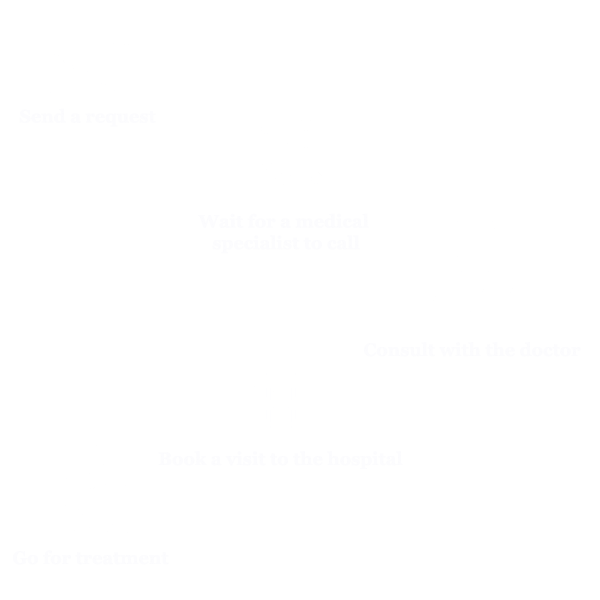
To undergo a comprehensive screening for paranasal sinus cancer abroad, click on the button below and fill out the feedback form. Our coordinators will call you back and help with all organizational issues.
How are nasal and paranasal sinus tumours treated abroad?
Treatment options for sinus cancer depend on several factors, including the type and stage of the disease, as well as possible side effects of therapy, patient preferences, and general health. Some of the main options for dealing with the disease include:
surgical intervention,
radiotherapy,
chemotherapy,
immunotherapy.
A treatment plan for paranasal sinus cancer may include one or several of these procedures. Surgery is considered the key way to fighting the disease. It is the most effective way to remove tumours in paranasal sinuses or nasal cavities. During surgery, the doctor performs a resection of the tumour and some of the surrounding healthy tissue, as well as lymph nodes if needed. This is necessary to reduce the risk of recurrence of the pathology.
Surgical procedures to remove paranasal sinus cancer include:
Endoscopic sinus surgery is a minimally invasive and minimally traumatic procedure to remove a malignant tumour using surgical instruments attached to a thin tube placed in the sinus. This surgical technique is indicated in the initial stages of the disease.
Maxillectomy – removal of part or all of the hard palate. Artificial or biological prostheses are then used to replace the defect. The operation is often performed for cancer of the appendicular sinuses.
Craniofacial resection is an extensive surgical procedure used to treat cancer of the lamina, frontal and sphenoid sinuses. The tumour is removed through incisions in the face and skull. During this surgery, the doctor removes more tissue than in a maxillectomy. After it, patients need reconstructive plastic surgery.
Resection of lymph nodes in the neck area. If it is suspected that cancer has spread to the lymph nodes, a neck dissection may be performed. The surgery removes the malignant lymph nodes on one or both sides.
The main goal of surgery is the complete removal of the malignant mass, leaving no sign of cancer in the healthy tissue nearby. However, in many cases, it is not possible to remove the tumour entirely during a single operation. Therefore, additional treatment is required. This may include another surgery, radiation, chemotherapy, and immune therapy. Patients also often need reconstructive surgery to restore the appearance and function of the affected tissue.
Radiation therapy for paranasal sinus tumours
Radiotherapy is usually used in conjunction with surgery for this pathology. It is prescribed before or after surgery. Radiation may also be given in conjunction with chemotherapy. For some types of tumours of the nasal cavity or paranasal sinuses, radiation therapy may be the main method of fighting the disease. It can also serve as the main treatment option if the patient has contraindications to surgery or decides not to have it.
The radiotherapy regimen is developed for all patients on an individual basis. As a rule, radiation sessions take place 5 times a week for 4-7 weeks.
Often external radiation therapy, including IMRT, is used to treat this oncopathology. This is radiotherapy with modulated radiation intensity. It allows high doses of radiation to be delivered directly to the tumour site while reducing damage to healthy tissue and lowering the risk of complications.
Proton therapy is also given to some patients with sinus cancer. This is a type of radiotherapy that uses protons rather than X-rays. It can be used for cancer of the nasal cavity or the paranasal sinuses when the tumour is close to the eye and the brain.
 Read:
Read: Chemotherapy for sinus cancer

Chemotherapy for paranasal sinus cancer is used before and after surgery. It can also be used as an independent treatment but in combination with radiation or immunotherapy. Antitumor drugs are administered intravenously over some time.
The duration and number of courses are calculated personally. A course of chemotherapy is usually 1-5 days with a 2- to 3-week break.
Chemotherapy for nasal cavity and paranasal sinus cancer can include a combination of several antitumor drugs. This makes it possible to increase the effectiveness of the treatment. The drugs used are predominantly the same as for other, more common types of head and neck cancer.
Immunotherapy for paranasal sinus cancer
Immunotherapy is also sometimes called “biological” therapy. These drugs are designed to strengthen the body’s natural defences against cancer. They set up the immune system to search for and destroy cancer cells.
The U.S. Food and Drug Administration (FDA) has approved 2 immune drugs to treat people with recurrent or metastatic squamous cell cancer of the head and neck. They are Keytruda and Nivolumab. They are used in combination and individually.
These drugs are also combined with chemotherapy. Nivolumab is recommended if the tumour continues to spread even after platinum-based chemo. The course of treatment is determined individually.
Survival prognosis for paranasal sinus cancer
The prognosis of survival for paranasal sinus cancer depends on the stage of the disease. If cancer is localized only in the nasal cavity or paranasal sinuses, around 82% of patients pass the 5-year threshold of life.
If cancer has spread to nearby tissues, organs, and/or regional lymph nodes, the survival rate is 52%. In the advanced stage of the disease, when cancer cells have spread to other parts of the body, then it does not exceed 42%.
Leading clinics for sinus cancer treatment abroad
Koç University Hospital
SoonChunHyang Hospital
Vivantes Clinic
Sheba Hospital
Liv Medical Network
University Hospital of Cologne
Severance Hospital
Resume
Nasal and paranasal sinus cancer is a rare type of head and neck tumour that is diagnosed in about 2% of cases. It develops in air-filled cavities located in the bones of the head, near the nose. It is predominantly diagnosed in patients over the age of 50. Women and men have the disease with equal frequency.
The main symptom of a sinus tumour is nasal congestion that does not go away after blowing your nose. Nasal bleeding and discharge of pus are also possible. Patients complain of nasal pain that radiates to the eye, jaw, or ears. The diagnosis is confirmed by a biopsy.
Treatment of paranasal sinus cancer involves a surgical intervention to remove the tumour and affected tissue. Resection of lymph nodes is also possible. To achieve the best results, patients are recommended chemotherapy, radiation, chemoradiotherapy, and immune medications.
Approximately 40% of patients experience oncopathology recurrence within 5 years of completing treatment. The overall survival rate for this tumour is 60%.
Clinics in Turkey, Germany, Korea, Israel and Austria choose to treat patients with sinus cancer. Among them, the following medical centres are worth mentioning: Koch, Liv, Medicina, Ichilov, SunChonHyang, Vivantes, Shiba, Vienna Private Clinic, Severance, and Cologne Uniclinic.
To choose the best clinics and doctors for sinus cancer treatment abroad, please contact our coordinators. We will carefully study your problem and help you find the best solution for it.