


Austria is one of the most popular medical destinations among the countries of the European Union, along with Germany, Spain and the Czech Republic. Every year, tens of thousands of foreign patients come to clinics in Austria for treatment. The demand for medical centres in the country grows every year due to the many advantages Austria has over the long-established leaders of medical tourism. Among them are the convenient location of the country, a large number of medical centres, high quality of treatment and qualification of doctors. Another big advantage is the more affordable price policy compared to that of German centres. MediGlobus medical experts will give 5 useful tips for patients who are planning treatment in Austria.
HOW TO CHOOSE A CLINIC?

This is one of the very first questions patients who consider treatment in Austria ask themselves.
The main leading medical centres of this country are located in the capital Vienna, as well as in its surroundings. This location of hospitals makes the patient’s arrival as convenient as possible – there is no need to travel to other cities and make transfers on the way.
The situation is different with rehabilitation and recovery centres – they are usually located in the mountainous regions of the country.
In addition to the capital, major medical centres are also located in the city of Graz, which is about 200 km from Vienna. Among the most popular Viennese medical centres are the following:
Central Vienna Clinical Hospital
Read about the clinic →
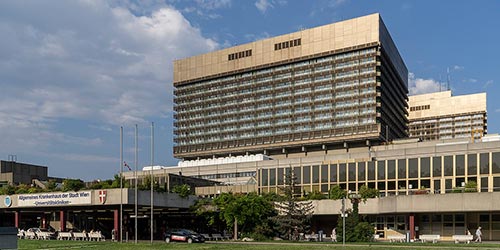
One of the largest wide-profile hospitals in the country. Every year it receives over one and a half million patients from all over the world. The key areas of the hospital are oncology, cardiac surgery, orthopaedics, general surgery, haematology, etc.
Vienna Private Clinic
Read about the clinic →
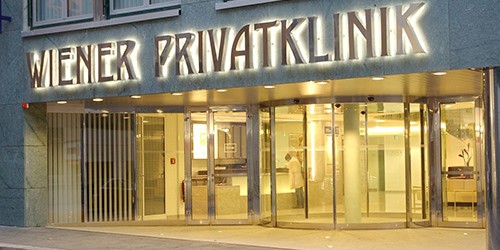
The Vienna Private Clinic is among the leading medical centres in Austria. It is ISO 9001 certified. The hospital provides patients with personalised treatment, which is developed by an interdisciplinary team of doctors from different specialities (Scientific Board).
 Hospital: Central Vienna Clinical Hospital
 Procedure: Mitral valve reconstruction
 Patiente from: Austria
Bernhard: “I had mitral valve surgery (reconstruction with complex parameters) at this clinic. I would like to thank everyone who looked after me, especially the administrative staff, the medical staff, and all the doctors who worked with me, especially Professor Kocher. The personnel were always friendly, patient and, above all, highly professional. The care and treatment provided here under conditions of extreme stress, staff pressure and constant workload are difficult to describe and virtually impossible to imagine. I have only to express my humble gratitude”
Hospital: Vienna Private Clinic
Procedure: Ovarian carcinoma removal
Patient from: Romania
Ioana: “I was diagnosed with cancer in Romania. I contacted various clinics for help and the Vienna Private Clinic was the first to respond. All consultations and examinations were scheduled by the minute, and thanks to their care, they were carried out very quickly so that the operation could be carried out as soon as possible. I got into the hands of a wonderful doctor, Prof Schurz, who was my hope and support during my most difficult days. The staff were very professional and very compassionate. I felt I was treated like a member of the family.”
Confraternität Private Clinic
Read about the clinic →
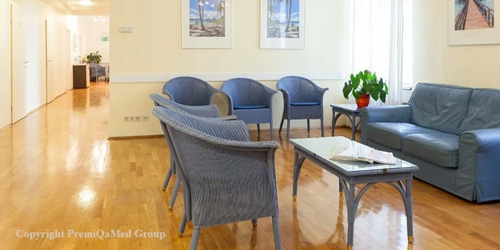
This multidisciplinary clinic has the Austrian Quality Mark award in medical tourism. The priority areas of the hospital are cardiology, neurology, oncology, urology, ophthalmology, and diagnostics.
Private Clinic Döbling
Read about the clinic →

A general clinic that belongs to the premium class of medical centres. It has an ISO 9001 medical management quality certificate and the “Austrian Quality Mark in Medical Tourism” certificate.
Clinic: Confraternität Private Clinic
Procedure: Surgery for lung cancer
Patient from: Romania
Stanciu: “In 2018, I underwent surgical treatment for lung cancer in the Private Clinic Confraternität. What I want to note: all doctors, nurses, and coordinators were very caring and attentive. The treatment process itself, including collection of tests, etc., is quite well organised. The wards are comfortable and modern.”
Clinic: Private Clinic Döbling
Procedure: Consultation with a dermatologist and treatmnet
Patient from: Ukraine
Maria: “Fast, convenient, and efficient – this is the best treatment experience I have ever had at a private clinic! The consultation with the dermatologist was expert and attentive. Many thanks to Christina Blufstein for caring so much about her patients.”
Rudolfinerhaus Clinic
Read about the clinic →
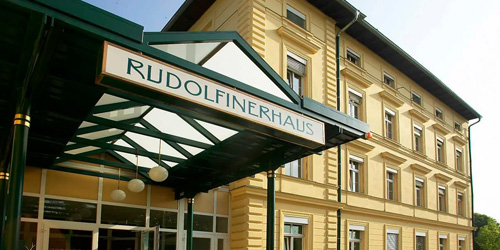
This is one of the most modern medical centres in Austria. Quality management is implemented here, which implies control over compliance with international standards of diagnostic and treatment services. The hospital is successfully accredited according to ISO 9001:2008 standards. Among the key areas of the hospital are oncology, surgery, diagnostics, cardiac surgery, and neurology.
Goldenes Kreuz Private Clinic
Read about the clinic →
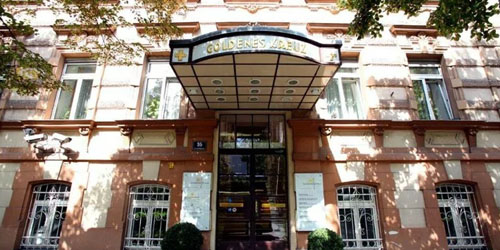
The clinic mainly specialises in diagnostics, surgery and gynaecology, and also provides medical care for pregnant women, women in labour and newborn babies. It has many awards and certificates, in particular the “Pursuit of Excellence” award and certification from the EFQM International Quality Committee.
Clinic: Rudolfinerhaus Clinic
Procedure: Surgery
Patient from: Hungary
Eszter: “I received very high-quality service from every member of staff. Special thanks to Dr Moser who operated on me.”
Clinic: Goldenes Kreuz Private Clinic
Procedure: Surgery
Patient from: Austria
Melanie: “My son (6 years old) had surgery at this clinic. He was in excellent hands. My boy was cared for in a completely child-centred manner. A big thank you also to the nurses in the post-operative ward…. just thank you to all the staff.”
HOW TO CHOOSE A DOCTOR?

The question of choosing a doctor for treatment is also important. The professionalism and experience of the doctor are the main factors that the success and effectiveness of the prescribed therapy will depend on. It is important to pay attention to the specialist’s membership in professional organisations, to read his/her CV in detail and the scope of the doctor’s narrow interests.
Many doctors operate on completely different pathologies within their specialisation and are considered experts in specific diseases (for example, an oncologist specialising in breast cancer or an oncologist operating on prostate cancer using the da Vinci robot).
In this way, the patient has the opportunity to see not just a doctor, but a recognised expert. It is necessary to be prepared for the fact that there may be a queue for an appointment with a renowned specialist. Because of this, a visit to him/her will need to be planned in advance. It is also worth considering that the price of the services of this doctor is somewhat higher than a doctor without a mass of regalia.
 Read:
Read: WHAT ARE THE ACCOMMODATION OPTIONS?
The most popular accommodation options for medical tourists in Austria are hotels and rented apartments. On the various booking sites, patients can choose the most suitable option for their stay in terms of comfort and budget.
If necessary, the host can help with the selection and pre-booking of apartments or hotels. In the case of surgical treatment, hospitalisation of the patient is included in the cost of treatment.
In most cases, the examination takes place in an outpatient format, provided that the patient’s condition does not require a stay in a clinic. The duration of a comprehensive diagnostic programme is usually about 3-4 days. The patient receives the result and the doctor’s recommendations for prevention or treatment within a week.
To organise a face-to-face or remote consultation with leading Austrian doctors, please fill in the application form. To do this, click on the button below and leave your contact details in the feedback form.
HOW TO ORGANISE AN INTERPRETER?
The majority of doctors in Austria conduct consultations mainly in German, only some specialists may speak English. A qualified interpreter will most likely be required to ensure that the patient and doctor can communicate comfortably and that there is no language barrier.
The interpreter is sufficiently familiar with medical terminology. He/she is provided by the host country on a fee basis (hourly rate).
The cost of interpreting services in Austria starts at €40 per hour. The patient has every right to invite his/her interpreter, confirming his/her competence and knowledge of medical terminology to avoid inaccurate interpretations of the specialist’s words.
HOW TO SAVE MONEY ON TREATMENT IN AUSTRIA?

Austria has an average pricing policy. The cost of medical services here is almost 20% lower than in Germany. Despite this, there are several ways in which patients can reduce their expenses in this country.
The first and main one is partial diagnostics in the home country, provided that quality and modern technology are available at the place of residence. The patient can perform imaging studies (CT, MRI) at home and bring discs with digitally recorded images for revision.
If the patient’s condition allows the examination without hospitalisation, it is better to consider the option of outpatient diagnostics (with accommodation in a hotel or rented flat). This is also relevant for patients coming for long-term treatment – it is definitely better to stay in an apartment, which will significantly save finances.
Advance planning of arrival can also make a visit to the clinic less expensive, as air tickets booked in advance can be much cheaper than buying them a few days before the flight.
Summary
 Austria is one of the popular medical tourism destinations. Patients often choose clinics in Vienna or Graz. People come here for comprehensive body diagnostics, as well as therapy or surgery for various diseases. Medical tourists choose hospitals in this country for cancer treatment, endoprosthetics, rehabilitation, brain neurosurgery, heart valve replacement, etc.
If you do not speak German, you will most likely need an interpreter. As a rule, one is provided by the hospital. The price of the service starts from 40 euros per hour.
Quality diagnostics in your home country will help you save money on treatment in Austria. A patient can perform imaging studies such as CT or MRI at home and bring discs with digitally recorded images for revision. However, the machines on which the examination is done should be state-of-the-art.
The leaders of the rating of the most popular medical centres in Germany are such clinics as Central Vienna Clinical Hospital, Rudolfinerhaus, Vienna Private Clinic, Goldenes Kreuz, Döbling Private Hospital, and Confraternität. They have everything necessary to treat even the most complex clinical cases.
If you have any questions about organising diagnosis and treatment in Austrian clinics – ask our experts! Submit your request for a callback via the form below! We will help you to choose the right clinic and the right specialist.
Sources:
- 1. Austria Health system summary 2022
- 2. Hospital Healthcare Europe
- 3. Statistics Austria
- 4. State of Health in the EU: Austria Country Health Profile 2023