


The FDA has approved cochlear implants for people with moderate, profound or severe hearing loss. This includes people with hearing loss in both ears, hearing loss in one ear, or normal hearing in low tones that is reduced to moderate or severe hearing loss. This procedure is available to adults and children as young as 9 months of age.
Studies show that among people with hearing loss, only 2-13% use cochlear implants, although it is an effective way to restore hearing. This is partly due to the myth that hearing aids are only needed for people with total deafness. Many people tolerate hearing loss instead of going to a professional and getting expert help.
In this article, we will tell you more about what types of modern cochlear implants exist, what they are, and how to decide which one to choose.
What are cochlear implants and how do they differ?
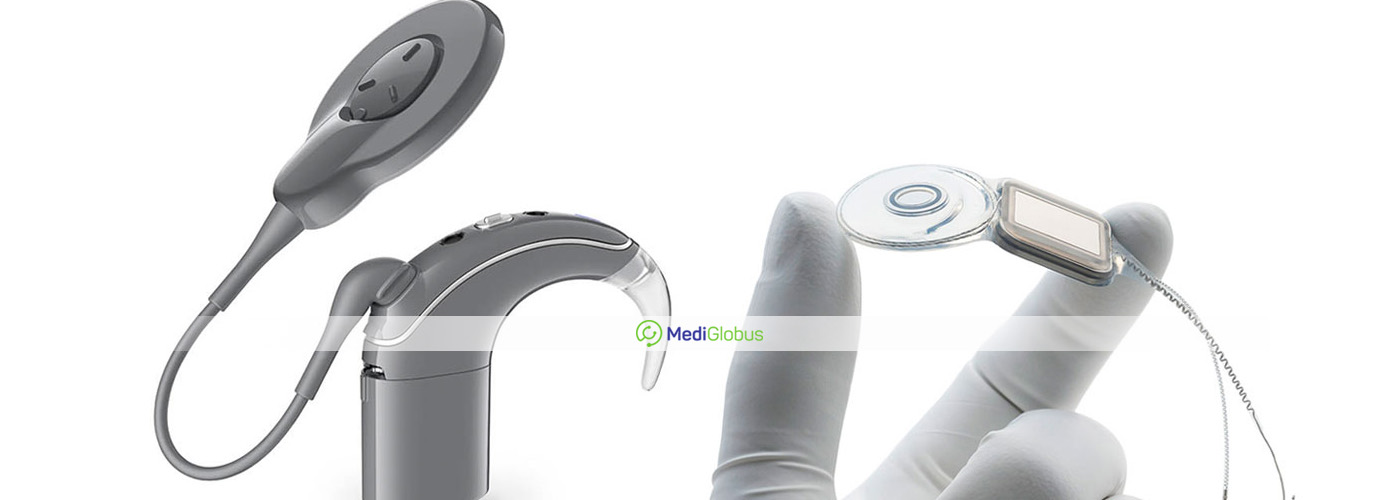
A cochlear implant is an electrical device attached to the auditory nerve that allows people with deafness related to injuries or diseases of the inner ear to regain their hearing. In other words, it is a treatment for people for whom a hearing aid is not suitable. Unlike the latter, a cochlear implant does not amplify environmental sounds but captures them, converts them into an electrical impulse and sends them to the auditory nerve, from where the signal is sent to the brain.
All cochlear implants consist of two parts:
The external part, which is responsible for the perception of sound. It consists of a microphone, a speech processor and a transmitter. This part of the device can be of different types – attached behind the ear, like a headset; to the scalp of the head, or attached to clothing.
The inner part, also called the processor. The transmitter is attached to the side of the head and attaches to the auditory nerve through surgery. There are different types of processors to suit different anatomies and pathologies of the inner ear.
The sound generated by a cochlear will not be 100% the same as that of a healthy ear. It is often described by patients as “mechanical”. However, this does not prevent a person from recognising and distinguishing sounds, and as you get used to it, using a cochlear becomes easier and more natural.
Only an experienced otolaryngologist can tell you which hearing treatment method will suit you best after a thorough diagnosis. This is particularly important when it comes to the treatment of young children, as they are not yet able to explain their complaints as adults, but an earlier start of hearing aid use is better for the child’s overall development. Patients should be aware of the general indications for cochlear implant use:
 Hearing loss that makes it difficult to communicate – the person may not hear speech well, particularly soft speech, or may confuse words with each other;
Realistic expectations of cochlear implantation;
Limited (or no) benefit from hearing aid use;
Motivation and willingness to undergo auditory rehabilitation.
You can get personalised advice on hearing loss/deafness treatment, find out the prices of cochlear devices and quickly book a consultation with an experienced otolaryngologist by contacting the MediGlobus coordinating doctors for a free consultation. Simply click on the button below, fill out the form and wait for a call.
How do I choose the best cochlear implant?
When choosing a cochlear implant, the extent of the hearing loss, the disease that caused it and the anatomy of the ear play a major role. Many aspects can only be assessed by a doctor, and only a doctor can determine the specifics required (e.g. length or number of electrodes). However, in addition to these factors, there are others in which the patient’s opinion can be taken into account.
Different models of cochlear implants may differ from one another:
The length of battery life;
Appearance (colour, size, location);
Different purposes (daily use, sports, listening to music, etc.);
The presence of additional functions (the ability to connect directly to audio players, water or shock resistance, etc.).

Dr Erin Blackburn, a leading audiologist at the prestigious Duke University Hospital in the USA, recommends the following to her patients: “All of the leading manufacturers make fairly similar devices from a technological standpoint. We can guarantee with a high degree of certainty the same good result no matter which device is chosen”. Some clinics work with only one cochlear manufacturer, while others work with several and give their patients a choice.
When selecting a device, it will be helpful to ask yourself these questions:
What is my budget?
What kind of lifestyle do I live? Will I be doing active sports, spending a lot of time outdoors, swimming?
What kind of battery life will I be most comfortable with? How often will I be able to recharge it and how comfortable will I be with the particular model of device I’m considering?
How comfortable and understandable is the cochlear implant user system for me?
If the cochlear implant patient is a child, the parent should also pay attention to these points:
How easy is it to tell from the outside whether the cochlear is on or off?
How easy is it to recharge it, and will the child be able to do it themselves?
Will it have enough battery power for a full day of school?
Is the hearing aid conveniently located so that it will not interfere with the child’s play/sports etc.?
The cosmetic features of the device, its size and the location of the speech processor may vary from manufacturer to manufacturer. Otolaryngologists recommend that parents give their children as much freedom as possible when choosing these features of the device, especially for older children. It is important for the child to feel that he or she is at least partially in control of the situation and that his/her opinion is important to parents.
 Read:
Read: The most popular models of cochlear implants
Of all the cochlear implant manufacturers, the most popular are Cochlear, MED-EL, and Advanced Bionics. All of them are FDA-approved and have many quality certifications. The brands have been on the market for decades and have good reputations. Importantly, these units are covered by a multi-year service and maintenance warranty. Each brand has several lines and generations of cochlear implants from which patients can choose the best one.
Cochlear Cochlear Implants

Cochlear Medical Company (Cochlear) was the first to develop a device to restore hearing in patients with inner ear deafness/ hearing loss and is still the market leader. They continue to develop new and ever more advanced devices.
Their latest line of cochlear devices offers two types of processors, the Kanso 2 (released in 2020) and the Nucleus 8 (released in 2022). Both devices are present in both paediatric models and adult models.
The Nucleus 8 is a model with a behind-the-ear sound processor that is worn over the ear, and a small coil is held to the head with a magnet. This device has a range of quality-of-life features, many of which are well-suited to children. Its sound processor can also be customised for hybrid use, combining electrical stimulation of the cochlea with acoustic stimulation of another part of the cochlea. This allows the user to take advantage of residual hearing.
The Kanso 2 cochlear implant is an extra-cochlear type of device. The sound processor is worn on the ear as a single device, which includes SmartSound iQ, True Wireless, a rechargeable inbuilt battery and a coil.
Cochlear cochlear implants use the smallest sound processor to date.
Cochlear cochlear devices can also be directly connected to Android or Apple mobile devices. Both the Nucleus 8 and Kanso 2 models offer users advanced features such as:
SmartSound iQ 2 system, which allows you to filter essential sounds from background noise;
ForwardFocus, a controlled system that improves the quality of speech during communication;
connectivity to FM radio systems;
compatibility with Bluetooth devices, allowing direct connection to smartphones, smart TVs, Bluetooth Auracast broadcasts in airports, gyms, etc.;
the presence of a parental application for mobile devices, allowing you to monitor the child’s device.
In addition to the latest generation devices, Cochlear offers older models – Kanso, Nucleus 7, Nucleus Hybrid, and Nucleus Bimodal Solution. These offer more modest functionality, but also at a slightly lower price. The company also makes several lines of bone conduction implants, including the Cochlear Baha line and the Cochlear Baha Start system designed for children. Aqua+ silicone cuffs are also available, which protect cochlear processors from water and allow patients to swim safely in a pool, sea, lake, etc.
MED-EL cochlear implants
The medical manufacturer Medel (MED-EL) offers a wide range of cochlear implants depending on the type of hearing loss. Vibrant Soundbridge, Bonebridge and Adhear are available for conductive hearing loss. For sensorineural hearing loss, Synchrony, Synchrony EAS and Vibrant Soundbridge are best suited. For mixed hearing loss, Medel Vibrant Soundbridge and Bonebridge cochlear implants are used. For neural hearing loss, the Synchrony ABI implant has been developed.
The latest generation of Medel cochlear implants comes with electrodes of different lengths, which makes it safe for patients with a “long” cochlea. It is also compatible with MRI machines (up to 3.0 Tesla). Patients with older devices typically require surgery to temporarily remove the cochlear implant if magnetic imaging is required.
Another advantage of the MED-EL brand is the very wide customisation of hearing aids, especially when it comes to children’s designs. The use of a toy-like cochlear implant helps to motivate the child to use it and engage in sessions with the doctor.

Medel’s newest line of cochlear implants consists of two audio processor models: the Rondo 3 and the Sonnet 2.
The Sonnet 2 processor is an intra-ear cochlear implant, also available in a hybrid version (to combine acoustic and electrical stimulation). The device uses an intelligent adaptive sound recognition system that automatically adjusts the device’s settings to the environment. In addition, Sonnet 2 has noise reduction and speech enhancement features and can connect via Bluetooth to mobile devices. The device is dust and water-resistant and has the option of being powered by rechargeable or disposable zinc batteries.
Rondo 3 is a small and ergonomic audio processor with the same advantages as Sonnet 2: smart noise cancellation, adaptive self-tuning and high-quality microphones for clear speech recognition. The device is powered by rechargeable lithium-ion batteries capable of wireless charging. Importantly, Rondo 3 is compatible with all types of hearing aids, in case the patient continues to use them in one ear. A separate bonus of the device is its remarkable design, which won the 2021 Reddot Design Award.
Advanced Bionics cochlear implants
The Advanced Bionics range of cochlear implants includes six sound encoding programs for patients with different types of hearing loss and needs. The devices are available in a variety of styles and designs for both children and adults, including in-ear, outer-ear and combination models.
The company places a lot of emphasis on convenience and extensive customisation options for cochlear implants. They are the only ones to use software that allows clinicians to fit a cochlear implant and its paired bimodal hearing aid using the same software in a single fitting session. In addition, in 2023, they introduced technology that allows doctors to calibrate the device remotely, eliminating the need for patients to travel so often for a consultation – an added benefit for international travellers.
Advanced Bionics’ newest cochlear models are the Naida CI, designed for adults, and the Sky CI Marvel, designed for children. The sound processors are compatible with hearing aids and Bluetooth devices. The AutoSense OS 3.0 operating system with artificial intelligence allows the patients to enjoy clear speech in crowded places and enhanced sound quality when listening to music.
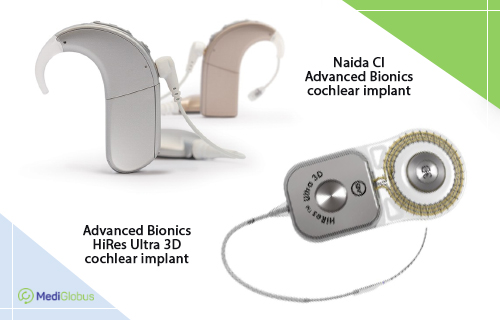
Advanced Bionics is releasing a fully waterproof AquaMic earpiece, as well as an AquaCase for certain sound processor models, such as the Naida CI.
Advanced Bionics’ previous model, the HiRes Ultra 3D, won the 2019 Medtech Breakthrough Award. The device was specifically designed for people working in the music field and allows them to hear five times more different sounds. The device is also compatible with software updates promising the availability of advanced technology up to 10 years ahead.
The device has a lightweight magnetic attachment system that allows its exterior to be quickly and painlessly removed to undergo MRI scans on up to 3.0 Tesla scanners. Patients can undergo 200 of these scans without harming the cochlear implant, which is the highest number on the market compared to competitors.
Some comparison criteria for Cochlear, MED-EL and Advanced Bionics hearing implants are summarised in the table below:
| Comparison criteria | Cochlear | MED-EL | Advanced Bionics |
|---|---|---|---|
| Number of updates per second the implant is capable of | 32,000 PPS | 51,000 PPS | 83,000 PPS |
| Channels and electrodes | 22/22 | 12/up to 24 | 16/16 |
| Frequency and data rate of sound processorу | 5 MHz, 0.5 MB/s | 12 MHz, 0.6 MB/s | 49 MHz, 1 MB/s |
| Weight | 8,6-9,5 g | 7,6-8,6 g | 10-12 g |
| Input dynamic range | up to 45 dB | up to 75 dB | up to 80 dB |
| Shock resistance | up to 1-2.5 joules | 2,5 joules | up to 2,5-6 joules |
| Rechargeable battery life | 17-34 hours | 7-24 hours | 9-18 hours |
| Replaceable battery | 60 hours | 60 hours | 16 hours |
The otolaryngologists partnered with MediGlobus achieve 98% patient satisfaction after cochlear implantation. To personalise the best treatment, you can have a free consultation with our coordinating doctors.
What to expect from the procedure and how to prepare?
Before the cochlear implant is placed, the doctor will tell you in detail how to prepare for the surgery, and what you can and cannot do. This will mainly concern what medications you should stop taking 2 weeks before the intervention, how long before the operation you should stop eating/drinking, etc. The doctor will also instruct you on how to behave after cochlear implantation, when you can start showering/washing your hair, etc.
The surgery itself lasts from 2 to 5 hours, depending on the complexity of the case and whether the patient has unilateral or bilateral hearing loss.
After the patient wakes up from anaesthesia, the doctor will activate the machine. He or she will make sure that all its components are working properly and will adjust the device to the individual patient.
The results of cochlear implantation vary from person to person. Factors that can affect the effectiveness of interventions include the age at which the hearing was lost and the length of time between hearing loss and surgery. It takes time and specialised rehabilitation to learn to interpret the signals received from a cochlear implant. Within 3 to 6 months after cochlear implant placement, most people significantly improve their speech understanding.

Cochlear implantation opens up such new possibilities for patients:
The ability to hear speech without lip reading;
The ability to understand speech in noisy environments;
The ability to identify where sounds are coming from;
Recognising everyday environmental sounds;
Ability to hear television programmes, music, and telephone conversations.
At the same time, you should be aware of possible side effects and complications:
Tinnitus;
Dizziness;
Inflammation of the inner ear (sometimes doctors recommend a meningitis vaccine before surgery);
Possible damage to residual hearing during placement of the electrode in the inner ear;
There is a small risk of nerve damage and cerebrospinal fluid leakage.
After cochlear implantation, all patients undergo auditory rehabilitation. This is a set of sessions with an audiologist to help train the brain to recognise, decode and distinguish sounds coming through the cochlear device. For patients who were born without hearing, this will be a skill they have to learn from scratch; while for those who have lost their hearing due to age/disease/injury, they will need to adjust to the fact that speech and sounds will now be different.
Regular visits to have your cochlear implant checked and adjusted, as well as hearing testing, will help to maximise the benefits of the device.
Prices and clinics for cochlear implants abroad
Prices for Cochlear, Medel and Advanced Bionics cochlear implants are in approximately the same range. There is a more significant difference in pricing between different types and generations of processors than between the manufacturers. Also, the final price will depend on whether the hearing implant needs to be placed in only one ear, or both ears.
The approximate cost of cochlear implantation abroad, depending on the country, is as follows:
| Country | Cost |
|---|---|
 Turkey Turkey | from $28,000 |
 Israel Israel | from $35,000 |
 Germany Germany | from €38,000 |
 Spain Spain | from €35,000 |
Among the clinics our patients most frequently choose for implant surgery for hearing loss are:
Hisar Intercontinental (Istanbul, Turkey)
Read about the clinic →

One of the most experienced and professional cochlear implant specialists in the country, Professor Yavuz Selim Yildirim, works at this clinic.
Rechts der Isar (Munich, Germany)
Read about the clinic →

Dr Hans-Peter Niedermeier, head of the clinic’s Hearing Centre, is one of the specialists we can recommend.
Uniclinica Navarra (Navarra, Spain)
Read about the clinic →

In 2022, the clinic was recognised as the No. 1 in Spain in the field of otolaryngology. The cochlear implant programme here is led by Dr Manuel Manrique Rodríguez.
Ichilov (Tel Aviv, Israel)
Read about the clinic →

The Ichilov Clinic’s treatment of hearing loss is carried out by the renowned Dr Ephraim Eviatar, an expert otolaryngologist with more than 35 years of experience.
Summary
The most popular cochlear implants are manufactured by Cochlear, MED-EL, and Advanced Bionics. All three manufacturers are FDA-approved and have numerous quality certifications. They produce cochlear implants with similar functionality and in the same price range that differ in the details. For the patient, this means that by using any of these devices, they can expect good quality and reliable results. All modern instruments are dust and water-resistant, compatible with FM and Bluetooth devices, MRI scanners and hearing aids.
The Cochlear cochlear implant offers a good balance of functionality and ergonomics. The strengths of this device are its compact sound processor, a large selection of electrodes and long battery life.
The Medel cochlear implant is distinguished by its award-winning design with extensive customisation possibilities. From a technical point of view, it is a fairly balanced option.
The Advanced Bionics cochlear implant places great emphasis on maximising technical sound quality. In addition, it is the only system whose system software allows the device to be customised remotely.
When choosing a cochlear implant, the nature of the hearing loss and the anatomy of the ear play a role, based on which the doctor forms his recommendations; however, there is also a role for individual preferences of the patient (shape and position of the device, battery life, etc.).
The adaptation period, during which the patient gets used to the cochlear implant, is on average 3-6 months.
The cost of cochlear implantation abroad starts from $28,000 (for unilateral surgery). Among the leading clinics with good value for money, the international platform MediGlobus can recommend medical centres in Turkey, Spain, Germany and Israel. Specific recommendations, doctors and prices can be found on our website.
MediGlobus, an international medical tourism platform, will help you find a clinic and a doctor for cochlear implantation abroad free of charge and organise your trip, including flights, transfers, accommodation, interpreter support, etc. We stay in touch with our patients 24/7 and provide them with personalised support and solutions to all their problems
Sources:
- 1. National Deaf Children’s Society
- 2. Healthy Hearing
- 3. Cochlear manufacturer website
- 4. Medel manufacturer website
- 5. Advanced Bionics manufacturer website
- 6. National Institute on Deafness and Other Communication Disorders
- 7. Cochlear Implant Comparison Chart
- 8. Frobes Health: Cochlear Implant Companies: What To Know About Your Options
- 9. British Cochlear Implant Group
- 10. MedRxiv: How can we compare CI systems across manufacturers? A scoping review of recent literature
- 11. American Academy of Audiology
- 12. Selecting Medical Hardware using Pairwise Comparisons: A Patient’s Perspective of CochlearComparisons: A Patient’s Perspective of Cochlear Implant Device SelectionImplant Device Selection