


| Treatment of fibromas |
|---|
1. Ovarian fibroma |
2. Fibromas on the skin |
3. Fibroma of the bones |
4. Fibroma of the gums |
5. Stomach fibroma |
6. Fibroma in the larynx |
A fibroma is a non-dangerous benign tumour that grows from connective tissue. The tumour can develop in any part of the body. Fibromas often occur in the uterus, complicating the course of pregnancy. Other common sites where fibromas develop are the ovaries, skin, bones, stomach, throat, etc. From this article, you can learn what methods are used to treat these tumours and which clinics MediGlobus recommends for surgery.
OVARIAN FIBROMA
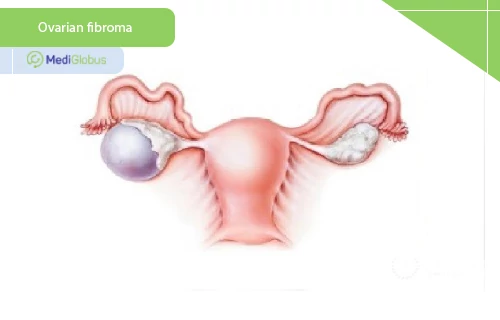
Ovarian fibroma is a benign tumour that arises from the stroma of the organ. This neoplasm is hormonally active and often appears in women after the age of 40. After menopause, the risk of tumour development increases. In more than half of the patients, a uterine myoma is diagnosed simultaneously with an ovarian fibroma. Therefore, if one diagnosis is confirmed, it is recommended to undergo screening for the other.
The size of ovarian fibroma usually does not exceed 12 centimetres. Tumours up to 5 centimetres do not cause significant discomfort. Symptoms of a larger-size ovarian fibroma include aching pain in the lower abdomen, bloating and swelling, shortness of breath, fatigue, and nausea. A big tumour has a chance of developing into ovarian cancer. Therefore, with such symptoms, it is important to immediately consult a doctor.
Diagnosis of ovarian fibroma is possible after taking general tests and undergoing ultrasound and MRI. Additional procedures may be required to clarify the disease.
Drug treatment of ovarian fibroma is usually ineffective. Surgery is the most effective treatment. Surgery for ovarian fibroma can be open or laparoscopic. The first option is cheaper but more traumatic. Laparoscopic surgery is performed with less deep incisions and is safer.
 Treatment prognosis
Removal of ovarian fibroma is successful for 95% of women. Surgeons can perform the resection without damaging healthy tissue.
Clinics where ovarian fibroma is treated:
 Read:
Read: SKIN FIBROMA
Skin fibroma is a painless growth on the skin that develops from connective tissue. It is not life-threatening but can cause skin trauma and noticeable cosmetic defects. Fibroma often appears on the skin of the face, back, legs, and head.
There are two types of fibromas: soft and solid. Soft fibromas are small growths on the skin, which increase in size slowly. Solid formations – dermatofibromas – are less noticeable. Several fibromas may appear on the body at the same time.
To diagnose a skin fibroma, an external examination, X-ray or ultrasound is necessary. Biopsy is a mandatory procedure since it will help the doctor to distinguish it from skin cancer.
Treatment options for skin fibroma can be different. Small neoplasms are removed without surgery. The most gentle method of skin fibroma removal is a laser. An alternative treatment is cryotherapy. The most common method of removing large-sized skin fibroma is surgery. This procedure takes place on an outpatient basis under local anaesthesia.

Clinics where skin fibroma is treated:
BONE FIBROMA

Non-ossifying fibroma is a common bone lesion. Bone fibroma is often found in children and adolescents 10 to 15 years of age and is rarely diagnosed after age 30. Fibroma forms in the femur, tibia, humerus, and heel bones. If the fibroxanthoma is larger than 3 centimetres, there is an increased risk of fracture.
The disease is symptomless and for this reason, it is detected accidentally. X-rays, CT scans, MRIs and scintigraphy are performed to diagnose bone fibroma. These imaging tests are performed to determine the location and size of the neoplasm.
Urgent treatment for bone fibroma is usually not needed. Doctors may prescribe surgery if the neoplasm occupies more than half the volume of the bone. In this case, the surgeon removes the tumour and fills the space with an autograft – a tissue sample from another bone.
The prognosis in non-ossifying bone fibroma is favourable. If you are careful in your movements and avoid heavy physical exertion, you can do without surgery.
Clinics where bone fibroma is treated:

GUM FIBROMA
Benign tumours can occur in the oral cavity. Certain types of these neoplasms affect the gums. These include dense, symmetrical, and lobular fibromas. A fibroma on the gum feels like a thickening of tissue. It is most often caused by trauma due to an improperly fitted denture. Causes of gum fibroma in adults include inflammation, periodontal disease, gingivitis, and other oral diseases. Gum fibroma in a child can occur due to improper wearing of the plate.
Gum fibromas are not dangerous and are slow-growing. However, if the traumatic factor is not eliminated, an oncologic process can begin at the site of the swelling.
Diagnosis of oral fibromas is done with X-rays and digital scans. The doctor will recommend surgical removal of the tumour if the results show that it is large.
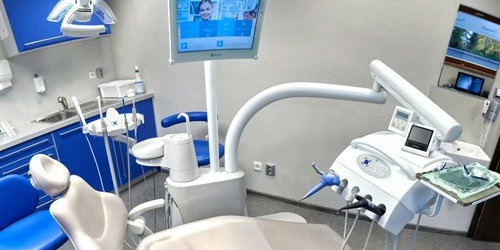
It is possible to undergo gum treatment without surgery. Clinics offer laser fibroma removal, which is done on an outpatient basis. Some clinics also offer radiofrequency removal of the tumour.

Clinics that treat gum fibroma:

GASTRIC FIBROMA
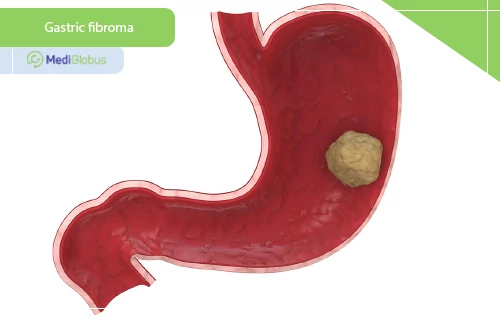
Benign tumours – fibromas – can also arise from the connective tissue of the stomach.
Small neoplasms develop inconspicuously. Large gastric fibroma manifests itself through symptoms: a constant feeling of heaviness, vomiting, frequent belching, and bleeding. Large benign tumours of the stomach are dangerous, as they can cause trauma. Injuries and diseases of the organ are a risk factor for the development of gastric cancer.
Fibroma in the stomach can be detected by X-rays. Cytologic analysis and biopsy are needed to confirm that the tumour is benign.
Treatment of gastric fibroma with drugs is an additional, but not the main method. The surest way to get rid of a benign tumour in the stomach is to remove it surgically. This will reduce the risk of possible recurrences. The leading cancer centres offer endoscopic surgeries, which are less traumatic compared to open surgeries. Gastroscopy is also a common method of treating gastric fibroma.
Clinics that treat gastric fibroma:
LARYNGEAL FIBROMA
Fibromas can form in the throat, most commonly affecting the larynx. A laryngeal fibroma is a benign tumour that occurs on the vocal cords. It grows slowly and in rare cases leads to the development of throat cancer. Large fibromas lead to impaired diction and a person may lose the ability to speak. A fibroma that develops on the throat is life-threatening as it can lead to respiratory arrest.
Common symptoms with laryngeal fibroma are hoarseness, loss of voice, neck pain, a feeling of having something stuck in the throat and coughing. A fibroma on the throat can be detected with an X-ray or MRI.
Laryngeal fibroma is one of the rare types of benign tumours that must be removed immediately. The main method of treatment for throat fibroma is minimally invasive surgery. Before and after surgery, the patient is prescribed painkillers, anti-inflammatory and antibacterial drugs./p>

Surgery for laryngeal fibroma is performed using ultrasound or laser. In this way, surgeons increase the chances of preserving the vocal cords without serious damage. Laser removal of laryngeal fibroma is the most preferred method of treatment, as it reduces the risk of bleeding after the intervention.
Open surgery is indicated for large tumours of the larynx. In this case, the doctor makes an incision in the neck, after which a small scar will remain. Afterwards, the patient needs up to 2 days to recover.
Clinics that treat laryngeal fibroma:

Summary
 Fibroma is a common benign tumour. It can occur in any part of the body – stomach, gums, bones, ovaries, skin.
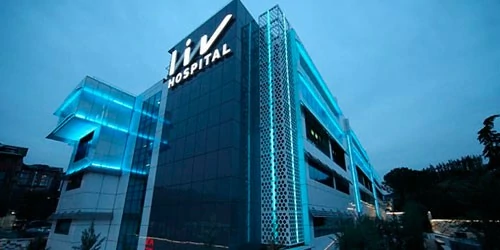
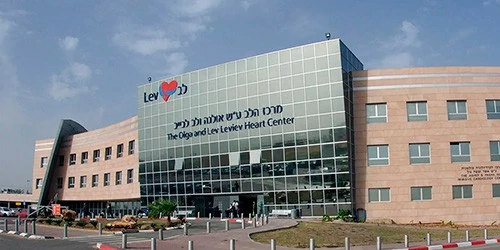
Ovarian fibromas tend to become malignant, so it is important to remove them. For this surgery, We recommend the Liv Clinic in Turkey and Chaim Sheba Medical Center in Israel.
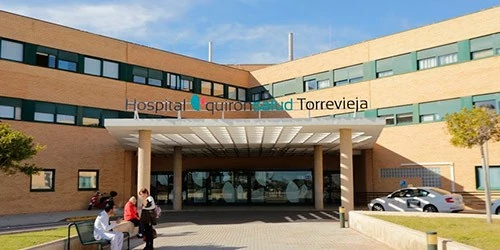
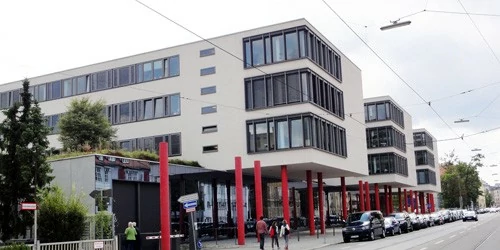
A skin fibroma is not life-threatening and may cause minor injuries. It can be treated with laser, cryo-destruction and minimally invasive surgery. Treatment can be sought at the Quironsalud Torrevieja Hospital in Spain and the Uniklinik Rechts der Isar in Germany.
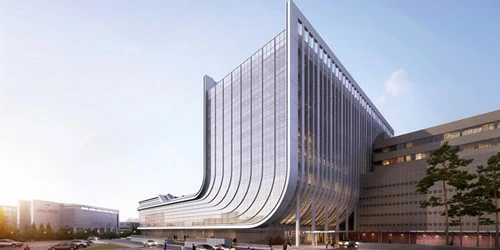
Bone fibromas occur in children and increase the risk of fractures due to minor trauma. The disease is usually sufficient to be monitored. Surgery is required if the fibroxanthoma reaches a large size. Then the doctor may prescribe curettage. You can make an appointment for surgery at the Bahçelievler Memorial Clinic in Turkey and the Anam Clinic in Korea.
Fibroma on the gums occurs due to mechanical trauma. It is treated with laser or radio wave methods. It is possible to remove a tumour on the gums without complications at the Lazurit Dental Clinic and ID Hospital.
Gastric fibroma can become cancerous. Removal of the neoplasm is carried out by endoscopic method. For this surgery, you can apply to the clinic Medical Park Antalya in Turkey and the Assuta clinic in Israel.
Laryngeal fibroma is one of the most dangerous benign tumours, as it can lead to respiratory arrest. Smaller throat tumours are removed with laser or ultrasound. Large laryngeal tumours are removed with surgery. Safe throat fibroma surgery is performed at Acibadem Clinic in Turkey and SoonChunHyang Hospital in Korea.
Stay with MediGlobus and keep up to date with the latest news on the latest developments in foreign medicine. If you need help from a neurologist abroad – leave an appointment. Our coordinators will help you find a clinic that offers a treatment program that will help you.

Sources:
- 1. Gynecologic and Obstetric Investigation: Clinical Characteristics and Surgical Management Options for Ovarian Fibroma/Fibrothecoma
- 2. General Gynecology: Incidence, clinical analysis, and management of ovarian fibromas and fibrothecomas
- 3. Journal of Bone Oncology: Desmoplastic fibroma of bone
- 4. The American Journal of Pathology: Non-osteogenic fibroma of bone
- 5. Pediatric Surgery: Jaw and gum tumours in children
- 6. Gut: Gastric fibroma with eosinophilic infiltration
- 7. Acta Oto-Laryngologica: Simple Fibromas of the Pharynx