


1. Gliosarcoma diagnostics |
2. Advantages of diagnosing and treating gliosarcoma abroad |
3. Treatment methods |
4. Survival prognosis |
5. Leading clinics |
Gliosarcoma is an aggressive malignant tumour of the central nervous system. It spreads rapidly to other areas of the central neural system via the cerebrospinal fluid. The tumour is a subtype of glioblastoma. It is predominantly found in the brain. Without a timely diagnosis, the prognosis is poor. Read about how this pathology is treated abroad and where patients most often turn for help in this article from the international medical platform MediGlobus.

Listen to the article:
How is gliosarcoma of the brain diagnosed abroad?
Gliosarcoma is a rare brain malignancy consisting of glial and sarcomatous components. It accounts for less than 0.6% of primary brain neoplasms and about 2% of all glioblastomas.
The disease predominantly occurs in patients aged 40-60. Men are more often affected than women. The main symptoms include headache, dizziness, seizures, memory and thinking disorders.
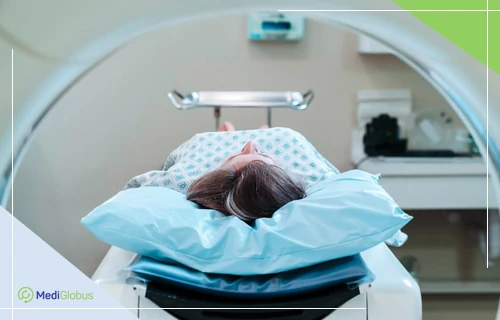
For the diagnosis of gliosarcoma, a complex examination is prescribed, which includes an MRI or CT scan as well as PET-CT, biopsy and laboratory tests. The diagnosis is confirmed by a microscopic examination of a biopsy sample.
On an MRI scan, gliosarcoma has fuzzy borders and appears lighter in contrast than other areas. It originates near the surface of the brain and adjoins its membrane. Cancer cells may also be found in the spinal cord.
To arrange an oncological examination abroad, please contact the coordinating doctors at MediGlobus. Our specialists will find the best diagnosis programme at a clinic that suits your requirements.
Benefits of gliosarcoma treatment abroad
 Quick and accurate diagnosis of gliosarcoma. These tumours can grow rapidly in size. To prevent them from spreading, examinations must be carried out as quickly as possible. Thanks to advanced medical equipment (MRI 3 Tesla, PET-CT), the accuracy of diagnosis abroad reaches 99%. It takes less than 3-4 days to receive the results.
Access to advanced treatments. Overseas, classic and advanced techniques for treating gliosarcoma are used. There are CyberKnife, GammaKnife and da Vinci robots. They allow patients to remove malignant lesions safely.
Doctors with many years experience of dealing with gliosarcoma. These specialists have carried out hundreds of successful brain surgeries practice here. They make extensive use of robotic systems, neuronavigation systems and endoscopic techniques. Such equipment reduces the surgical risks for patients, shortens the rehabilitation period and increases the effectiveness of treatment.
Abroad, cancer patients are treated by a multidisciplinary team of doctors, including oncologists, neurosurgeons, radiologists, chemotherapists, etc. For each patient, they work together to develop a personalised treatment plan that complies with international protocols.
What treatments are available abroad for gliosarcoma?
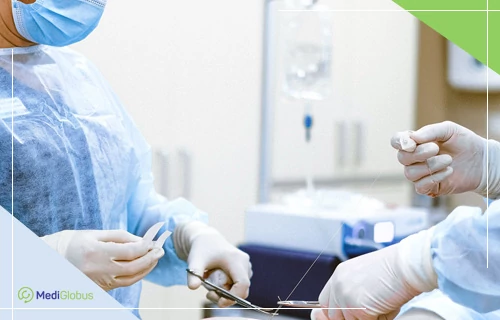
Gliosarcoma is an aggressive tumour and surgery alone is not enough to fight it. An oncology treatment programme for the disease involves a comprehensive approach. The initial treatment is surgery. It can be either open or minimally invasive. The choice of surgical technique depends on the localisation and size of the tumour.
To remove large gliosarcoma, a craniotomy is used – opening the cranial cavity and then resecting the abnormal cells. After the maximum volume of cancerous cells has been removed, the opening is closed with a plate and sutures are applied.
For small gliosarcoma, surgery is performed using endoscopic equipment or the da Vinci robot. Through tiny incisions and holes in the skull, surgeons remove the neoplasm with minimal risk of complications. In about 97% of cases, these operations proceed without neurological side effects.
After the resection of a gliosarcoma, radiation or/and chemotherapy as well as targeted drugs are prescribed. Radiotherapy is recommended for most patients with this cancer. The duration and regimen of radiation or chemotherapy are calculated for each patient on an individual basis.
The latest generation of radiotherapy units is available abroad, in particular RapidArc. Such systems make it possible to destroy the tumour without affecting healthy tissue. The targeting of the tumour means that the duration of the session is shorter and the intensity of the radiation remains at a high level.
Early-stage gliosarcomas can be treated with Gamma Knife and CyberKnife radiosurgery. Cancer cells can be destroyed in just one procedure. There is no need for invasive intervention, anaesthesia or hospitalisation. The patient leaves the clinic on the same day.
 Read:
Read: The survival rate for gliosarcoma of the brain
The relative 3-year survival rate for gliosarcoma is around 10%. However, this varies depending on many factors. These include the characteristics of the tumour, the age and state of health of the cancer patient, and the response to treatment. According to these criteria, the prognosis is as follows:
The average life expectancy for patients under 50 years is 15-20 months, compared to 7 months for those over 50 at the time of diagnosis.
The survival prognosis for patients who have not undergone surgery is only 4 months. After the resection, the average life expectancy increases to 7-11 months.
Patients with grade 4 glioblastoma who have not received adjuvant radiotherapy live for approximately 4 months. Patients who have received radiotherapy have a life expectancy increase of about 10 months.
Leading experts in gliosarcoma control abroad
Professor Tunç Öktenoğlu
Neuro-oncologist at Koç University Hospital. He specialises in minimally invasive and radiation brain surgery. He actively uses CyberKnife in his practice. Dr Öktenoğlu has over 25 years of experience.
Dr Uriel Wald
Dr Uriel Wald is Israel’s leading neurosurgeon. He is the head of the department of neurosurgery at the Assuta clinic. He specialises in minimally invasive brain cancer surgery in children and adults. His experience exceeds 30 years.
Dr Bartolomé Oliver
Spain’s top specialist in neurosurgery. He is the head of the neurosurgery department at the Teknon Clinic. The doctor performs brain surgery using endoscopic and robotic equipment. He performs over 200 surgical procedures on patients of all ages each year. Bartolomé Oliver has over 45 years of experience.
Professor Dag Moskopp
He is a renowned German neurosurgeon. Dr Moskopp is the head of the neurosurgery department at the Vivantes Clinic. The doctor has published the “Handbook of Neurosurgery” together with other specialists. He performs microsurgical operations on the spine and the brain, as well as the conservative treatment of intracranial tumours. The doctor has over 30 years of experience.
Where is gliosarcoma treated abroad?
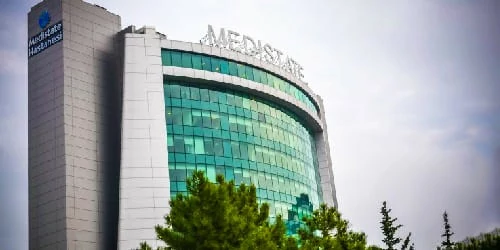
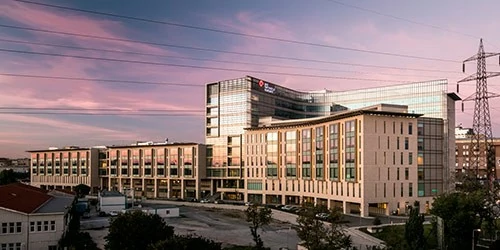
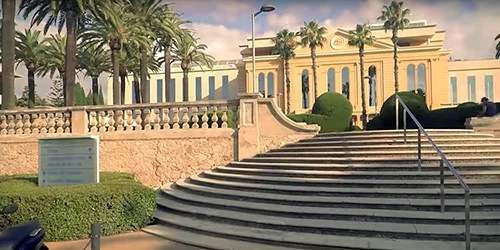
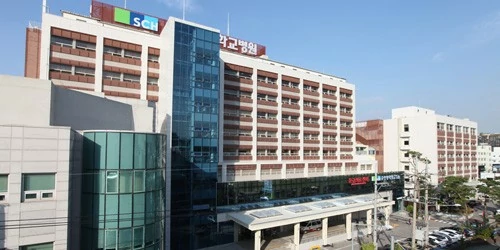
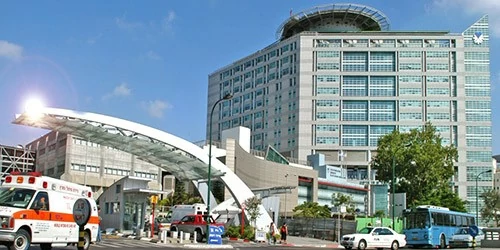
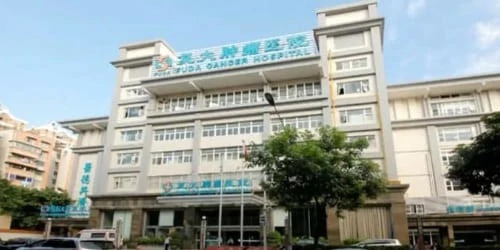
For gliosarcoma, medical tourists choose major cancer centres and leading clinics in Turkey, Germany, Spain, Israel, Korea and China. The following medical centres are particularly popular:


Summary
Gliosarcoma is an aggressive, rare tumour of the central nervous system. It is characterised by rapid progression and an unfavourable prognosis. Men suffer from this disease more than women. The disease peaks between the ages of 40 and 60.
Resection is considered to be the mainstay of gliosarcoma treatment. Both open and minimally invasive techniques are used to remove the neoplasm. The method of gliosarcoma removal depends on the size and location of the tumour. Large neoplasms are removed by craniotomy, while small ones are removed endoscopically or robotically. Radiotherapy and chemotherapy are prescribed after surgery. In the initial stages of gliosarcoma, Cyber- or Gamma Knife removal is possible.
The average 3-year survival rate for gliosarcoma is around 10%. This figure depends on the characteristics of the tumour, response to treatment, age and health status of the patient.
Leaders in neurosurgery abroad are considered to be medical centres such as Medistate, Koç, Teknon, Vivantes, Fuda, SoonChunHyang, Ichilov, Sheba, and Cologne University Hospital. The best specialists in neurosurgery practice in these institutions are Dr Uriel Wald, Bartolomé Oliver, Dag Moskopp, and Tunç Öktenoğlu.
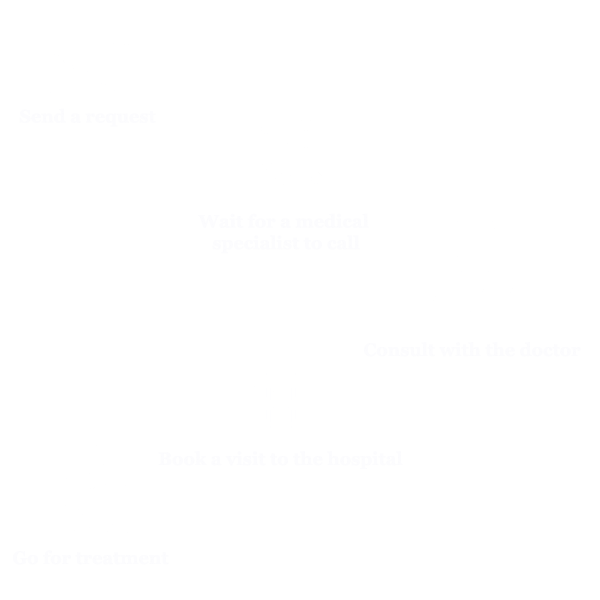
To go for treatment for gliosarcoma abroad, fill in the feedback form. We will call you back as soon as possible. Our coordinators will assist you in choosing a doctor, clinic and travel arrangements.
Sources
- ScienceDirect
- US National Center for Biotechnology Information
- Journal of Neuro-oncology
- National Cancer Institute