



1. Features of TNBC |
2. Treatment for stages 1-3 |
3. Treatment for stage 4 |
4. Advances in the treatment of TNBC |
5. New methods of cancer therapy |
6. Clinics recommendations |
7. Cost of treatment |
In 2018, there were approximately 2 million cases of triple-negative breast cancer (TNBC). It is one of the most aggressive subtypes of breast cancer, immune to hormone therapy and targeted drugs that are effective in other oncologies. The prevalence of TNBC is about 15% of all breast cancers. The tumour is more common in women under the age of 40, especially those of African American origins and BRCA1/BRCA2 gene mutation carriers. Despite the complexity of the disease, research in oncology is constantly advancing and modern treatments are allowing for better control. In this article, we will review recent advances in the treatment of TNBC and highlight the most effective therapies that are helping to improve patient prognosis.
Features of therapy of triple-negative breast cancer
According to researchers, TNBC accounts for approximately 10-20% of all cases of malignant breast tumours and is usually diagnosed in young women under 40 years of age. Risk factors include genetic predisposition, particularly mutations in the BRCA1 and BRCA2 genes, as well as some other genes associated with hereditary cancer.
One of the main difficulties in treating this disease is its high aggressiveness and low sensitivity to many types of drugs that are effective in treating other types of breast cancers. These cancer cells do not have receptors for the HER2 protein and are not sensitive to the hormones progesterone and oestrogen. Therefore, hormonal therapy and most variants of targeted therapy do not bring proper results. Thus, chemotherapy remains the main option to control the disease. It usually yields high results at the beginning of treatment, but the likelihood of relapse remains very high.
The following treatments are used for this disease:

 Surgery. Depending on the stage of the disease, surgical treatment may include lumpectomy or mastectomy.
Radiotherapy. A method of cancer treatment that uses high-energy rays to kill cancer cells.
Chemotherapy. This is a systemic treatment that targets cancer cells throughout the body.
Immunotherapy. Activates the patient’s immune system to recognise and destroy cancer cells.
Targeted therapy. Targets specific molecular targets in cancer cells.
If you have been diagnosed with triple-negative breast cancer, don’t give up hope. Contact MediGlobus to find a qualified oncologist who will find the best treatment plan for you. To get free help in finding a doctor and clinic, click the button below.
 Read:
Treatment of triple-negative breast cancer by stage

Stage 1-3
If the early-stage triple-negative breast cancer tumour is small enough, the recommended first-line treatment is surgical removal. Breast-conserving surgery or mastectomy with lymph node checking can be performed. In certain cases, such as a large tumour or cancer detected in the lymph nodes, radiation treatment may be prescribed after surgery.
Chemotherapy is administered after surgery to reduce the chance of cancer recurrence. More recently, chemotherapy has been recommended before surgery (neoadjuvant chemotherapy) alone or in combination with pembrolizumab (Keytruda) to reduce the size of a large tumour and/or lymph nodes with cancer.
If cancer is still found in the tissue after neoadjuvant chemotherapy, your doctor may recommend:
Oral chemotherapy drug capecitabine (Xeloda) for 18 to 24 weeks. This may help some women live longer.
An additional course of pembrolizumab after surgery to reduce the chance of cancer recurrence.
Targeted therapy with olaparib for a year for women with a BRCA mutation to reduce the risk of recurrence and prolong life.
Stage 4
For triple-negative stage 4 breast cancer with metastases, chemotherapy is usually the first line of treatment. Anthracyclines, taxanes, capecitabine, gemcitabine, eribulin, and others are used for treatment. Chemotherapy drugs can be used alone or in combination with other treatments.
For women with TNBC who have a BRCA mutation and the cancer no longer responds to traditional chemo, other platinum-based chemotherapy drugs (such as cisplatin or carboplatin) or targeted PARP inhibitor drugs (such as olaparib or talazoparib) may be considered.
If high levels of PD-L1 protein are present, pembrolizumab immunotherapy may be used in combination with chemotherapy. PD-L1 protein is found in about 1 in 5 women with TNBC.
Immunotherapy with the drug pembrolizumab is also used for metastatic TNBC, in which the cancer cells have a high level of mutations. If treatment with at least two methods has failed, the doctor may recommend the antibody-drug conjugate sacituzumab govitecan. In some cases, surgery and radiation therapy are given in the last stage of cancer to relieve symptoms and improve quality of life.
Triple negative breast cancer is aggressive but treatable. Scientists are actively working to develop new drugs, giving hope for more effective ways to fight this disease. Ask your MediGlobus coordinator which clinics are using modern treatment methods.
Advances in the treatment of TNBC
Previously:
Treatment for TNBC was less effective with a poor prognosis compared to other breast cancers.
Chemotherapy was the main treatment, but it caused severe side effects.
The choice of chemotherapy drugs was limited.
Today:
New effective treatments have emerged, such as PARP inhibitors, immunotherapy and others. These have significantly improved the prognosis for female patients.
Chemotherapy has become more effective and less toxic. Thanks to the use of modern chemotherapies, the risk of TNBC recurrence has decreased by 25-40%.
A wide range of drugs allows doctors to tailor therapy individually, taking into account the characteristics of the tumour.
New therapies for TNBC
Neoadjuvant chemotherapy | One of the most significant advances in TNBC therapy has been the use of chemotherapy before surgery. This approach increases the percentage of patients suitable for organ-preserving breast surgery and avoids surgical removal of lymph nodes. The CALGB 40603 study showed that 67% of TNBC patients with clinically confirmed positive lymph nodes had no cancer cells detected in the lymph nodes after neoadjuvant chemotherapy. |
Adjuvant chemotherapy with capecitabine | Used after surgery to reduce the risk of recurrence. The CREATE-X study shows that adding 4-6 cycles of capecitabine after surgical removal of the tumour improves survival by 14% and recurrence-free duration by 8%. |
Targeted therapy with PARP inhibitors | The drug olaparib has shown fairly high efficacy in patients with BRCA1/2 mutations in early breast cancer. Results from the OlympiA trial showed that the use of olaparib after surgery improved 3-year recurrence-free survival. |
Immune checkpoint inhibitors (ICIs) | The addition of immune checkpoint inhibitors (ICIs) to standard neoadjuvant chemotherapy has been a novel advance. The KEYNOTE 522 study showed significant improvement in pathological complete response to therapy and patient survival after treatment. |
Antibody-drug conjugates (ADCs) | This is a specific method of delivering chemotherapy directly to tumour cells. ADCs are hybrid molecules consisting of an antibody that recognises a protein on the surface of cancer cells and a chemotherapy drug coupled to the antibody. The method is effective in the treatment of metastatic TNRML. The phase III ASCENT study showed that the drug saquituzumab govitecan increased disease progression-free survival from 1.7 to 5.6 months and overall survival from 6.7 to 12.1 months. Other similar drugs are currently under development. |
The prognosis for triple-negative breast cancer
The survival prognosis of patients with TNBC is less favourable compared to other types of breast malignancies. This type of cancer is characterised by a more aggressive course and a high risk of recurrence. The likelihood of the disease returning within the first 5 years after diagnosis is 3 times higher than in other types of breast cancer. Metastases most often affect the lungs, lymph nodes, and brain. However, thanks to the development of new drugs, doctors can prolong the life of patients and improve their quality of life.
According to the American Cancer Society, the 5-year survival rate for triple-negative breast cancer is:
for localised TNBC (tumour has not spread outside the breast) – 91%
for regional TNBC (tumour has spread to nearby lymph nodes or other tissues) – 66%
for metastatic TNBC (tumour has spread to distant organs) – 12%
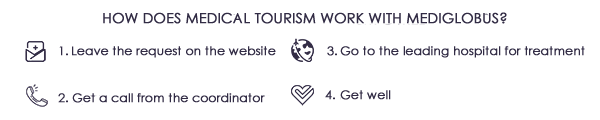
Where to go for treatment of triple-negative breast cancer?
MediGlobus recommends clinics in Turkey, Israel, Spain and South Korea for the treatment of aggressive breast cancer:






Cost of therapy for negative breast cancer
Turkey:
| Procedure | Cost |
|---|---|
| Lumpectomy | from $8,000 |
| Mastectomy | from $10,000 |
| Chemotherapy | from $2,000 |
| Radiotherapy | from $6,000 |
| Immunotherapy | from $2,500 |
Spain:
| Procedure | Cost |
|---|---|
| Lumpectomy | from €14,600 |
| Mastectomy | from €16,500 |
| Chemotherapy | from €3,000 |
| Radiotherapy | from €8,000 |
| Immunotherapy | from €4,500 |
Israel:
| Procedure | Cost |
|---|---|
| Lumpectomy | from $17,000 |
| Mastectomy | from $20,000 |
| Chemotherapy | from $3,000 |
| Radiotherapy | from $9,000 |
| Immunotherapy | from $5,000 |
South Korea:
| Procedure | Cost |
|---|---|
| Lumpectomy | from $13,000 |
| Mastectomy | from $17,000 |
| Chemotherapy | from $2,500 |
| Radiotherapy | from $9,000 |
| Immunotherapy | from $3,500 |
Summary
Triple-negative breast cancer is an aggressive subtype of breast cancer that lacks oestrogen, progesterone, and HER2 receptors. The disease is immune to hormone therapy and targeting drugs that are effective in other types of cancer.
Stage 1-3 triple negative breast cancer is treated with surgical removal of the tumour and affected lymph nodes, chemotherapy, radiotherapy, and modern immune and targeted therapy drugs.
The disease is treated mainly with chemotherapy in combination with other anticancer drugs at stage 4 with distant metastases. Surgery and radiotherapy are possible as palliative care.
Triple-negative breast cancer has a less favourable prognosis compared to other types of breast oncology. The disease is characterised by high aggressiveness and risk of recurrence. However, thanks to the development of new drugs, doctors can prolong the life of patients and improve their quality of life.
MediGlobus recommends clinics in Turkey, Israel, Spain and South Korea for the treatment of aggressive breast cancer.
The cost of TNBC therapy differs depending on the country and the chosen methods of treatment. In Turkey, breast cancer treatment is cheaper, where the cost of surgery starts from $8,000, chemotherapy from $2,000, radiotherapy from $6,000, and immunotherapy from $2,500. In comparison, in Spain, Israel and Germany, the cost of treatment will be 2-2,5 times higher.
MediGlobus experts will find a clinic in the shortest possible time, taking into account your individual needs and budget, make an appointment with an oncologist without a queue and help you with travel preparations. Click on the button below and leave your contact details. A coordinator will call you back within an hour with all the information you need.
Sources:
- 1. Frontiers in Molecular Biosciences
- 2. Medical News Today
- 3. Springer Nature
- 4. ScienceDirect
- 5. American Cancer Society
- 6. Journal of Oncology Practice