



Kidney transplantation offers the best prognosis to patients with kidney failure. There are many questions and myths surrounding this surgery, which we will try to address today. We have compiled a list of the questions that medical tourists most often have and asked the doctors working in this field.

Listen to the article:
How is a kidney transplant performed?
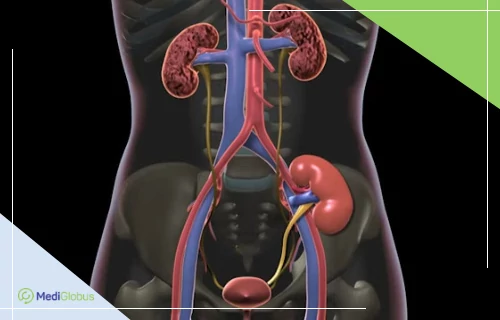
Kidney transplant surgery involves replacing a patient’s damaged organ with a healthy donor organ. It is usually recommended for patients with kidney failure that cannot be treated by other means.
Modern medicine allows the vast majority of kidney transplants to be performed laparoscopically. This approach differs from open surgery in that there is no need to make a large incision in the abdomen. Instead, the doctor makes a few small punctures through which he or she inserts a camera and a laparoscope – a flexible tube that allows for all the necessary surgical manipulations. Such procedures have several advantages: shorter hospitalisation, faster rehabilitation, and less postoperative pain.
Laparoscopic kidney transplantation is a complex technique that requires previous experience in vascular and laparoscopic surgery. For this reason, it is recommended to go to centres that specialise in organ transplants and can offer the services of experienced specialists.
There are different techniques for kidney transplantation, which are used depending on the specific medical case and the anatomical conditions of the patients. The most commonly used one goes as follows:
 Donor kidney removal
The organ is usually taken from a living donor via a laparoscopic nephrectomy. The left kidney is better suited to transplantation as it has a longer renal vein. The organ is carefully removed along with the renal artery with the aortic patch, the renal vein with the IVC patch, and the ureter. After removal, the tissue is washed with preservative fluid as soon as possible and stored in a special “refrigerator” to preserve cellular integrity.
Kidney transplantation
The graft is placed in the patient’s iliac fossa. After cutting into the retroperitoneum, the surgeon exposes the iliac vessels and ligates all the lymphatic vessels. He then connects the blood vessels and ureters of the donor kidney to the blood vessels and bladder of the patient, respectively. This will allow the donor organ to start functioning and filtering waste products from the patient’s blood, just as a healthy kidney would do. At this stage, a ureteral stent can be placed, which will be removed after about 6 weeks.
A kidney transplant from a living donor is performed under full anaesthesia and takes approximately 3 hours.
Robotic kidney transplantation is also available in leading foreign hospitals. It is performed using the da Vinci medical robot. It is a machine that allows the surgery to be performed via remote control with greater accuracy and dexterity as well as reducing tremors and fatigue.
The European Association of Urology (ERUS) confirms that robotic kidney transplantation combines the advantages of open surgery (patient and graft survival rate) and minimally invasive procedures (shorter and easier recovery period, less blood loss). This is particularly relevant for overweight patients, who benefit most from robot-assisted kidney transplantation. Studies conducted by the University of Illinois have shown survival rates similar to other patient groups; as well as a reduction in the risk of infection from 28,6% to 3,6%.
 Read:
Read: For which diagnoses can a kidney transplant be prescribed?
A kidney transplant is the recommended treatment for stage 4 and 5 renal failure. This condition can be caused by many different conditions, the most common being:
Diabetes,
Glomerulonephritis,
Kidney cancer,
Congenital abnormalities of the urinary tract,
Polycystic kidney disease,
Pyelonephritis,
Obstructive uropathy,
Alport’s disease,
Hypertensive nephrosclerosis,
Reflux nephropathy,
Interstitial nephritis,
IgA nephropathy,
Goodpasture’s syndrome,
Haemolytic-uremic syndrome,
Chemical nephrotoxicity,
Renal artery embolism,
Sickle cell nephropathy,
Systemic lupus erythematosus.
Many people also have concerns about the possibility of kidney transplantation for patients with hepatitis. Current treatment protocols indicate that transplantation is possible, provided that the patient is in stable health and has no severe complications, such as cirrhosis or liver cancer.
In 2014, this diagnosis also ceased to be a contraindication to kidney donation thanks to the introduction of direct-acting antivirals (DAAs) into standard treatment regimens. Some clinics perform organ transplants from a donor with hepatitis C, while others still list this diagnosis as an absolute contraindication.
Find a hospital for a kidney transplant
If you need a kidney transplant and you already have a histocompatible doctor, the MediGlobus medical platform can help you with your choice of clinic for the surgery. To contact us, click the button below, fill in the request form and wait for a call from our medical coordinator.
How long do people live after a kidney transplant?
If the kidney transplant was performed in a qualified medical centre by an experienced surgeon, the treatment prognosis is very optimistic. 87,9% of patients live more than 10 years after transplantation. Using an organ from a living donor improves the prognosis.
The longevity of a transplanted kidney depends on the age of the patient, the presence of concomitant diseases, and the lifestyle. On average, an organ can last 20-25 years after transplantation. The longest medically documented outcome is a donor kidney that has lasted 60 years.
How many times can a kidney be transplanted?
Most transplantologists agree that a second kidney transplant can be a good treatment option if the first graft has been rejected, but the patient has another potential donor. There is still an ongoing scientific debate about third and fourth transplants. Some physicians believe that dialysis will be the preferred treatment option in such cases. At the same time, others, in particular doctors at the University Hospital of Barcelona in Spain, think that in some cases a second operation may be possible. In particular, the experience of this hospital shows that 90,6% of patients live more than 5 years after their third kidney transplant, and 85,7% – after their fourth.
Which is better – a kidney transplant or dialysis?
Dialysis and kidney transplantation are the main treatment options for kidney failure. There are advantages and disadvantages to each, and patients need to work with their doctors to make individual decisions on a case-by-case basis.
Dialysis refers to the process of mechanical blood purification with a special machine that can be performed in the hospital or at home. The second option, peritoneal dialysis, removes the need for frequent clinic visits but requires the patient (or the person helping them) to be prepared to perform the medical procedure themselves. In terms of quality of life and longevity, both types of dialysis are on par.
The significant comparison points between dialysis and kidney transplantation are:
| Dialysis | Kidney transplantation |
|---|---|
| The Spanish Quality of Life in Chronic Renal Failure research group has found that patients who have undergone kidney transplantation have better functional status, well-being, life satisfaction and life expectancy than those who are on dialysis. The difference is seen on all levels – physical, emotional, social, performance, sexual and family life. | |
| Dialysis can be time-consuming and requires regular visits to the clinic. Many patients who receive haemodialysis at the hospital are either unable to work or choose not to work due to lack of time. | Kidney transplantation provides greater freedom and independence as the patient does not need to spend 12 hours a week in the hospital. |
| Dialysis is a very affordable and safe procedure that can be carried out in most hospitals with a specialist nephrology unit. | If no potential donor can be found among the patient’s relatives, finding a suitable organ can be a difficult task. |
| A minimally invasive procedure. | Organ transplantation carries all the risks of surgery: infection, bleeding, reaction to the anaesthetic, and organ rejection. |
| Dialysis can be physically and emotionally draining, and cause side effects such as fatigue, muscle cramps and low blood pressure. | After a kidney transplant, patients need to take medication to prevent rejection of the organ for the rest of their lives and have frequent check-ups with their doctor. Drugs can have side effects, including an increased risk of serious infections, diabetes and some cancers. |
| The cost of treatment varies greatly depending on where it is carried out. However, when comparing reports from medical organisations in different countries, a similar trend can be observed: while dialysis costs less in the short term; taking into account all medical costs over 10 years, it is kidney transplantation that proves to be the cheaper option. | |
Who can and cannot be a kidney donor?
Most transplant centres have the following requirements for kidney donors:
Age 18 years or older;
Good physical and psychological health;
Healthy kidney function.
Contraindications to kidney donation include high blood pressure, diabetes, HIV infection, acute infections and cancer.
Different transplant centres have different policies regarding smoking among potential donors. This habit affects respiratory health, which greatly increases a donor’s risk of developing postoperative pneumonia. Some centres consider smoking an absolute contraindication for nephrectomy, while others carry out the operation on the condition that the donor quits the habit sometime before the procedure and demonstrates good lung health at a pulmonary diagnostic test.

Under international and national laws, kidney donation can only be performed voluntarily and cannot include a financial reward.
How do I find a kidney donor?
The patient’s closest relatives – parents, siblings, uncles and aunts – are checked first for compatibility. The chance of finding a suitable donor is highest among blood relatives. However, it is not always possible to find the right person in this way.
In such cases, there are two solutions – to join the waiting list for a cadaver kidney or to look for a cross-over donor. The first option is not available for treatment abroad; in addition, one may need to wait a long time for a suitable organ to show up. Cross-over transplantation requires a potential donor who is willing to donate their kidney but cannot because of incompatibility with the recipient. Then they go to a transplant centre in search of other couples with the same problem. If a recipient from one pair is compatible with a donor from another and vice versa, it is possible to operate on four people at the same time.
Is it possible to get a kidney from an adult to a child?
Yes, an adult can donate a kidney to a child if he or she is a histocompatibility match.
The kidney donor does not necessarily have to be the child’s parent either – in rare cases, another relative or even a non-relative (in a cross-over operation) can take on the role.
Is kidney transplantation possible in elderly patients and donors?

According to the official guidelines of the American Society of Transplantology (AST), there is no upper age limit for kidney donation or transplantation.
However, in practice, elderly patients are not always approved for organ transplantation. The problem is that people over the age of 70 often have diagnoses that make any surgical procedure contraindicated because of the high risk to their health – cardiac ischaemia, peripheral vascular disease, etc. The decision whether or not to operate is therefore done on a case-by-case basis, taking into account all potential risks.
Robotic kidney transplantation is a unique possibility in cases of partial contraindication due to advanced age. Such a procedure has been successfully performed on a 90-year-old patient in Turkey by one of the best robotic surgeons in the country, Dr Fatih Agalar.
Is a kidney transplant possible between people with different blood types?
No. Blood tests, along with chemotyping, determine the compatibility between the donor and recipient.
The compatibility of blood types for kidney transplantation can be shown in the following table:
| Donor’s blood type | Recipient’s blood type |
|---|---|
| A | A and AB |
| B | B and AB |
| AB | Only AB |
| O | All blood types |
The rhesus factor does not play a role in carrying out a kidney transplant.
What are the advantages of a kidney transplant abroad?
 The superior experience of foreign surgeons
The experience of the doctor is the factor that has the greatest influence on the outcome of the operation. Because of this, the trend is that patients from countries with less experience in transplant surgery are moving to countries with greater experience. To compare, in Ukraine doctors transplanted 275 kidneys in 2022, in Kazakhstan – 1,695, and in Turkey, more than 4,000 kidney transplants have been performed during the same period.
More advanced technology
The level of surgery also depends on the techniques and technology used by the doctor. In general, more modern equipment used for both diagnosis and treatment makes the process safer and more effective. Patients travelling overseas for a kidney transplant can expect high survival rates, low risk of complications, less blood loss and a shorter recovery period. And innovations such as the da Vinci robot allow surgery to be performed on patients who may be refused treatment at other hospitals, such as those who are older or overweight.
A low percentage of postoperative complications
Less experienced hospitals have a higher rate of postoperative complications, including infection. Referral to a specialist transplant centre reduces this risk to between 1% and 5%.
Finding foreign donors for cross-over transplantation
Advanced transplant centres usually have close links with other hospitals and international donor databases. This makes it possible to quickly find a suitable candidate for cross-over kidney transplantation from anywhere in the world. Turkey, in particular, offers such an option.
Good value for money
The cost of treatment depends primarily on the pricing policy of the country. Many patients are surprised to learn that quality treatment in Turkey or India is comparable with Western European countries, but 20-40% cheaper.
High standards of patient care
Strict hygiene standards, clean and comfortable rooms, skilled nursing staff and a client-centred approach make the hospital stay much more bearable. Many people are pleasantly surprised by the exceptional standard of care.
Quickly sign up for treatment
Patients who come from abroad to be treated for dangerous diseases are often given priority access to fast medical care by international medical centres.
What are the complications and risks of kidney transplantation?
Kidney transplantation can cause vascular complications: thrombosis or stenosis of the renal artery, and renal vein thrombosis. These occur very rarely, in less than 10% of cases. However, to exclude such an undesirable outcome, patients are always monitored closely after surgery, undergoing Doppler ultrasound or angiography. Medication to prevent vascular complications may also be prescribed.
Ureteral leaks and urinary tract obstruction can develop after kidney transplantation. These are treated by surgery.
Delayed graft function (DFT) is a short-term side effect manifested by the fact that the kidney does not function at first after transplantation. When transplanted from a living donor, DFT very rarely occurs; and in most cases, it goes away on its own. However, there is still some risk of delayed graft function developing into organ rejection.
Other side effects are related to the medication prescribed for patients after organ transplantation. These are primarily the development of cardiovascular disease, diabetes, infectious diseases or cancer (due to weakened immunity)

What are the consequences of a kidney transplant for the donor?
Any surgical procedure carries risks. The potential donor should be aware of how nephrectomy can affect their health. In particular, there is some risk of bleeding, infection or adverse reaction to anaesthesia. In the first period after the surgery, they may experience pain, nausea, vomiting and constipation. However, in 80-90% of cases, surgeries performed by experienced surgeons proceed safely and without complications.
As for living with one kidney, there is no need to worry about it – the remaining organ will take over the function of the transplanted one and begin to work more actively. However, the productivity of one kidney will still be lower than that of two. For this reason, donors are advised to undergo regular diagnostic tests to monitor the condition of the organ – for example, blood and urine tests, as well as blood pressure measurements.
On average, you will be hospitalised for 3-5 days after kidney donation. After this, you will be discharged home. However, you should expect to make a significant improvement in your condition in about 6 weeks. During this time, you should take time off from work and have help at home, as high activity and heavy lifting will be contraindicated.
Is pregnancy possible after a kidney transplant?

Yes, surviving an organ transplant is not a contraindication for pregnancy. Given that overall health improves after this surgery, most patients experience an increase in fertility.
On average, it takes about a year for the kidney function to stabilise after a transplant, so doctors recommend avoiding pregnancy for this period. Once the woman’s condition has improved, it is possible to start planning a family. Even then, however, it is advisable to consult a doctor and closely monitor your health: pregnancy is a serious strain on the body, and certain medications can have unwanted effects on the development of the foetus. Expectant mothers who have had organ transplants face certain risks, but this fact does not stand in the way of the desired motherhood.
As a last resort, if the attending physician concludes that pregnancy is not desirable in your particular case, IVF with a surrogate mother remains an option. Using the patient’s healthy eggs, she will be able to conceive a baby ‘in vitro’ that is carried to term by another woman – but it will still be related to the genetic mother.
Can an artificial kidney be transplanted?
To date, there are at least two promising projects to develop an artificial kidney. One of them, KidneyX, is run jointly by the US Department of Health and Human Services (HHS) and the American Society of Nephrology (ASN). The other, Neokidney, is authored by the Danish Kidney Association in cooperation with several private companies. However, neither development has yet reached the clinical trial stage. Doctors believe we should wait at least another 4-5 years before using them in humans.
The artificial kidney may be a good alternative for patients who have been on the waiting list for an organ transplant for many years. It is a small device that can be implanted inside a person and perform dialysis at any time and place, freeing the patient from having to make regular visits to the hospital.
Over the past few years, the artificial kidney project has successfully tested in separate experiments a hemofilter that removes waste products and toxins from the blood, and a bioreactor that replicates other kidney functions, such as the balance of electrolytes in the blood.

What is the price of a kidney transplant?
The price of a kidney transplant abroad depends on the country in which the operation is to take place. When comparing advanced foreign transplant centres, the best value for money for a kidney transplant can be found in Turkey, India and Azerbaijan.
For Turkey, the price range starts from $19,000-24,000. The Liv Vadistanbul, Medicana and Liv Istinia Bahceşehir clinics have good deals. Apart from the surgery itself, the package also includes transfer, an interpreter, and a full range of post-operative procedures for both the patient and the donor. In addition, Turkey is one of the few countries where da Vinci surgery is performed and cross-over kidney transplantation is allowed.


In India, many doctors have a lot of experience in performing kidney transplants – more than 7,500 such operations are performed there in a year. Transplant costs start at $9,000-14,000, depending on the hospital. International patients are primarily referred to BLK Hospital, Artemis and Medanta. These hospitals have an excellent reputation and are internationally certified.
Azerbaijan can also be a good option for kidney transplants abroad, especially for those from neighbouring countries. Here we can recommend Liv Bona Dea Clinic Baku, which belongs to the Turkish network and has all the advantages of innovative medicine of the 21st century. A kidney transplant will cost a patient between $13,000 and $14,000 here.
Summary
Kidney transplantation is the most effective treatment for kidney failure. Thanks to modern techniques, the survival rate of patients reaches 97% (according to the Organ Procurement and Transplantation Network). Performing the surgery laparoscopically or by da Vinci robot increases its safety, especially when it comes to patients from vulnerable groups (obesity or old age).
In most countries of the world, only blood relatives are recognised as kidney donors. Sometimes it is possible to have a cross-over transplant (when two patients with kidney failure “exchange” donors) or from a spouse – such a treatment option is possible in Turkey in particular. Organ donation is entirely voluntary and any form of financial reward is criminally punishable worldwide.
To check whether a person is a suitable kidney donor, a general blood test (to determine the blood group) and chemotype testing are required. Parents can be donors for their children, and old age is also not an absolute contraindication for the surgery.
Going to a foreign clinic for a kidney transplant has several advantages: superior experience of foreign surgeons, modern technology, low percentage of postoperative complications, good value for money, high standards of patient care, and quick appointment times.
The price range for kidney transplants abroad starts at $9,000 (India). Liv Vadistanbul, Medicana, Liv Istinia Bahcesehir (Turkey), BLK Hospital, Artemis and Medanta (India), and Liv Bona Dea Baku (Azerbaijan) can all boast extensive experience in transplantology.

To make an appointment for a kidney transplant abroad, leave a request on our website. Our coordinating doctors will call you back to answer all your questions and help you organise your medical trip – booking, collection and processing of documents, transfers, interpreters etc.
Sources:
- 1. Clinical Kidney Journal: Robot-assisted kidney transplantation: an update
- 2. European Urology: Laparoscopic kidney transplantation
- 3. Transplantation Processings: Third and fourth kidney transplant: still a reasonable option
- 4.KidneyX project successfully tests prototype bio-artificial kidney
- 5. Journey of Clinical Medicine: Long-Term Results of Kidney Transplantation in the Elderly: Comparison between Different Donor Settings
- 6. National Kidney Foundation on the interaction of blood groups in organ transplants
- 7. World Journal of Hepatology: Update on hepatitis C: Direct-acting antivirals
- 8.The story of a kidney transplant for a 90-year-old patient
- 9. Contemporary Kidney Transplantation: Kidney Transplantation: Surgical Complications
- 10. Kidney International: Quality of life for patient groups
- 11. Clinical Kidney Journal
- 12. The impact of chronic kidney disease on developed countries from a health economics perspective: A systematic scoping review
- 13. Cost-effectiveness analysis of dialysis and kidney transplant in patients with renal impairment using disability adjusted life years in Iran
- 14. Graft and Patient Survival Rates in Kidney Transplantation, and Their Associated Factors: A Systematic Review and Meta-Analysis
- 15. National Kidney Foundation on pregnancy after a kidney transplant
- 19. American Society of Nephrology on life after kidney donation