


1. Diagnostics of Alzheimer’s disease |
2. Symptoms of the disease |
3. Risk factors for the disease |
4. Early signs of Alzheimer’s |
5. Leading clinics |
Alzheimer’s disease is one of the most common types of dementia. It is caused by the loss of neurons and synaptic connections in the cerebral cortex. The pathology manifests with impaired memory, speech, spatial and temporal orientation as well as behavioural and cognitive issues. The person loses the ability to learn new skills and perform the old ones. This develops into incurable dementia. It is not currently possible to get rid of the disease completely. Early diagnosis of Alzheimer’s, however, may make it possible to slow down its progression and effectively control it. You can read more about how Alzheimer’s can be diagnosed abroad in this article.

Listen to the article:
Diagnosing Alzheimer’s disease at an early stage?
Diagnosing Alzheimer’s disease requires more than just a blood or cerebrospinal fluid test. A range of imaging and neurological tests are essential for accurate diagnosis and staging. Doctors will also look at the patient’s symptoms, medical history and medication history. Someone who knows the patient well (for example, a loved one: husband, wife, children, or family friend) should be there to answer all the medical questions. The doctor will also perform a physical examination and prescribe some tests. These include:
Computed tomography (CT) | Creates cross-sectional images of the brain. This X-ray technology can rule out malignant and benign brain neoplasms, strokes and neurological disorders caused by head injuries that can cause similar symptoms. |
Magnetic resonance imaging (MRI) | During the procedure, radio waves and a strong magnetic field are used to visualise brain structures in detail. The scan can show shrinkage in some areas of the brain, which is one of the signs of early-onset Alzheimer’s. Magnetic resonance imaging can also help rule out other pathologies. It is considered to be a more accurate diagnostic tool for dementia than a CT scan. |
PET scan | Used to obtain images of a pathological process taking place in the brain. In a PET scan, a radioactive substance is injected into the blood, which allows certain abnormalities in the brain cells to be pinpointed. There are different types of PET scans: Fluorodeoxyglucose (FDG) PET, Tau-PET and amyloid PET. An FDG scan identifies areas of the brain where nutrients are poorly absorbed. This is typical of Alzheimer’s disease. Amyloid PET measures the level of amyloid deposits in the brain. This test, like Tau-PET, is usually prescribed in clinical trials and when patients have unusual or very early symptoms of dementia. |
An early and accurate diagnosis of Alzheimer’s syndrome is useful for several reasons. Firstly, most drugs work best in the initial or intermediate stages of the disease. Secondly, therapy before severe impairments may give better long-term results and allow for more effective control of symptoms.
 Read:
Read: What are the markers of Alzheimer’s disease?
Biomarkers are measurable indicators of what is happening in the body. They can be found in blood and other body fluids, organs and tissues. They help to identify diseases, monitor their course and evaluate the effectiveness of treatment with certain drugs. For example, elevated cholesterol levels are a biomarker of heart attack risk.
The biomarkers of Alzheimer’s disease are found in cerebrospinal fluid and blood. These include beta-amyloid 42 (Aβ 42 ), tau protein and phospho-tau. They are specific indicators of the development of neurodegenerative processes in the brain associated with Alzheimer’s disease. The biomarkers are obtained by lumbar puncture (spinal tap) or by taking a blood sample.
In combination with other diagnostic methods, these biomarkers make it possible to determine the likelihood of developing Alzheimer’s disease. They are an important part of the complete assessment of a patient’s condition and help to differentiate between diseases.
What are the risk factors for Alzheimer’s disease?
Alzheimer’s disease leads to the gradual death of brain cells, dementia, disability and death. The exact reasons that cause this are not known. Older age, however, is one of the main criteria that can increase the risk of the disease. In 95% of cases, the first symptoms appear in people over 65. If the pathology manifests in patients younger than 65 years of age, it is considered to be an early-onset Alzheimer’s syndrome. Other factors that increase the likelihood of developing this pathology include:
 Brain injuries,
Family history,
Down syndrome,
Hypertension,
Diabetes mellitus,
Smoking,
Cardiovascular diseases,
Obesity,
Depression,
Physical inactivity.
Having more than one of the risk factors listed above increases the possibility of developing Alzheimer’s disease significantly. For more information on the first symptoms of Alzheimer’s and how to diagnose the disease abroad, contact the medical coordinators of the international medical platform MediGlobus.
What are the first signs of Alzheimer’s?
The progression of Alzheimer’s disease is roughly divided into 3 main stages: preclinical, the appearance of mild cognitive impairment and dementia. The course of the disease may vary from patient to patient, but in most cases life expectancy after diagnosis is around 4-8 years. The syndrome is usually detected at the onset of cognitive impairment.
Preclinical Alzheimer’s disease means that the patient has no symptoms, but there are signs of incipient Alzheimer’s on brain imaging (MRI or CT scan) or in blood/spinal fluid biomarkers. The deteriorating processes in the brain can begin long before the first symptoms appear – up to 20 years.
More than 80% of Alzheimer’s cases are diagnosed in the early stage of the disease. The most important signs of the disease are:
Memory impairment (patients have difficulty recalling things that have happened in the recent past; difficulty finding the right word when speaking, remembering a place and a person’s name, etc.)
Difficulties communicating and performing everyday tasks;
Problems understanding visual images and spatial relationships;
Difficulty making decisions, short-sightedness;
Changes in mood and personality.
With mild cognitive impairment, patients can still be independent in their daily lives. However, it is important not to ignore these manifestations and not to miss the first signs of Alzheimer’s disease. By starting the treatment early, the symptoms can be alleviated and the patient’s level of independence can be maintained for as long as possible.
Symptoms of Alzheimer’s disease in young people
In people under the age of 40, Alzheimer’s disease most often develops as a result of a chromosomal disorder (Down syndrome) or brain injury. The symptoms are not very different from those of older patients. They may suffer from memory and speech disorders. They may display apathy, loss of interest in life and increased aggression. Also, the main signs of early-stage Alzheimer’s disease in young people include:
difficulties solving simple problems or working with numbers,
difficulty estimating distances and problems while driving,
impaired spatial memory, whereby the patient is unable to remember for a long time where he or she has placed an object.
If you discover early signs of Alzheimer’s disease in yourself or a loved one, you should seek medical help. There is no time to waste. Leave your application on our website and we will help you find the most competent person for your issue.
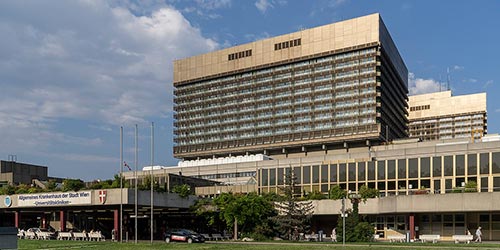
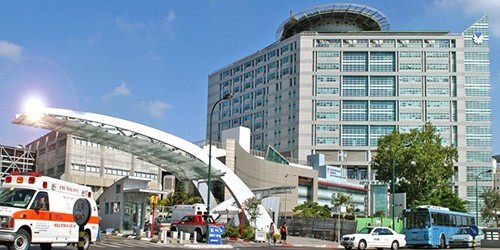
Leading clinics for laboratory and imaging diagnosis of Alzheimer’s disease




Summary
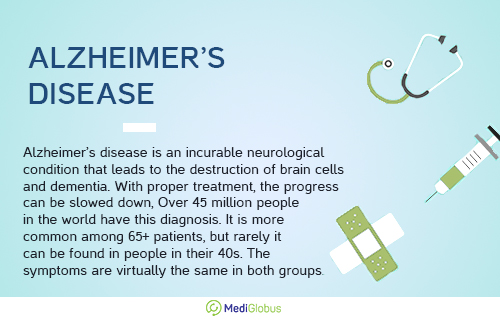
Alzheimer’s syndrome is an incurable neurological disease that leads to the destruction of brain cells and dementia. More than 45 million cases of this pathology have been diagnosed worldwide. It mainly affects people over the age of 65. However, the disease can also appear at an earlier age, up to forty years old. The symptoms of Alzheimer’s do not differ much between older and younger people.
Early clinical manifestations of Alzheimer’s disease include memory impairment, confusion over location or time, difficulty concentrating and planning tasks, poor judgement in decisions, frequent mood swings, impaired speech, etc.
Alzheimer’s disease requires comprehensive and in-depth diagnostics. There is no single method that can accurately detect the presence of the pathology. Abroad, a complex of various diagnostic tools is used. Patients undergo neurological tests to evaluate cognitive function, brain imaging using MRI, CT or PET, as well as cerebrospinal fluid or blood tests.
Early diagnosis of Alzheimer’s disease abroad is available at the following clinics: Hisar, AKH, Medipol, Ichilov, Motol and Charité.
For a diagnosis of Alzheimer’s disease at the best clinics abroad, click on the button below and fill in the feedback form. We will help you choose the medical centre best suited to your needs.
Sources:
- National Institutes of Health
- Alzheimer’s Association
- National Library of Medicine
- National Institutes of Aigh
- Alzheimer’s Association: 10 Early Signs and Symptoms of Alzheimer’s
- MayoClinic