


1. Can breast cancer occur in men?
|
2. Symptoms of the disease
|
3. Diagnosing breast cancer
|
4. Treatment of breast cancer
|
5. Leading clinics
|
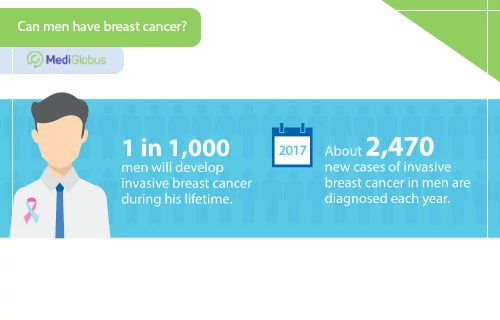
Breast cancer occurs rarely in men, but this does not make it any less dangerous. One in 1,000 men is diagnosed with breast cancer each year. 8 patients out of 10 seek medical treatment only at late stages. It is more difficult to treat late-stage breast cancer in men than early-onset disease. However, there are still options. What methods of diagnostics and treatment of this disease are used abroad? How effective is the treatment? Which clinics can help? Read this article to learn the answers to these questions.

Listen to the article:
What is breast cancer in men?
Although breast cancer is considered to be a disease affecting predominantly women, it does occur in men as well.
Pathology can occur at any age, but in most cases, it develops after the age of 50.
Most often it is localised in the ducts or lobes of the breast. These are ductal carcinoma in situ and invasive ductal and lobular carcinoma.
Malignant breast tumours in men can metastasise. Over time, cells of the neoplasm spread through the blood or lymph to other organs, which harms the prognosis.
Symptoms of breast cancer in men
Men don’t always perceive a lump in breast tissues as something dangerous. Many patients do not pay attention to it until they have discomfort and soreness. As the disease progresses, the following signs appear:
 discharge from the nipple,
pigmentation, peeling and ulceration of the skin,
enlargement of the axillary lymph nodes,
itching in the tumour area,
enlarged breasts,
“drooping” of the nipple,
increased body temperature,
constant fatigue.
Risk factors for malignant breast tumour formation in men
The main causes of breast cancer in men include:
hereditary predisposition (mutation of the BRCA1 and BRCA2 genes),
hormonal drugs containing estrogen,
radiation therapy to the chest,
alcohol abuse,
Klinefelter syndrome (a genetic disorder in which a man has an extra X chromosome),
testicular disease and trauma,
overweight,
exposure to chemicals,
cirrhosis of the liver.
Men who have an increased risk of breast cancer should have regular cancer check-ups. This will help to detect the disease at an early stage when it is easiest to cope with it. MediGlobus coordinators will organise a trip abroad for diagnosis. The accuracy of diagnosis in the best clinics in Turkey, Israel, Germany or another country with developed medicine reaches 100%.
Diagnostic methods for malignant breast tumours in men
A painful lump near the nipple is usually a sign of a second or third stage of cancer. It is difficult to treat at this stage. For the most effective therapy programme, a comprehensive examination is necessary. To do this, patients are prescribed various diagnostic methods, in particular:
mammography – a low-dose radiation X-ray of the breast;
ultrasound – a painless scan using sound waves to create an image of the breast;
biopsy – a small sample of tumour tissue for examination under a microscope;
laboratory tests.

What treatment options are available abroad for breast tumours in men?
The main treatment for breast cancer in men is surgical removal of the affected breast – mastectomy. During surgery, the entire breast, including the nipple, is removed. Sometimes part of the chest wall muscles are resected along with the breast.
A lumpectomy, a partial resection of the breast with the tumour, is not usually suitable for men. It is only effective at an early stage of the disease. Such intervention for stage 2 or 3 breast cancer has a high risk of recurrence.

The lymph nodes in the armpit area are dissected out during a mastectomy. If there are no signs of cancer in them, then the samples of several nodes closest to the cancer are taken – this is called sentinel lymph node biopsy. When it is known before surgery that the axillary lymph nodes are affected, then all of them are removed.
After surgery, the patients are treated with chemotherapy or radiation therapy. These methods are recommended to destroy the remaining cancer cells. Chemical drugs are indicated for patients with affected lymph nodes. They are administered intravenously or taken in pill form.
Radiation therapy is prescribed for large or metastasising breast tumours 3 weeks after the surgery. The number of sessions is determined on an individual basis. As a rule, 28 sessions are recommended to achieve maximum therapeutic effect. They are carried out for 5 days a week.
Hormonal therapy is often used in addition to other methods of fighting breast cancer. It blocks the action of oestrogen or reduces its amount in the body. Hormonal drugs are an effective treatment for oestrogen receptor (ER) breast cancer. They are taken in pill form for up to five years.
Targeted or immune therapies are prescribed to treat advanced breast cancer. Targeted drugs affect cancer cells and do not damage healthy tissue. They are often prescribed in combination with chemo. Immune drugs activate the body’s defences against cancer. They make the tumour “visible” to the immune system.
Breast cancer treatment in men by stage
Stage 1
The main method of dealing with stage I breast cancer is surgical removal of the tumour. As a rule, this is done with a mastectomy. In rare cases, surgery with preservation of the breast and subsequent radiation is indicated. The lymph nodes under the arm are removed and tested for the presence of cancer cells. If cancer is found in the sentinel lymph nodes, the patient is given chemotherapy, hormone therapy, or radiation therapy.
Stage 2
At this stage, men undergo surgery to remove the breast. In case of large tumours, chemotherapy or radiation is performed before the intervention. After mastectomy, additional treatments are also indicated: chemo, treatment with hormones or radiotherapy. For some types of stage 2 breast cancer, targeting drugs are recommended before and after surgery. They are often combined with chemotherapy.
Stage 3
Before surgery, the patient is given chemotherapy along with targeted drugs. This shrinks the tumour and eliminates metastases. Then a mastectomy is performed with complete removal of axillary lymph nodes. After surgery, chemical and targeted drugs are used, as well as radiation. Hormone therapy after surgery is recommended for men with hormone-dependent tumours.
Stage 4
Drug therapy is the main treatment for stage 4 breast cancer in men. It includes hormonal, chemical, targeted and immune therapies. A combination of these methods is also possible. Surgery along with radiation therapy is prescribed for palliative care. This provides an opportunity to alleviate the symptoms and prolong the life of the patient. After surgery, chemotherapy together with targeted drugs is indicated.
Survival prognosis for breast cancer in men
With timely detection and treatment of breast cancer in men results in a favourable prognosis. The 5-year survival rate for patients with stage 1 oncopathology is 97%. For the second and third stages of the disease, the survival rate is 83% and 69%, respectively. At stage 4 of breast cancer, only 22% of patients overcome the 5-year survival threshold.
Where is the best place to treat male breast oncology abroad?







Summary
In 1 out of 1,000 men, a lump in the breast can be cancerous. In 80% of cases, patients get diagnosed at the 3-4 stages of the disease. This is because men typically perceive a breast lump as benign and delay visiting the doctor.
The symptoms of breast cancer in men are painful thickening near the nipple, discharge from the nipple, discomfort in the breast, “drooping” nipple, enlarged lymph nodes near the breast, skin peeling or ulcers.
The main treatment method for breast cancer in men is surgery. Chemotherapy, radiation or hormone therapy are also prescribed along with surgery. Metastasising tumours are treated with targeted drugs and immune therapy.
The overall 5-year survival rate for men with breast cancer is 80%. Patients with stage 1 and 2 breast cancer have the best prognosis for cure.
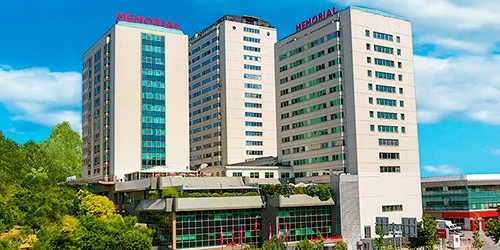
For the treatment of breast cancer abroad, foreign patients prefer such medical centres as Liv, Ichilov, Assuta, Memorial, Teknon, SoonChunHyang, and University hospitals in Navarra and Munich.
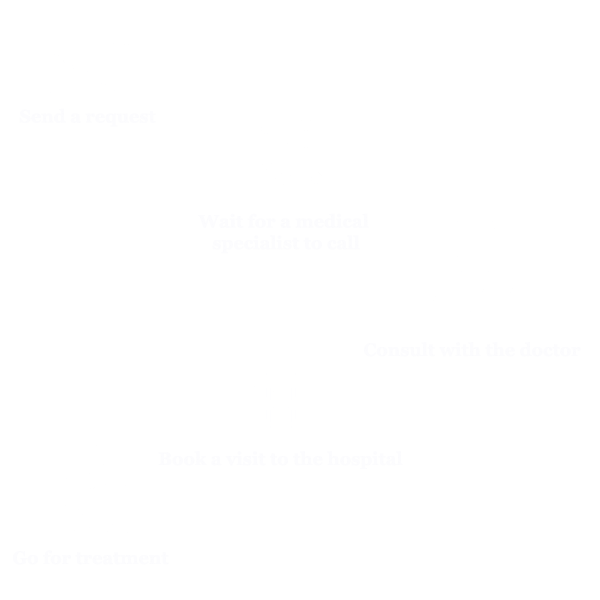
To go for treatment at one of the leading international clinics, leave an application on the website. Click the button below, enter your contact details and wait for a call from our coordinator.

Sources: