


Oxygen treatment in a hyperbaric chamber has a wide range of medical applications, but it is not available in all clinics, even abroad. It is a non-invasive and painful method of therapy, which activates stem cells and accelerates the healing process.
Read this article to learn about the process of hyperbaric oxygenation, its indications and clinics that offer such treatment.
What is hyperbaric oxygen therapy?
Hyperbaric oxygenation, also known as hyperbaric oxygen therapy, is an adjunctive treatment method used for a wide range of medical conditions.
This method consists of placing the patient in a special chamber filled with 100% oxygen (for comparison, normal air consists of only 20% oxygen) under 1.5-3 times higher pressure. Such conditions significantly accelerate oxygen saturation of blood and tissues of the patient’s body, which has many positive effects:
 acceleration of regenerative processes,
production of tissue growth factors;
regulation of collagen production;
faster wound healing;
improved neovascularization;
enhanced fight against infections;
immunomodulatory action;
stem cell activation.
Normally, a person’s blood oxygen levels depend on the activity of red blood cells. Because of this, people with anaemia – reduced haemoglobin levels – suffer from symptoms such as weakness, fatigue, dizziness, etc., which is essentially a consequence of deprived oxygen supply. However, the special conditions formed in the hyperbaric chamber saturate the body with oxygen in any person without the involvement of additional red blood cells.
Hyperbaric oxygen chambers are officially approved by the FDA and several other European organisations for the treatment of a wide range of conditions, while research is still underway for others. To be sure that you are receiving the proper quality of treatment, it is important to:
go to a certified centre that uses quality equipment;
be confident in the qualifications of the doctors who prepare the treatment plan and carry it out.
You can get personal recommendations on the best clinics for hyperbaric oxygen therapy from MediGlobus coordinating doctors free of charge. Simply click on the button below, fill out the form and wait for our medical coordinator to call you. We will answer all your questions and help you find the best solution to your problems!
What are the indications for hyperbaric oxygenation?
Most clinics adhere to the FDA’s 2021 guidelines. They have approved the use of a hyperbaric chamber for treatment of:
Carbon monoxide poisoning (can occur due to fires or improper use of heating equipment);
Decompression sickness (occurs in divers, aviators, etc.);
Burns;
Crush and impact injuries (crash syndrome);
Non-healing wounds, including diabetic ulcers, diabetic foot;
Severe skin and bone infections;
Skin graft transplants;
Radiation damage to tissues;
Gas gangrene;
Anaemia when blood transfusion is not possible;
Air and gas bubbles in blood vessels;
Sudden hearing loss without any clear cause;
Sudden and painless loss of vision in one eye due to blocked blood flow.
Doctors continue to research the effectiveness of hyperbaric medicine to treat various other conditions, such as complications of COVID-19 (‘long COVID).
However, patients should be aware of what can or cannot be treated with hyperbaric oxygenation. For example, some clinics may offer such treatment for diseases for which there is no proven benefit, such as Alzheimer’s disease, autism, or PTSD. Always be wary of loud promises and consult with your coordinating physician if you have any doubts. At MediGlobus, our international platform is staffed exclusively by qualified doctors who are knowledgeable about modern medicine and will be able to advise you on treatment options for your specific condition.
How is the treatment carried out?
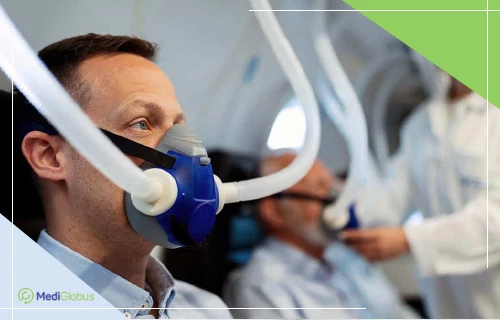
For hyperbaric oxygenation, the patient lies down in a special apparatus – the hyperbaric chamber. They are simply required to lie on a table and breathe air, while the doctors gradually increase the pressure.
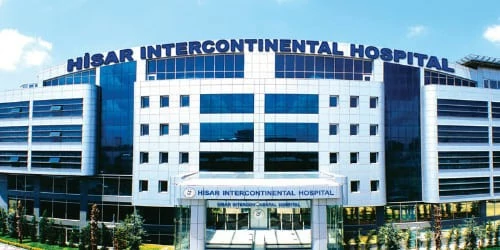
The chamber usually accommodates only one person – in terms of internal space it can be compared to an MRI tomography scanner – but some clinics, such as Hisar Intercontinental in Turkey, have large ‘rooms’ where several people can fit.
The treatment plan is individualised for each patient, depending on the diagnosis, age, general condition, comorbidities, etc. This helps to minimise the risk of side effects and complications.
The duration of time spent inside can vary greatly depending on the treatment prescribed by the doctor, ranging from three minutes to 2 hours. The number of sessions can also range from 20 to 60 therapeutic doses, which are usually 1-3 times per day.
From time to time, the patient will need to take short breaks from being in the HBO chamber to breathe regular air. This is to protect the tissues from the harmful effects of too high concentrations of oxygen.
High pressure can cause discomfort in some patients. The most common complaints are pain and stiffness in the ears, similar to that experienced by people on aeroplanes. These can be relieved by ‘equalising’ the pressure by yawning, blowing your nose or massaging special points on the head. The doctor who monitors the patient during treatment will be able to suggest the most effective way to relieve the discomfort.

Frequently asked questions from patients about hyperbaric therapy
How many sessions do I need to stay in the hyperbaric chamber?
The number of hyperbaric therapy sessions depends on the patient’s diagnosis and the severity of their illness. Most medical centres consider 20 as the minimum number of visits, but no less than this number. Tissue repair, which is usually the ultimate goal of hyperbaric oxygenation, requires some time.
What should I do if I am claustrophobic?
A large number of claustrophobic patients do not experience panic attacks during hyperbaric therapy. Modern chambers are often made of glass. In addition to this, a doctor will always be sitting next to you to monitor your condition, and if necessary, he/she will be able to remove you from the machine immediately. Many hospitals offer patients the opportunity to familiarise themselves with the hyperbaric oxygenation unit before they start treatment so that the environment becomes familiar and causes less anxiety.
What can I take with me into the hyperbaric chamber?
Patients shouldn’t bring anything into the hyperbaric chamber for safety reasons. 100% oxygen is a flammable substance, so most electrical appliances carry a risk of fire. Many patients fall asleep peacefully during oxygen treatment in the chamber, but there may also be a television outside the machine, which will be visible through the glass surface.
How long does it take to raise and lower the pressure inside the chamber?
The pressure inside the chamber is raised and lowered gradually over 10-15 minutes. This gives the body time to adapt to the change and alleviates discomfort for most patients. However, in emergency cases, this process can be accelerated, for example, if the patient needs to be released from the chamber for emergency medical treatment.
For many diagnoses, the speed of initiation of therapy is crucial to the effectiveness of treatment. The MediGlobus international platform will help you to solve all issues related to treatment abroad as quickly as possible, including organising emergency air evacuation. Leave a request on our website to book a call from our coordinating doctors.
Effectiveness of hyperbaric chamber use in different diagnoses
Hyperbaric therapy for diabetic foot
Diabetic foot is a complication of diabetes mellitus caused by limb ischaemia. As a result of the disease, hard-to-heal ulcers form on the feet of patients. Due to weakened immunity, there is a risk of tissue necrosis and amputation.

Hyperbaric therapy helps to stop inflammatory processes, improve the rate of wound healing, and destroy anaerobic infections, and in some patients, it can completely cure diabetic foot. In addition, patients report a significant reduction in pain as a result of the treatment.
The American Diabetes Association compared the outcome of diabetic foot patients treated in a hyperbaric chamber with those who followed conventional protocols and found the following patterns:
Wounds and ulcers in patients heal 66% faster;
The need for surgical treatment is reduced by 84%;
The need for amputation is decreased by 74%.
 Read:
Read: Hyperbaric therapy for osteoradionecrosis
Osteoradionecrosis is one of the potential complications of radiotherapy, occurring in approximately 4-8% of cancer patients. It involves the development of necrosis, which can lead to infections, tooth loss and bone fracture.
Hyperbaric oxygen therapy plays an important role in the treatment of this condition by improving tissue response to the surgical wound. Due to the high effectiveness of this method, some clinics prescribe it as a preventative treatment for patients who have undergone head and neck irradiation.
The cure rate for radionecrosis of the mandible is close to 94% in patients treated with hyperbaric oxygen.
Hyperbaric oxygenation technique for infections
The FDA has recognised hyperbaric therapy as an ‘unconventional strategy’ in the treatment of wounds that cannot heal. The positive effects of the method have been shown to alter the wound microenvironment, destroy bacterial cells, enhance immune cell activation and release antiviral peptides. In addition, increased tissue oxygenation has an anti-inflammatory effect, which protects the tissue from damage and prevents infection from spreading.
All this in combination has a strong therapeutic effect, which is especially important in the treatment of immunocompromised patients or the treatment of antibiotic-resistant infections, of which there are more and more every year.
The hyperbaric oxygen chamber is most often indicated for the treatment of necrotising soft tissue infections, including necrotising fasciitis, Fournier’s gangrene and gas gangrene.
Hyperbaric oxygenation method for decompression sickness
Decompression sickness occurs due to the formation of bubbles caused by a decrease in ambient pressure, resulting in dissolved gases entering the body. In turn, these bubbles lead to mechanical tissue destruction, blood vessel blockage, endothelial dysfunction, platelet activation and capillary leakage. This condition can occur in aviators, divers, astronauts, and people who work with compressed air.
Symptoms of decompression sickness include generalised weakness, rash, joint pain, decreased sensation, and in severe cases, motor weakness, poor muscle coordination, pulmonary oedema, shock and death.
Due to the effect of high pressure in the chamber, the hyperbaric oxygenation method induces processes opposite to the mechanisms of decompression sickness, which stops its development and protects the body. The hyperbaric chamber can be used even if more than 48 hours have passed since the accident and its effectiveness will still be high – 76%.

Treatment of air embolism with the hyperbaric chamber
Air embolism is a rare but dangerous complication of procedures such as lung biopsy, arterial catheterisation, cardiopulmonary bypass, neurosurgical interventions, etc. This complication can be potentially fatal and international protocols recognise hyperbaric therapy as the best treatment option given its availability and rapid delivery. It provides tissue oxygenation, promotes the reabsorption of gases, and reduces irreversible ischaemic damage.
If the use of a bariatric chamber is necessary, it should be administered within 6 hours of embolism (although some studies have found later start of treatment to be beneficial as well).
Treatment of central retinal artery occlusion using the hyperbaric chamber
Central retinal artery occlusion is caused by a ‘blockage’ of the retinal artery, which stops blood flowing to the eye. From the patient’s side, this appears as a sudden painless and severe (but not total) loss of vision. Retinal cells are extremely sensitive to hypoxia, and even a short-term loss of access to oxygen from the blood can lead to irreversible blindness.
Immediate hyperbaric oxygenation after occlusion occurs protects the eye cells from oxygen deprivation and is considered an effective treatment for this complication.
Patients treated with hyperbaric oxygen within 8 hours of symptom onset have an 83% chance of improving visual acuity.
Treatment of crash syndrome with hyperbaric oxygen
Crush syndrome is a complication of complex trauma when due to the compression of tissues, a large number of toxic substances are released into the patient’s blood. Very often such patients also have acute ischaemia in the affected areas of the body. The hyperbaric chamber helps to combat these complications and promotes the normal recovery process of the body.
Treatment of carbon monoxide poisoning with hyperbaric oxygen
Carbon monoxide poisoning most commonly occurs when using gas appliances or burning coal. Its inhalation can be deadly and cause long-term problems, particularly cognitive impairment. Long-term brain dysfunction occurs in 40% of patients, and about one in three develop cardiac abnormalities such as arrhythmias, left ventricular systolic dysfunction and myocardial infarction.
The use of a hyperbaric chamber within the first 24 hours may reduce the risk of cognitive impairment in the long term.
Hyperbaric oxygenation for coronavirus
Although hyperbaric oxygenation has not yet been recommended by the FDA as a primary treatment for coronavirus, the available research shows great potential for its use. Doctors who are studying the issue – for example, Professor Shai Efrati, director of the Sagol Centre for Hyperbaric Medicine and Research at Shamir Medical Centre, believe hyperbaric oxygenation is the most effective treatment for so-called ‘long’ coronavirus.
‘Long COVID’ is a difficult-to-diagnose disease with more than 200 different symptoms associated with it, and their treatment is still an open debate. Currently, hyperbaric oxygen therapy is the only treatment protocol whose efficacy has been proven in controlled clinical trials. The efficacy of therapy is long-term, including when it comes to neurological complications. It is believed that the process of hyperbaric therapy can trigger neuroplasticity and can reverse brain damage.
Hyperbaric oxygenation in oncology

Hyperbaric oxygen therapy has been proposed as an adjuvant treatment to overcome tumour hypoxia, which is considered one of the hallmarks of resistance to cancer treatment. Even in isolation, hyperbaric oxygenation inhibits tumour growth, metastasis, angiogenesis and anti-cancer gene expression. In addition, combining hyperbaric oxygen treatment with other protocols (e.g., I-MIBG) enhances the production of reactive oxygen, causing cancer cell death.
Hyperbaric oxygen therapy is currently considered by the European Committee for Hyperbaric Medicine (ECHM) as a potential treatment for recurrent stage IV neuroblastoma.
Potential risks and side effects of the hyperbaric chamber
The most common symptoms that patients deal with after hyperbaric oxygenation are mild weakness and dizziness.
In rarer cases, there is a risk of developing:
Ear and sinus pain;
Injury to the middle ear, including rupture of the eardrum;
Temporary changes in vision;
Pulmonary collapse.
To ensure the patient’s safety during hyperbaric therapy, a physician is always present to monitor the patient’s condition and to provide medical assistance if necessary.
Where is hyperbaric oxygenation performed abroad?
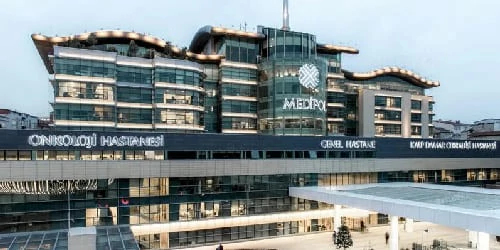
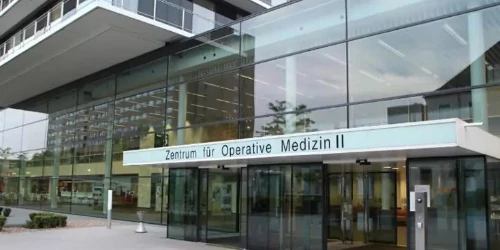
Certified hyperbaric oxygenation units are available in clinics in Turkey, Israel, Spain, and other countries. Two main factors guarantee that you will receive effective treatment: high-quality, certified equipment and experienced, professional doctors. The following clinics meet these criteria:



HYPERBARIC TREATMENT APPOINTMENT
To find out the price for hyperbaric oxygenation abroad, click on the button below and fill in the form. Our coordinators will call you back within 30 minutes. They will provide you with all the necessary information and help you organise your trip.
Summary
Hyperbaric therapy consists of staying in a special chamber where the patient breathes 100% oxygen under increased pressure for some time. The method has a strong positive effect on the healing and recovery processes in the body.
The main indications for hyperbaric oxygenation are wounds (especially diabetic wounds and burns), radiation injuries, decompression sickness and crush syndrome, CO2 gas poisoning, and sudden loss of vision or hearing.
The number of sessions can also range from 20 to 60 therapeutic doses, which are usually administered 1 to 3 times per day.
Hyperbaric therapy has a wide range of applications and few contraindications and can be used in cases where alternative treatments are not possible.
Certified hyperbaric oxygenation units are available in clinics in Turkey, Israel, Spain, and other countries. For help in choosing a clinic, please contact MediGlobus’ medical coordinators.
Sources:
- 1. Food and Drug Administration (FDA)
- 2. A General Overview on the Hyperbaric Oxygen Therapy: Applications, Mechanisms and Translational Opportunities
- 3. Hyperbaric Physicians of Georgia
- 4. Pharmacy Times: Hyperbaric Oxygen Therapy May Be the First, Only Clinically Effective Treatment for Long COVID
- 5. Frontiers in Oncology: Hyperbaric oxygen therapy as a complementary treatment in neuroblastoma — a narrative review
- 6. International Journal of Environmental Research and Public Health: Local Hyperbaric Oxygen Therapy in the Treatment of Diabetic Foot Ulcers
- 7. Diabetes Care: Hyperbaric Oxygen Therapy for Diabetic Foot Wounds
- 8. Indian Journal of Surgical Oncology: Role of Hyperbaric Medicine for Osteoradionecrosis and Post Irradiation Wounds: an Institutional Experience
- 9. PLoS One: Delayed Recompression for Decompression Sickness: Retrospective Analysis
- 10. StatPearls: Hyperbaric Treatment of Central Retinal Artery Occlusion