


1. How is the surgery performed? |
2. Indications for treatment |
3. Comparison with alternatives |
4. Breast reconstruction |
5. Effectiveness and possible side effects |
6. Cost and clinics |
For women who learn about their cancer diagnosis for the first time, the main priority immediately becomes survival. However, this disease requires lengthy treatment and monitoring, and in the long term, the quality of life of the patient – her psychological well-being, control of treatment side effects, etc. cannot be neglected. In the end, surgery remains the main method of treatment for breast cancer, which leaves the question open – what will my breasts look like after surgery and how will it affect me?
One of the options available to patients undergoing breast cancer treatment is subcutaneous (endoscopic) mastectomy – an organ-preserving surgery performed by experienced cancer surgeons. How this surgery is performed, in which cases it may be indicated, how the breasts will look after treatment, how much it costs and where to go for help – all this will be covered in our new article.
What is endoscopic mastectomy and how is it performed?
Endoscopic or subcutaneous nipple-preserving mastectomy is a surgery in which some or all of the breast tissue is removed through small incisions under the arm. Compared to open surgery methods, subcutaneous mastectomy allows you to preserve more natural tissue and, when performing breast reconstruction with implants, even preserve the natural look of the bust. The main advantage of this surgery is considered to be the preservation of the nipple along with the sensitivity.
We spoke to Prof Mustafa Tükenmez, Head of the Breast Health Department at Liv Vadistanbul Clinic, about this method of treating breast oncology.
Each surgeon has their subtleties when performing an endoscopic mastectomy, but the general course of the operation is as follows:
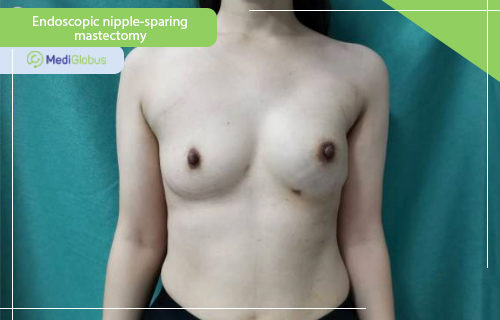
 The patient is prepared for surgery. Approximately 2,5 to 5 cm incision is made below the axillary fold.
Through the hole formed, the surgeon inserts an endoscopic port through which instruments will pass: camera, endoscope, and cauterising scalpel.
The inside of the breast is filled with carbon dioxide to create an accessible space for the surgeon to manipulate.
Using a cauterising scalpel, the doctor removes the tumour along with the surrounding tissue to prevent recurrence of the disease.
The surgeon usually also collects tissue samples by biopsy to make sure all cancer cells have been removed.
If necessary, breast symmetry is restored with lipofilling (less common) or implants (more common).
The surgery can then be considered successful and complete. The doctor removes all the instruments and closes the incision. For a few days, the patient may need to walk around with a drain to remove excess fluid from the surgical wound.
How long does the endoscopic mastectomy last?
Subcutaneous mastectomy typically lasts longer than open surgery. On average, a unilateral intervention with reconstruction takes 3-4 hours and a bilateral intervention takes 4-5 hours.
Will I be able to breastfeed after a subcutaneous mastectomy?
No. Although the nipple will be preserved along with its sensitivity, the breast tissue is usually completely removed during a mastectomy, making breastfeeding impossible.
APPOINTMENT FOR MASTECTOMY
To book an appointment with a surgeon, click on the button below and fill in the form. Our coordinators will call you back within 30 minutes. They will provide all the necessary information and help you with travel arrangements.
Indications for subcutaneous mastectomy
An important point to keep in mind is that endoscopic mastectomy may not be indicated for all patients.
Professor Mustafa Tükenmez identifies two main indications for this procedure:
Small breasts (C cup or smaller);
A single tumour up to 2,5 cm in diameter (stage 0-2 cancer).
For those who have bigger breasts or cancer at stages 2b, 3, or 4, open surgery is still the recommended method of treatment, as it is the only way to achieve clean resection margins.
The most common indication for this intervention is various forms of breast cancer. However, endoscopic mastectomy can also be performed in men for gynecomastia. The treatment of breast cancer in men, which is much less common, can also be performed using subcutaneous mastectomy.
Comparison of endoscopic mastectomy with other types of breast removal
The main advantage of breast removal via subcutaneous mastectomy is the preservation of the pectoral muscle and the shape and sensitivity of the nipple.
By using smaller incisions, patients can get back on their feet and be discharged from the hospital more quickly after surgery.
When subcutaneous mastectomy is combined with one-stage reconstruction with implants, it is possible to fully preserve the natural appearance of the breast and thus better aesthetic results.
Also, endoscopic surgery is associated with less postoperative pain.
Comparing open and subcutaneous mastectomy, studies, such as those published by Taiwanese doctors in the Annals of Surgery, show roughly the same results for the effectiveness of early cancer treatment.
Some clinics offer robotic subcutaneous mastectomy. It shows safety and effectiveness similar to open or endoscopic surgery but costs more.
Is breast removal with one-stage implant placement possible?
Yes, many patients opt for a subcutaneous mastectomy to have a one-stage placement of silicone implants and to preserve breast volume. The choice of implants is made in the same way as during cosmetic breast augmentation surgery. The doctor takes measurements of the body proportions and individually selects the best implant depending on the natural data of the patient. Depending on the situation, the surgeon may also use lipofilling (fat tissue grafting) to create a more natural bust contour.
 Read:
Read: What results can patients expect?
Numerous studies dating back to the time of the introduction of this operation – for example by Kyushu University in Japan – show that subcutaneous mastectomy is as successful in treating breast cancer as open surgery. The five-year survival rate of patients and the risk of recurrence are comparable.
| Breast cancer stage | 5-year survival rate |
|---|---|
| Stage 0 | Up to 100% |
| Stage 1 | 98-99% |
| Stage 2 | 90-99% |
It was also found that cancer patients who underwent subcutaneous mastectomy had better psychosocial well-being 1 month after surgery compared to those who underwent open surgery. The minimally invasive intervention also had better sexual performance.
At the same time, it should be remembered that every endoscopic mastectomy, like any other surgery, carries with it certain risks. In particular, about 18% of patients experience:
Infection,
Bleeding,
Ischaemia of the nipple-areolar complex.
The possibility of such complications is well known to doctors and their treatment is included in surgical protocols. Therefore, hospitalisation may be recommended for the first few days after surgery to monitor the patient’s well-being.
The outcome of a subcutaneous mastectomy depends directly on the surgeon who performs the surgery. For this reason, we recommend patients to first contact doctors who have extensive experience in performing this particular procedure.
Who to contact for endoscopic mastectomy?
The price of a mastectomy with one-stage reconstruction will vary significantly depending on where the treatment is performed. For more budget-friendly treatment options, you can go to clinics in Turkey or Korea, while Western Europe will cost patients a little more.

Among Turkish doctors, we first of all recommend Professor Mustafa Tükenmez, who practises at Liv Vadistanbul Clinic. He is one of the most experienced subcutaneous mastectomy specialists in the country. Cancer patients from all over the country as well as foreign medical tourists are referred to his department. Dr Tükenmez is also experienced in the treatment of gynecomastia. This specialist has over 21 years of professional experience.
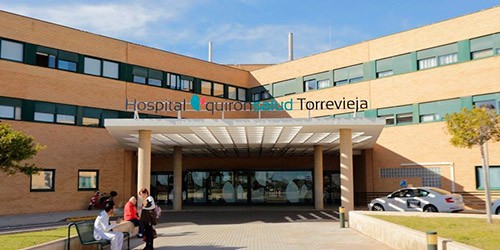
The Quironsalud Torrevieja clinic, located in Spain, is one of the best cancer centres in the region according to the Hospital Quality Index (Índice de Excelencia Hospitalaria). Procedures such as skin-preserving mastectomy and nipple-preserving mastectomy are performed here. The Mammalogy Department is headed by Professor José Farré Alegre, a doctor with more than 40 years of experience and a specialist in the da Vinci robot technique.
Specialists in Asian countries, such as Korea or China, have extensive experience in subcutaneous mastectomy. An average woman in these countries has smaller breasts, so the need to develop surgical techniques that preserve the proportionality and aesthetics of the bust has been more urgent.
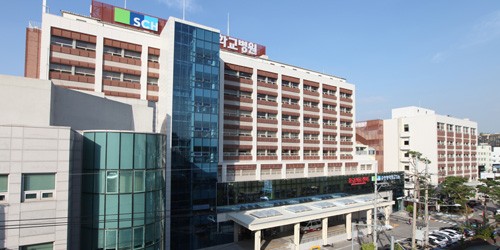
The leading position in the field of cancer treatment in Korea is held by the SoonChunHyang University Hospital. Oncotherapy here is carried out using the most modern methods. The equipment used in the clinic includes the latest generation of the da Vinci Robot and CyberKnife. Surgeons Lee Minhyuk and Kang Sanggue are the leading specialists in breast removal and implant placement.

Among Chinese clinics, the Fuda Cancer Centre, located in Guangdong Province, stands out for its innovation and quality of care. It holds many awards, including Advancement In Medicine Foundation, Role Model of the Times and, importantly, JCI international quality certification. Breast cancer patients are treated by Drs Liu Shupeng and Wang Feng.
To find out the price for a subcutaneous mastectomy with one-stage reconstruction, contact our coordinating doctors by clicking on the button below. We will get back to you with up-to-date prices and help you organise your treatment abroad free of charge.
Summary
Subcutaneous mastectomy can be used as the primary treatment for breast cancer in women with small breasts at stages 0-2 of the disease.
The main advantages of this method are preservation of the shape and sensitivity of the nipple, better possibility for breast reconstruction, and faster and less painful recovery period.
Endoscopic mastectomy can be a worthy alternative to radical mastectomy in the presence of appropriate indications. The survival rate of patients after such intervention is comparable.
Subcutaneous mastectomy can also be used to treat breast cancer and gynecomastia in men.
For subcutaneous mastectomy, the international medical tourism platform MediGlobus recommends clinics in Turkey (Liv Vadistanbul), Spain (Quironsalud Torrevieja), South Korea (SoonChunHyang) and China (Fuda).
Sources:
- 1. Present status of endoscopic mastectomy for breast cancer
- 2. Robotic Versus Conventional or Endoscopic Assisted Nipple Sparing Mastectomy and Immediate Prothesis Breast Reconstruction in the Management of Breast Cancer
- 3. Endoscopic-assisted Nipple-sparing Mastectomy with Direct-to-Implant Subpectoral Breast Reconstruction in the Management of Breast Cancer
- 4. Novel technique for endoscopic-assisted nipple-sparing mastectomy and immediate breast reconstruction with endoscopic-assisted latissimus dorsi muscle flap harvest through a single axillary incision
- 5. Endoscopic Mastectomy: What does the Future Hold?
- 6. Early results of an endoscope-assisted subcutaneous mastectomy and reconstruction for breast cancer
- 7. Validation Study of the American Joint Committee on Cancer Eighth Edition Prognostic Stage Compared With the Anatomic Stage in Breast Cancer
- 8. Clinical practice guidelines for endoscopic breast surgery in patients with early-stage breast cancer
- 9. Short-term safety and cosmetic outcomes of endoscopic direct-to-implant breast reconstruction and simultaneous contralateral breast augmentation for breast cancer