


1. Prostate cancer treatments |
2. Radiation therapy |
3. Hormonal therapy |
4. Brachytherapy |
5. HIFU ablation |
6. Immune therapy |
7. Clinics for prostate cancer treatment |
Prostate cancer is the leading type of cancer among men. Each year more than 1.3 million new cases are diagnosed and approximately 370,000 deaths occur. It is mostly found in mature and elderly patients. Surgery is the primary treatment for the disease. However, is it possible to cope with it without using radical methods that may negatively affect sexual function? Experts from the international medical platform MediGlobus provide the answer to this question.

Listen to the article:
What is the treatment for prostate cancer?

Prostate cancer is one of the most common malignancies diagnosed in men aged 40-70. Treatment options depend on the size and stage of the tumour, and the patient’s general state of health.
The key way of dealing with cancer is prostatectomy – the removal of the prostate gland. Often doctors also remove the lymph nodes in case cancer has spread to them.
The intervention is either open or minimally invasive. The second option is preferred. 80% of surgeries for prostate cancer are performed laparoscopically, often using the da Vinci robot.
Patients with an early-stage prostate tumour undergo a transurethral resection – excision of the affected part of the organ through the urethra. A special instrument, the cystoscope, is used during this operation. It makes it possible to resect the abnormal tissue without making an incision in the abdomen.
Alternatives to prostate cancer surgery include radiotherapy, chemotherapy, the use of hormonal or immune agents, brachytherapy and HIFU ablation of the prostate. These methods can be used either alone or in conjunction with surgery.
Careful diagnosis and a multidisciplinary approach to treatment are needed to choose the right therapy for prostate cancer. To get professional help, contact our coordinating doctors. They will arrange a medical trip, where you will receive high-quality treatment in the shortest possible time.
Non-surgical treatments for prostate cancer: Radiation therapy
The most common type of non-surgical treatment for localised prostate cancer is radiation therapy. This method uses a special device that focuses a beam of X-rays on the area affected by cancer. The location of the tumour cells is determined by computer or magnetic resonance imaging.
Typical radiotherapy regimens for prostate cancer usually include 35 to 43 sessions over eight to nine weeks.
Hypofractionated radiotherapy is often used as a standalone treatment option for prostate cancer. It involves receiving a higher daily dose of radiation for a shorter period.
Radiotherapy for prostate cancer is given on a moderate or intensified regimen.
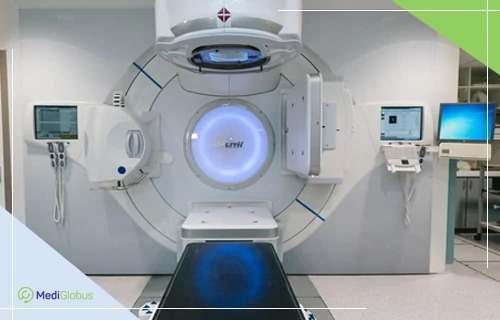
In the first option, patients undergo about 20 radiotherapy sessions over 4 weeks. Boosted or ultra-fractionated radiotherapy is given in just 5 sessions or less. This treatment is also called stereotactic beam therapy (SBRT) or stereotactic radioablation (SABR).
Hormone therapy for prostate cancer
Testosterone is the basic ‘nutrition’ needed for the growth of prostate cancer cells. Hormone therapy is therefore part of the standard treatment of malignant prostate tumours from stage 2 onwards.
This method is also used when the disease is metastatic.
Hormone therapy aims to stop the production of testosterone or minimise its effect on the cancer cells. The tumour stops growing or disappears altogether after the testosterone has stopped flowing into it.
The duration and regimen of hormone therapy are calculated for each patient on a personal basis. The medicine is usually given as an injection once a month or every 3-6 months for 3-5 years.
In some men, prostate cancer cells become resistant to hormone therapy. They can grow in the low-testosterone environment created by treatment. Despite this, hormone therapy remains an important step in the process of dealing with recurrent and neglected diseases. It offers the possibility of alleviating the symptoms and prolonging the patient’s life.
Brachytherapy for prostate cancer
Brachytherapy is currently used less frequently compared to radiation therapy. However, patients prefer this treatment primarily because it does not require daily visits to the clinic for several months.
Brachytherapy for malignant prostate tumours involves placing radioactive “grains” or catheters inside the prostate. This allows the tumour cells to be irradiated at a minimum distance. The treatment is carried out in 1-4 sessions.
The radioactive “grains” are injected permanently into the prostate gland, while the catheters are inserted for 30-40 minutes, which sometimes requires repeating the procedure. In the first case, cancer can be destroyed within a year. During this time, the radioactive source decomposes completely and the capsules become harmless.

Brachytherapy is usually used for patients in the initial stages of the disease. It is often combined with distant radiation and hormonal therapy. To receive such treatment abroad, fill in the contact form.
HIFU therapy for prostate cancer
High-intensity focused ultrasound (HIFU) is approved by the Food and Drug Administration (FDA) for the treatment of malignant prostate tumours. It is a non-invasive method that uses ultrasound to pinpoint, heat (ablate) and destroy cancer cells.
The HIFU procedure lasts between 1 and 4 hours and is carried out under general or epidural anaesthesia. During the session, an ultrasound transducer is inserted into the rectum near the prostate. Using 3D imaging, the doctor then obtains an accurate image of the tumour and directs the focused ultrasound waves toward the cancer cells.
A single beam destroys pathological tissue as big as a grain of rice. The session continues until the entire neoplasm has been destroyed. After treatment, an ultrasound or MRI scan evaluates the result. After HIFU, the 10-year survival rate for patients with early-stage prostate cancer is between 92% and 99%.
 Read:
Read: Immunotherapy for prostate cancer
Immunotherapy for prostate cancer is mainly used with metastatic tumours. It helps the patient’s immune system to fight the cancer cells by activating the patient’s defences. The FDA has approved two drugs to treat this disease. Those are Sipuleucel-T and Keytruda.
Sipuleucel-T is a medicine that is prescribed to men with metastatic prostate cancer that is resistant to hormone therapy. The process involves filtering the patient’s immune cells and stimulating them in the laboratory to fight the tumour. The treated cells are injected into the patient intravenously every 2 weeks for a month and a half. A total of 3 treatments are needed.
Keytruda immunotherapy is indicated for advanced prostate cancer. It is considered after other available treatments have proved ineffective or have been ruled out. The medicine is given intravenously once every 3 weeks. It does not eliminate the symptoms of the disease, but slows its progression and soothes its course.
Where can I get treatment for prostate cancer without surgery abroad?








Resume
 The treatment of prostate cancer is determined by the characteristics of the tumour, the age and the general condition of the patient. The main method of fighting the disease is surgery (prostatectomy). Transurethral resection of the prostate is also possible.
Alternative treatment options include radiation, brachytherapy, hormonal therapy, HIFU and the use of immune drugs. The prognosis for the effectiveness of each of the oncological therapies is considered on a case-by-case basis.
Medical tourists choose Liv Vadistanbul, Medicana Ataşehir, Sheba, Assuta, Teknon, Motol and Navarra University hospitals for conservative treatment of prostate cancer.
Ask our coordinators for more information about innovative prostate cancer treatment abroad. We will help you choose the most suitable treatment option for your problem.