


Cancer is no longer a death sentence. The same malignancies that seemed incurable only 10 years ago are being successfully cured today. Breast cancer, prostate cancer, melanoma, thyroid cancer – there is a cure for all these diseases. How exactly are they treated and which hospitals offer the best treatment – learn answers to these questions from our article.
Breast cancer
Breast tumours are among the five most common malignancies in the world. According to the World Health Organisation, this disease is the most common type of cancer among women. During life, 1 out of 8 women will hear this diagnosis. Early-stage breast cancer does not have a pronounced symptomatology. As the malignant process spreads, the following symptoms may appear:
 thickening and heaviness in the mammary gland;
discharge of fluid or blood from the nipple;
changes in the shape of the breast;
retracted nipple;
dimpling of the breast or redness;
pain in the affected area of the breast;
enlargement of lymph nodes;
increased fatigue and bone pain;
decreased body weight;
fever.
Prognosis in breast cancer
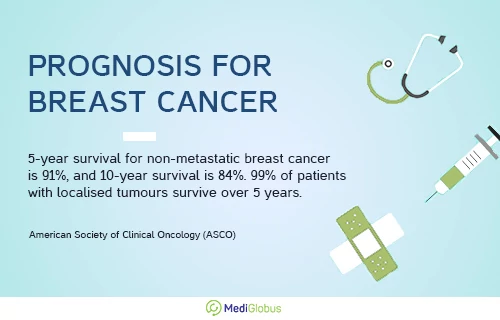
According to the American Society of Clinical Oncology, the overall 5-year survival rate for women with non-metastatic breast tumours is 91% and the 10-year survival rate is about 84%.
If the cancer is localised only in the breast, the 5-year survival threshold is crossed by more than 99% of patients.
In 62% of patients, the disease is detected at an early stage. Patients under 39 years of age are less likely to be diagnosed at the initial stage than women over 65 years of age. This is because most screenings to detect this disease are carried out after the age of 40.
The average 10-year survival rate for patients with breast cancer is 84% and the 15-year survival rate is approximately 80%.
What does luminal type A breast cancer mean?
According to Breastcancer.org, luminal type A breast cancer includes oestrogen and progesterone receptor-positive breast tumours. Also, these neoplasms have a reduced rate of a specific protein responsible for controlling the growth of malignant cells. Luminal A breast cancer usually progresses more slowly than other cancers of this organ. It is a low-grade malignancy that shows a good survival prognosis.
What does cytogenetic therapy for cancer suggest?
According to the National Cancer Institute, cytogenetic testing is crucial for making a diagnosis, planning a treatment programme and evaluating a patient’s response to therapy. It involves testing samples of body fluids and tissues from the human body for changes in chromosomes. The presence of such changes may indicate certain types of cancer (in particular, breast cancer, leukaemia, and non-small cell lung malignancies). These tumours can be treated with biological drugs, particularly targeted drugs.
Treatment methods for malignant breast tumours
The use of certain methods of oncotherapy depends on the stage of the disease, age and general condition of the patient. The first line of treatment is typically a surgical intervention. It involves the removal of the tumour along with some healthy tissue or complete resection of the affected organ.
Abroad, more than 80% of surgeries for 1-2 stage breast cancer are organ-preserving. With total removal of the breast, the patient eliminates the defect with the help of implants. Surgical intervention is followed by chemotherapy and/or radiation therapy.
 Read:
Read: 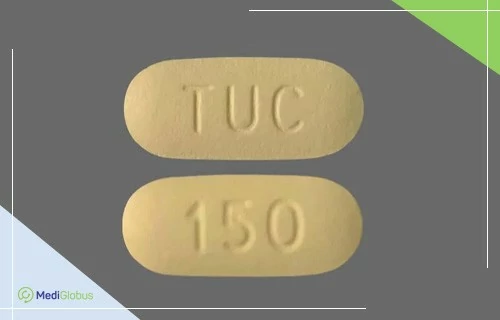
Cancerous breast tumours respond well to hormone therapy. Therefore, the disease is often treated with hormone-blocking drugs that need to be taken for several years. Metastatic or recurrent breast cancer is treated with monoclonal bodies that boost the immune system.
A new drug in the fight against breast cancer is Tukysa. It is a targeted drug that was FDA-approved in 2020 to treat the final stage of the disease. After its use, 33% of patients stop the progression of the disease within a year. The 2 years is overcome by more than 44% of patients with stage 4 breast cancer. Without the use of the Tukysa, this figure does not exceed 26%.
A story of victory over stage 4 breast cancer
Even though the best therapeutic results are demonstrated by patients with the initial stage of cancer, breast cancer in its final stages can also be cured. This is confirmed by the story of American Judy Perkins.
The woman was diagnosed with a malignant breast tumour at the terminal stage. Immediately she was recommended to have a mastectomy. After the operation, the disease receded for 10 years, and then returned and spread to other organs. The prognosis was not inspiring.
Judy underwent seven courses of chemotherapy, which did not produce the expected results. The woman decided on experimental immunotherapy.
In 10 days after the start of treatment, the neoplasm in the breast shrank and completely disappeared. After 2 months, metastases in other organs completely disappeared.

Where is breast cancer treated abroad?
To fight this disease, foreign patients go to specialised centres and oncological departments of leading Turkish, German, Israeli and Korean clinics. Among the most popular medical institutions are:


Prostate cancer
Each year, approximately 1,28 million cases of prostate cancer are diagnosed worldwide. It is the most common malignant tumour in men. About 60% of cases are found in patients over the age of 65. The average age of diagnosis is 66 years old. The disease is rarely found in young men under the age of 40. As a rule, the prostate tumour is slowly progressing. It does not cause any symptoms until the late stage. At this point, the patient may experience:
Difficulty in urination;
Urinary incontinence;
Increased urges to urinate;
Erectile dysfunction;
Blood in the urine;
Weakness and fever.
Prognosis of prostate cancer treatment
According to the American Cancer Society, the 5-year survival rate for men with initial prostate cancer is nearly 100%. For patients whose tumour has spread to other organs, the rate is approximately 31%.
Methods of Prostate Cancer Treatment
Prostatectomy is a surgical procedure that is the mainstay of prostate cancer treatment. It involves the removal of the prostate gland or part of it, as well as some surrounding tissues and lymph nodes. Over 90% of prostatectomies abroad are performed in a minimally invasive way.
Robotic surgery using the Da Vinci unit is one of the priorities. This unit is equipped with a 3D visualisation system with a 20-fold magnification of the operated area. This makes it possible to precisely remove cancer cells without traumatising healthy tissue. The significant advantages of prostatectomy with the da Vinci robot include:
Less than 1% risk of bowel and urinary disorders;
Preservation of erectile function;
Minimal blood loss;
Surgical incisions as small as 1 cm;
The patient is hospitalised for 1-3 days and fully recovers within 3-4 weeks.

Additional treatment options for prostate cancer include:
Chemotherapy;
Immunotherapy;
Targeted therapy;
Cryotherapy;
Radiation therapy;
Hormone therapy.
Leading clinics for prostate cancer treatment abroad
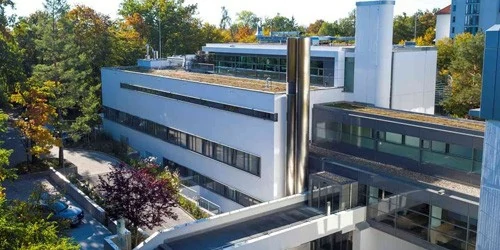
Medical tourists treat prostate cancer in specialised centres, as well as leading hospitals in Turkey, Germany, Spain, Korea, Israel and the Czech Republic. For example:

APPOINTMENT FOR PROSTATE CANCER TREATMENT
Advanced prostate cancer treatments are available abroad that can successfully remove the tumour and preserve sexual function. Please contact the Mediglobus coordinators. We will find the best solution to your medical problem.
Testicular cancer
Testicular cancer most commonly occurs in young men aged 15-35 years. It is a relatively rare type of cancer, accounting for only 1% of all malignant diseases occurring in men. Common symptoms of the disease include pain in the groyne or scrotum, as well as prolonged discomfort in the testicles. The pathology responds well to treatment, even if the cancer cells have spread beyond the testicle. Depending on the type and stage of the disease, the patient is indicated with one of several methods of therapy.
How is testicular cancer treated abroad?
In the early stages of the disease, when the tumour has not spread to other parts of the body, surgery to remove the affected organ – orchiectomy – is indicated. This gives the opportunity to completely get rid of oncology.
If a man has only one testicle removed, the other testicle usually produces enough hormones to maintain sexual function and have children.
In the later stages of testicular cancer, radiation and/or chemical therapy are used together with surgery. Good results can be achieved with 3-4 courses of chemotherapy using a combination of different drugs. In case of recurrent pathology, high-dose chemotherapy and stem cell transplantation are performed.

Outcomes of oncotherapy for malignant testicular tumours
The overall 5-year survival rate for testicular cancer is 99% for tumours that are confined to this organ. The survival rate for tumours that have spread to tissues or lymph nodes located near the testicles is about 96%. Thanks to modern methods of oncotherapy, 73% of patients with terminal disease live more than 5 years. This is quite a high rate for end-stage oncology.
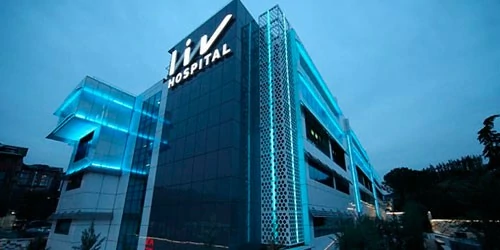
Where to get testicular cancer treatment abroad?

Thyroid cancer
The thyroid gland is a small, butterfly-shaped organ that produces hormones that control heart function and metabolism. Thyroid cancer affects about 300,000 people each year. In 9 out of 10 cases, the disease is detected in patients aged 30-60 years.
APPOINTMENT FOR THYROID CANCER TREATMENT
MediGlobus coordinating physicians will assist in organising the medical journey and will be in touch with the patient at every stage of treatment. For more information about oncological therapy abroad, please contact us!
Key treatments for thyroid tumours
The standard treatment for the disease is the removal of all or part of the organ. If the doctor performs a radical thyroidectomy, the patient needs to take hormones for life.
Radioiodine therapy, chemotherapy, hormonal therapy and radiotherapy are also used to fight the disease.

Results of oncotherapy for thyroid cancer
According to the American Cancer Society, the five-year survival rate for stage 1 and 2 thyroid cancer exceeds 98%. For stage 3 and 4 diseases, these figures are 50% and 20%, respectively.
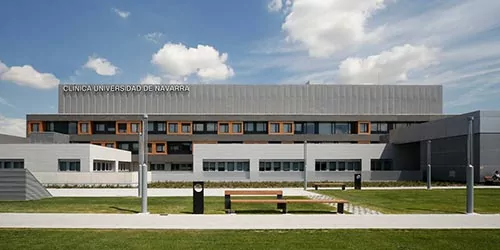
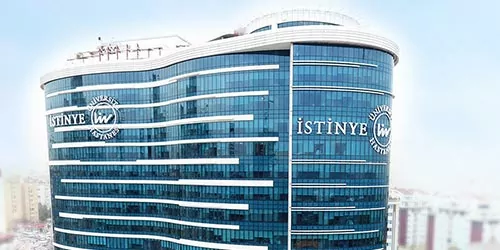
Clinics for Thyroid Oncotherapy
Skin cancer
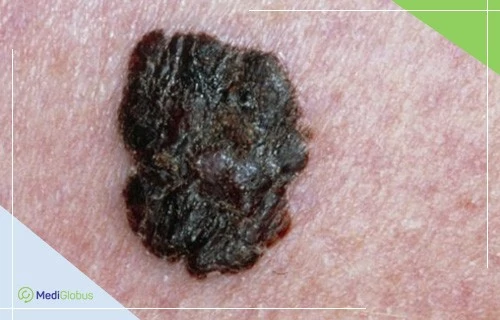
According to the World Health Organisation, skin cancer occupies the 5th position in the list of the most common oncopathologies. Every year, the disease is diagnosed in more than a million people.
There are three main types of skin cancer: basal cell and squamous cell carcinoma, melanoma. The first two types grow slowly and rarely go beyond the skin. They respond well to therapy and are completely cured in 9 out of 10 cases.
Melanoma is a potentially aggressive and life-threatening skin cancer. As the disease progresses, the tumour can metastasise to the brain, lungs, liver or other organs. However, early diagnosis and modern methods of treatment allow to achieve success in the fight against the disease.
Treatment methods for skin cancer
Surgery is the main method of treatment for malignant skin tumours. Surgery involves removing the tumour and some of the surrounding healthy tissue. Other options for controlling the disease include:
Cryotherapy;
Immunotherapy;
Targeted therapy;
Photodynamic therapy;
Radiation therapy;
Anti-cancer creams.
Combining several methods of oncotherapy gives the maximum effect. Abroad, each patient has an individual treatment programme that meets international standards.
APPOINTMENT FOR ONCOTHERAPY
To get treatment abroad, please leave your application by pressing the button below and filling out the form. We will call you back within 30 minutes and answer all your questions!
Results of oncotherapy for skin cancer
American Skin Cancer Institute reports that 99% of patients beat the disease at an early stage. According to the American Cancer Society and the Melanoma Research Alliance, overall 5-year survival rates for stage zero, stage one and stage two disease range from 92% to 98%.
The story of a patient who defeated terminal-stage melanoma
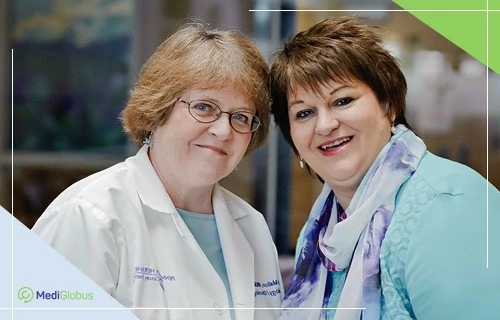
Rosemary Monbaci is a nurse in the paediatric ward of a hospital in Pennsylvania, USA. She was diagnosed with stage 4 melanoma. Treatment began with the removal of the tumour and lymph nodes. Then the woman underwent several courses of chemotherapy. However, the disease did not recede.
Rosemary decided to take part in clinical trials of a new immunotherapy drug. But the disease again did not want to leave the woman’s body. So the medical team decided to carry out a complex approach.
Rosemary was treated every day for a month with a combination of immune, targeted and radiation therapy. This has yielded the desired results. During the control examination, no signs of the disease were found.
What type of cancer is incurable?
To understand which cancer is untreatable, it is necessary to turn to the survival statistics. It allows us to determine which cancer pathologies are the most deadly. According to information published in Live Science, the top five most dangerous malignancies are pancreatic cancer (5-year relative survival rate of 11,5%), mesothelioma (5-year relative survival rate of 12%), gallbladder cancer (5-year relative survival rate of 19,4%), oesophageal cancer (5-year relative survival rate of 20,6%) and malignant tumours of the liver and intrahepatic ducts (5-year relative survival rate of 20,8%).
Is remission good or bad?
According to the American Cancer Society, remission is a period when the cancer is controlled or responds to treatment. It can be partial or complete. In the latter case, it means that the patient has no signs of disease after treatment and tests do not detect cancer. Some patients in complete remission think that they have beat the cancer, but this is not entirely true. The disease can return even after several years, so you need to pay attention to your body, undergo regular comprehensive examinations and follow the doctor’s recommendations. However, any remission, even a partial one, is a good thing. It increases the chances of survival.
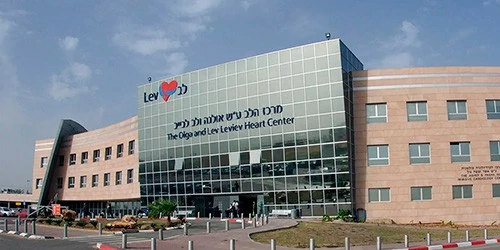
Leading cancer centres abroad
Summary
All oncological diseases are a serious threat. They can lead to a fatal outcome without timely treatment. However, there are types of cancer that demonstrate some of the highest rates of relative 5-year survival, and they can be considered the “safest”. These include Hodgkin’s lymphoma, breast, prostate and testicular cancers, as well as cervical and thyroid malignancies.
The 5-year survival rate for women with initial breast cancer is over 99%. This disease is most often travelled to institutions such as Anadolu and Vienna Private Clinic for treatment.
According to the American Cancer Society, about 100% of men with stage 1 and 2 prostate cancer live longer than 5 years. The disease is successfully treated at the urological centre Munich-Planegg and the Memorial Hospitals.
In the case of testicular cancer at stage 1, 99% of men reach the 5-year life expectancy threshold. The disease is best treated at Ajibade and Liv Hospital Network.
In malignant thyroid tumours of stages 1 and 2, about 98% of patients survive more than five years. Foreigners go to the Uniclinic of Navarre and Liv Istinia for treatment of this oncopathology.
According to the Melanoma Research Alliance, the 5-year survival rate for stages 0, 1 and 2 of the disease is 92-98%. The leading medical centres for oncotherapy for this disease are Sheba Hospital and Anadolu.
Regarding the 5-year relative survival rate, the most incurable cancers are considered to be: pancreatic oncology, mesothelioma, malignant tumours of the gallbladder, and esophageal and liver cancer.
Sources:
- Medical News Today
- World Health Organization
- American Cancer Society
- National Center for Biotechnology Information
- Melanoma Research Alliance
- American Cancer Society
- The Skin Cancer Foundation
- Live Science
- American Cancer Society
- WebMD
- Breastcancer.org
- National Cancer Institute