


According to the Parkinson’s Foundation, approximately 10 million people worldwide suffer from this disease. It occurs when the neurons in the brain that produce dopamine are damaged or die. These pathological processes result in vegetative and mental disorders, limb tremors, postural instability (impaired balance), muscle rigidity, and hypokinesia (low motor activity of the body). It is not yet possible to cure the disease, but it is possible and necessary to significantly improve the condition of a person with Parkinson’s. Among the new methods of treating Parkinson’s disease, ultrasound exposure to damaged areas of the brain stands out. Find out how effective this technology is and where it is used abroad from our article.
Modern treatment of Parkinson’s disease

Existing methods of treating this disease (the use of implants and medications) produce mixed results and are accompanied by a host of side effects. Therefore, scientists at the Israeli company Insightec have developed an alternative method of combating Parkinson’s disease — transcranial focused ultrasound.
This technology can alleviate the effects of tremors and restore some motor functions. It involves the use of a helmet that transmits ultrasound waves and a magnetic resonance tomograph. This method does not require surgical intervention, which can damage healthy brain tissue and is not always effective.
In 2018, the United States Food and Drug Administration approved the use of this method as a treatment for one of the symptoms of Parkinson’s disease — tremors.
In 2021, the list of indications for transcranial ultrasound was expanded. The FDA included other symptoms of the disease, such as stiffness or slowness, as well as dyskinesia (involuntary movements). Insightec specialists are working to improve this technique. They intend to create new treatments not only for Parkinson’s disease, but also for Alzheimer’s disease, brain cancer and epilepsy.
 Read:
Read: Indications and contraindications for the use of ultrasound in Parkinson’s disease
Transcranial focused ultrasound creates thermal damage deep within the brain with virtually no effect on surrounding healthy structures. It is ideal for people with Parkinson’s disease who cannot or, for some reason, do not want to undergo deep brain stimulation. The procedure is also indicated when long-term drug therapy has been ineffective or has failed to produce any positive results.
Like any medical procedure, ultrasound therapy for Parkinson’s disease has its contraindications. Insightec does not recommend the procedure if the patient has any type of metal implants that are not compatible with MRI. Such devices include pacemakers, neurostimulators, spinal fixation devices, etc. The procedure is also not performed in cases of pregnancy, intracranial tumours, extensive scarring on the head, severe blood or brain diseases, progressive kidney disease, and certain other conditions.
Preparation for ultrasound treatment of Parkinson’s disease
Before starting the procedure, it is necessary to consult with a doctor. Only a qualified specialist can determine how suitable this treatment is for a particular patient, taking into account their health condition and medical history. It is necessary to undergo a medical examination to identify possible contraindications. It is important to rule out any factors that could complicate the therapy process or pose a potential danger to the patient. In addition, you should inform your doctor about all medications you are taking and any allergies to medications or contrast agents.
If you have scars on your head, you must inform your doctor. This may be important information when planning and conducting therapy. Scars can affect the passage of ultrasound waves or cause pain during the procedure. In this case, specialists calculate the direction of the beams to bypass the scar tissue.
How is Parkinson’s disease treated with ultrasound?
The procedure is performed in two stages, lasting from two to four hours. First, an anaesthetic is applied to the patient’s scalp. The patient remains awake during the therapy. A special helmet is placed on the patient’s head. Then they are placed in an MRI machine, which allows doctors to correctly select the direction of the ultrasound waves and accurately determine the location of the affected area in the brain. This may require the administration of a contrast agent.
Ultrasound penetrates deep into the brain tissue and destroys neural circuits and other undesirable structures that cause limb tremors and motor activity disorders.

During the procedure, specialists monitor heart rate, blood pressure and blood oxygen levels. The patient can communicate with the medical team using a communication system. The procedure can also be stopped at any time using a special button.
This is a modern treatment for Parkinson’s disease that helps to eliminate or alleviate neurological symptoms without the use of surgical incisions or implantable devices.
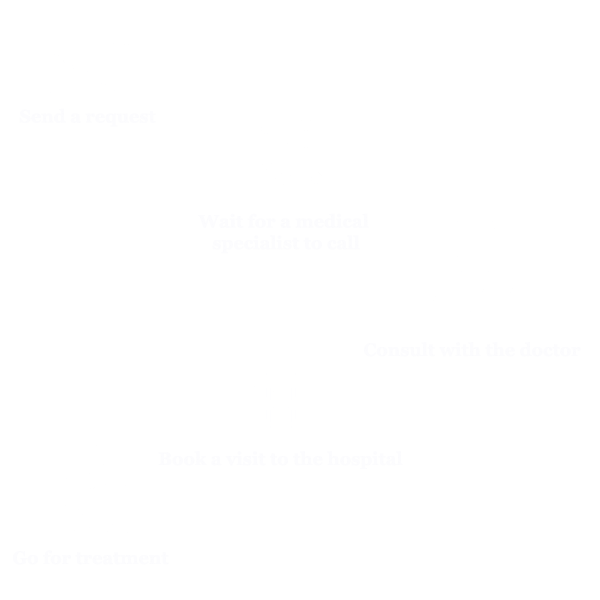
To undergo treatment with transcranial focused ultrasound abroad, click on the button below and fill out the feedback form. We will help you choose a clinic and organise your medical trip.
Advantages and disadvantages of ultrasound in the treatment of Parkinson’s disease
More than 1,000 patients have already been treated for Parkinson’s disease using ultrasound. In a quarter of patients, three months of ultrasound therapy led to a significant improvement in their condition: it alleviated or eliminated tremors and restored some motor functions. According to research, the effect of therapy was observed for 3 years or more in 76% of patients. Importantly, in 60% of cases, a single application of transcranial focused ultrasound showed high results.
The main advantages of treating Parkinson’s disease with ultrasound waves are:
- immediate and long-lasting relief of symptoms;
- no scars on the head, holes in the skull, or implants installed to eliminate the symptoms of this pathology;
- reduced dependence on medication;
- high effectiveness of a single application of transcranial focused ultrasound therapy (in the vast majority of cases, just one session is enough to eliminate limb tremors and unsteady gait);
- low risk of complications.
But not everything is as rosy as it seems at first glance. Transcranial focused ultrasound has several drawbacks. First, ultrasound waves do not pass through the thick bones of the skull well enough, which sometimes reduces the effectiveness of this therapy. Secondly, this treatment cannot be used for patients with bilateral symptoms (tremors in both limbs, not just one) or patients with brain cancer.
Side effects of ultrasound therapy in the treatment of Parkinson’s disease
Transcranial focused ultrasound is a non-invasive procedure that allows safe and targeted treatment of important areas of the brain. Side effects of the therapy are rare and mild. In 98% of cases, they disappear on their own, without any intervention. According to the results of studies sponsored by Insightec, the most common complications experienced by patients after treatment were:
- nausea;
- headaches;
- coordination problems;
- mild to moderate temporary numbness and tingling in the fingertips or lips;
- speech and swallowing disorders.
Which foreign clinics use ultrasound to treat Parkinson’s disease?
Foreign specialists have achieved considerable success in combating such an insidious and painful pathology as Parkinson’s disease. At the same time, in some developing countries, this disease is still difficult to treat. Neurosurgeons and neurologists at foreign clinics use various methods to treat Parkinson’s, in particular, transcranial focused ultrasound. This technology is effectively used in Israeli and German medical centres. This technique has also proven itself in Spain, Turkey, and South Korea. You can get treatment for Parkinson’s disease using ultrasound at the following clinics:
NP Brain Hospital

Koç University Hospital

Liv Clinic Network

Sheba Medical Centre

Teknon Clinic

Navarra University Hospital

SoonChunHyang Hospital

Anam Clinic

Steve’s story about ultrasound treatment for Parkinson’s disease
Steve’s story with Parkinson’s disease began at the age of 25, when he noticed that he could not hold objects in his hands. Despite taking medication, the disease progressed. He developed problems with walking, tremors, and involuntary movements. Due to his health problems, Steve was no longer able to work or pursue many of his hobbies.
He began searching for a solution to his problems. On the internet, he saw a video about a man in Israel who had undergone ultrasound treatment. At that time, this method had not yet been fully studied, and clinical trials were being conducted. Steve then applied to participate in the research. As a result, he was accepted as the second patient to receive treatment for Parkinson’s disease dyskinesia at the University of Maryland.
“I wasn’t worried about participating in the clinical trial. I tried not to have too many expectations, and I didn’t hope for a complete cure. I just wanted to improve my quality of life,” Steve recalls. However, the results exceeded all expectations. After the procedure, the man immediately noticed improvements. “I still noticed some tremors, but they were much weaker. My dyskinesia (involuntary movements) completely disappeared, which was a great relief.”

Eighteen months after treatment, the symptoms of dyskinesia did not return, and Steve felt well. Ultrasound therapy allowed him to reduce the dosage of his medications and even stop taking some of them altogether.
“My daily life has become easier, and I don’t feel that my wife and son have to take such good care of me. My quality of life has improved. And I was happy to return to cycling. I would recommend this treatment.”
It has now been six years since the treatment. The therapy has been approved by the US Food and Drug Administration (FDA) and has already helped thousands of Parkinson’s patients. Steve has been living with the disease for over 20 years, and some of its symptoms continue to bother him. But thanks to ultrasound, he has managed to slow down the progression of the disease, get rid of uncontrolled movements and significantly improve his quality of life.
“Focused ultrasound was directed specifically at dyskinesia, which is practically absent in me today! Other benefits, such as reduced tremors, are a bonus,” says Stephen about the effectiveness of the treatment.

Summary
- Transcranial focused ultrasound is an effective treatment for Parkinson’s disease. It is used to destroy brain cells that cause movement problems. The patient remains conscious during the procedure. No anaesthesia or implantation of special devices is required. With the help of MRI scanning, ultrasound beams are precisely directed to specific areas of the brain. The session lasts 2-4 hours.
- New methods of treating Parkinson’s disease are available in Israeli, Turkish, Korean and Japanese clinics. Transcranial focused ultrasound is used in Turkish medical centres – Liv hospitals, NP Brain Hospital (Istanbul), Koç University Hospital (Istanbul) and Haim Shiba Hospital (Tel Hashomer). This technique has also proven itself at the SoonChunHyang Clinic (Seoul), the Anam Medical Centre at Korea University (Seoul), Teknon (Barcelona) and the Navarra University Clinic (Pamplona).
- In a quarter of Parkinson’s patients, ultrasound therapy over 3 months led to a significant improvement in their condition. It alleviated the severity of tremors or eliminated them. Some patients also experienced restoration of motor functions. In 60% of cases, a single application of this technique showed high results, comparable to those observed in patients who underwent more than one therapy session.
For more detailed information about Parkinson’s disease treatment in foreign clinics, please contact the MediGlobus coordinators. Click on the ‘Get a free consultation’ button, submit your request, and wait for a response.