


Lymphomas account for about 3% of all childhood cancers. Lymphogranulomatosis is a malignant disease of the lymphatic system. The condition can develop in children of different age groups. Non-Hodgkin’s lymphoma is found in 5% of patients and Hodgkin’s lymphoma in 3%. This pathology is the most frequently diagnosed cancer in adolescents between 15 and 19 years of age.

Listen to the article:
Is lymphogranulomatosis cancer or not?
Lymphogranulomatosis is a form of cancer that affects the body’s lymphatic system. It is characterised by an abnormal overgrowth of white blood cells (B-lymphocytes) in the lymph nodes, which can cause them to enlarge in size. As a result of the disease, the body loses its ability to fight off viral and infectious diseases.
The exact causes of lymphogranulomatosis are unknown. However, studies have identified possible factors associated with the development of this pathology. Genetic factors play a certain role in the development of cancer. People with certain genetic mutations or a family predisposition may have an increased risk of developing the disease. In addition, people with immune system disorders, such as those with HIV infection or those taking immunosuppressive drugs after an organ transplant, are at risk. Infection with the Epstein-Barr virus, which causes infectious mononucleosis, has also been linked to the development of some cases of Hodgkin’s disease.
Symptoms of lymphogranulomatosis in children
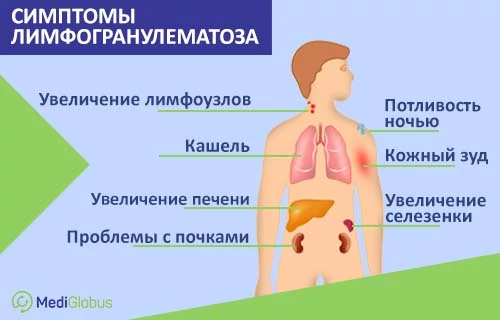
Lymphogranulomatosis has many symptoms, which can vary from patient to patient. The most common symptoms observed in the development of the disease are:
 Enlargement of lymph nodes. They may be painful or painless. The nodes usually swell in the neck, armpits or groyne area.
Fever, loss of appetite, night sweats, increased fatigue and general weakness.
Weight loss without any apparent reason. The sudden weight loss is due to loss of appetite and metabolic disturbances caused by the tumour.
Itching and skin rashes. This may be due to changes in the immune system and the body’s reaction to the tumour. These may also include redness, rashes or other changes to the skin.
In rare cases, lymphogranulomatosis leads to an enlargement of the spleen, liver or lungs. This causes discomfort and associated symptoms related to the dysfunction of these organs.
These symptoms are not specific to lymphogranulomatosis and can be associated with other diseases. If you have these symptoms, you should see your doctor for an accurate diagnosis and the necessary tests.
Types and stages of lymphogranulomatosis (Hodgkin’s lymphoma)
Lymphogranulomatosis is a subtype of lymphoma that can develop in children. The following types of Hodgkin’s lymphoma are usually distinguished:
Non-disseminated sclerosing form (classical form) | This type makes up the majority of cases of lymphogranulomatosis in children. In this form of cancer, tumours form inside the lymph nodes. They are composed of special cells called Reed-Sternberg cells. On histological examination, visible thickening or sclerosis (fibrous tissue) is found in the lymph nodes. Normally, the lymph nodes are soft and elastic. |
Lymphogranulomatosis with leader cell morphology (non-classical form) | This is a rarer variant of Hodgkin’s disease. In this case, the tumour cells have a special structure. They may have several nuclei or differ from the normal cell type. |
Clarification of the specific subtype of Hodgkin’s lymphogranulomatosis and its differentiation from other types of lymphoma requires histological and immunohistochemical analysis of the tissue. Diagnosis is important in determining the best treatment and prognosis.
Lymphogranulomatosis also has certain stages and categories, which help doctors to determine the spread of the tumour. The App Arbor system is used to classify the disease.

Stages of Hodhkin’s lymphoma:
I. Cancer cells are only in one lymphatic area.
II. Pathology spreads to two or more lymphatic areas on one side of the diaphragm (the transverse muscle separating the chest and abdomen).
III. Affects lymph nodes on both sides of the diaphragm.
IV. Disease spreads to one or more organs outside the lymphatic system, such as the liver, lungs, bones or bone marrow.
Categories of Hodhkin’s lymphoma:
A – Absence of characteristic symptoms.
B – The patient experiences one or more general symptoms, such as fever, weight loss or night sweats.
E – The tumour has spread beyond the lymphatic system into neighbouring tissues or organs.
S – The tumour has spread to the spleen.
Classifying the stages and categories of Hodgkin’s lymphoma helps the physician determine the treatment plan and prognosis, but each case requires an individual approach and additional tests to accurately assess the spread of the tumour and choose the best treatment strategy.
Diagnosing Hodgkin’s disease
Diagnosing lymphogranulomatosis in children involves several procedures and tests that help doctors make an accurate diagnosis. Here are some of the main methods used to diagnose lymphogranulomatosis:
Medical history and physical examination | The doctor collects a detailed medical history of the child, including symptoms, how long the symptoms have been present, risk factors and the presence of hereditary diseases. This is followed by a physical examination, palpation of the lymph nodes, palpation of the organs and an assessment of the patient’s general condition. |
Blood test | Patients with lymphogranulomatosis may have elevated lymphocyte counts or show the presence of atypical Reed-Sternberg cells. |
Lymph node biopsy | A biopsy of a lymph node is performed to obtain a definite diagnosis. Usually, a tissue sample is taken by puncture or surgery. The tissue is analysed under a microscope to confirm the diagnosis. |
Radiography, CT, MRI or PET-CT | Used to determine the location and stage of the pathology and to assess spread to other tissues. |
Lumbar puncture | In some cases, it is necessary to take a tissue sample of the spinal cord to evaluate the central nervous system and rule out tumour spread to the spinal cord. |
A combination of these methods allows doctors to make the right diagnosis, determine the stage of the disease and develop the best treatment plan for the child. It is important to see an experienced haematological oncologist for all the necessary tests and diagnoses.
Therapy for lymphogranulomatosis in children
The treatment of Hodgkin’s disease depends on the stage of the cancer, the patient’s general condition and other factors. A combination of different therapeutic methods is usually used.
Chemotherapy
Chemotherapy is the mainstay of treatment. It involves the use of antitumor drugs that destroy the malignant cells. A combination of several drugs is usually used: ABVD (doxorubicin, bleomycin, vincristine and dacarbazine) or BEACOPP (bleomycin, epirubicin, vincristine, cyclophosphamide, procarbazine and prednisolone). Chemotherapy is given as courses repeated at regular intervals.
Immunotherapy
Immunotherapy is a new approach to the treatment of lymphogranulomatosis. Medicines are used that activate the body’s immune system to fight cancer. A PD-1 blocker is used abroad. This drug helps to weaken the cancer cells’ control over the body’s immune response.
 Read:
Read: Radiation therapy
Radiation is required to destroy cancer cells and is carried out before, during or after chemotherapy. Radiation therapy usually targets the affected lymph nodes or other tumour sites. It is applied remotely or by contact (brachytherapy), where the radiation source is placed directly into the lesion.
Bone marrow or stem cell transplantation
In some cases, especially for relapsed or high-risk lymphogranulomatosis, a bone marrow or stem cell transplant may be needed. This is a procedure in which the patient receives healthy stem cells or bone marrow from a donor to restore the normal functioning of the hematopoietic system.
How long do I live with lymphogranulomatosis?
The 5-year relative survival rate for children with Hodgkin’s lymphoma under 14 years is 99%. The survival rate for adolescents aged 15 to 19 years is 98% (according to the American Cancer Society, ACS).
Children with early-stage lymphogranulomatosis have a better prognosis because the tumour is localised and does not spread to other organs or tissues. At a later stage, the prognosis is less favourable, but modern methods of controlling the pathology can still help achieve long-term remission. Patients who respond positively to first-line therapy (chemotherapy and/or radiation therapy) have a high chance of long-term remission. However, even when lymphogranulomatosis relapses, there are secondary lines of treatment and new approaches to help achieve control of the disease.
Where to treat lymphogranulomatosis abroad?
MediGlobus specialists recommend clinics in Turkey, Spain, Israel, South Korea and Germany to treat children with lymphogranulomatosis.
Turkey
Turkey is renowned for its well-developed medical sector and state-of-the-art equipped clinics. Treatment in this country may be more affordable in terms of financial expenses compared with some European countries. Experienced onco-haematologists working in Turkish hospitals, e.g. Prof. Betül Tawil with 23 years experience (Memorial Hospital) or Prof. Tunç Fışiin with over 25 years experience (Bahçeliövler Medical Park Clinic).


Spain
In the treatment of all types of blood cancers, Spain uses advanced medical technology and is actively involved in clinical research to ensure access to the latest therapies. The country is known for its high standards of healthcare, which attracts patients from all over the world. One of the best onco-haematologists is Professor Luis Madero (Hospital of Quironsalud Madrid). His work experience is more than 40 years.

Israel
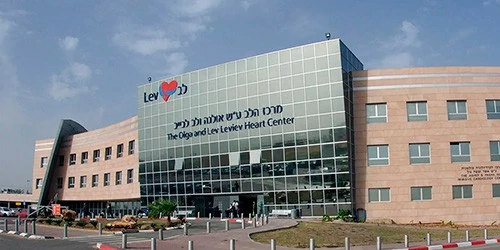
Israel is one of the most advanced countries in the field of medicine and oncology. Innovative cancer therapies are developed and applied here. The largest haemato-oncology department and the only children’s hospice in the country are located at the Sheba Clinic. Each year, around 1,200 children with blood cancers are treated here.
South Korea
South Korea is renowned for its cutting-edge medical technology. Korean medical facilities use integrated treatments, including chemotherapy, radiation therapy and immunotherapy. The Samsung Medical Centre is considered one of the strongest in terms of blood cancer therapy. Some 90-100 stem cell transplants are carried out each year with a success rate of more than 68%.

Germany
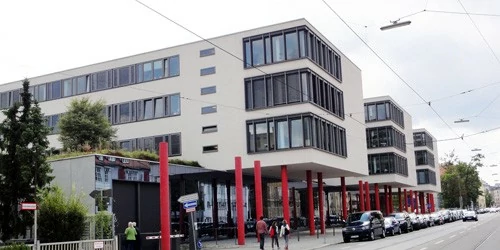
Germany is known for its high level of medical services. Here, an individualised approach to therapy is practised, taking into account the special characteristics of each patient and applying advanced methods of personalised medicine. The Rechts der Isar University Hospital is known for its excellent treatment of malignant blood diseases. It is home to the Department of Radiation Oncology and Radiation Therapy under the direction of Professor Stephanie Combs. The latest linear accelerators and a brachytherapy unit are used here.
Cost of treatment for lymphogranulomatosis in children
The cost of lymphogranulomatosis treatment may vary significantly depending on the country, therapies, stage of the disease, duration of treatment and individual patient needs. You can find out specific figures on costs by contacting a medical specialist on the MediGlobus global platform.
Summary
Lymphogranulomatosis or Hodgkin’s lymphoma is a malignant blood disorder that affects the human lymphatic system.
It can be caused by genetic predisposition, immune system abnormalities, and certain viral diseases.
Lymphogranulomatosis causes enlarged lymph nodes, general weakness, reduced appetite and weight loss.
The type of lymphogranulomatosis, stage and spread to other tissues and organs are taken into account when deciding on treatment options.
Treatment options include chemotherapy, radiation, immunotherapy and bone marrow or stem cell transplantation.
If the disease is detected early, the prognosis is favourable. About 99% of children survive past the 5-year mark.
Modern therapies for lymphogranulomatosis are available in Turkey, Spain, Israel, South Korea and Germany.
The cost of therapy for Hodgkin’s disease depends on the country, the complexity of the disease and the length of therapy.
If you need more information about lymphogranulomatosis treatment, please contact the MediGlobus medical experts. We will explain the special features of treatment abroad, help you choose a clinic, make an appointment for a consultation and organise your trip.

Sources:
- 1. Lymphoma – Hodgkin – Childhood: Statistics
- 2. Lymphoma Facts and Statistics: What You Need to Know
- 3. Hodgkin Lymphoma
- 4. How Doctors Diagnose Non-Hodgkin’s Lymphoma
- 5. What Is Hodgkin’s Lymphoma (Hodgkin’s Disease)