


1. Advances in oncology treatment in Germany |
2. Köln University Hospital |
3. Munich University Hospital |
4. Vivantes Hospital |
5. Nuremberg Medical Centre |
Oncology is considered one of the most developed areas of German medicine. The state allocates huge sums for the construction and improvement of hospitals and research centres. Thanks to financial support, clinics purchase high-quality equipment, scientists study the diseases and develop modern treatment methods. Read our article to learn which hospitals are considered the leaders in the treatment of cancer.
Achievements of German doctors in cancer treatment
German doctors have achieved astonishing results in the treatment of cancer. One of the largest studies in this field, CONCORD-2, found that Germany is among the top 5 countries with the best cancer survival rates. For example, early-stage cancer is cured in 85-95% of cases in German clinics. Among the EU countries, Germany has the highest 5-year survival rates for various types of cancer. Moreover, these rates are increasing year by year.
For example, in the early 2000s, the effectiveness of breast cancer treatment was 86%, in 2018 this indicator reached the level of 90% and continues to grow. The efficiency of melanoma treatment in German clinics is 95%, which is almost the best rate worldwide.
The high percentages of effectiveness of cancer therapy in Germany are largely the merit of scientists. Here are some of the outstanding achievements:
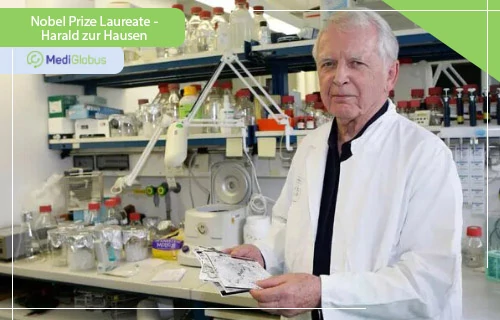
 In 2008, the Nobel Prize was awarded to Professor Harald zur Hausen for the discovery of a previously unknown strain of human papillomavirus (HPV) that causes cervical cancer. Thanks to his discovery, the development of effective new treatments for this cancer and prophylactic antiviral vaccines began. This has led to improved survival rates for patients with this common disease.
In 2009, scientists from the University of Würzburg in Germany isolated the so-called AURKA gene, related to another gene MYCN, which is responsible for the spread of neuroblastoma. This opens up new possibilities in the treatment of this type of cancer.
In Germany, a new method of intra-arterial chemotherapy was developed, the essence of which is to inject a drug through an arterial catheter directly into the tumour itself. This method of fighting malignant tumours prevents patients from severe side effects and significantly improves the condition of patients after chemotherapy.
Embolisation of tumour arteries was developed by German scientists. The principle of action is based on the introduction of a special substance into the blood vessels that feed the tumour, which leads to the gradual destruction of the neoplasm.
If you have any questions about cancer treatment in Germany, click the button below to contact a MediGlobus medical expert.
TOP CANCER TREATMENT CLINICS IN GERMANY
The leading medical centres for cancer diagnosis and treatment in Germany are:
University Hospital Cologne
University Hospital of Munich Ludwig Maximilian
Vivantes Hospital Group
Nuremberg University Hospital
 Read:
Read: University Hospital Cologne

The University Hospital of Cologne is a wide-ranging medical institution that has a history of more than 100 years. It is one of the largest hospitals in the country. It annually receives more than 375,000 patients from all over the world. Clinical trials of new methods of fighting various diseases, particularly cancer, are conducted here.
The hospital is home to the Centre for Integrative Oncology, as well as the Breast Cancer Treatment Centre and the Centre for General, Visceral and Oncological Surgery. In 2019, the Cologne University Hospital opened an emergency department for cancer patients.
The Centre for Integrative Oncology treats more than 25,000 patients in a year. It is accredited by the German Cancer Society. There are more than 30 specialised departments. Patients can undergo preventive screenings for early detection of cancer. The duration of such diagnostics is approximately 2-3 days.
To find out more information about the intricacies of cancer treatment in German medical centres, please contact MediGlobus coordinating doctors. We will help you choose the best oncology centre and the most competent doctor for your question.
LUDWIG-MAXIMILIAN UNIVERSITY IN MUNICH
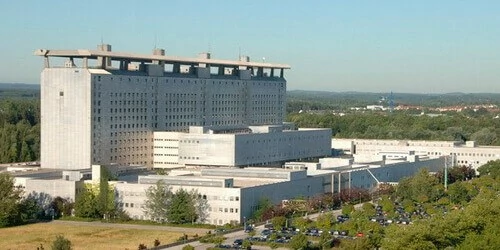
The history of the Ludwig-Maximilians-University Hospital Munich dates back more than two centuries. It is one of the oldest and largest medical centres in Europe. Every year more than half a million patients come to the clinic for diagnosis and treatment in 44 areas. Cancer treatment and diagnosis are among the priority areas. For example, the Department of Oncology and Haematology receives about 13,000 patients a year, of whom almost 3,000 are treated as inpatients.
When treating cancer, doctors act according to international standards and are guided by the latest medical achievements. Each patient is diagnosed and treated on an individual basis. The interdisciplinary approach, when several doctors of different specialities are involved in the treatment process, practically reduces the doctors’ wrong decisions to zero and increases the efficiency of therapy several times. The clinic cooperates with the world’s best medical and scientific centres. For example, scientists from the Ludwig-Maximilian Clinic together with colleagues from the Rechts der Isar Clinic are working on the development of the latest methods of oncology treatment.
The Ludwig-Maximilian Clinic has been renowned for its use of modern technology since the very beginning of its existence. For example, in the early 19th century, a ventilation system, unique at the time, was installed here for the first time in the world, which was an undeniable achievement in the development of hygiene. Emperor Napoleon came to see the ventilation system.
When surgically removing a tumour, doctors strive to do everything possible to preserve the affected organ and its functions. Therefore, in the case of large tumours, specialists prescribe a set of treatments to reduce the size and scope of surgery. After the tumour is removed, treatment continues to prevent recurrence. The clinic resorts to radiotherapy and radiosurgery, brachytherapy, chemotherapy, and stereotactic radiotherapy. Immunotherapy and targeted therapies are also in demand.
Hyperthermia is also used in the hospital. The essence of the method is to heat the body or a certain area of the body to a high temperature – from 39 to 45° Celsius. As is known, cancer cells are destroyed under the influence of high temperatures. They become more sensitive to the action of chemotherapy and radiotherapy.
For example, in some types of abdominal cancer, classical treatment methods (surgical removal, chemotherapy, radiation) are ineffective and the survival rate of patients is very low. But recently doctors have been successfully treating inoperable abdominal cancer with the latest technology HIPEC (hyperthermic intraperitoneal chemotherapy). The advantage of this method is that the heated drug is injected directly into the tumour. Toxic substances do not enter the general bloodstream, but act only on pathological cells, so the dose can be increased several times without harming the patient’s health. High temperature damages the shell and internal structures of cancer cells and leads to their death, which multiplies the effect of chemotherapy.
The Ludwig-Maximilian Comprehensive Cancer Centre is certified by BZKF, OECI, ERN EURACAN, nNGM, DNPM, TARGET, Integration, DKTK, and DKFZ.
Another advantage of treatment at the Ludwig and Maximilian Clinic is the possibility of customised medication in the hospital’s pharmacy. A diagnostic report is required for the production of medicine, based on which the necessary components and optimal dosages are selected. The effectiveness of such medicines is many times higher.
VIVANTES CLINIC NETWORK
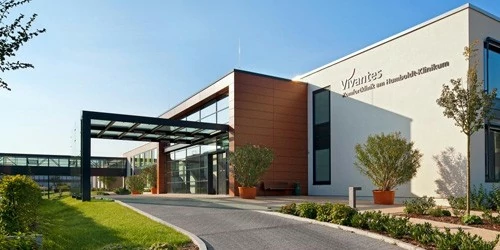
Today, the Vivantes Group comprises more than 100 medical institutions, including hospitals, research centres and institutes, nursing homes, rehabilitation centres, etc. Some clinics have been in operation for more than 140 years. In Vivantes clinics, patients receive medical care in a comprehensive manner – diagnostics, therapy, and rehabilitation. There are 3 oncology centres in the Vivantes clinic network, as well as more than 50 highly specialised clinics. The total number of cancer patients per year is approximately 15,000 people. Thanks to an established communication system, doctors in any department, regardless of their location, can work together and share a common database and information on any disease.
All Vivantes oncology departments have quality certificates and comply with international health regulations, among them: DIN EN ISO 9001 quality standard, quality certificate of the German Society of Haematology and Oncology (DGHO), OnkoZert of the German Cancer Society (DKG), certificate of the College of American Pathologists (CAP). Vivantes facilities are also recognised with Patient Safety certificates.
Treatment of cancer patients at Vivantes clinics is personalised and depends on the specifics and stage of the disease, general health condition and other factors. In case of inoperable cancer or tumours in their final stages, doctors provide effective palliative care aimed at improving the quality of life of incurable patients. If necessary, in addition to specialised doctors (oncologist, surgeon, radio-, chemotherapist), a psycho-oncologist, nutritionist, physical therapy instructor, occupational therapist and other specialists participate in the treatment.
Vivantes clinics focus on early diagnosis of cancer and preventive examinations of patients. The Check-Up programme, which includes about 10 different tests and analyses, has been developed specifically for early detection of cancer. Each department has the most modern models of diagnostic equipment, such as 3 Tesla MRI, 64-slice Multislice Somatom CT, angiographic and X-ray machines from Siemens, high-precision mammographs and others.
Modern diagnostic equipment allows doctors to determine the location of the cancerous tumour with millimetre accuracy, and to study its structure, vascular system, and presence of metastases. In addition, modern diagnostics is safer for health, as the time for the examination and radiation dose are significantly reduced.
Based on Vivantes clinics there are rehabilitation centres in various areas, in particular for work with cancer patients. There is an individual approach to patients. The main goal of rehabilitation is to restore the organism of a patient who has undergone various diseases of any severity.
MULTIDISCIPLINARY CLINIC NUREMBERG

The University Hospital Nuremberg is one of the largest clinics in Germany. In 32 years of operation, it has excelled in many medical fields, including oncology. The institution includes several specialised centres for the diagnosis and treatment of certain types of cancer.
The Breast Cancer Centre, the Lung Cancer Centre, the Skin Cancer Centre and the Bowel Cancer Treatment Centre have been awarded LGA-Intercert quality certificates by DIN EN ISO 9001:2015 for their high treatment rates, use of modern therapies and commitment to improving patient safety. In 2023, FOCUS magazine ranked Nuremberg University Hospital among the best cancer centres in the country.
More than 6,000 cancer patients are treated at the University Hospital Nuremberg every year. The treatment and diagnosis of malignant tumours is carried out according to international protocols using the latest methods, for example:
The da Vinci Surgical System is a robot assistant that makes it possible to perform complex tumour removal operations without risk to the patient. Thanks to it, the surgeon’s movements are several times more precise, and the possibility of damage to nerves or large blood vessels is virtually nil. The recovery period after robot-assisted surgery is therefore several times shorter. This device is often used to resect malignant tumours of the prostate, kidney, stomach, oesophagus, gallbladder, testicles, etc.
Angiographic examination with the Siemens Artis zee system allows to study of the tumour’s circulatory system with high precision and to determine the degree of involvement of the main vessels. At the same time, the required radiation dose needed to obtain a high-quality image is several times smaller.
The images obtained with the 64-slice MRI machine at the Nuremberg Clinic are of better quality than those obtained with the 16-slice system. In addition, the patient is exposed to less radiation during the examination. This device can detect pathological neoplasms at the very early stages.
Summary
Oncology is a priority area of medical tourism in Germany. The country’s top hospitals in this field are the university hospitals of Munich, Cologne, Nuremberg and the Vivantes network hospitals.
Treatment of malignant tumours in German hospitals involves several specialists – oncologists, radiologists, chemotherapists, and other doctors depending on the type and location of the tumour. As a rule, a tumour board meets once a week to analyse the results of therapy and, if necessary, to adjust the treatment regimen.
Germany has one of the highest 5-year survival rates among cancer patients. For example, the effectiveness of melanoma treatment here reaches 95%, and breast cancer treatment is over 90%.
To organise a medical trip for oncology diagnosis or treatment in Germany, please fill in the contact form. We will call you back as soon as possible.
Sources:
- 1. German Cancer Registry Data Centre
- 2. DKFZ: The world’s largest cancer survival study reveals significant differences – Germany among the world’s leading countries
- 3. German cancer statistics according to WHO data
- 4. Germany’s cancer registry data centre – melanoma
- 5. Nobel Prize for Physiology and Medicine 2008
- 6. Aurora-A prevents transcription-replication conflicts in MYCN-amplified neuroblastoma
- 7. NCBI: Hyperthermic Intraperitoneal Chemotherapy