


Amyotrophic lateral sclerosis (ALS) is the most common motor neurone disease, occurring in 4-6 people out of 100,000 in the general population. The disease is characterised by a very poor prognosis, short life expectancy and limited treatment options. Doctors are actively researching the possibility of stem cell therapy for amyotrophic sclerosis, which raises both hope and many questions among patients and their family and friends. We’ll help you make sense of this topic in our new article.
Is it possible to treat amyotrophic lateral sclerosis with stem cells?
Unfortunately, amyotrophic lateral sclerosis (ALS) is one of a number of diseases that cannot be completely cured. It is a complex, congenital pathology that is underresearched by doctors. There are treatment protocols for this disease, but they can only extend the patient’s life expectancy and improve the quality of life. Among the available therapies, stem cells are considered one of the most promising due to their unique regenerative abilities. However, even with them, it is too early to talk about a complete cure for ALS.
Treatment of ALS is aimed at slowing down the progression of the disease, and it can not only prolong the patient’s life but also significantly improve its quality.
The problem of finding an effective cure for ALS stems from a lack of understanding of the mechanisms of the disease. Although doctors have managed to recognise genes that are associated with its development, they are detected in only 5-10% of patients. This means that for the majority of people with this diagnosis, it is not yet possible to identify the ‘weaknesses’ of the disease that could be targeted by drugs, such as in the treatment of cancer with targeted therapies.

This is what Dr Richie Ho, head of the Cedars-Sinai Institute for Regenerative Medicine’s Institute of Regenerative Medicine laboratory, and an expert in ALS, says: ‘We are coming to an understanding that amyotrophic lateral sclerosis is an umbrella group of diseases that share the same symptoms. However, if we take, for example, 1,000 patients, there will be 100 different subgroups of this disease among them. Finding an effective drug will depend on how well we can distinguish these groups from each other and tailor the therapy to each patient based on the individual characteristics of their disease’.
Given this characteristic of ALS, stem cells are in a unique position: although they cannot affect the root of the problem – the genetic changes in the patient’s DNA – they naturally counteract the degenerative processes through which the disease manifests itself.
How do stem cells help ALS patients?
To explain the therapeutic effect of stem cells in ALS, we need to understand the mechanism of the disease more specifically.
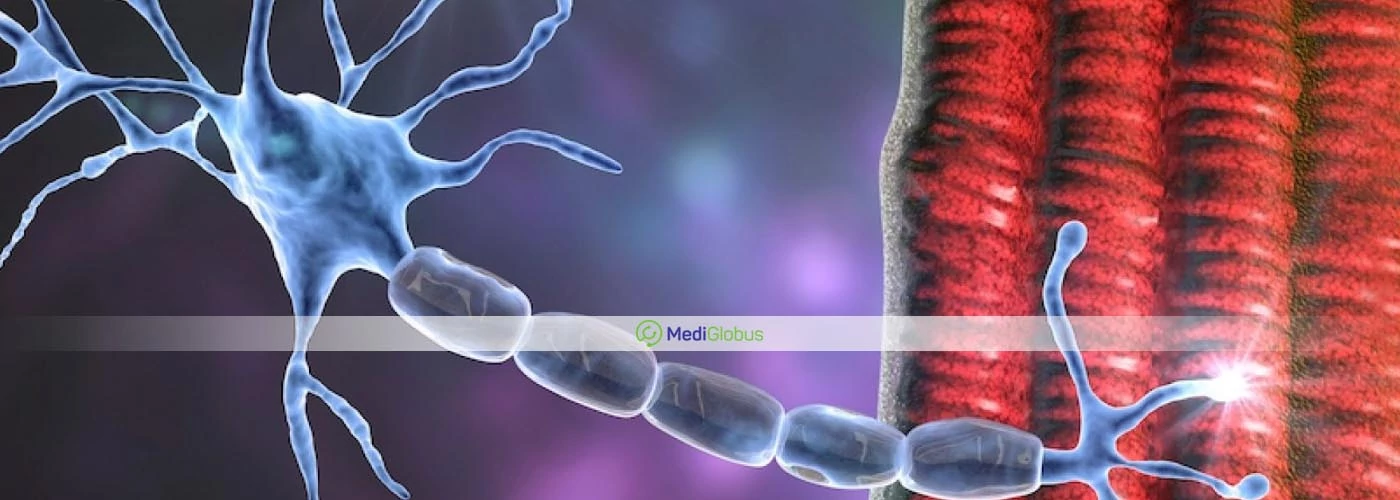
Amyotrophic lateral sclerosis is a progressive neurodegenerative disease, the main characteristic of which is the dying off of motor neurons in the spinal cord and brain that are responsible for muscle function.
The disease is usually diagnosed at an older age, with an average patients’ age being 55-70 years, but 40-year-old people can also have it. ALS progresses rapidly, leading to neuronal degradation and muscle atrophy. The most dangerous symptom is atrophy of the muscles responsible for breathing, which is fatal. Without treatment, the average life expectancy is 3-5 years, but modern medicine can extend it to over 10 years. One of the most famous people with this diagnosis, physicist Stephen Hawking, lived with ALS for more than 50 years.
 Symptoms of ALS:
 General weakness;
Muscle stiffness or rigidity;
Involuntary twitching of muscles;
Muscle atrophy.
Stem cells help fight ALS on several levels at the same time.
Stem cells are a part of each person’s body that is ‘turned off’ in its normal state, but when an injury or illness occurs, it activates to repair damaged tissue. Stem cells can become any type of cell in the human body, which is their unique regenerative ability. The most commonly used stem cells in medicine are mesenchymal stem cells, which are isolated from the patient’s blood or fat. Usually, the largest number of stem cells of good quality can be collected from these two areas.
The main goal of stem cell therapy for ALS is to replace dead motor neurons. Stem cells are naturally programmed to migrate to disease sites and have the desired therapeutic effect. They are also able to ‘repair’ damaged areas of neurons that are in the process of degeneration, thereby slowing the progression of the disease.
In addition, stem cells are also capable of transforming into astrocytes – maintenance cells that protect neurons and keep them in good condition. In ALS, patients are often found to have defective astrocytes that fail to fulfil their function, causing inflammation and contributing to neuronal destruction.

More in-depth studies of the effect of stem cells on neurons in amyotrophic lateral sclerosis have shown that in addition to a direct regenerative function, their administration also promotes the formation of new neuronal connections. This can be compared to creating ‘bypass roads’ for neural impulses to replace damaged ones. In combination with physical rehabilitation, which also activates neuroplasticity, this strategy effectively increases the patient’s functionality and reduces the severity of symptoms.
In addition to the above, stem cells also have positive effects on the microenvironment of the stem and brain. They remove toxic molecules, reduce inflammation, and release beneficial cytokines and growth factors.
In this way, stem cells prevent the progression of ALS by slowing down neuronal degeneration and even repairing damaged areas of the spinal cord; thus improving the patient’s neuromuscular functionality.

What results can be expected?
With stem cell therapy, many patients can slow the progression of ALS and partially improve their musculoskeletal function. The effect of the treatment will strongly depend on the age of the patient and the duration of the disease.
A large number of studies of stem cell therapy for ALS have been conducted over the past decades. Doctors use different drug dosages, and methods of administration, and test the drugs on patients at different stages of the disease, so the results of the studies may vary.
On average, 67-87% of patients respond positively to treatment. Patients see the following changes:
Improvement in muscle tone;
Improved mobility and strength in the arms and legs;
Normalisation of reflexes;
Improved appetite;
Improved swallowing, speech, pronunciation;
Better tolerance to daily activities.
Risks, complications, contraindications, side effects
Stem cell therapy is classified as well tolerated. Compared to the two other drugs approved by the FDA for the treatment of amyotrophic lateral sclerosis – Riluzole and Edaravone – this treatment method does not cause severe side effects. The most frequent complaints of patients are headache and general fatigue. Complications from organ systems are not observed at all. Also, numerous studies have been looking into the potential carcinogenic risk, and all of them have confirmed that stem cells do not increase the risk of cancer.
Since the disease will continue to progress despite treatment, it will be necessary to repeat stem cell injections to maintain the effect. The frequency of the course depends on the age and condition of the patient.
Contraindications to stem cell treatment for ALS are standard for this procedure:
damaged bone marrow cells;
blood clotting disorders;
low platelet counts in the blood;
cancer;
pregnancy and lactation period;
active severe infections (AIDS, tuberculosis).
How is the treatment carried out?

A patient’s stem cells are always used to treat amyotrophic lateral sclerosis. Depending on the specifics of each case, the doctor may use blood, fat or bone marrow as a source.
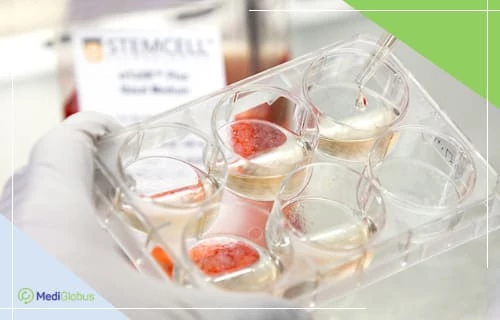
Once a sufficient number of stem cells have been collected, they are sent to a laboratory. There, a special machine prepares the serum by separating the stem cells from other cells.
After the stem cells have been prepared, they are administered to the patient. Depending on the approach of the clinic and doctor, there are two different approaches to ALS: intravenous injection or injection of stem cells directly into the spinal cord. The second option is carried out under X-ray monitoring to ensure its safety and with the use of local anaesthesia.
Usually, one complete course involves a certain number of injections given over a short period or intermittently. The treatment plan is flexibly adapted to the patient: his/her age, condition, well-being, the severity of symptoms, etc. play a major role.
The effects of stem cell treatment will appear gradually, building up over months. Doctors can observe the activity of stem cells up to 3.5 years after their administration. However, to maintain the maximum effect, it is usually recommended to repeat the treatment every 1-2 years – depending on the needs of the patient.
How to get stem cell treatment for ALS?
Stem cells are still considered an experimental treatment for ALS. This means that a single protocol for dosage/frequency of injection/method of administration has not yet been approved. The treatment approach can vary significantly from clinic to clinic, depending on their individual experience in treating patients with this diagnosis. This fact should be taken into account when choosing a clinic – amyotrophic lateral sclerosis is a rare disease, and it is better to go to a doctor who has sufficient experience in treating it.
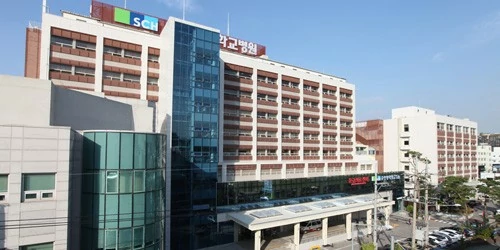
Taking this factor into account, our coordinating doctors usually recommend to our patients the following clinics, which have earned our trust due to the availability of modern equipment, a wide range of doctors’ experience and a loyal pricing policy:


 Read more
You can ask our coordinating doctors about the cost of stem cell therapy for ALS. They will make a comparative analysis of offers from different clinics and help you find the best solution.
Summary
Stem cell therapy is a potential palliative treatment for amyotrophic lateral sclerosis. It is still in the research phase but has managed to prove its safety and good patient tolerability over the last +20 years.
67-87% of ALS patients have a good response to stem cell therapy. The treatment can slow down the dying of nerve cells, and improve the patient’s mobility as well as his/her life expectancy.
Stem cell therapy uses mesenchymal cells from blood, bone marrow or fat. The course of treatment includes several intravenous or intraspinal injections, which will need to be repeated every 1-2 years.
The treatment is well tolerated by patients, does not have a long list of contraindications and does not cause a large number of side effects. In combination with other approaches to ALS treatment – drug therapy, and rehabilitation – stem cells can give the patient a chance for a longer life.
Sources:
- 1. Cell Regeneration: Stem cell therapy for amyotrophic lateral sclerosis
- 2. Cedars Sinai: Regenerative Medicine: A New Path for ALS Treatment
- 3. Iran Journal of Basic Medical Sciences: Mesenchymal stem cell therapy in amyotrophic lateral sclerosis (ALS) patients: A comprehensive review of disease information and future perspectives
- 4. ALS News Today: Stem cell-based therapy deemed safe in Phase 2 study
- 5. ALS association
- 6. Nature: Looking backward to move forward: a meta-analysis of stem cell therapy in amyotrophic lateral sclerosis
- 7. Experimental Neurology: The past, present and future of stem cell clinical trials for ALS
- 8. International Journal of Developmental Neuroscience: Stem cells for ALS: An overview of possible therapeutic approaches
- 9. Journal of the Neurological Sciences: Stem cell treatment in Amyotrophic Lateral Sclerosis
- 10. A Journal of Progress in Neurosurgery, Neurology and Neurosciences: Overview of stem cells therapy in amyotrophic lateral sclerosis