


1. Scoliosis and its treatment |
2. Childhood scoliosis treatment |
3. Therapy of scoliosis in adults |
4. Physiotherapy for scoliosis in adults and children |
5. Clinics for the treatment of scoliosis |
Scoliosis is one of the most common spinal conditions affecting both children and adults. This pathology has a significant impact on the quality of life of those who experience it. For children and adolescents, scoliosis becomes a barrier to full development, while adult patients face pain and discomfort that interferes with normal life. However, thanks to continuous scientific and medical research, modern doctors have learned how to treat spinal curvature. Today, patients have access to a wide range of surgical techniques and conservative therapies that can restore health and quality of life. In this article, we will focus specifically on non-surgical methods – wearing fixators and corsets, physiotherapy, etc. You will also learn about rehabilitation centres where you can get the necessary help.

Listen to the article:
What is scoliosis and how to treat the disease
Scoliosis is an abnormal curvature of the spine. It can develop at any age, but typically it is diagnosed in children 10-15 years old. In most cases, the cause of scoliosis remains unknown, although sometimes it develops due to trauma, connective tissue diseases, congenital anomalies, and neuromuscular conditions like muscular dystrophy or cerebral palsy.
In children and adolescents, scoliosis predominantly develops in the thoracic region; and in adults, more often in the lumbar region. Sometimes, the spine can be curved in two places, resembling an S-shape. With a strong curvature, there is a noticeable bulge on the back, protrusion of the shoulder blade, and asymmetry of the shoulders and hips. Such changes in appearance often have a negative impact on a person’s mental state and self-esteem. Lack of control and treatment leads to more serious problems. For example, spinal curvature can affect the proper development of a child, and cause breathing problems, severe pain, discomfort, difficulty with mobility and other complications.
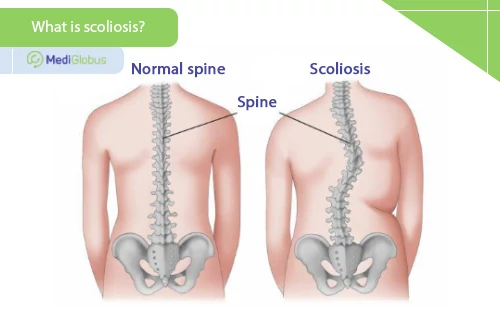
When scoliosis is diagnosed, treatment depends on the patient’s age, general condition and degree of curvature. The curvature of the spine can be mild (up to 10 degrees), medium (up to 100 degrees) and severe (more than 100 degrees). Mild scoliosis often does not require therapy. Treatment is prescribed if the disease progresses and has a significant impact on a person’s health.

Dr Muhsin Doran, Physiotherapist and Rehabilitologist at Liv Hospital identifies 3 main aspects of scoliosis therapy for children and adults: regular monitoring, spinal correction with a brace, therapeutic exercises and physiotherapy.
Dr Muhsin Doran is a physiotherapist and rehabilitation therapist at Liv Clinic with over 8 years of experience. One of his main specialities is the treatment of scoliosis in children and adults. He received his medical education from Dokuz Eylul University and Istanbul Training and Research Hospital for Physical Therapy and Rehabilitation. He has worked in several major Turkish public hospitals. He is actively engaged in research activities in the field of scoliosis prevention and therapy. He is a member of the Istanbul Chamber of Medicine, the Turkish Association of Physical Medicine and Rehabilitation and other organisations.
Does scoliosis treatment differ between children, adolescents and adults?
Treatment of scoliosis in children and adolescents is usually focused on preventing further curvature, as the spine is still actively growing. In adults, treatment methods are mainly aimed at relieving pain and improving quality of life.
Until what age does scoliosis progress?
The formation of the skeleton is fully completed by the age of 23-25 years. By this time, the deformation of the spine usually stops. However, it is recommended to remain under the observation of an orthopaedist to make sure that the pathology does not progress.
Does scoliosis progress in adults?
Lack of therapy can lead to the aggravation of scoliosis and the development of negative symptoms – pain, impaired motor functions and work of internal organs. Therefore, it is recommended to periodically see a doctor to prevent the progression of spinal deformity.
Is it possible to treat scoliosis without surgery?
Yes, it is possible to treat scoliosis without surgery, especially in the early stages. However, the older the patient, the more difficult it is to stop the development of pathology. Non-surgical methods of treatment are used to prevent further deterioration and improve the quality of life. Surgery is indicated if conservative methods do not help and the curvature of the spine significantly aggravates the state of health.
 Read:
Read: If you or your child has developed scoliosis, rehabilitation is an option to avoid surgery. Contact the experts at MediGlobus to choose a medical centre for treatment. We will book you an appointment without a waiting list and organise your travel for treatment.
Correction of scoliosis in children
Therapy of scoliosis in children is selected by an orthopaedist depending on the age of the child, the degree of curvature of the spine and the dynamics of the disease. Many children do not require surgical treatment, and only a small number of them (3-4 children out of 1000) undergo surgery.
Observation
If the curvature of the spine in a child reaches 7 degrees or more, it is recommended to consult an orthopaedist. The doctor will assess the patient’s condition and decide whether any action is required. There is a possibility that the curvature of the spine will pass as the child grows. Therefore, doctors prefer the observational approach. Dr Muhsin Doran, the specialist in physical therapy and rehabilitation at the Liv Clinic, recommends a six-monthly check-up with scoliometry or radiography, clinical posture examination and neurological examination. Therapy is recommended if the problem progresses, the angle of deformity exceeds 30 degrees and there is a risk of organ compression.
Wearing a plaster fixator
A plaster fixator is a rigid corset made of plaster, which is worn around the child’s back, creating support and pressure on the spine to straighten it. A plaster cast is worn permanently and cannot be removed. It is periodically replaced with a new one as the baby grows. This method is recommended for newborns and children up to 3 years old. The duration of wearing the plaster fixator depends on the degree of scoliosis and the growth rate of the child.
Removable brace (braces)
A removable brace is recommended for older children and adolescents if the curvature of the spine continues to increase. It is prescribed if the curvature has reached 20° to 40°. It should be worn as long as the child continues to grow. In some cases, patients may continue wearing braces even after growth is complete to improve posture and maintain the correct position of the spine.

The brace cannot cure scoliosis completely. Its main goal is to prevent the progression of the pathology until the active growth phase is complete. In a randomised trial, 72% of patients who wore braces were able to stop the progression of scoliosis and avoid surgery, compared to 53% of patients who did not wear braces.
There are 2 main types of braces:
 Rigid corsets are made of a lightweight plastic material. They apply pressure at three points that form a triangle along the curvature area.
Dynamic corsets are designed to correct different types of scoliosis. Flexible straps inside the corset, stretching and contracting, maintain the position of the spine as the patient moves. This method is preferable for active lifestyles and sports.
Complex physiotherapy for scoliosis in children
Physiotherapy for stage 2 scoliosis and other forms of pathology is an important and integral part of treatment. It can be applied independently. However, according to the International Society for Orthopaedic and Rehabilitation Treatment of Scoliosis (SOSORT), the combination of physiotherapy with other methods gives the best results. Thus, in 2011, SOSORT adopted standards for the treatment of children with scoliosis. Comprehensive treatment includes exercises, wearing a brace, training in daily life activities and psychological support for the child. Therefore, not only physiotherapists and orthopaedists but also psychologists should be involved in the treatment of children.
Abroad, the curvature of the spine is treated according to international standards using modern methods and technologies. Contact us to arrange a trip to one of the rehabilitation centres as soon as possible.
Treatment of scoliosis in adults
Treatment of scoliosis in adults is complicated by the fact that the skeleton is already formed, and the deformation of the spine often has a persistent character. Therapy in this case is aimed more at eliminating the pain. To treat pain and improve the quality of life, patients are prescribed: drug therapy, wearing corsets, and physiotherapy. It can be considered as an alternative to surgery in cases where surgery is undesirable.
Treatment of back pain usually begins with the prescription of painkillers. However, not all patients can take these medications, so a doctor’s consultation is required. Sometimes scoliosis causes compression of nerve endings and severe pain and numbness. In such cases, the doctor may recommend spinal injections of steroids or local anaesthetics.
Therapeutic exercises aimed at strengthening the back and stretching are also an effective method of pain relief. The physiotherapist selects a programme of exercises based on the individual characteristics of the patient and the peculiarities of his pathology.
Back braces are not as common in adults as in children. However, it is possible to use them to support the spine and reduce discomfort.
The treatment of scoliosis in adults requires an individual approach and consultation with a doctor to determine the best treatment method for each case. Contact MediGlobus to book a consultation with a doctor and receive an individual therapy programme.
Physiotherapy for scoliosis in adults and children
Regular physical exercises are important for all patients with scoliosis. They help to stop the progression of pathology, strengthen muscles, reduce back pain, and improve and strengthen the respiratory system. Several effective programs are used for scoliosis: the Schroth method, the Scientific Exercises Approach to Scoliosis (SEAS), Klapp exercises, breathing exercises, etc. Physiotherapy is carried out in conjunction with the main treatment and should be regular. It is necessary to consult with the attending physician about the appropriateness of treatment.
Schroth method for scoliosis | This is a popular system of therapy for scoliosis, which is used for patients of different ages and with different degrees of curvature of the spine. The main goals of the exercises are to restore muscle symmetry and align posture. In addition, the patient performs special breathing exercises that help to strengthen the chest muscles and maintain the correct position of the vertebrae. Schroth exercises are individually selected for each patient, taking into account the unique curvature of the spine. Treatment using the Schroth method should be supervised by a specially trained physiotherapist. |
Aquatic Physiotherapy | Exercises are performed in water, such as a swimming pool. The water supports the body and reduces stress on the joints, making the exercises more comfortable and less traumatic. Aquatic physiotherapy helps to strengthen muscles and improve circulation and coordination of movement. |
Heat and cold therapy | Applying hot or cold compresses, taking a bath, and visiting a sauna helps relieve pain, helps relax muscles, reduces swelling and inflammation. However, this type of therapy is not suitable for every patient and there are contraindications. Therefore, consultation with a specialist is required. |
Massage | Back massage helps to relax tired and tense muscles, which helps to reduce pain and improve blood circulation. Regular treatments help to strengthen the muscles and improve the overall health of the spine. Treatment should be carried out by an experienced professional and only on the advice of your doctor. |
In foreign rehabilitation centres, physiotherapy for scoliosis in children and adults is carried out according to complex programmes that are selected individually. Experienced doctors and specialists work with patients. Contact MediGlobus if you want to learn more about rehabilitation abroad or to undergo treatment in one of the certified clinics.
Clinics for scoliosis treatment
Scoliosis is treated in orthopaedic departments of multidisciplinary medical centres, in individual orthopaedic clinics or in rehabilitation centres. MediGlobus offers medical centres based on our experience and patient reviews.
Patient testimonials:
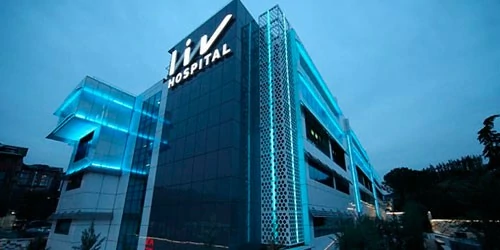
“I am very satisfied with the physiotherapist at Liv Clinic. Our doctor is a professional and a wonderful person. He listens to the patient, tries to understand his problems and offers appropriate solutions. The service is top-notch.”
“We highly recommend Liv Hospital Ulus! We have been treated in this hospital on numerous occasions with our son. The doctors and staff are very competent and the hospital itself is equipped with the latest medical equipment. The wards have everything you could wish for, but the most important thing is the good results the doctors achieve!”

Patient testimonials:
“I used to take my daughter to physiotherapy here. It is a very good hospital. Caring staff and everywhere is clean. From morning to evening the child was engaged – swimming pool, massage, muscle development and movement. We will definitely come here again.”
“It is a very good centre. A comprehensive physiotherapy programme is applied there. Massage, electrotherapy, swimming pool, therapeutic muds, relaxation – I got all this at a very affordable price. The staff do their work with love. They solve any problem. I am satisfied.”
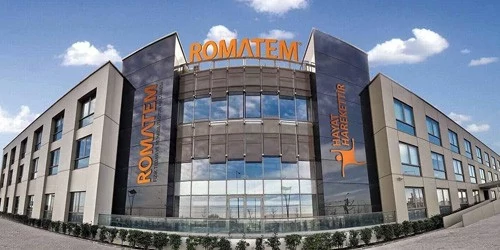
Patient testimonial:
“Dr Ahmet Dinç is a very professional doctor. My child has mild degree scoliosis. The doctor gave sensible and detailed information about our problem and referred us for treatment. Thanks to the staff, there was no problem with the checkout. I am happy with everything so far. The staff is very friendly and helpful.”
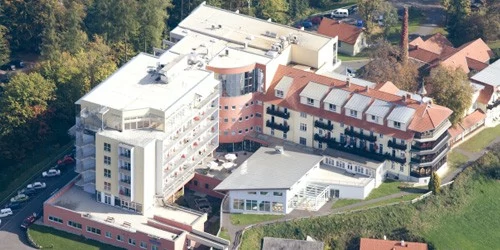
Patient testimonial:
“The place is beautiful. Very nice people and therapists work, great food. I was pleased with the results of the rehab. Great therapy, everything is top-notch. I would like to recommend this place.”
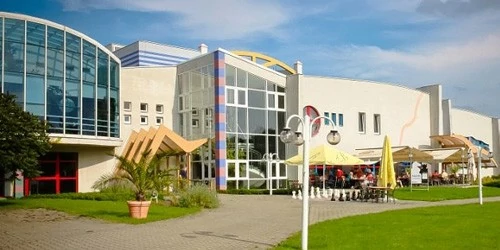
Patient testimonial:
“I was here together with my 4-year-old daughter. We were accommodated in a beautiful room with a kitchen, bedroom, balcony and bathroom. All kinds of procedures are carried out here and children with various diseases are treated. There is a swimming pool and therapeutic baths. We were very satisfied with everything. The food is tasty, and portions are average-sized. The staff is friendly. Thank you to the doctor, he helped my daughter a lot.”
Summary
With scoliosis, the spine curves laterally and takes the shape of the letter “C” or “S”. Pathology negatively affects the quality of life of a person, and can also provoke the development of complications: back pain, restriction of movements, and damage to internal organs.
Treatment of scoliosis in children and adolescents is focused on preventing further curvature. In the initial stages, therapy is not required. It is recommended to examine the child 2 times a year to observe the dynamics. If the disease progresses and the angle of curvature exceeds 30 degrees, a decision is made about therapy: wearing a corset and physiotherapy. Surgery is carried out in extreme cases.
Therapy of scoliosis in adults is more complicated since the skeleton is already formed. Patients are recommended treatment with analgesics and other drugs and physiotherapy. Corsets are used to maintain the spine in the correct position. Surgery is performed if conservative methods do not help, and the pathology continues to progress.
There are 3 types of orthopaedic corsets: plaster non-removable, removable rigid corsets and removable dynamic corsets. Each of them has its own features. Therefore, what kind of corset is needed is determined by the doctor according to the individual parameters of the patient.
Rehabilitation for scoliosis includes the performance of specially selected exercises, breathing exercises, water physiotherapy, massage and other methods.
MediGlobus will help you find a doctor and clinic for scoliosis treatment of any complexity. Leave an application on the site to go to the treatment of the spine in the shortest possible time.
Sources: