


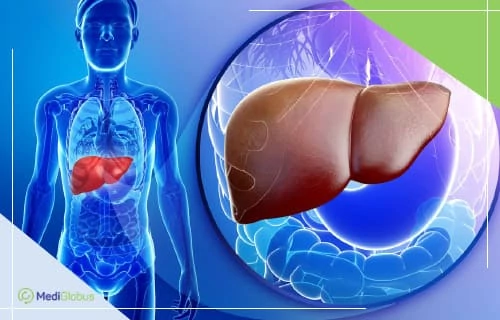
Hemangioma of the liver is the most common form of benign tumour of this organ. According to data published on the website of the U.S. National Library of Medicine, the disease occurs in about 7% of the general population, but most people are symptomless. Still, a diagnosis of liver hemangioma can knock a patient off their feet. Many questions arise. Is it dangerous? How to treat it? How to distinguish hemangioma from cancer? What if the tumour is found in a child? How long do people live with a haemangioma of the liver? It is difficult to find answers to these questions on your own. Therefore, we have asked the most common questions to experienced liver specialists and shared their answers in this article.
Can liver haemangioma be confused with cancer?

Yes, haemangioma is quite often mistaken for a malignant liver tumour and vice versa. This happens for two reasons. Firstly, both benign and malignant liver tumours cause similar symptoms in patients. It is more difficult for non-specialised doctors to make a correct diagnosis based on the patient’s complaints. Secondly, both types of tumours resemble each other on imaging tests – ultrasound, CT, MRI, etc. The situation is complicated if a person goes to a public hospital, which usually do not have quality medical equipment.
Incorrectly defined disease will lead to the fact that the patient will be prescribed the wrong treatment. On average, misdiagnosed patients lose up to 10 months that could have gone into treating the disease. The malignant tumour may grow during this time and progress to a stage that is difficult to treat. In cases where patients with benign haemangiomas are misdiagnosed with cancer, they are given unnecessary chemotherapy or surgery, which also puts a strain on the body. After that, it is necessary to spend a lot of money and time on rehabilitation.
Therefore, responsible doctors always recommend seeking a second opinion before agreeing to surgery or other high-risk treatments. The new clinic may run new tests. According to Professor Joseph Klausner, head of the Department of Surgery at Ikhilov, up to 25-30 per cent of patients who come to them from Eastern European countries come in with incorrectly performed or misinterpreted tests.
Can a haemangioma of the liver develop into cancer?
The answer to the question of whether a haemangioma can develop into cancer is unequivocal – No. Many years of observation of patients with liver haemangiomas confirm that haemangiomas are not cancer. These tumours rarely develop into malignant tumours.
APPOINTMENT FOR A CONSULTATION
If you have questions about the diagnosis or treatment of haemangioma in the liver, you can have a consultation with a foreign specialist. MediGlobus collaborates with the leading surgeons, oncologists and gastroenterologists. We can organise an online or face-to-face consultation in a matter of days. To book a service, leave your request online.
Is liver haemangioma dangerous?
The prognosis of a haemangioma of the liver depends on its size. Usually, formations up to 4 centimetres do not pose a danger and do not even cause any symptoms. However, even in this case, they can continue to grow, so annual ultrasounds should be attended.
A more dangerous situation is caused by large haemangiomas. Tumours can squeeze the stomach and bile ducts, disrupting their work, as well as causing pain. In addition, they can form blood clots and accumulate calcium deposits or scar tissue.
The most dangerous complication of hepatic hemangioma is bleeding and rupture of the tumour. They occur in only 1-4% of cases, but often end in death, even if a doctor is consulted in time. For the safety of the patient, it is recommended to remove all tumours larger than 10 cm. Factors that increase the risk of hemangioma rupture include taking steroids. These drugs are often prescribed to treat asthma, eczema, arthritis and other conditions.

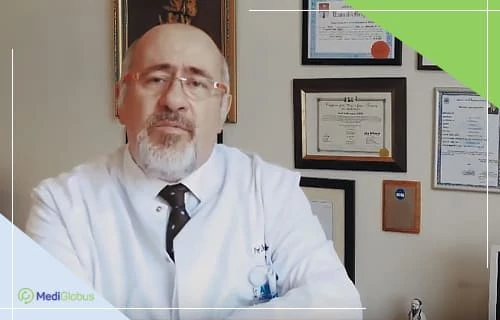
Prof. Fatih Agalar
Regular follow-up is recommended for asymptomatic haemangiomas that do not show rapid growth and do not carry a risk of injury, even if their size is large. Although rarely necessary, treatment consists of surgical removal.
Which doctor treats haemangioma of the liver?
Most liver haemangiomas are discovered during the diagnosis of other diseases. If a mass in the liver is suspected, patients are referred to a doctor specialising in the digestive system (gastroenterologist) or the liver (hepatologist). If surgery is required, the patient will be referred to a surgeon who specialises in liver surgery. Important blood vessels are located in this area, so special care and precision are required from the specialist.
The doctor has found a haemangioma of the liver. What is the best examination to clarify the diagnosis?
Most often patients turn to foreign clinics after an ultrasound performed at home indicates the presence of a haemangioma. Ultrasound is considered an inaccurate method of diagnosing this disease, so additional imaging methods are always prescribed abroad:
 Ultrasound with contrast enhancement. The method differs from the standard method in that the patient is intravenously injected with a contrast agent containing microscopic gas bubbles. This allows a clearer view of the vessels that make up the haemangiomas.
Computed tomography (CT). The method uses X-rays to create multiple “slices” of a picture of the liver. Haemangiomas are usually clearly visible on a CT scan, and the method is effective in differentiating benign liver tumours from malignant ones.
Magnetic resonance imaging (MRI). The method is based on magnetic and radio fields that make up a three-dimensional image of the organ under study. Modern MRI units have high image accuracy and are reliable enough to distinguish haemangiomas from cancer.
There is no single rule as to which method of diagnosing haemangioma is more accurate and which is less accurate. Up to 90% of typical tumours are visible on an MRI or CT scan, but atypical haemangiomas may require more thorough examinations. Sometimes patients with more than one liver disease, for example, metastases and haemangioma, come to the clinic, which also complicates the diagnosis. The doctor may need to perform several different types of tests to compare the results.
Can a haemangioma of the liver hurt?
Most haemangiomas do not cause pain or other symptoms. Unpleasant sensations may occur in large masses larger than 4 cm, or the presence of several neoplasms. Patients usually complain of pain in the right upper abdomen.
Can a haemangioma of the liver disappear on its own?
To find an answer to the question of whether a haemangioma of the liver can disappear without any medical help, many people turn to various online resources. They may search the forums for stories of people who have had their haemangioma dissolve. However, they will most likely not find a positive answer. After all, hemangiomas of the liver do not typically disappear without treatment.
Does a haemangioma of the liver grow?
Based on the observations of doctors at the University of Wisconsin Medical School, up to 40% of liver hemangiomas grow over time. They typically grow by 2 mm per year, although faster-growing neoplasms are occasionally seen.
APPOINTMENT FOR HAEMANGIOMA TREATMENT
Foreign surgeons have extensive experience in performing minimally invasive operations to remove haemangioma of the liver. These procedures are safer than open surgery and are easier for patients to tolerate. To find out more and book an operation, leave a request online by clicking the button below. Our coordinators will answer all your questions and help you organise your treatment.
Is liver haemangioma dangerous in pregnancy?

A careful and individualised approach is needed in the treatment of pregnant women with haemangioma. Maternal liver haemangioma does not directly harm the fetus but has the same complications as other patients. The need for surgery should always be weighed against the risks to the mother and child.
During pregnancy, a woman’s body secretes a large amount of estrogen. This hormone causes accelerated growth of liver haemangiomas, if such already exist. A similar effect is observed in patients who take oral contraceptives. Because of this, monitoring of pregnant patients with liver haemangioma is more careful, including regular ultrasounds and doctor’s visits.
During pregnancy, a haemangioma can grow rapidly and begin to cause painful symptoms, even if such symptoms have not been observed before. Up to 90% of patients with large tumours have complaints of pain, abdominal bloating and nausea. However, most manage to postpone surgery until after the baby is born to avoid unnecessary risks.
Can liver haemangioma be cured without surgery?
No, it is not possible to reduce or destroy liver haemangioma with medication. The doctor may prescribe medications to relieve negative symptoms if immediate surgery is not indicated. However, only surgery can completely get rid of the tumour.
The European Association for the Study of the Liver (EASL) recommends that haemangiomas of 5 cm or more should be removed.
There are four types of surgical procedures used to treat liver haemangiomas:
liver resection,
enucleation,
ligation of the hepatic artery,
liver transplantation.
Resection and enucleation remain the most commonly used surgical techniques. Most surgeons recommend enucleation of the liver haemangioma. This surgery has less blood loss, fewer complications, and a shorter hospital stay.
 Read:
Read: Where can an elderly patient with a haemangioma of the liver get help?
Unfortunately, elderly patients are more likely to be refused surgery, particularly when it comes to non-specialised public hospitals that do not want to take the risk of complications during surgery. Modern techniques and treatments are being used to treat vulnerable groups of patients. These make operations safer. These include, for example, laparoscopic surgery and the da Vinci robot. The equipment for these procedures is not available everywhere, and the surgeon must be specially trained to use it.
Public and private clinics in Europe, Turkey, Israel, South Korea and several other countries widely use modern methods of surgery. Here, advanced equipment is more often used and there are more doctors with experience in removing particularly large liver haemangiomas in elderly patients.



Summary
It is possible to confuse liver haemangioma with cancer. To avoid misdiagnosis and inappropriate treatment, additional tests such as MRI and CT scans are performed and a second medical opinion is sought.
Liver haemangioma never develops into cancer; however, tumours larger than 10 cm can lead to bleeding and death. In addition, neoplasms measuring 4 cm or more often cause pain, nausea, and swelling. The situation can be aggravated by improper nutrition, especially alcohol consumption. Doctors recommend removing haemangiomas that cause discomfort and can potentially rupture.
The only method of treatment for liver haemangioma is surgery. Most patients with small tumours up to 4-5 cm are left under observation as there are no risks to their health and life. Patients with large haemangiomas are indicated for liver resection, enucleation, ligation of the hepatic artery, and in very rare cases, liver transplantation.
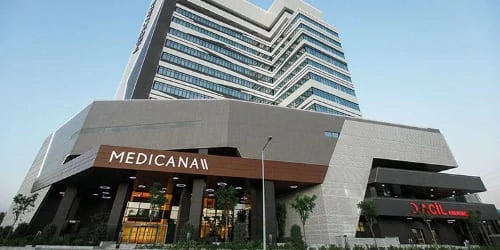
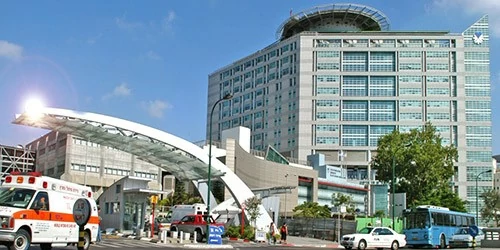
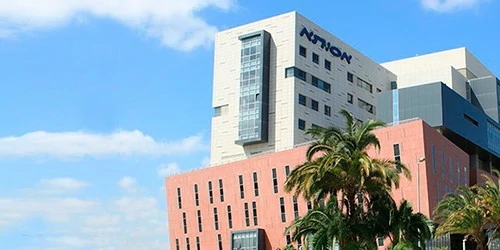
Patients with hepatic haemangioma who require special medical attention include pregnant women and the elderly. The leading clinics in Turkey, Germany, Spain, Austria and Israel: Medicana Ataşehir, Medistate, Uniclinica Navarra, Uniclinica Cologne, Ichilov and Assuta Medical Centres can be contacted for qualified consultation.
To book an appointment for this procedure abroad, click on the button below and fill in the form. Our coordinators will call you back within 30 minutes. They will provide all the information you need and help you with travel arrangements.

Sources