


1. Muscle reconstruction |
2. Muscle transplantation |
3. Muscle prosthetics |
4. Scaffolds |
5. Stem cells |
6. Clinic recommendations |
Muscle injuries can occur due to sport trauma, degenerative diseases, cancer, accidents and other unforeseen situations. For milder injuries, tissues can recover with conservative treatment, but severe muscle and tendon tears often result in long-term disability. In such cases, patients require more specialised care. In this article, we will talk about the latest innovations in the field of muscle recovery and treatment after severe injuries.
Muscle reconstruction
A muscle tear with a loss of up to 20% of muscle volume is amenable to natural regeneration processes (i.e. conservative treatment with rehabilitation). However, for more severe injuries, recovery is not possible without surgery.
Surgical muscle reconstruction is recommended for partial or complete muscle tears when more than half of its volume is disturbed, which is associated with functional inferiority.
Muscle reconstruction is often performed in combination with the treatment of damaged tendons, for example, in foot or wrist injuries. In this case, the surgeon localises the affected areas of tissue and sews them together.

Various techniques can be used for surgical muscle repair, which an experienced surgeon will adapt and combine depending on the individual clinical case. Such surgery is often performed during cosmetic interventions – for example, abdominoplasty (“tummy tuck”). Revascularisation – the restoration of blood flow to the muscle; nerve, muscle and skin grafting are also frequently performed. These interventions, depending on the extent of the injury, can be quite complex and often require a high degree of professionalism and expertise on the part of the surgeon.
Among the most common procedures performed for this purpose are:
 Abdominal abs muscle reconstruction;
Free flap microsurgery;
Local flap surgery;
Skin grafting;
Tissue expansion;
TRAM flap surgery.
In more severe lesions of the muscle tissue, their blood supply, and therefore their regenerative functions, can be severely affected. In such situations, doctors need to take additional measures.

Muscle transplantation
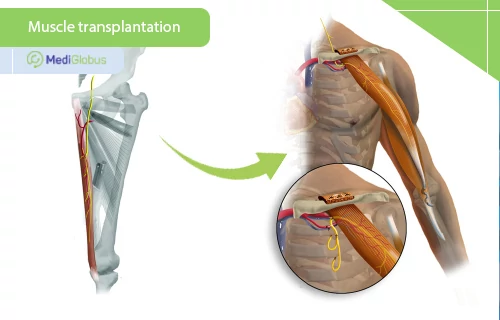
Muscle transplantation is a procedure during which the affected muscle is completely replaced by a graft from another part of the patient’s body.
Muscle transplants are performed when a large amount of muscle mass has been lost – for example, after the removal of a tumour, in cases of extensive bodily trauma or motor dysfunctions associated with nerve damage. Very often this surgery is performed simultaneously with cosmetic intervention to restore not only the functionality of the affected body part but also its appearance.
Most often surgeons graft the muscles of the back and inner thigh. They are large enough to replace most of the injured muscles; moreover, such a transplant often does not result in a critical loss of body mobility.
Another advantage of muscle transplantation is that the operation can be performed at any time after the injury. Some patients have been able to regain limb mobility with a muscle transplant a decade after the initial muscle loss.
A muscle transplant will likely not fully restore the mobility of the limb that the patient had before the injury. For example, muscle transplantation for long thoracic nerve palsy allows patients to improve mobility by 58% and reduce pain by 50%.
Examples of operations performed using muscle transplants:
Restoration of elbow flexion ability after injury;
Restoration of hip mobility after removal of synovial sarcoma;
Treatment of muscle weakness in facial paralysis;
Reconstruction of the pelvic floor.
Muscle prosthetics
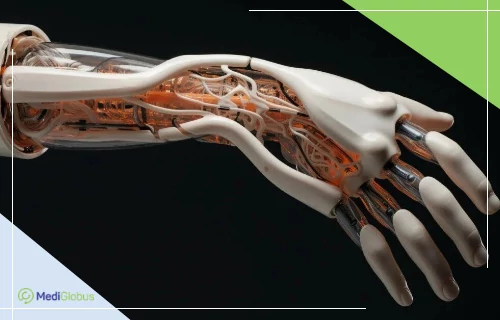
Medical engineering is opening up new possibilities in the treatment of muscle tears and other injuries. Advanced medical centres around the world are already beginning to use “muscle prostheses” – flexible structures made of artificial materials that are implanted in place of the lost tissue. They can stretch, contract and rotate on their axis, just like ordinary human muscles.
These prostheses are made from a variety of materials – graphene fibres, carbon nanotubes, nylon and spandex fibres, as well as other artificial materials such as silk and cotton threads.
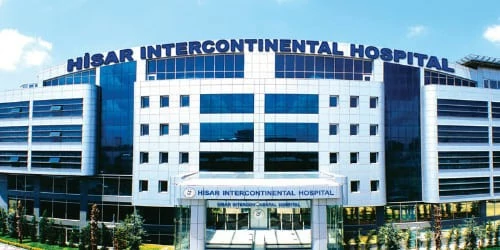
At Hisar Intercontinental Hospital, we had the opportunity to talk about muscle prosthetics with a medical surgeon with more than 30 years of experience who works in this field. Dr Erkan Yildirim talked about his patient who recently underwent a successful pectoral muscle prosthesis. The artificial muscle was custom-made in France and transported to Turkey where the intervention was carried out. The surgery was successful and the patient is completely satisfied with the results.
 Read:
Read:
Like any other surgery, muscle reconstruction and transplantation carry with it certain risks for the patient that you need to be aware of. In particular, infection and tissue rejection are the most unwanted complications. One way to stay safe is to see an experienced surgeon or seek a second medical opinion.
 New in treatment
The leaders in research on artificial muscle prostheses to date are China, the United States and Japan. Almost half of all research papers and patents are from Chinese research centres.
Scaffolds

Another technological breakthrough that modern surgeons are using to treat muscle tears is scaffolds. These are thin “films” created from a combination of organic and inorganic materials that are applied to the affected areas of tissue and promote regeneration. They contain components that signal to the body that this area needs more help. As a consequence, the tissues begin to produce growth factors that help muscle and blood vessel tissues regenerate, and free stem cells get “attracted” to the affected area. In addition, in some medical centres, scaffolds can be combined with cell therapy to further enhance the regenerative effect.
The use of scaffolds allows effective recovery from muscle tears that cannot be repaired with reconstruction alone, or in cases of severe tissue traumatisation.
Scaffolds help muscles “regrow” on their own after injury without forming excessive amounts of non-functional fibrous tissue, as can be the case with the natural regeneration process.
A study published by the University of Pittsburgh in the journal Biomaterials found that the use of scaffolds improves the recovery of injured muscles by 80%.
Stem cells
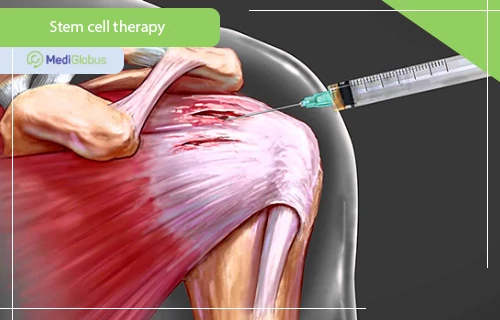
Stem cells are another treatment option for muscle injuries that can be a worthy alternative to surgery. They have the potential to turn into any cells in the body, depending on what environment they are in. Consequently, such cell therapy for areas of muscle tissue that have undergone injuries or surgeries promotes effective regeneration.
In 2018, experts from the Georgia Institute of Technology shared a new technology for repairing muscle tissue after injuries. Under normal conditions, stem cells placed in the site of injury, in their majority die. That’s why a group of researchers came up with the idea of putting them in a protective hydrogel “capsule.” This technology is just one of many being worked on in leading foreign cell therapy centres.
An indispensable advantage of stem cells is their ability to treat muscle atrophy and degenerative diseases such as Duchenne myodystrophy. Surgical and conservative treatments are often impotent in these diagnoses, which is why the availability of cell therapy is so valuable to patients. One of the largest studies conducted in this area found improved muscle strength in 87% of patients with Duchenne myodystrophy after stem cell treatment (A. Sharma et al, Cell Transplantation Medical Journal).
Stem cells also help elderly patients who have a weakened natural regeneration process to recover better from injuries.
Where to go for treatment?
Even though the technologies described above are at the rubicon of medical development and are just beginning to be introduced into practice, it is still possible to find medical centres offering breakthrough treatment for muscle injuries. Many modern technologies are being pioneered in leading clinics in the United States, but the cost of treatment there often far exceeds the budget of most patients. A more affordable alternative is the treatment of injured muscles in Turkey. This country has modern medical centres offering the same technologies (leading specialists often trained or practised in American institutions) but at much more affordable prices.
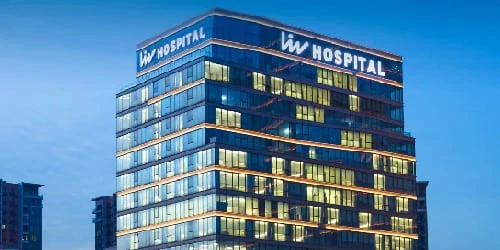
In addition to the previously mentioned Hisar Intercontinental Hospital, the Liv Medical Network is also a popular choice, especially among patients interested in stem cell treatment. Both hospitals have been honoured with international JCI quality certificates. And Liv, in addition, has its cellular medicine laboratory – the first in the country with GMP certification.
Stem cell therapy is also available at the Czech hospital Cellthera, which specialises in this area of treatment. It is headed by the country’s leading specialist in the field of regenerative medicine – Professor Jaroslav Michalek. The clinic is often consulted for the treatment of sports injuries and degenerative diseases.
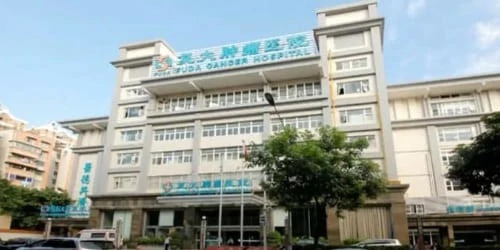
Among the clinics in the Eastern market, we can recommend the Fuda Medical Centre located in China. It will be primarily of interest to patients with soft tissue oncological diseases such as sarcoma.
Summary
Recovery from severe muscle damage, including sports injuries, can be performed in a variety of ways, depending on the specifics of the case. While mild injuries can be managed with conservative methods, surgical techniques are used for extensive loss of muscle mass.
Muscle and tendon repair is most commonly performed when the muscles and tendons are partially torn, in an area of approximately 20-50% muscle mass loss.
In cases of complete muscle loss, especially in patients with soft tissue tumours (sarcomas, etc.) and neurodegenerative diseases, muscle transplantation may be necessary. Back or inner thigh muscles are commonly used for this purpose.
One of the most advanced technologies in this field is the use of artificial muscles.nbsp;
During surgery, the doctor may use scaffolds – an advanced technology that increases muscle tissue regeneration by up to 80%.
Stem cells can also be used to repair muscles after injury or disease, especially when it comes to the elderly and patients with degenerative diseases.
Among the clinics that we primarily recommend to our patients are Hisar Intercontinental, Liv Vadistanbul, Fuda and Cellthera.
Stay with MediGlobus and keep up to date with the latest news about medical advances abroad. If you need the help of a surgeon abroad, leave a request. Our coordinators will help you find a clinic that will offer you a treatment programme to help you.

Sources:
- 1. Current Reviews in Muscoskeletal Medicine: Surgical treatment for muscle injuries
- 2. Advanced Intelligent Systems: Hydrogel-Based Artificial Muscles: Overview and Recent Progress
- 3. Biomed Research International: Current Methods for Skeletal Muscle Tissue Repair and Regeneration
- 4. Frontiers in Bioengineering and Biotechnology: Advances in artificial muscles: A brief literature and patent review
- 5. Cold Spring Harbor Perspectives in Medicine: Biologic Scaffolds
- 6. Biomaterials: Functional Skeletal Muscle Formation with a Biologic Scaffold
- 7. Brachial Plexus Injury: Nerve Reconstruction and Functioning Muscle Transplantation
- 8. Philosophical Transactions B: Stem cells for skeletal muscle repair
- 9. Therapeutic Advances in Neurological Disorders: Duchenne muscular dystrophy: current cell therapies
- 10. Stem Cells Heal Damaged Muscle, Doing What Surgery Can’t
- 11. Nature: Towards stem cell therapies for skeletal muscle repair
- 12. Cell transplantation: A clinical study shows safety and efficacy of autologous bone marrow mononuclear cell therapy to improve quality of life in muscular dystrophy patients
- 13. Orthopaedic Physical Therapy Secrets (Third Edition)
- 14. Plastic and Reconstructive Surgery: Complications of muscle-flap transposition for traumatic defects of the leg
- 15. Use of local muscle flaps to cover leg bone exposures