


In the modern medical world, stem cells have become the object of increasing attention. Their potential in the treatment of various diseases and injuries has generated interest not only in general medicine but also in sports medicine. How exactly stem cells are used in the treatment of injuries and occupational diseases in athletes and what results they may yield – let’s take a closer look.

Listen to the article:
What are stem cells?
Stem cells are the special precursors of all the mature human cells. They are found in the bone marrow, blood, gastrointestinal tract, skin, fatty tissue and other parts of the body.
Stem cells have several important functions. Firstly, they can multiply on their own and ensure their continued presence in the body. Secondly, they can change into different types of cells and replace them if damaged. For example, if a person has an injury, stem cells can help repair the damaged tissues and return them to their normal functions. This makes stem cells useful in sports medicine – the treatment of injuries and illnesses in athletes.
Application of stem cells in sports medicine
The use of stem cells in sports medicine opens up new possibilities for treating various injuries and diseases related to physical activity.
Here are some of them:
 muscle and tendon injuries;
cartilage injuries;
osteoarthritis;
bone injuries.

 Read:
Read:
Benefits of stem cell treatment in sports medicine compared to other therapies:
Stem cells can turn into different types of cells, which are essential for repairing damaged tissue. This allows for more effective and precise treatment of the problem area and stimulates the natural regeneration process.
In some cases, cell therapy makes it possible to avoid surgical intervention. It reduces the risk of complications and shortens recovery time.
Using your stem cells (autologous transplantation) avoids the problem of rejection because the body does not perceive your cells as foreign.
The treatment causes virtually no side effects or undesirable reactions.
An interesting fact: among all sports-related injuries, 40-50% are tendon injuries. Despite the tendon’s ability to regenerate, the success rate of regeneration is low, possibly due to insufficient blood supply. The main methods of tendon repair are surgery, physiotherapy and anti-inflammatory drugs, but these are not always effective. Currently, alternative therapies are being actively researched. These include the use of the patient’s stem cells to speed up the recovery process. The results of the research are showing good results. Cell therapy is not only highly effective, but it is also safe and painless (taken from the National Library of Medicine).
Stem cell treatment for children
Paediatric sports medicine is concerned with the health and well-being of young athletes. In some cases, for certain injuries or conditions, stem cells can be used to treat children. This allows tissue repair and speeds up the healing processes so that they can return to sport as soon as possible.
For more information on cell therapy, please contact MediGlobus.
How does stem cell treatment work for athletes?
Pre-treatment examinations
For sports injuries and illnesses, several diagnostic procedures are performed to assess tissue conditions and determine whether or not cell therapy is necessary and feasible. The doctor performs a physical examination and interview with the patient to identify symptoms, assess the general condition and medical history, and review information about previous injuries, surgeries, chronic conditions or allergies that may affect the effectiveness and safety of stem cell treatment. Tests are also carried out to assess pain levels, joint mobility, muscle strength and other functional parameters to determine the extent of injury. X-rays are prescribed to assess the condition of the bones and determine whether there are any fractures, tears or degenerative changes. MRI and ultrasound scans help to examine internal tissues, muscles, tendons, ligaments or cartilage.
After diagnosis, the doctor will be able to determine whether stem cell therapy is suitable for the individual case, choose the best approach to therapy and decide whether additional procedures or consultations with other specialists are needed.
Preparation for cell therapy for injuries and sports-related illnesses
Before a stem cell treatment, it is important to follow certain recommendations for maximum effectiveness and safety of the procedure. Here are some general recommendations:
You may need to stop taking certain medicines before the procedure. Follow your doctor’s advice on cancelling or changing your medication.
Before and during treatment, it is advisable to limit or avoid alcohol and nicotine consumption. This promotes better tissue regeneration and improves the results of treatment.
Your doctor can make specific recommendations regarding the intake of food and liquids before the procedure. Follow these tips to ensure optimum conditions for a successful procedure.
It is important to realise that specific recommendations and requirements may vary depending on the type of stem cell treatment and the individual patient. It is therefore important to discuss all issues and obtain individual recommendations from your doctor before starting the treatment.
Stem cell harvesting procedure for orthopaedic pathologies and injuries
The methods of stem cell harvesting for trauma and occupational diseases in athletes vary depending on the source from which the harvesting takes place. The main approaches are:
Bone marrow sampling | Bone marrow puncture is performed using a special needle in the pelvis. To ensure the patient’s comfort, a local anaesthetic may be used before the procedure. General anaesthesia is required when cell sampling is performed in children or when other surgical procedures are performed at the same time. |
Cell harvesting from adipose tissue | Liposuction surgery is used to harvest cells. Your doctor makes a small incision and inserts a thin catheter system into the fatty tissue in the abdomen or buttocks. The fat cells with high stem cell content are then extracted using an aspirator. The procedure is usually carried out under local anaesthetic. |
Cell harvesting from the umbilical cord | The procedure is done during delivery. After the baby is born and the umbilical cord is cut off, blood is drawn from the umbilical artery. After extraction, the material can be frozen and stored for a long time. |
The duration of the cell collection procedure depends primarily on the method. With cord blood cell harvesting, the procedure takes only a few minutes. For bone marrow or liposuction, the procedure takes 30 minutes or longer.
How are the stem cells processed in the laboratory and how long does it take?
The processing of stem cells in the laboratory involves several steps, which vary depending on the specific protocol and the purpose of the treatment.
First, the cells are isolated from the collected samples. This is done by centrifugation, filtration or chemical treatment. After isolation, the cells undergo processes of cleaning out impurities, increasing their concentration or activation. In some cases, stem cells may be placed in a culture medium where they will multiply and expand in number. This allows more cells to be obtained for use in treatment. If the material is not to be used immediately after treatment, it is frozen. If necessary, the cells are thawed and used as intended.
The time required to process stem cells in the laboratory varies depending on the type of sample, the processing methods and the requirements of the specific treatment. Typically, the processing can take anywhere from a few days to several weeks.
How does the stem cell procedure work?
There are these methods of cell therapy in sports medicine:
Injections | The most common way to inject stem cells is into a specific area of the body that needs to be treated. For example, for sports injuries, the drug is injected directly into the injured joint, muscle or tissue. |
Intravenous injection | In some cases, cells are injected into the patient’s bloodstream through a vein. This allows the cells to spread throughout the body and have their therapeutic effects on different tissues and organs. |
Surgical intervention | In rare cases, particularly with complex injuries or diseases, surgery may be necessary to precisely place the stem cells in the correct area. For example, when a joint is reconstructed or a fracture occurs. |
When treating sports injuries with stem cells, hospitalisation is not always required. For uncomplicated injuries, the procedure is performed on an outpatient basis and the patient is released home immediately after the session. However, in more complex cases or surgery, hospitalisation for observation and additional care may be necessary.
The length of therapy and number of sessions required depend on the type of injury or illness, the patient’s condition, the chosen treatment protocol and other factors. In some cases, only one session may be required, while in other cases several sessions are necessary.
SVF technology in sports medicine
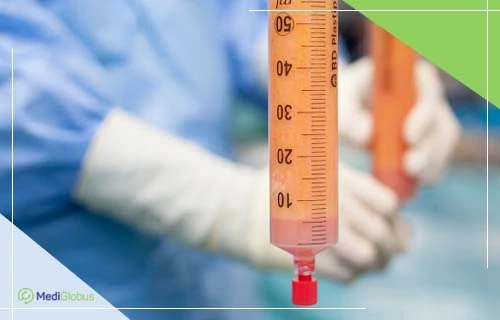
This is a method of using stem cells derived from the body’s fatty tissue. It is used in sports medicine to treat injuries and damage. The fatty tissue is processed to extract the necessary cells. A stromal cell fraction is created which includes stem cells, cell precursors, immune cells, etc. The resulting mixture is injected into the injured area of the athlete’s body. This can be done by injection or other delivery methods.
Benefits of SVF technology:
Stem and other cells derived from the patient’s adipose tissue do not cause immune reactions or rejection, as they are genetically matched to the body.
The harvesting of adipose tissue and the injection of the stromal fraction do not usually require complex surgical interventions. This minimises risk and speeds up recovery.
The cells in the stromal fraction are thought to promote the natural process of tissue regeneration and speed up recovery.
It is important to note that SVF technology is still in the process of research and development. Additional research and clinical trials are needed to more fully evaluate its effectiveness and safety in treating sports injuries.
The skeletal method of stem cell delivery
This is a surgical method of delivering stem cells to the injured area. Instead of simply injecting medicine into the injured area, a special structure is used to help hold and support the stem cells in place.
The framework is a kind of “support” on which the stem cells are placed. It helps to concentrate the cells in the right place and provides them with a suitable environment for tissue growth and repair.
The advantages of the method are better cell localisation and retention, supporting cell survival and growth, and improving the outcome of the treatment. This method helps to speed up the athlete’s recovery and healing process after an injury or fracture.
Ask a MediGlobus specialist for more information about stem cell therapy. To contact us, click on the button below and wait for a call.
What to do after stem cell therapy?
After treatment for sports injuries and pathologies, it is important to follow the doctor’s recommendations. Physical activity should be limited in the first days or weeks after the procedure. Rehabilitation exercises or physical therapy to strengthen the muscles may also be recommended. Following these recommendations will help you return to normal activity sooner.
Results of cell therapy in athletes
Stem cells contribute to the regeneration and healing of damaged tissues, stimulate the growth of new cells, and improve the blood supply to tissues. That is why sprains, dislocations, fractures and tendon injuries heal faster. In addition, inflammatory processes in damaged tissues go away faster, pain, swelling and other symptoms associated with injury are reduced. This can be especially important for athletes, who need to quickly return to physical activity and achieve optimal results.
The time to recovery depends on the type of injury, the extent of the injury, the individual characteristics of the patient and other factors. For some people, results may be visible after just a few weeks, while for others it may take several months. It is worth bearing in mind that every case is unique and individual results may vary.
Risks and complications of stem cell therapy
Like any medical procedure, stem cell therapy may be accompanied by certain risks and potential complications. In general, the use of stem cells in sports medicine is considered safe. Here are some of the possible risks and complications:
There is a small risk of infection when injected.
Some patients may experience an unforeseen reaction of the body to the introduction of the cells. This may manifest as an allergic reaction or inflammation.
Although cell therapy promotes healing and tissue repair, results may be individual and not always guaranteed. Some patients may require additional treatment or rehabilitation for optimal results.
Stem cell clinics for treating athletes
Stem cell treatment for athletes is becoming increasingly popular. Some medical centres abroad offer innovative technologies to make stem cell treatment as effective and safe as possible. Special laboratories are used to gather and process the material, using the latest techniques and employing experienced specialists. Besides, many clinics abroad have specialised centres for sports traumatology. They employ professional doctors who are familiar with the unique needs of athletes. They are highly experienced in treating sports injuries and have in-depth knowledge of the use of stem cells for recovery.
MediGlobus recommends certified clinics that meet strict quality and safety standards. They are accredited and licensed to guarantee a high level of medical practice and patient care.
Treatment in clinics abroad offers athletes not only access to modern stem cell treatments but also the opportunity to undergo rehabilitation to help them return to their sporting activities as soon as possible. This is particularly important for athletes who need fast and effective recovery from injury.
Cellthera Clinic (Czech Republic);
Liv Clinics Network (Turkey);
University Hospital of Navarra (Spain);
SoonChunHyang Clinic (South Korea).
Cost of stem cell therapy
The prices of stem cell treatment at sports medicine clinics can vary significantly depending on the geographical location of the clinic. Additional factors, such as the level and specialisation of the doctor, methods and techniques used, the scope and complexity of the procedure, as well as the patient’s individual needs, all have an impact on the prices.
| Country | Cost |
|---|---|
| Turkey | from $10,000 |
| Czech Republic | from €12,000 |
| Country | Cost |
|---|---|
| Spain | from €18,000 |
| South Korea | from $15,000 |
Summary
Stem cells are special cells that can turn into different types of cells and help repair damaged tissue. In sports medicine, stem cells are used to treat injuries and diseases, helping athletes recover faster and return to sports.
Treatment with stem cells in athletes begins by harvesting these cells from the body, such as bone marrow or adipose tissue. The collected cells are then processed in a laboratory and then injected back into the athlete’s body, where they can help with tissue repair and healing.
Stem cell therapy helps to speed up the healing process of injuries, reduce inflammation, improve tissue and organ function, and improve the overall condition of the patient. It helps athletes recover faster and return to sporting activities.
MediGlobus recommends certified clinics in Turkey, the Czech Republic, Spain and South Korea for stem cell therapy.
The cost of therapy depends on the country, method of cell harvesting and processing, the complexity of the injury and other factors. The minimum price for treatment is $10,000.
Sources:
- 1. National Library of Medicine
- 2.Stem Cell Therapy for Sports Injuries
- 3. What do Athletes Need to Know about Stem Cell Therapies