


Obesity is defined by the global medical community as a chronic metabolic disease. Therefore, to treat severe cases of the disease, radical methods are needed. Bariatric surgery is a type of surgery that specializes in treating obesity. Bariatric manipulation helps to reduce the volume of the stomach and correct metabolic processes. As a result, a person takes less food and gets more energy from food. Read more about what bariatrics is, what types of gastric surgery for obesity exist, and the best clinics for this intervention abroad in our article.
INDICATIONS AND CONTRAINDICATIONS FOR BARIATRIC SURGERY
Bariatric surgery is not available to all people. The main condition for the appointment of surgery is Grade 3 obesity – morbid obesity. It is characterised by a BMI above 40. BMI is a measure that helps to estimate the weight-for-height ratio of a person. It is defined as weight in kilograms divided by height in meters squared. If BMI is between 30 and 40, surgery may be indicated in the presence of type 2 diabetes. Other conditions under which surgery may be possible:
 Age between 14 and 75 years old;
Ineffective dieting, physical activity and use of weight loss medication in the past;
Realistic ideas about the surgery, its risks and results;
Motivation to lose weight after bariatric surgery and willingness to follow doctor’s recommendations.
General surgery specialist and president of the Bariatric and Metabolic Surgery Association, Professor Mahir Ozmen (Liv Hospital), said: “A very small per cent of obese patients are people with genetic obesity problems. Most undergo obesity because of external factors.”
A doctor can prescribe the surgery after analysing the risks and benefits. Bariatric surgery is contraindicated if the BMI is below 30, the patient is pregnant or has comorbidities such as hypertension, cirrhosis of the liver, or autoimmune diseases. The doctor may cancel the intervention if the patient has gained weight or continued to smoke in the 3 months before the intervention.
In 2016, many global medical associations, including the American Diabetes Association (ADA) and the International Diabetes Federation (IDF) included bariatrics in the list of treatments for type 2 diabetes.
For more information about bariatric surgery abroad, contact MediGlobus specialists. Click on the button below and fill in the feedback form. We will try to answer as soon as possible and, if necessary, we will arrange travel for gastric bypass, gastric resection or any other bariatric procedure abroad.
PREPARATION FOR SURGERY
Before the surgery, the doctor will determine whether there are any indications and assess the patient’s health condition. For this, a medical history and a weight loss history are taken. The doctor makes sure that the excess weight cannot be corrected using any other method. After this, the patient is given a series of laboratory tests and an ultrasound of the abdomen. This helps to assess the health of the gastrointestinal tract and select the appropriate surgical technique.
After the surgery, a special diet will be prescribed by the doctor. It must be followed for 3 weeks. The patient must reduce the amount of sugary and fatty foods in the diet. The intake of protein foods (fish, meat and eggs) increases. Such an approach helps to lose 2-3 kg, reducing the size of the liver and stomach. This makes the surgery easier and speeds up the recovery process.
 Read:
Read: TYPES OF BARIATRIC SURGERY
Each of the bariatric methods works by decreasing the stomach volume. Because of this, the person will require less food to satisfy their hunger and feel full.
Gastric bypass surgery;
Sleeve gastroplasty or sleeve gastrectomy;
Gastric banding;
Biliopancreatic bypass.
GASTRIC BYPASS
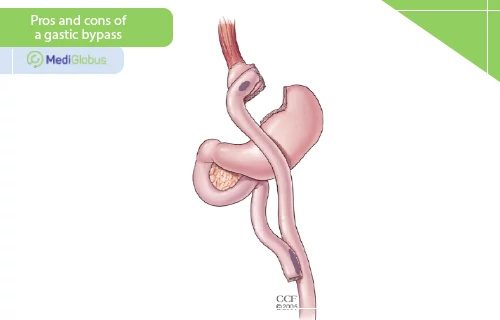
The surgeon sews up the stomach, only leaving a small part of it (25-30 cm3). The organ is then connected directly to the small intestine, bypassing most of it. As a result, the stomach is smaller, food takes a shorter route and nutrients are absorbed more quickly. The procedure is done in an open or minimally invasive way with a laparoscope.
Gastric bypass is the ‘gold standard’ among weight loss surgeries. According to the National Vascular Surgery Registry in Britain (NBSR), it is well-researched and shows the highest effectiveness in treating obesity.
| Advantages | Disadvantages |
|---|---|
| The fastest weight loss: in the first year, up to 50% of body weight is lost. | Decrease in vitamin B12, calcium, iron and folic acid levels. |
| Reduced appetite and rapid satiety. | Requires a lifetime of vitamin and mineral supplementation. |
| Beneficial changes in hormone levels. | Prolonged recovery: the patient is hospitalized for 2-3 days. |
| Acceleration of metabolism. | Possible complications after the operation. |
SLEEVE RESECTION (GASTROPLASTY) OR DRAINAGE OPERATION
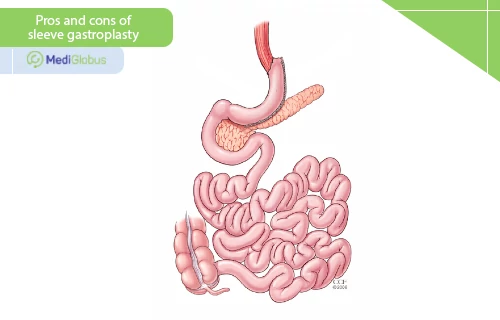
The procedure removes 70%-80% of the stomach. From the remaining tissue, surgeons form a ‘sleeve’ 1 cm in diameter. This helps patients to fill up with less food.
The surgery is done in a minimally invasive way. Through small incisions in the abdomen, the doctor inserts a laparoscope. He or she then uses it to perform the necessary manipulations and sews up the incisions. In leading foreign hospitals, 3D laparoscopy is available, where the doctor has a complete overview of the patient’s innards.
Da Vinci robotic surgery is considered a safe intervention.
| Advantages | Disadvantages |
|---|---|
| Fast recovery: the patient stays in the hospital for 1-1,5 days. | Decrease in vitamin and mineral levels. |
| Less traumatic compared to bypass surgery. | Requires a strict diet. |
| Does not require the insertion of foreign objects or bypassing or redirecting the food flow. | Possible complications after surgery. |
| Helps suppress feelings of hunger and control blood sugar. | It is not possible to repeat this surgery. |

GASTRIC BANDING
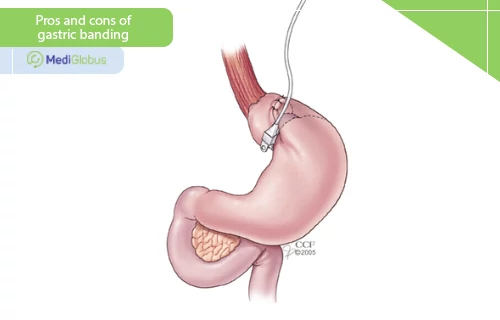
To reduce the volume of the stomach, the surgeon attaches a special ring to the top of the stomach. The bandage restricts the lumen through which the food enters the stomach. The operation is restrictive and does not require the removal of parts of the organs. The diameter of the lumen can be adjusted.
The bandage divides the stomach into two parts. A small reservoir of 10-15 ml is formed at the top. This is where the receptors responsible for satiety are located. Due to this separation, food fills the upper, small part of the stomach first. Therefore, a person needs less food to get full.
| Advantages | Disadvantages |
|---|---|
| It is the safest bariatric method with a low risk of complications after surgery. | Weight loss is slower than after other methods. |
| Quick recovery time after surgery – the patient can be discharged from the hospital in 24 hours. | As a result, the patient loses up to 50% of their body weight. |
| The surgery does not involve removing part of an organ. | Requires a foreign object to be inserted in the body. |
| It is possible to remove the bandage and return the stomach to its former state. | Risk of ring displacement and disturbance of lumen diameter. |
| The ability to get enough vitamins from food is maintained. | Possible body reactions: fever, inflammation. |
BILIOPANCREATIC STUNTING
This is the most complex bariatric procedure. It involves reducing the volume of the stomach and the length of the small intestine. During the surgery, the duodenum is divided immediately after leaving the stomach. Its end is then elevated and connected to the outlet of the newly created stomach.
When the patient eats, food passes through the created gastric tube and enters directly into the last segment of the small intestine. Three-quarters of the food consumed bypasses the small intestine.
| Advantages | Disadvantages |
|---|---|
| Suitable for patients weighing 150-200 kg. | The highest risk of complications. |
| It is the most effective method to treat diabetes mellitus. | The highest risk of complications after this treatment. |
| A more varied diet is possible after the surgery. | High risk of protein, vitamin and mineral deficiencies. |
| Less food and fewer calories are absorbed, and the hormone balance is normalized. | Failure to follow the diet and doctor’s recommendations can lead to serious complications. |
HOW IS THE BARIATRIC SURGERY CARRIED OUT?
The procedure takes place under anaesthesia and lasts between 1-3 hours. The longest procedure is bypass surgery and the shortest is bandage surgery.
According to the WHO, bariatrics has one of the highest safety rates. 99,7% of such surgeries are successful.
Most clinics use minimally invasive surgery: laparoscopic or robotic techniques. Laparoscopic surgery requires several punctures of 2-3 cm in the abdomen. This helps to avoid large incisions and blood loss. As a result, the patient recovers faster and postoperative scars remain inconspicuous.
Robotic bariatrics is an advanced type of obesity treatment. The procedure is performed by a surgeon who remotely controls the robot. With the help of this machine, thin and precise incisions can be made. Using the da Vinci robot reduces the risk of bleeding and infection after surgery.
LIFE AFTER BARIATRIC SURGERY
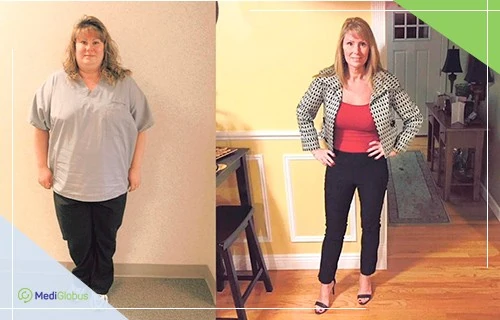
Rehabilitation after bariatric surgery lasts one month. During this time, the patient needs to stay in the hospital only for 1-2 days. The rest of the time they are recovering at home. In the first two weeks after surgery, patients will eat finely chopped food in small portions. It is important to remember that the stomach has shrunk, so it will not be possible to eat the same amount of food as before.
After 30 days, the diet will return to normal. It will be possible to eat small portions 4-6 times a day. In addition to the diet, the doctor will prescribe vitamins and micronutrients that the patient does not receive with food. It is important to change your eating habits to prevent weight gain after the surgery. A dietician and a psychologist will be able to be of help.
From the second month onwards, it is important to gradually increase the level of activity. Patients need to walk, stretch and swim. This will have a positive effect on weight loss and strengthen the body as a whole.
RESULTS OF THE SURGERY
After the surgery, the hormonal balance changes and the metabolism improves. Food is better absorbed and fewer calories are needed per day to satiate the body.
Depending on the type of procedure, the patient loses 50-70% of their weight within 2 years. After a drastic weight loss, the weight may come back at a rate of 5-10%. This is a normal process. Bariatrics do not guarantee that the patient will not gain any more extra pounds. If dietary behaviour does not change, the weight may return.
After surgery, the risk of diabetes, malignant tumours and joint diseases is reduced. Your general well-being improves and your quality of life improves.
BARIATRIC SURGERY CLINICS ABROAD
You may sign up for bariatric surgery in clinics in Turkey, Poland, the Czech Republic, Germany, Spain and South Korea. You should give preference to specialised centres or multidisciplinary clinics with JCI and ISO accreditation.
How much does gastric reduction surgery cost?
The price of bariatric surgery depends on its type and complexity. It is also influenced by the level of the medical centre where the surgery will take place and the qualifications of the surgeon. The approximate price of bariatric surgery abroad is:
| Country | Cost |
|---|---|
| Turkey | from $2,800 |
| Spain | from €7,000 |
| Poland | from €3,000 |
| Country | Cost |
|---|---|
| Czech Republic | from €5,300 |
| Germany | from €9,000 |
| South Korea | from $7,600 |
For individual prices for gastric bandages, bypasses, and other bariatric treatments please contact the coordinating doctors of Mediglobus International Medical Platform.
BARIATRIC SURGERY REVIEW
 Where was it performed: KCM Clinic
 What procedure: Sleeve gastroplasty
 Patient’s age: 37 years
 Patient from: Kyiv
Anna: “I’ve read many positive reviews on the Internet about gastric bypasses, bandages, and other similar surgeries abroad. That’s why I decided that bariatric surgery was perfect for me. I lost 40 kilos in 3 months without any wild diets or self-abuse. Forty kilos out of 130! I was able to achieve these results due to a gastric resection. In the process, 80% of the organ was removed. The first 24 hours were very tough. On the second day, I was allowed to drink and had an X-ray taken. By the third day, I was able to eat, but not a lot. After the surgery, I carefully followed the recommendations and took vitamins. And the result – minus 17 kilos in the first month! Now, 6 months later, I weigh 90 kg. It’s not my ideal weight but I feel better now. I no longer have any problems with blood pressure or high blood sugar.”
Summary
Bariatric surgery helps people with obesity and related conditions to relieve unpleasant symptoms and improve their quality of life. It is important to remember that bariatric surgery is not an alternative to the usual methods of weight loss: diet and exercise. Bariatric surgery is worth doing in complicated cases where the benefits outweigh the risks.
Bariatrics is not suitable for all people. The main condition for it is a body mass index over 35.
Before the surgery, the patient undergoes a medical check-up and blood tests. A few weeks before the intervention, they will have to follow a diet that excludes sweet foods and caffeine.
There are 4 types of bariatric surgery: gastric bypass, sleeve gastroplasty/gastrectomy, gastric banding and biliopancreatic bypass.
Gastric bypass surgery is the gold standard in bariatrics. It is considered safe and patients lose weight faster afterwards. Gastric bypass allows the patient to lose about 50% of their body weight in the first year.
Sleeve gastroplasty involves removing part of the stomach. It can be done laparoscopically or with the Da Vinci robot.
The safest method in bariatrics is gastric banding. It allows the organ to remain intact. The surgeon puts on a bandage that reduces the amount of food passing through.
Biliopancreatic bypass is a complex surgery. The method has been shown to be most effective in treating diabetes mellitus.
After bariatric surgery, the patient must take supplements and stick to a strict diet and exercise.
Bariatric surgery can be performed in clinics in Turkey, Poland, the Czech Republic, Germany, Spain and South Korea.
Take the opportunity to book a bariatric surgery appointment at one of the leading clinics abroad. You will be operated on by an experienced doctor using safe technology. MediGlobus will help you organise your trip to the clinic and take care of all your paperwork, visas and translations.

Sources:
- 1. The University of Pittsburgh Medical Center (UPMC)
- 2. International Federation for the Surgery of Obesity and Metabolic Disorders (IFSO)
- 3. National Institute of Diabetes and Digestive and Kidney Diseases (NIDDK)
- 4. American Society for Metabolic & Bariatric Surgery