


The NanoKnife is an innovative way of treating malignancies in a minimally invasive way. It gives patients with inoperable tumours or cancers that cannot be treated with other methods, such as surgery, radiation or chemotherapy, a chance for survival. The technology is highly effective and safe. You can read more about it in our article.

Listen to the article:
What is a NanoKnife?
The NanoKnife is an irreversible electroporation ablation (IRE) technology. It uses high-voltage pulses to destroy or reduce lesions. There is no radiation exposure to the tissue. Instead, the malignant cells are killed by powerful electric fields.

The NanoKnife is used when there are limited options for fighting the disease using other methods. It allows the treatment of difficult-to-reach tumours.
The technology is often used for malignant neoplasms of stages 3 and 4. It is also prescribed to patients who have undergone surgical or/and conservative treatment for cancer but have relapsed.
NanoKnife is currently undergoing clinical trials for the treatment of solid liver tumours. One of them involved 152 patients aged 34-70. They have demonstrated a good response to the procedure. The success rate of electroporation ablation (IRE) was 94,9%.
The NanoKnife system received Food and Drug Administration (FDA) approval for soft tissue surgical ablation in 2008, and for pancreatic cancer in 2019.
NanoKnife is a minimally invasive non-thermal ablation that does not damage vital organs and systems. It is performed under general anaesthesia. The progress of the procedure is monitored with a CT scan or ultrasound. It usually lasts about 30-40 minutes, and sometimes an hour or more.
Find out more about NanoKnife oncology treatment from the doctors at MediGlobus International Medical Platform. Fill in the feedback form and we will call you back as soon as possible.
What are the benefits of NanoKnife in treating liver cancer?
 Minimally invasive and safe (performed through tiny punctures; ablation only affects the tumour without damaging healthy tissue or blood vessels),
Destruction of the tumour without removing the organ,
Short surgical time (about 30 minutes),
Short hospital stay (approximately three days),
Quick recovery after the procedure (2 times shorter than after traditional surgery),
High efficiency (success rate about 95%),
Minimal risk of side effects (98% of patients have no complications),
Can be used for inoperable tumours.
Can liver cancer be treated with the NanoKnife?
NanoKnife treatment for liver cancer is possible for recurrent tumours and stage 3 and 4 cancers. It can also be used for liver metastases. The best results are achieved with neoplasms smaller than 3-4 cm. However, treatment of larger lesions is also available.
The patient is under general anaesthesia during the procedure. All manipulations are carried out under ultrasound or CT scanning.
The liver is accessed using laparoscopic equipment that makes several punctures in the abdominal wall. Two to four special electrodes (probes) are inserted through these holes. They are placed directly into or near the tumour.
Electrical pulses of up to 3 KV per 100 milliseconds are sent into the neoplasm. This destroys the structure of the cancerous cells and destroys them. The dead tissue from the malignant tumour is eliminated by the body on its own within a few weeks. This process is similar to the resorption of a haematoma.
After the ablation is completed, the probes are removed. All the punctures are stitched together and a special dressing is applied. Hospitalisation lasts 3-5 days.

 Read:
Read: Results of NanoKnife treatment for liver cancer
The prognosis for liver cancer with NanoKnife depends on the stage of the pathology, the age and the general health of the patient. On average, in the treatment of stage 3 and 4 liver cancer, about 65-70% of patients achieve good results. Within 1-3 months after the procedure, no patient has experienced a recurrence of the disease. After six months, about 91% of patients had no recurrence. The overall survival rate at 6 months follow-up was 88,16%.
Contraindications and complications of NanoKnife treatment for liver cancer
NanoKnife treatment for liver cancer is currently contraindicated in patients with pacemakers. It is also not advisable for people with a history of irregular heartbeats.
NanoKnife is not used for liver cancer with extensive lesions (tumours that have spread beyond the organ). If the patient has metastases to several distant organs, the procedure is also not advisable.
Like any other surgery, NanoKnife has its risks and complications. An intervention performed by an experienced surgeon in a specialised centre makes it possible to minimise the likelihood of side effects. A small number of patients (less than 2%) experience the following adverse effects after the procedure:
bleeding,
fistulas and infections at abdominal puncture points,
abnormal heartbeat,
pneumothorax or collapsed lung,
vascular thrombosis,
development of an inflammatory process.
Recovery after NanoKnife liver cancer treatment
After surgery, the patient leaves the clinic in 3-5 days. No special rehabilitation is needed. However, the doctor’s recommendations should be followed. It is important to bear in mind that for a fortnight you must not lift heavy weights or engage in strenuous physical activity.
Price of NanoKnife for malignant liver tumour
The cost of the procedure varies depending on the severity of the disease, the extent of the surgery, the level of the medical centre, the country’s pricing policy and the qualifications of the surgeon. The indicative price of irreversible electroporation ablation (IRE) is:
| Country | Cost |
|---|---|
| Turkey | from $5,000 |
| Spain | from €15,000 |
| Country | Cost |
|---|---|
| Germany | from €16,000 |
| Israel | from $19,000 |
Where can I get NanoKnife treatment for liver cancer?
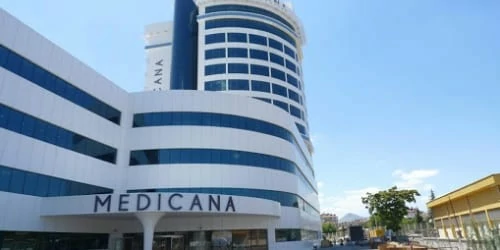
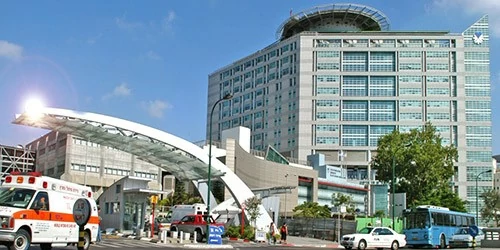
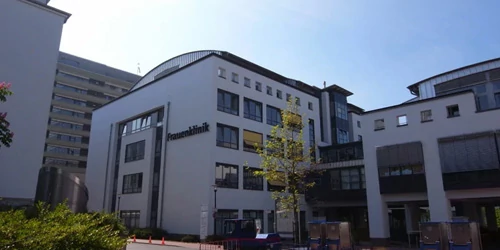
NanoKnife treatment for liver cancer can be carried out in general and specialised clinics in Turkey, Israel, Spain, Germany and other countries with advanced medicine. The leading medical institutions in this field are:

Summary
NanoKnife works on the principle of irreversible electroporation (IRE). This technology involves applying a high-powered electric field to pathological lesions using high-voltage direct current (up to 3 kV). This is designed to damage the cell membrane and disrupt the division mechanism of malignant cells.
The NanoKnife is approved by the FDA to treat soft tissue and prostate cancer. It is being clinically tested for liver cancer. The procedure is also available for pancreatic, kidney and lung cancer.
NanoKnife surgery is performed under a general anaesthetic. It lasts about 30-40 minutes. All manipulation is monitored by an ultrasound or CT scanner. During it, punctures are made in the abdomen through which special electrodes are inserted. Probe needles are inserted into or near the tumour. A high-voltage electric field is then applied to the cancer cells. This destroys the cancerous tumour without damaging neighbouring organs or tissues.
NanoKnife is a minimally invasive technology. It is safe, effective and has a low risk of complications. After the surgery, the patient recovers swiftly. 65-70% of patients achieve good results. A 6-month recurrence-free survival rate is demonstrated in about 91% of cases.
The cost of NanoKnife treatment for stage 3 or 4 liver cancer varies for each patient. This is influenced by many factors, including the complexity of the treatment, the level of the clinic and the qualifications of the doctor. The approximate starting price is $11,000.
For NanoKnife surgery, patients often go to medical centres such as Ichilov, Medicana, Essen and Teknon.
To undergo NanoKnife treatment abroad, click on the button below and leave your application. Our coordinators will help you with the choice of clinic and doctor. They will contact the medical centre as soon as possible and organise your trip.

Sources:
- National Library of Medicine
- AngioDynamics
- Frontiers Media
- ScienceDirect
- University Health Network
- Springer Nature