


1. SYMPTOMS AND CAUSES OF BELL’S PALSY |
2. TREATMENT PROGNOSIS |
3. NON-INVASIVE TREATMENTS |
4. SURGERY FOR BELL’S PALSY |
5. CLINICS AND PRICES |
6. PATIENT TESTIMONIAL |
Bell’s palsy, also known as facial neuritis, is a lesion on the 7th cranial nerve that causes sudden weakness or paralysis of the muscles on one side of the face. It occurs in 20-30 people out of 100,000. Of these, 30% of cases are in children. According to The National Institute for Health and Care Excellence, people aged 15-25 are more likely to have Bell’s palsy. The 7th cranial nerve controls the muscles of the face, neck and middle ear, as well as the salivary and lacrimal glands. If it is affected, facial symmetry is impaired, control of facial expressions, salivation and lacrimation is lost, and vision and hearing are affected. To prevent the development of undesirable effects, it is advisable to start treatment in the first few days after the appearance of the first symptoms. Our article discusses how to treat the disease and which clinics abroad to contact for help.

Listen to the article:
SYMPTOMS AND CAUSES OF BELL’S PALSY
The following symptoms are indicative of the disease and are a sign that a patient should start therapy as soon as possible:
 pain behind the ear;
numbness of the face on the affected side;
facial misalignment, one half becoming immobile;
difficulty in trying to wrinkle the forehead, close the eye, smile;
impaired production of tears and saliva;
changes in the sense of taste;
hearing problems.
Causes that cause facial palsy include:
inflammation in the ear or nose;
certain viral and infectious diseases, such as herpes type 1, COVID-19, chickenpox, measles, mumps, Lyme disease, sarcoidosis, etc;
hypothermia;
head injuries;
vascular diseases;
oncology.

Symptoms of facial neuritis are similar to some diseases (stroke, Lyme disease, tumours), so a comprehensive examination is required when making a diagnosis. This allows the doctors to find out whether facial nerve palsy is an illness of its own, or if it accompanies other pathologies. It is also important to determine the location and extent of the lesion.
In many developing countries, only an external examination of the patient is often carried out for suspected Bell’s palsy. However, abroad doctors perform comprehensive examinations and involve several specialists (ophthalmologist, otolaryngologist, neurologist, etc.) in the treatment. The diagnostics include necessary laboratory tests, X-ray examination, MRI and CT scanning, as well as nerve function studies.
Accurate diagnosis makes it possible to prescribe the most effective type of therapy individually.
To find out where to be diagnosed and how to treat Bell’s palsy, contact the specialists at MediGlobus. Please click on the button below to contact us.
PROGNOSIS FOR THERAPY OF BELL’S PALSY
According to Facial Palsy UK, 70% of patients will make a full recovery if treated promptly and correctly. The remaining patients will have mild facial muscle weakness or the disease will become severe. If the treatment is not administered, is incorrect or the doctor’s recommendations are not followed, complications and irreversible damage to the nervous and muscular tissues may occur. The complications may include corneal ulceration, scarring of the ocular mucosa, persistent facial muscle weakness and involuntary muscle movements. Relapse of the disease occurs in 7% of people.
NON-INVASIVE TREATMENTS FOR BELL’S PALSY
The treatment of facial neuritis depends on the cause of the inflammation, the complexity of the case and the individual characteristics of the patient. The first treatment usually required is a combination of medications:
Corticosteroids help to get rid of the swelling.
Anticonvulsants reduce the sensitivity of nerves to stimuli and eliminate pain.
Neuroprotectors protect the nerve cells from the development of pathological processes.
Antispasmodics relieve muscle spasms.
Antiviral medicines fight the viruses that provoke the development of Bell’s palsy.
Botulinum toxin injections help to restore muscle tone, loosen involuntary movements and restore facial symmetry.
Eye drops and eye patches are used to protect the cornea from drying out and damage.
According to the Journal of Neurology, Neurosurgery & Psychiatry, treatment with corticosteroids is most effective during the first 3 days after the onset of Bell’s palsy symptoms. In later stages, corticosteroids are combined with antivirals or additional therapies.
Once the main symptoms have resolved, patients with Bell’s palsy are treated with various physiotherapy options:
Electrostimulation is a treatment with electrical impulses. It restores muscle and nerve endings.
Electrophoresis is an application of medication with simultaneous exposure to electric current. It increases the efficiency of penetration of medication into the affected area.
Magnetotherapy involves using a static magnetic field. It relieves pain and improves blood circulation in the affected area.
Laser therapy eliminates pain and inflammation with the help of laser radiation. It allows the patients to get rid of pain and discomfort in the affected area.
Acupuncture is an irritation of nerve endings by inserting thin needles. It stimulates and improves the functioning of the nervous system.
The duration of Bell’s palsy treatment depends on the severity of the condition. In mild cases, treatment lasts 7-10 days.
For more information on the treatment of neurological disorders abroad, please contact the MediGlobus platform. To do so, click on the button below and fill in a feedback form.
SURGERY FOR BELL’S PALSY ABROAD
Surgical interventions for facial neural palsy are performed if medication and physiotherapy have proved to be ineffective. Doctors in Turkey, Israel, and South Korea perform modern methods of treatment.
Foreign neurosurgeons and plastic surgeons perform operations to reconstruct the facial nerve, correct facial movements and correct external paralyses. Surgical techniques include:
Nerve decompression | The surgeon performs an intervention to relieve the pressure on the nerve. |
Neurolysis | Restoration of normal nerve endings conduction. |
Nerve grafting | In cases of extensive damage, the surgeon removes the affected part of the nerve and replaces it with a graft. |
Neurovascular functional muscle transplantation | To correct facial asymmetry and restore normal facial expression, healthy muscle tissue is transplanted from the affected muscle tissue. Healthy tissue is taken from another part of the body. |
Ophthalmoplasty | Performed to restore the functions of the eye, eliminate problems with lacrimation and dryness, and correct the appearance. |
Surgical restoration of the smile | The asymmetry of the face is corrected, and the ability to smile normally is restored. |
Facelift | Various kinds of facelifts are performed to restore symmetry and eliminate sagging of the skin. |
Surgeons in foreign hospitals use modern neurosurgical microscopes. They allow specialists to view the operated area on a large scale. This allows the smallest details to be seen, increases patient safety and improves the outcome of the surgery.
The latest generation of neurosurgical instruments and ultrathin sutures are used for surgical procedures. The use of modern equipment maximises results and minimises the risk of complications.

RECOVERY FROM BELL’S PALSY
Facial exercises, massages and physiotherapy are recommended to consolidate the treatment result and prevent a relapse.
 Read:
Read: CLINICS FOR THE TREATMENT OF BELL’S PALSY
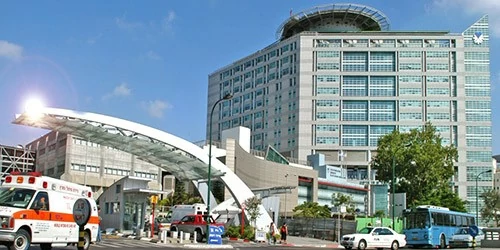
Each year, more than 1,000 patients from all over the world come to the clinic’s neurosurgeons. This trust is due to the use of the latest and most effective neurosurgical techniques. The latest neuronavigation systems and neurophysiological monitoring devices are used, and doctors use MRI machines to monitor the operation. This allows Israeli neurosurgeons to avoid trauma to the nervous system and achieve the best possible treatment outcomes.
COST OF THERAPY FOR BELL’S PALSY IN ISRAEL IN 2023
| Procedure | Cost |
|---|---|
| Consultation with a neurologist | from $680 |
| Nerve decompression | from $17,000 |
Thanks to its high-quality treatment, development and application of the latest medical methods, the clinic has been awarded the prestigious Joint Commission International (JCI) medical certificate as well as the TÜV (European ISO certificate). The neurosurgeons of the Medical Center perform more than 250 operations a year, with an annual success rate of 90%. During neurosurgical interventions, doctors use modern equipment, which helps to multiply the effectiveness of the procedure, prevent the development of complications and shorten the rehabilitation period. Despite the high level of service, the cost of medical services here is far lower than in European hospitals.
COST OF NEURITIS OF THE FACIAL NERVE TREATMENT IN TURKEY IN 2023
| Procedure | Cost |
|---|---|
| Consultation of a neurologist | from $150 |
| Nerve decompression | from $12,000 |

The medical centre has received more than 15 prestigious international awards for its high-quality services and is ISO 9001 certified. Every year more than 6,000 plastic surgeries are performed here. The specialists use CT and 3D computed tomography machines. The surgeons also use 3D visualisation to select the best method of plastic surgery and achieve 100% efficiency. This allows for maximum effect in patients with defects in appearance.
COST OF SURGERY FOR BELL’S PALSY IN KOREA 2023
| Procedure | Cost |
|---|---|
| Blepharoplasty | from $1,890 |
| Facelift | from $5,090 |
REVIEWS OF BELL’S PALSY TREATMENT IN TURKEY
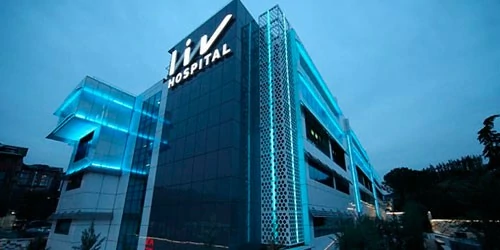
 Hospital: Liv Hospital
 Procedure: Nerve decompression
 Patient age: 35 years
 Patient from: Zhytomyr
Vasiliy: I would like to share my positive experience with surgery for Bell’s palsy at Liv Hospital in Turkey. The entire procedure, from preparation to postoperative care, was performed at the highest level. Initially, I received all the necessary information from the medical centre about the operation and preliminary recommendations. When I arrived at the hospital, I was met by a friendly and competent team of medical professionals. The doctors carried out an examination, answered all my questions and reassured me about possible risks and complications. The operation itself went smoothly and painlessly due to the high level of skill and experience of the surgeons. The post-operative care was also excellent. The medical team provided regular check-ups and consultations to ensure that my condition was improving and that I was making a full recovery. They provided the necessary advice on rehabilitation and gave valuable tips for a speedy recovery. Overall, my experience with the surgery in Turkey was very positive. I received quality medical care, professional attention and support throughout the entire process. Moreover, the cost was many times less than in any other clinic in Europe. I am grateful to the team of specialists for their competence and concern for my well-being.
Summary
Bell’s palsy is a nerve lesion in which there is partial or complete paralysis of one side of the face.
The main symptoms of Bell’s palsy are pain, loss of facial mobility and asymmetry, impaired salivation and lacrimation, vision and hearing problems, etc.
Therapy of neurosis with corticosteroids is most effective in the first 3 days after the onset of symptoms.
Physiotherapy methods help to restore the disturbed functions of the nervous system and restore muscle tone.
In the case of severe facial nerve damage, surgery is carried out.
Modern methods of neurosurgery are used abroad. Surgeries are performed with the latest-generation equipment. It allows for achieving the best results and avoiding post-surgical complications.
In the case of Bell’s palsy, patients choose clinics in Turkey, Israel, and South Korea.
For Bell’s palsy, please contact the coordinators of the MediGlobus international medical platform. We will answer your questions, help you choose a clinic and doctor and organise your treatment trip.
Sources:
- 1. National Organization for rare disorders NORD
- 2. Facial Palsy UK
- 3. National Library of Medicine
- 4. Surgical Treatment of Facial Paralysis