


According to the World Health Organisation, infertility affects about 17% of couples worldwide, making it a serious medical and social problem. Despite the availability of many modern treatment methods, this problem remains relevant and requires new approaches. Over the recent years, scientists have been focusing on stem cells, which opens new perspectives in the treatment of infertility. These cells have a unique ability to repair damaged tissues, improve the quality of eggs and sperm, and treat diseases that prevent conception. In this article, we will examine how stem cells are used in reproductive medicine and what results to expect from the treatment.
Why does infertility develop in women and men?
Normally, a woman of reproductive age (under 40) can become pregnant naturally within a year with regular sexual activity. If conception does not occur within 3 years, the probability of getting pregnant naturally decreases significantly every year and drops to about a 1 in 4 chance (or even less). In such a situation, it is recommended to consult a doctor for examination and start infertility therapy.
There are two main types of infertility: primary and secondary. Primary infertility is diagnosed when a couple has never been able to conceive despite regular attempts. Secondary infertility occurs when a couple has already had successful pregnancies, but cannot conceive again.
The causes of infertility are many and the problem can affect both women and men.
What are the reasons why a woman cannot get pregnant?

 polycystic ovarian syndrome;
thyroid disorders;
premature menopause;
pelvic surgery;
cervical mucus problems;
endometriosis;
pelvic infections;
taking certain medications or drugs.
The most common factors of male infertility are:
low or absent sperm count;
abnormal sperm movement;
abnormal sperm shape;
infections, tumours or trauma to the testicles;
testicular failure;
testicular surgery;
ejaculatory disorders;
low testosterone levels;
taking certain medications or drugs.
In addition, factors such as age, weight, smoking and excessive alcohol consumption can affect fertility. Exposure to pesticides, solvents, and certain metals have also been shown to reduce fertility, especially in men, and stress can impair ovulation and sperm production.
Make an appointment for a fertility diagnostics
Correct recognition of the cause of infertility determines the outcome of treatment. Contact MediGlobus to get an appointment in one of the leading international clinics that use advanced diagnostic methods and the latest equipment to identify the causes of infertility. This will allow you to find the most effective treatment and increase your chances of successful conception. Click on the button below to get answers to all your questions.
 Read:
Read: What are stem cells and how are they used in reproductive medicine?
In modern medicine, there are many treatments for infertility in women and men.
Traditional fertility treatments for men include various technologies to improve sperm quality, surgical treatment, and hormone therapy.
In women, the most common treatments include ovulation stimulation with hormones, surgical treatment of endometriosis and other pathologies, and assisted reproductive technologies such as artificial insemination, in vitro fertilisation and intracytoplasmic sperm injection. However, in some forms of infertility, these methods may be ineffective. In such cases, stem cells come to the rescue.
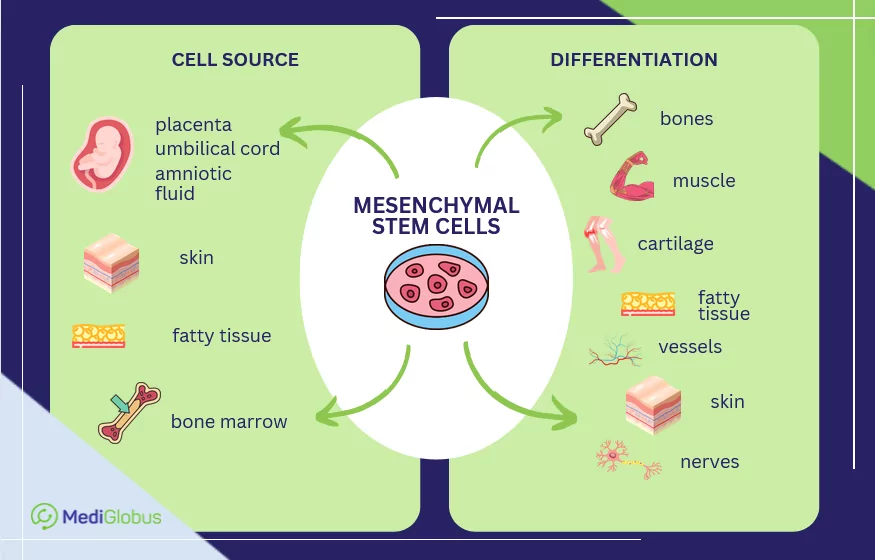
Stem cells have a unique ability to transform into other types of cells. Thanks to it, they can repair damaged tissue in the ovaries, testicles or other organs of the reproductive system, restoring their function. Stem cells are also used to stimulate the formation of new sperm or eggs. They are used to improve cell-to-cell communication and sensitivity to hormones. Stem cells can regulate the immune system, which is important in some forms of infertility associated with autoimmune processes.
In women, stem cells are most commonly used for the treatment of premature ovarian exhaustion (early menopause) and insufficient endometrial thickness. They help to restore ovarian function, stimulate oocyte maturation and improve the endometrium, which is necessary for successful embryo implantation.
In men, stem cells help improve sperm quality, restore testicular function and normalise hormonal balance. Scientists are also actively researching the possibility of producing sperm from stem cells, which opens up new perspectives for infertility treatment.
Each case is unique, and the decision to try stem cell therapy should be made on an individual basis in consultation with a qualified doctor. Contact MediGlobus to find an experienced doctor and clinic for your treatment.
Treatment of female infertility with stem cells
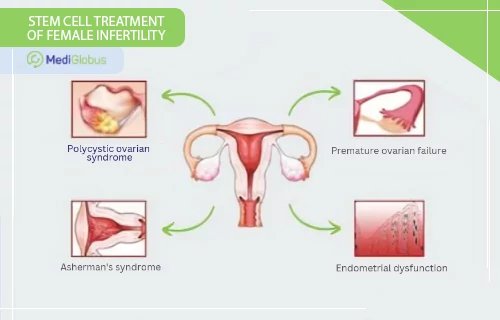
Stem cell treatment is a new promising direction in the field of reproductive medicine. However, research in this area is still ongoing, and not all methods have yet been widely used clinically. The effectiveness of treatment depends on the specific disease, the type of stem cells, the technique used and the individual characteristics of the patient.
A great deal of research has been conducted and continues to be conducted in the field of stem cell therapy for infertility. The results show that the therapy helps to improve the functionality of the reproductive system. The beneficial effects of stem cells in the treatment of common female diseases are various.
Premature ovarian failure syndrome (early menopause):
regulation of the balance between different immune cell populations;
reduction of inflammatory processes in the ovaries;
reduction in the number of apoptotic granulosa cells;
release of growth factors, cytokines and other active substances that help restore ovarian function;
increase in the level of hormones (estradiol, progesterone, anti-Müllerian hormone);
stimulation of the formation of new blood vessels in the ovaries, which promotes a better blood supply to the tissues;
prevention or reduction of scarring of ovarian tissue, which helps to preserve their function;
normalisation of the menstrual cycle;
stimulation of follicle development and improvement of egg maturation;
improvement of IVF results and higher chances of a successful pregnancy.
Polycystic ovary syndrome
suppression of local and systemic inflammatory reactions in the ovaries;
reduction of the activity of fibrotic processes in the tissues of the ovaries and uterus;
normalisation of the immune system;
reduction of the number of polycystic ovaries;
normalisation of the menstrual cycle;
reduction of congestion and oedema;
stimulation of oocyte maturation in vitro by adding growth factors and cytokines secreted by bone marrow mesenchymal stem cells to the culture medium;
increasement of the number of mature oocytes, improved fertilisation and blastocyst formation;
improved glucose tolerance and reduced insulin resistance.
Asherman syndrome (intrauterine adhesions)
Bone marrow mesenchymal stem cell transplantation:
improves fertility;
promotes endometrial regeneration and reduces fibrosis;
increases the thickness of the endometrium and the number of glands in the uterus;
increases the expression of oestrogen and progesterone receptors, which accelerates the repair of damaged endometrium.
The use of stem cells derived from umbilical cord blood:
promotes reduction of fibrosis and inflammation in the uterus;
accelerates endometrial regeneration by stimulating angiogenesis.
Therapy using mesenchymal stem cells derived from adipose tissue:
high level of secretion of cytokines and growth factors promotes tissue regeneration;
effective in combination with estrogens, reduces inflammation and fibrosis, and increases vascularisation.
Application of mesenchymal stem cell secretion:
prevents recurrence of adhesions after surgery;
protects the endometrium from trauma and restores its functionality.
The use of exosomes secreted by stem cells:
accelerates the repair of damaged uterine tissues;
provides faster recovery compared to the direct application of stem cells.
Endometriosis
repair of damaged areas of the endometrium;
reduction of chronic inflammation associated with endometriosis;
formation of new blood vessels, which improves blood flow to affected tissues and accelerates healing;
restoration of a proper response to progesterone, which helps in treating endometriosis and improving fertility.
Pre-eclampsia
reduction of the inflammation;
regulation of blood pressure;
restoration of immune balance;
improvement of the blood supply to the placenta, which is important for normal foetal development and maintaining placental health;
stem cells and their exosomes can reduce cell death in placental tissue, which improves its functional status;
stem cells improve foetal health and development in women with pre-eclampsia.
Fallopian tube obstruction
repair of fallopian tube tissue;
reducing inflammation in the fallopian tubes, which can prevent blockage and improve their patency;
reducing fibrosis and adhesions in the fallopian tubes;
repairing damaged fallopian tube epithelium;
improving fertility;
stem cells may reduce infection and inflammation in the fallopian tubes caused by Chlamydia trachomatis bacteria.
Modern advances in the field of medicine offer new perspectives for combating complex conditions such as female infertility. Stem cell treatment offers an innovative approach to restoring fertility. To find out more and book a consultation, contact us. MediGlobus specialists can help you take the first step towards a long-awaited pregnancy.
Male infertility treatment with stem cells

The treatment of male infertility using stem cells has become a significant breakthrough in modern medicine. Studies have shown that it is possible to restore testicular function and improve spermatogenesis using cell therapy. However, it is important to note that despite the impressive results, stem cell therapy is still at the stage of clinical trials and is not yet widely used in practice.
Stem cells have the unique ability to differentiate into various cell types, including spermatogonia, the cells responsible for the formation of spermatozoa. In cases of male infertility caused by impaired spermatogenesis, stem cells stimulate the regeneration process by replacing damaged germinative cells, leading to the restoration of fertility. This is particularly promising for the treatment of azoospermia when there is no sperm in the ejaculate. Stem cells can form new sperm cells, offering hope of overcoming this major barrier to conception.
In addition, cell therapy can be used to correct genetic abnormalities that affect sperm production or function. Stem cell therapy offers the possibility of passing on healthy genetic material to offspring. Stem cells can also help repair damaged testicular tissue after trauma, chemotherapy or radiation exposure, reopening the way to normal spermatogenesis and reproductive function.

PRP therapy in the treatment of infertility
Stem cell therapy is often combined with PRP (platelet-rich plasma) to achieve better results in infertility treatment.
PRP therapy is an innovative treatment method based on the use of the patient’s blood. The procedure is used in various medical fields, including orthopaedics, cosmetology, dentistry and gynaecology, to stimulate natural healing and tissue regeneration processes.
The method has been successfully used to treat fertility problems in women and men. During the procedure, a small amount of blood is extracted from the patient. Platelets and their growth factors are then isolated from the blood in the laboratory and plasma rich in biologically active substances is formed. The serum is then injected back into the body, which helps to improve the condition of the reproductive system.
Improving female fertility with PRP therapy promotes:
Tissue regeneration. Growth factors contained in platelets promote regeneration and rejuvenation of ovarian tissues.
Improved blood supply. The procedure improves blood supply to the reproductive organs, which is important for maintaining their normal function.
Improving the quality and quantity of eggs. Ovarian rejuvenation with PRP has a positive effect on the health of eggs and helps to increase their number and viability.
Reducing symptoms of early menopause. The procedure helps reduce symptoms associated with hormone imbalance such as hot flashes, vaginal dryness, and mood changes.
Normalisation of the menstrual cycle. The treatment helps to normalise the production of FSH, E2, AMH, and LH hormones, which are responsible for the menstrual cycle.
Maintaining reproductive health. Ovarian rejuvenation can be especially valuable for women who are facing reproductive health issues or who wish to maintain their reproductive health as they age. Treatment helps increase the chances of natural conception or successful IVF.
Effect of PRP therapy on the treatment of male infertility:
Stimulation of spermatogenesis. PRP therapy improves sperm quality and supports testicular health.
Improving testicular function. The method helps to improve testicular function and support male reproductive health.
Effectiveness of enriched plasma therapy for infertility
PRP therapy shows significant efficacy in treating fertility problems, as evidenced by several reports on the successful application of this method. Here is an example of one of the studies published in the journal Menopause in 2021. The study was conducted by Chao Chin Hsu, MD, an infertility specialist at the National University Hospital in Taiwan, and colleagues. It involved 12 women between the ages of 40 and 50 with amenorrhoea for more than 1 year. After the PRP procedure, 11 of the 12 participants resumed their menstrual cycle within 37 days.
‘The preserved immature follicles in the ovaries of women in early menopause can be stimulated to grow into mature follicles with our new method,’, said Chao Chin Hsu.
In addition, 6 participants underwent egg retrieval procedures for IVF. As a result, 10 fully fertilised eggs were obtained. Two patients underwent embryo transfer. As a result, one participant became pregnant.
Dr Chao Chin Hsu said the method provides a new treatment scenario for women in early menopause, allowing them to increase their ability to conceive using their eggs. A reduction in menopausal symptoms such as hot flashes, sweating and urinary distress has also been noted.
How stem cell therapy for infertility treatment in women is performed
The procedure for stem cell therapy in women involves several key steps, each of which is important for effective results:
Examination and preparation | Before starting the therapy, the patient undergoes a medical examination to rule out contraindications and assess her general condition. This includes:
|
Cell harvesting | Stem cells for female infertility treatment are extracted using several methods, depending on what type of cells are needed for treatment. The method used to obtain mesenchymal stem cells is liposuction, where approximately 20 cubic centimetres of fatty tissue is extracted from the abdomen or thighs. The procedure is performed on an outpatient basis and is quick and minimally invasive. In some cases, apheresis may be used to extract cells from the spinal cord or other techniques. If necessary, blood is also drawn to create PRP plasma. This plasma will be used to enhance stem cell therapy. |
Cell injection | Stem cells are injected through the vagina directly into the ovaries or other problem areas. The injection is done under anaesthesia, making the process completely painless. In some cases, the injections are administered intravenously. The method is chosen individually, depending on the goals of therapy. |
Duration of treatment | The procedure may include several sessions, spaced or consecutive, depending on individual indications. After the procedure, the remaining stem cells can be frozen for future use. |
Results and expectations | The effectiveness of the therapy depends largely on the cause of infertility, the complexity of the pathology, the patient’s lifestyle and health status. Smoking, obesity and alcohol consumption can negatively affect the results of treatment.
The first improvements are usually observed 3 months after injections. About 20% of women regain their menstrual cycle and 60% of women with early menopause resume ovulation after therapy. 90% of women experience an improvement in fertility as early as one month after treatment. |
The process of stem cell therapy for male infertility treatment
Stem cell therapy for male infertility takes several steps and includes preparation, cell harvesting, treatment process and follow-up. This method aims to restore spermatogenesis and improve fertility.
Preparation and analyses | First, a thorough examination of the patient is carried out to identify and rule out possible contraindications that may affect the results of treatment or cause complications.
Preliminary analyses include: |
Stem cell harvesting | Spermatogonial cells are extracted through a testicular biopsy. The procedure is carried out under anaesthesia. Liposuction is used to obtain mesenchymal stem cells by extracting a small amount of fat tissue from the abdomen or thighs. The procedure is performed under local anaesthesia and takes a short time. Stem cells are then isolated from the extracted material in a laboratory to be used in the treatment. If necessary, the patient’s blood is also drawn to create PRP plasma. This plasma will be used to enhance stem cell therapy. |
Treatment procedure | The resulting serum is injected intravenously or directly into the area of both testicles to stimulate spermatogenesis. |
Hospitalisation time and rehabilitation | The patient stays in the clinic for about 3 days. The procedure is followed by a three-month waiting period, during which the effect of the therapy on spermatogenesis is observed. The complete cycle of sperm formation takes about 65-70 days. |
Results and Effectiveness | 3 months after the injections, semen is reanalysed to assess the success of the therapy. If the indicators improve, further treatment can be planned.
The success of therapy depends on the individual characteristics of the patient, such as the degree of damage to the reproductive system and the general level of health. The quality of the original stem cells and the correct implementation of all treatment steps also play an important role. In addition, factors such as being overweight, smoking, alcohol abuse, etc. can affect the results.
Preliminary studies have reported success in 56% of patients with non-obstructive azoospermia. However, the results are still being refined and additional studies are required to definitively evaluate the efficacy and safety of the therapy. |
Clinics for stem cell therapy for infertility
Stem cell therapy in the treatment of infertility is a promising area of medicine, but it is still at the stage of active research. Therefore, the choice of a clinic for such a procedure requires special care. Improperly conducted procedures may not only fail to bring the desired result but also cause harm to health. Currently, there are many dubious offers of stem cell treatment, promising fast and guaranteed results. However, it is worth remembering that infertility treatment is a complex process that requires an individual approach and highly qualified specialists. Only correctly selected therapy, carried out in a certified clinic using modern technology, can give a positive result.
Pay attention to the following factors when choosing a clinic:
The clinic must have all the necessary licences to conduct medical activities, including work with stem cells.
Doctors working in the clinic should have appropriate specialisation and experience in the field of reproductive medicine and cell technologies.
The clinic must be equipped with modern equipment for all stages of treatment, from stem cell collection to administration.
Contact your MediGlobus coordinator to find out more about the clinics and costs of stem cell infertility treatment. Click the button below, leave your phone number and wait for a call from a specialist.

Summary
Infertility factors in women are associated with polycystic ovary syndrome, endometriosis, thyroid disorders and pelvic infections. In men, infertility is often related to the absence or low number of sperm, improper shape or movement, as well as hormonal disorders or the consequences of injuries and operations on the testicles.
Modern therapies allow the effective use of stem cells. Infertility can be avoided thanks to advances in regenerative medicine. Cell therapy helps to repair damaged tissue and stimulate the growth of new cells, which helps to improve reproductive function in women and men. This results in increased production of sex cells, which significantly increases the chances of successful conception.
The treatment of female infertility with stem cells opens up new possibilities in the fight against such complex diseases as polycystic ovarian syndrome, premature ovarian failure and endometriosis. Stem cells help to restore normal ovarian function, reduce inflammation and promote regeneration of the endometrium, which increases the chances of successful conception and pregnancy.
Male infertility treatment using stem cells can restore testicular function and improve spermatogenesis.
PRP therapy (platelet-rich plasma) is a promising method of infertility treatment used in both women and men. The procedure involves extracting the patient’s blood and isolating platelets and growth factors from it, after which the enriched plasma is injected back into the body. In women, PRP therapy helps to regenerate ovarian tissue, improve blood supply to the reproductive organs and increase the quality of eggs, while in men it helps to improve sperm quality and testicular function. This method has shown significant results in clinical trials, confirming its effectiveness in restoring reproductive function.
Stem cell therapy for infertility treatment begins with a thorough medical examination to rule out contraindications and assess the general condition of the patient. Stem cells are then harvested either from adipose tissue (liposuction), bone marrow or other sources, depending on the method. The cells are injected into the problem area or intravenously. The procedure may require several sessions, and results begin to appear after 3 months.
Stem cell therapy for infertility is recommended to be carried out under the supervision of experienced specialists. The processes of cell production, administration and follow-up should be strictly controlled and carried out in accredited clinical centres. This will ensure the safety of the participants of the procedure, prevent possible complications and ensure a quality result of the procedure. Click the button below to contact a MediGlobus coordinator. Our specialist will give you a free consultation on your question, help you choose a clinic and make an appointment without waiting in line.
Sources:
- 1. World Health Organization
- 2. NHS: Infertility
- 3. Xiaobo Liu, Jiajia Li, Wenjun Wang, Xue Ren, Ji-Fan Hu, Therapeutic restoration of female reproductive and endocrine dysfunction using stem cells, Life Sciences, Volume 322, 2023, 121658, ISSN 0024-3205
- 4. Cucinella G, Gullo G, Catania E, Perino A, Billone V, Marinelli S, Napoletano G, Zaami S. Stem Cells and Infertility: A Review of Clinical Applications and Legal Frameworks. Journal of Personalized Medicine. 2024; 14(2):135
- 5. Wu J-X, Xia T, She L-P, Lin S, Luo X-M. Stem Cell Therapies for Human Infertility: Advantages and Challenges. Cell Transplantation. 2022;31
- 6. L Cacciottola, F Vitale, J Donnez, M M Dolmans, Use of mesenchymal stem cells to enhance or restore fertility potential: a systematic review of available experimental strategies, Human Reproduction Open, Volume 2023, Issue 4, 2023, hoad040
- 7. Platelet-rich plasma – Healio
- 8. Hsu, Chao Chin MD, PhD; Hsu, Isabel MD; Hsu, Leonard MD; Chiu, Yi Jen PhD; Dorjee, Sonam MD. Resumed ovarian function and pregnancy in early menopausal women by whole dimension subcortical ovarian administration of platelet-rich plasma and gonadotropins. Menopause 28(6):p 660-666, June 2021