


Every year, MediGlobus shares the medical breakthroughs that have impressed us the most over the past year. For 2023, we have divided the most significant innovations into 4 categories, each with several nominees. These are innovations that have already begun to revolutionise the treatment of many diseases and have great potential to expand their reach to more and more diagnoses in the future.
Innovations 2023 produced in diagnostics
 Using AI to predict the risk of getting pancreatic cancer
In 2023, the affordable and quality artificial intelligence (AI) models, most famously ChatGPT, changed the world. They have impacted many fields, and medicine is no different. The specificity of this field requires surgical precision and does not tolerate mistakes. Medical researchers are using the strengths of AI technologies – the ability to work with large data sets and deep analytical capabilities – to uncover connections that even the largest teams of researchers are unable to identify.
In 2023, a multinational team published a study in one of the most prestigious journals, Nature, proving the feasibility of using AI to detect the risk of pancreatic cancer in patients up to 3 years before the disease develops. The importance of this discovery is that pancreatic cancer has one of the worst treatment prognoses at inoperable stages, and in most cases is diagnosed in an already advanced state.
The AI model analysed the medical records of more than 6,2 million patients over 41 years, among whom 24,000 were subsequently diagnosed with pancreatic cancer. By comparing specific sequences of events leading up to the diagnosis, the model was able to identify risk factors and detect them in new patients. Applying the technology to a database of US veterans has been able to predict cancer in more than 4,000 people.
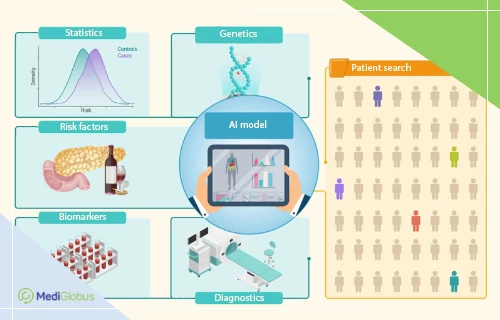
People at risk should undergo frequent cancer check-ups. This is the only way to detect a pancreatic tumour when it can still be treated, as it is asymptomatic at stages 1-2.
Who can benefit from this?
People who have relatives diagnosed with cancer (especially pancreatic cancer), patients with chronic pancreatitis, diabetes, bad habits (smoking, alcohol) and other risk factors, and those who are worried about their risk of cancer.
A more effective method for breast cancer screening in patients with dense breast tissue

In 2023, the US Food and Drug Administration (FDA) approved the use of a new method of breast ultrasound imaging, SoftVue. This technology uses ultrasound waves to create a 360° 3D image of the organ.
The method was developed specifically for cancer screening in women with high breast tissue density. According to the NCI, they make up 40% of the population and are 4-6 times more susceptible to cancer. Standard mammography is less effective for these patients because it can miss a cancerous mass or mistake a benign neoplasm for a malignant one. According to studies, conventional mammograms miss up to 40-60% of cancers in women with high breast density.
SoftVue helps eliminate this problem. The technology improves screening accuracy by 20% and is less likely to lead to “false positives” – cases where women are diagnosed with breast cancer when it is not present.
Who can benefit from this?
Women with high breast tissue density over the age of 40, women +30 who have close relatives who have survived breast cancer, and BRCA gene carriers.

Non-invasive prenatal diagnostics
A new method of foetal genetic diagnosis (NIPD & NIPT) can assess the risk of more than 100 genetic diseases, determine the sex and blood type of the unborn child, and confirm paternity non-invasively. Standard protocols use amniotic fluid analysis for this purpose, which is normally tolerated by most women, but can lead to miscarriage in high-risk pregnancies.
The new technology can “capture” small samples of foetal DNA from the mother’s blood for analysis. This is a completely safe and reliable diagnostic method.
In addition, non-invasive prenatal diagnostics can be used to perform a paternity test in the first trimester of pregnancy, starting at week 7. The duration of the test in most laboratories takes an average of a week.
An important point is that prenatal diagnosis by blood test can only be carried out in the case of a single pregnancy. If there are twins, the mother’s bloodstream will contain cells from both children, which cannot be separated from each other in the laboratory.

Who can benefit from this?
Women with a high-risk pregnancy.
The most innovative drugs to emerge in 2023
New drug for Alzheimer’s patients
Alzheimer’s disease is one of the most common neurodegenerative diseases characterised by consistent memory loss, impaired thinking, personality changes and emotional disturbances. This disease cannot be cured and all therapeutic approaches are aimed at slowing progression.
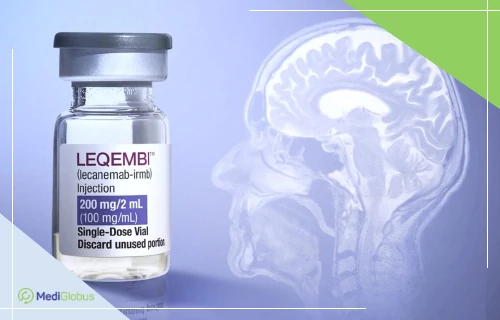
In the summer of 2023, the FDA approved a new drug, Lekembi (lecanemab). This is the first drug that treats the cause of Alzheimer’s disease – the accumulation of amyloid plaques in brain tissue. They provoke inflammatory processes and disrupt the connections between neurons, which leads to memory impairment and other symptoms of the disease.
Lekembi belongs to a group of drugs called monoclonal antibodies. It is a type of targeted therapy, in other words, drugs that have a targeted effect on selected disease-causing cells. The drug destroys existing plaques; however, it cannot prevent the formation of new ones, so a complete cure cannot yet be achieved.
A study published in the Journal of the American Medical Association (JAMA) showed that the use of Lecembi slows the development of Alzheimer’s disease by 35% in the early stages of the disease.
The drug has certain risks of side effects and will not be effective for late-stage disease, but those to whom this medicine can be recommended benefit greatly from its use.
Who can benefit from this?
Patients or relatives of patients with Alzheimer’s disease.
A drug that can be used to treat obesity
No. 1 medical breakthrough according to the Science journal
Obesity is a complex metabolic problem that carries an increased risk of a large number of diseases, including cancer. According to WHO, it affects more than 39% of the world’s population. The standard treatment plan for obesity – physical activity and diet – requires a lot of effort and motivation on the part of the patient, and not everyone manages to stick to a healthy lifestyle. In 2023, doctors started using a new group of drugs that can help with this problem – GLP-1 agonists.
These are synthetic drugs similar in structure to the human hormone glucagon-like peptide-1, which is produced in the gut. It causes a feeling of satiation, as well as slows digestion and lowers blood sugar levels. These drugs were originally developed to treat type 1 diabetes, but this year doctors revealed that they have many benefits for regular obese patients as well.

Specifically, the use of GLP-1 agonists improves heart function and reduces the risk of heart attack and stroke by 20%. In addition, interim results are available suggesting that these drugs may also protect against kidney disease and reduce cravings for smoking and alcohol. And all of this is accompanied by overall weight loss, which in itself has a healthy effect.
Who can benefit from this?
People with obesity and/or type 1 diabetes who are unable to control their weight within the recommended range.
New medical technologies developed in 2023
Stents ‘treating’ patients after stroke
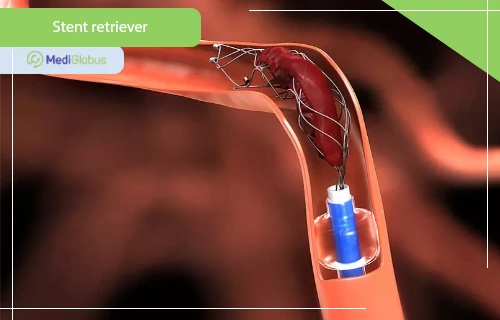
Stent retrievers have been revolutionising the treatment of stroke patients for the last few years. The market for these devices has doubled in 2023. These are special devices that look like a catheter made of a thin mesh material that is placed along the blood vessels to the area where the neurovascular disease has occurred and removes blood clots.
The use of stent retrievers in the first 2-7 hours after a stroke dramatically reduces the risk of stroke recurrence and reduces long-term damage to brain tissue. The rehabilitation period for these patients becomes shorter and easier.
Modern clinics are combining stent retrievers with drug therapy, neuroprotective agents and even stem cell treatment to further accelerate the neurorehabilitation process.
Who can benefit from this?
People who have risk factors for stroke: age 55+, high blood pressure, history of heart disease and transient ischaemic attack, arrhythmia, high blood cholesterol, diabetes and obesity, smoking, etc.
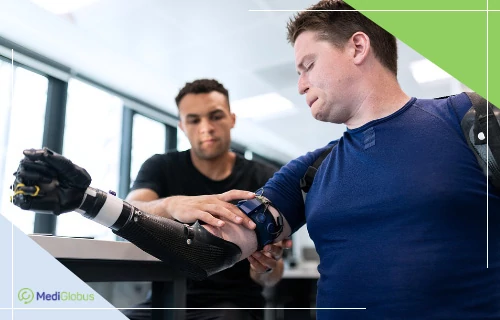
Neurofeedback systems for prosthetic limbs
Neurofeedback systems can mimic the natural nerve function of amputation patients to help them adapt to the use of prosthetic limbs.
These devices “collect” information about the pressure on the robotic foot while walking and transmit it to electrodes specially implanted in the peripheral nerves on the residual limb. The information from there goes to the brain, just as it would during the natural process of walking in a healthy person. The brain reads it and reacts accordingly, resulting in more precise coordination of whole-body movements – and best of all, it’s all completely subconscious.
Patients with prosthetic legs who use neurofeedback devices can walk and climb stairs faster and with greater confidence, and their movement accuracy increases by 20%. Patients with prosthetic arms have improved fine motor skills: for example, they can pick up small and fragile objects more easily.
Who can benefit from this?
People who have had a limb amputated.
Technology for remote monitoring of glucose levels in diabetics
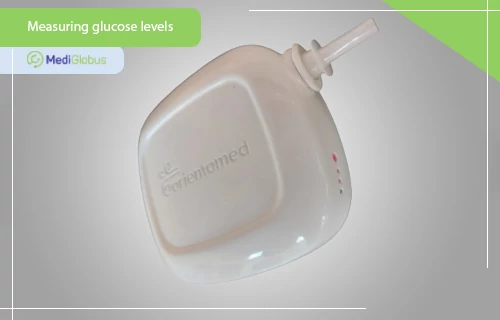
During the 2023 Annual Conference of the Association for Advanced Technology and Diabetes (AATD), the medical community shared two promising methods for non-contact glucose measurement in diabetic patients. These were breath analysis and glucose measurement using light (Raman spectroscopy). These innovations eliminate the need for continuous blood draws. Patients get real-time results, providing better control over their condition.
Such technologies have been available in the scientific world for a long time, but they can only be performed in large laboratories. The innovation comes in the development of small devices that patients can carry around with them, and which will still provide as accurate and reliable results as previously available methods of measuring glucose levels.
Both technologies are already undergoing practical trials, and the researchers boast optimistic preliminary results.
Who can benefit from this?
Patients with diabetes, especially type 1 diabetes.
Gene therapy advencements in 2023
First gene therapy to treat Duchenne myodystrophy
The possibility of “removing” the disease from patients’ DNA has long been hotly debated in the medical community, but the complexity and sensitivity of such a treatment have long stood in the way of its introduction into everyday practice. And now in 2023, the first shift in the future of gene therapy has occurred – the FDA has approved the first-ever gene modification drug to treat children with Duchenne myodystrophy, a dangerous disease that leads to degeneration of muscle tissue and premature death due to impaired production of a vital protein. Gene therapy finds the stretch of DNA responsible for the formation of this protein and “fixes” it.
The drug uses CRISPR/Cas9 technology to edit genes. This technique is famous for the fact that its researchers won the Nobel Prize in Chemistry in 2020.
Who can benefit from this?
People whose families inherit the Duchenne myodystrophy gene.
The first gene therapy to treat sickle cell anaemia
Just like the previous technique, gene therapy for sickle cell anaemia uses CRISPR/Cas9 technology to edit genes. The gene therapy, called CASGEVY, corrects defective haemoglobin genes in the patient’s bone marrow stem cells so that they can produce complete haemoglobin. The patient’s stem cells are taken from their bone marrow, edited in the lab, and then injected back into the patient. A single treatment has the potential to completely cure the disease.
Previously, the only way to completely cure sickle cell anaemia was a bone marrow transplant. However, a big problem with this approach is finding suitable bone marrow donors. Gene therapy has the potential to remove this obstacle.
Who can benefit from this?
People whose families inherit the gene for sickle cell anaemia.
Summary
 The year 2023 has seen many innovations in the field of medicine. The world is moving towards personalised, targeted and preventive medicine; and with the increasing efficacy of drugs and technologies, there is an opportunity to prioritise the quality of life of patients.
Diagnostics are becoming more accurate and reliable every year. This year, the biggest breakthroughs occurred in the diagnosis of breast cancer, pancreatic cancer, and X-chromosome defects in the fetus.
The innovations that have most excited the medical world this year concern the treatment of diseases for which there are few effective approaches – for example, Duchenne myodystrophy and Alzheimer’s disease; as well as common diseases and conditions that affect huge numbers of the world’s population – obesity, diabetes, stroke, etc.
Gene therapy is already beginning to be used to treat certain diseases – sickle cell anaemia and Duchenne myodystrophy. Research is underway to treat dozens of other diseases, including many congenital disorders, cancer and infertility. Up to 40% of all diseases have a genetic component to them, and a future in which we can treat them promises to be much healthier.
Prosthetic limbs, a technology that sits at the intersection of medicine and robotics, are becoming more advanced every year. Neurofeedback systems can improve the interaction between the prosthesis and the brain and improve the adaptation of people with amputations.
Stay with MediGlobus and keep up to date with the latest news about medical advances abroad. If you need help in organising your treatment abroad, leave a request. Our coordinators will help you find a clinic that offers the best treatment programme.

Sources:
- 1. ScienceNews
- 2. American Association of Retired Persons
- 4. Science
- 5. Nature Medicine: A deep learning algorithm to predict risk of pancreatic cancer from disease trajectories
- 6. Delphinus Medican Technologies
- 7. National Cancer Institute
- 8. World Health Organisation
- 9. JAMA Network: Donanemab in Early Symptomatic Alzheimer Disease
- 10. Nature: Early noninvasive prenatal paternity testing by targeted fetal DNA analysis
- 11. Science: Nerve-mimicking device gives ‘feeling’ to prosthetics
- 12. Nature: On-body non-invasive glucose monitoring sensor based on high figure of merit (FoM) surface plasmonic microwave resonator
- 13. DiaTribe
- 14. ScienceNews: The first gene therapy for muscular dystrophy has been approved for some kids