NEEDS SUPPORT?
Call me back

Leave your phone number and our Medical Coordinator will contact you

Leave your phone number and our Medical Coordinator will contact you

University Hospital Erlangen
The specialists of the MEDIGLOBUS Support Team will help you to get an individual Treatment Plan with a Price Quote.

University Hospital Erlangen

Erlangen, Germany

Clinic Review

University Hospital Erlangen

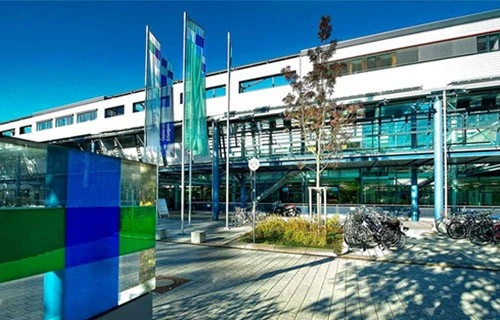
University Hospital Erlangen is one of the best specialised clinics in the country. It ranks 15 out of 1,170 medical facilities, according to the FOCUS magazine.

Erlangen University Hospital was founded in 1815. It is located in the south of Germany and is considered a medical valley due to a large number of departments and centres.

The hospital cooperates with partners from scientific, economical, political and medical equipment companies. This partnership helps Erlangen Clinic to achieve international leadership in healthcare and advanced medical technology.

The Erlangen Medical Complex has 24 clinics, 19 independent departments and 7 institutes covering every area of modern medicine.

The buildings of the university hospital are mainly located in the city centre near the palace garden and have over 1,300 beds. More than 7,500 medical staff work here, which ensures optimal care for each patient.

Departments in Universitätsklinikum Erlangen

  • Anesthesiology
  • Bariatric Surgery
  • Cardiology
  • Cardiovascular surgery
  • Dentistry
  • Dermatology
  • Endocrinology
  • Gastroenterology
  • Infectious diseases
  • Nephrology
  • Neurology
  • Neurosurgery
  • Obstetrics and gynecology
  • Oncohematology
  • Oncology
  • Ophthalmology
  • Orthopedics and traumatology
  • Otorhinolaryngology
  • Pediatry
  • Phlebology (vascular surgery)
  • Plastic Surgery
  • Psychiatry
  • Pulmonology
  • Radiology
  • Rehabilitation
  • Reproductive Medicine
  • Rheumatology
  • Spine surgery
  • Sports Medicine
  • Surgery
  • Transplantology
  • Urology

Services at University Hospital Erlangen

Accommodation:

Patients have access to single and double rooms as well as wards of superior comfort. Each room is equipped with a bathroom, a special bed, a wardrobe, a bedside table and a table with chairs. In many wards, the patient can watch TV and use wi-fi.

Hospital pharmacy:

The Erlangen University Hospital has a pharmacy with a laboratory where patients can order their own medicine. The medications that are produced in this pharmacy meet all international quality and safety standards.

Meals during your stay in the clinic:

The cafeteria of the Erlangen University Hospital offers about 5,000 meals every day. Here, patients can choose a meal that combines excellent taste with all the necessary vitamins. The clinic’s menu has won many awards, including a prize in the ESSEN PRO GESUNDHEIT competition. The competition was organised by the Ministry of Environment, Health and Consumer Protection.

Features of the Clinic

Diagnostics and treatment in the neurology department

The neurological department of the Erlangen Clinic is one of the largest in Germany. Over 7,000 patients are treated there every year. Also, the Department of Neurology works closely with the Departments of Neurosurgery and Neuroradiology.

Also, the department is accredited by the German Society for Orthopaedics and Orthopaedic Surgery has an EndoCert certificate and successfully undergoes annual follow-up examinations. This means that patients receive an arranged system of examination, consultation and treatment. In doing so, doctors always consider the personal situation of the patient. To assess the necessary treatment measures, orthopaedic traumatologists cooperate with doctors in other specialities, such as physiotherapy and rehabilitation.

The Neurology Department offers special outpatient clinics for therapy of:

  • multiple sclerosis;
  • motor disorders;
  • dementia;
  • neuromuscular diseases;
  • tumour diseases of the nervous system;
  • neurovascular diseases.

The stroke units, intensive care for seriously ill patients and epilepsy centre deserve special attention. Also thanks to molecular neurology, a new department was created in 2008, which combines basic research with clinical experience. This makes it possible to treat patients at the highest level by applying the latest developments in medicine. The department has a quality management system and has been certified according to DIN EN ISO (since 2000).

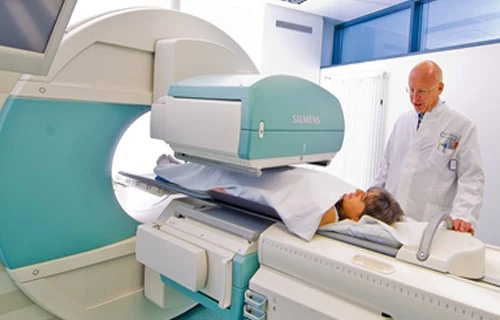
University Hospital Erlangen cooperates with Siemens Healthiness. This allows new equipment to be adapted to the needs of doctors and patients. For example, one of the Erlangen doctors, Arnd Dörfler, Head of Neuroradiology, was involved in the development of a new ultra-high field MRI machine. With such a device you can see minor changes in the body, even at the metabolic level.

The Erlangen Neurosurgery Department is considered one of the largest in Germany. The clinic performs more than 2,500 operations annually.

It treats all neurosurgical pathologies, injuries, inflammations, tumours and malformations of the brain, spinal cord and spine. The neurosurgical department has 78 beds, 14 of which are in the intensive care unit.

There’s also an intensive care unit in the ward. Neurosurgical patients with diseases or injuries of the nervous system, acute spinal injuries, craniocerebral injuries and acute cerebral haemorrhages are referred here.

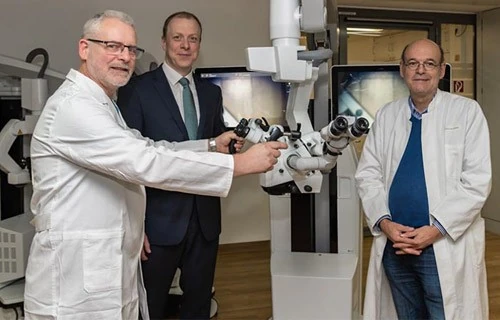
The neurosurgery department has 4 modern operating rooms with high-precision microscopes, the latest neuronavigation and 1.5 Tesla MRI to control the course of the operation.

University Hospital Erlangen

If the person has doubts about the diagnosis or wants to clarify the need for neurosurgical treatment, they can ask for a second opinion service or make an appointment online. During the online consultation, the doctor explains the possible treatment options, as well as determines its urgency and possible alternatives to surgery.

Treatment of oncology at the Erlangen Clinic

Cancer patients get a fast and accurate diagnosis, treatment and follow-up care. The clinic has narrowly focused departments, which deal with the treatment of certain oncological diseases:

  • University Breast Center of Franconia – for patients with various breast diseases;
  • The Center for Colorectal and Pancreatic Cancer;
  • Skin Cancer Center;
  • Children’s Oncology Dispensary;
  • Head and Neck Tumor Center;
  • Onco-haematological centre (Lymphoma, leukaemia, multiple myeloma, etc.);
  • Prostate cancer centre;
  • Kidney and bladder cancer centre.

All types of cancer treatment are available in oncology departments: chemotherapy and radiation therapy, surgical removal of neoplasms, immuno- and targeted therapy. In addition to basic treatment, the clinic provides psychological support, nutritional advice and organizes self-help groups. Also, the oncology departments are audited annually by the DKG (German Cancer Society).

Chemotherapy
Oncologist consultation
Personal medication selection
Separate boxes for courses
Side effects reduction

Get a free quote

Radiotherapy
Oncologist consultation
MRI diagnostics
360° motion control accelerator
Side effects reduction

Get a free quote

University Hospital Erlangen

The cancer centres at the Erlangen Clinic are constantly updating their equipment. Thus, a new spiral imaging CT scanner has been installed in the Franconian Breast Department. A CT scanner like this ensures high image quality, with a lower dose of radiation.

The new procedure has become noticeably more pleasant for the patients because there is no chest squeeze when performing it. During the examination, the breast is in a special recess of the device and is fully scanned in a spiral within a few seconds.

For surgical treatment of oncological diseases, the clinic often uses the Da Vinci robot. For example, it is used to remove the prostate gland, colon growths (especially in sigma and rectum) and tumours in the oral cavity. Da Vinci unit is also used for interventions on the kidneys and adrenals, renal pelvis, ureter and bladder. Using the device helps speed up the rehabilitation process and make it less painful.

Interesting fact: It was Erlangen University Hospital that developed a fundamentally new method of brain tumour removal – DIVA surgery. Its essence is to control the intervention with the help of fluorescent imaging of the tumour and MRI machine. The uniqueness of this method is that it allows doctors to accurately separate tumour tissue from healthy tumours while maintaining important brain functions. Such an operation requires serious training of doctors and the latest navigation system installations. In this case, the intervention significantly increases the chances of removing tumour cells, even in brain regions with difficult access.

Transplantology Department of Erlangen Clinic

At the Erlangen University Hospital, organs and tissues transplants can be performed on adults and children. The department works with the German Organ Transplantation Foundation and the Eurotransplant agency, which gives access to a donor database. Here, doctors transplant:

  • hearts;
  • kidneys;
  • pancreas;
  • combined pancreatic and kidney transplant;
  • corneas;
  • bone marrow/stem cells.

During the whole period of its existence (since 1966) doctors have transplanted more than 3,300 kidneys, 215 hearts, 343 livers and performed 106 pancreatic transplantations. The department also performed more than 1,450 stem cell transplantation procedures and 11,898 corneal transplantations.

Stem cell transplantation

Since 2011, specialists at the Erlangen University Hospital have been performing not only autologous (own stem cells) and allogeneic (stem cells from a suitable donor) transplants, but also cord blood transfusions.

The most innovative method is haploid stem cell transplantation. The latter can be used to create individual cell cultures, which are essential for the treatment of type 1 diabetes. Haploid cells can also be used to treat blindness or other diseases in which some tissues die or degenerate. Thanks to a single set of chromosomes, such cells can also be used to treat reproductive diseases such as infertility.

Orthopaedics and Traumatology at Erlangen University Hospital i

The Department of Traumatology and Orthopaedics at the Erlangen University Hospital is headed by Professor Mario Pearl. Here, all injuries and degenerative disorders of the musculoskeletal system can be treated with surgical and conservative therapy. Trauma doctors treat about 20,000 patients annually and perform more than 3,000 surgical procedures. Among them:

  • hip and knee arthroplasty;
  • shoulder joint endoprosthetics;
  • facet and iliac joint infiltration;
  • diagnostics and therapy of acute and chronic sports injuries;
  • arthroscopy of the knee, ankle, hip, shoulder and elbow joints;
  • autologous stem cells in restoration of motor functions of hip and knee joints.

The medical team of the Orthopedics Department has extensive experience in treating professional athletes. The clinic cooperates with the Institute of Sports Science FAU Erlangen-Nüremberg and provides medical services to the teams of the Greuther Fürth game association and teams of other sports clubs in the region. Also, the department is accredited by the German Society for Orthopedics and Orthopedic Surgery has an EndoCert certificate and successfully undergoes annual follow-up examinations. This means that patients receive an arranged system of examination, consultation and treatment. In doing so, doctors always consider the personal situation of the patient. To assess the necessary treatment measures, orthopaedic traumatologists cooperate with doctors in other specialities, such as physiotherapy and rehabilitation.

Children’s medicine at the Erlangen Clinic

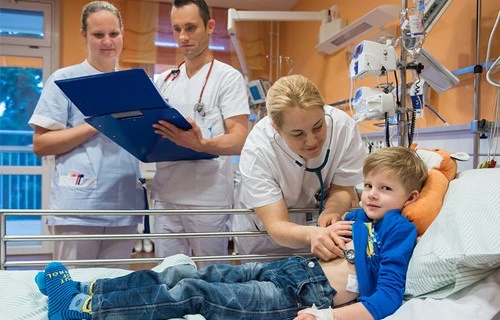
In the Department of Child and Adolescent Medicine at the University Hospital Erlangen, doctors have been taking care of young patients who suffer from a wide range of diseases for over 100 years. There are an outpatient clinic and a children’s hospital. The department provides 24-hour care for premature and newborn babies as well as children and adolescents of all ages. They offer optimal treatment strategies and make the stay at the clinic as short and pleasant as possible for patients and their families.

The children’s clinic assists in such areas as surgery, cardiac surgery, cardiology, molecular paediatrics, neonatology, oncology and haematology. Families with children who suffer from endocrine pathologies, neurological disorders, developmental defects, as well as for epilepsy and cystic fibrosis also come here.

It is an important fact that doctors from the Department of Child and Adolescent Medicine participate in scientific research on new diagnostic and treatment methods. In 2019, Ferdinand Knieling, a doctor from the department, received the prestigious Adalbert Czerny award for his contribution to the creation of a new diagnostic method in paediatrics.

University Hospital Erlangen

He developed an alternative biopsy – a procedure, that causes fear in many children. The method is based on visualization with light and sound, which provide comprehensive information on the composition of the affected tissue. It is not necessary to make incisions and take a sample of the child’s tissue.

Cost of diagnostics and treatment of Erlangen University Hospital

ProcedureCost
Consultation with a specialistfrom €500
Laboratory testsfrom €350
Mammary gland ultrasoundfrom €350
MRIfrom €1,000
PET-CTfrom €1,500
Chemotherapyfrom €2,500 per session
Radiation Therapyfrom €6,000 per course
ProcedureCost
Immunotherapyfrom €6,000
Knee arthroscopyfrom €7,000
Shoulder replacementfrom €11,000
Mastectomyfrom €13,000
Hip arthroplastyfrom €18,000
Knee replacementfrom €19,000
Surgical removal of the tumourfrom €20,000

Testimonials (2)

Average clinic rating
  • 5
    5
Hans Maulwurf
Age: 48 years
The patient was treated of Treatment of coronary artery disease

Very competent doctors. They answered all the questions I had. Also a big praise to the nurses. I go back there anytime. Very modern buildings. What was specially noticeable is that one pays attention to hygiene. Rooms are cleaned and w... Read more

  • 5
    5
Ena
Age: 34 years
The patient was treated of Orthopedics and traumatology

I have been admitted to the Erlangen Clinic with a herniated disc in the cervical spine. The care was very, very, very good. The nurses were very human and thoughful. The organization for the well-being of the patients perfect. Thanks fo... Read more

Certificates

Award of the independent rating magazine Focus
Certification according to DIN EN ISO 9001 by TÜV NORD CERT
DKG
DKG
Focus magazine rating
TÜV ISO 9001
TÜV ISO 9001
Turkish Academy of Esthetic Dentistry (EDAD) Certificate
World's Best Hospitals by Newsweek

Doctors

Specialist in general and abdominal surgery.
From 1990 to 1997, Dr Grützmann conducted medical research at the Charité Clinic in Berlin. He then worked for several months with the Boston Consulting Group (BCG) and then moved to Dresden University Hospital. After 2005, Professor Grützmann found the field of research that attracted him most and became an international pancreatic cancer specialist. He has published around 120 specialist articles, for which he has received numerous awards. In addition, Professor Grützmann improved his surgical skills during his practice abroad at the Mayo Clinic in Rochester (USA) from 2007 to 2015. Prof. Grützmann is currently in charge of the department and department of surgery at FAU Erlangen-Nürnberg.
Membership in professional organizations and awards:
  • Member of the German Society for General and Abdominal Surgery (DGAV);
  • Member of the German Society of Surgery (DGCH);
  • Member of the German Society for Vascular Surgery (DGG);
  • Won the Carl Gustav Carus Prize (2004);
  • Won the Von-Langenbeck prize of the German Society of Surgery (2005);
  • Had a scholarship from the Pancreatic Center and the American Congress of Surgeons (2007).

Specialization: general and abdominal surgery, pancreatic surgery, vascular surgery.
Профессор Роберт Грюцманн
Robert Grützmann
Experience: over 25 years
Surgery
Specialist in general and interventional cardiology.
Graduated from the Faculty of Medicine at the University of Erlangen and then interned in the Department of Cardiology at the Erlangen University Hospital. After his internship, the doctor worked at Massachusetts General Hospital, USA. Since 2012, Professor Achenbach has been Head of the Department of Cardiology and Angiology at the Erlangen University Hospital.
Membership in professional organizations and awards:
  • Member of the American Heart Association;
  • Member of the European Society of Cardiologists;
  • President of the Board of Directors of the Society for Cardiovascular Diseases;
  • Won the Gold Medal of the Cardiovascular CT Society (2015);
  • Won the Godfrey Hounsfield Commemorative Award from the British Institute of Radiology (2016).

Specialization: cardiology, interventional cardiology, CT/MRI, intensive care for acute cardiac pathologies.

Профессор Штефан Ахенбах
Stephan Achenbach
Experience: over 20 years
Cardiology
Specialist in gynecology and mammology.
From 1979 to 1986, he studied at the Albert Ludwig University in Freiburg and at Columbia University in New York and Louis Pasteur University in France. Professor Matthias W Beckmann is involved in the study of predisposition to endometriosis, breast cancer and ovarian cancer. He is also researching new, minimally invasive cancer therapies. Since 2001, he has been Head of the Department of Obstetrics and Gynaecology at the Erlangen University Hospital, and since 2010 he's been the Director of the Center for Comprehensive Cancer Treatment in Erlangen-Nuremberg.
Research directions:
  • genetic predisposition to endometriosis, breast cancer, ovarian cancer;
  • molecular endometriosis pathogenesis;
  • minally invasive methods of cancer treatment.

Specialization: gynecology, mammology.
Профессор Матиас В Бекман
Matthias W. Beckmann
Experience: over 30 years
Obstetrics and gynecology
Specialist in dermatology.
He graduated from the Faculty of Medicine at the University of Innsbruck in Austria and then practised in the Department of Histology and Embryology at the same university. Dr. Schuler was also a researcher at Rockefeller University in New York. He is currently head of the Department of Dermatology at the Erlangen University Hospital.
Membership in professional societies and awards:
  • Max Kade Foundation member (1983);
  • Corresponding Member of the Austrian Academy of Sciences (since 1998);
  • German Research Foundation. Project "Induction of Immune Tolerance by Dendritic Cells" (1997-2002);
  • Member of the German National Academy of Natural Sciences Leopoldina (since 2010).

Specialization: dermatology.
Профессор Геральд Шулер
Gerold Schuler
Experience: over 30 years
Dermatology

Location of the Clinic

Maximilianspl. 2, 91054 Erlangen, Germany
The closest airport to the clinic is 14.2 km from Erlangen, in Nürnberg (NUE). From there, the Erlangen Hospital can be reached by bus (in an hour) or private transport (in 30 minutes). The clinic itself is located in the city centre, next to the botanical garden and park, where it is pleasant to walk in your spare time. In addition, the area where the clinic is located, there are many facilities: restaurants of American, Greek and Turkish cuisine. For those who lead an active lifestyle, there is a gym nearby, where you can practice various sports. Also, if you do not want to stay in the clinic during treatment, there is a guest house Hotelchen am Theater, Hotel Rokokohaus GmbH and Hotel A nearby. B. Hotel.

Germany
Germany

FAQ

Similar clinics

Girin Plastic Surgery Clinic

Lienjang Plastic Surgery and Dermatology Clinic

Medicana Ataköy Hospital

Leave us a Review


    Successful
    This email already registered, please resend form

    Leave your request

    Благодарим за обращение.

    Наши координаторы обрабатывают
    вашу заявку.