Spreebogen is the best ophthalmology clinic in Germany. This is confirmed by the Focus magazine's ‘Top German Clinics’ ranking, in which Spreebogen appears every year without exaggeration.

NEEDS SUPPORT?


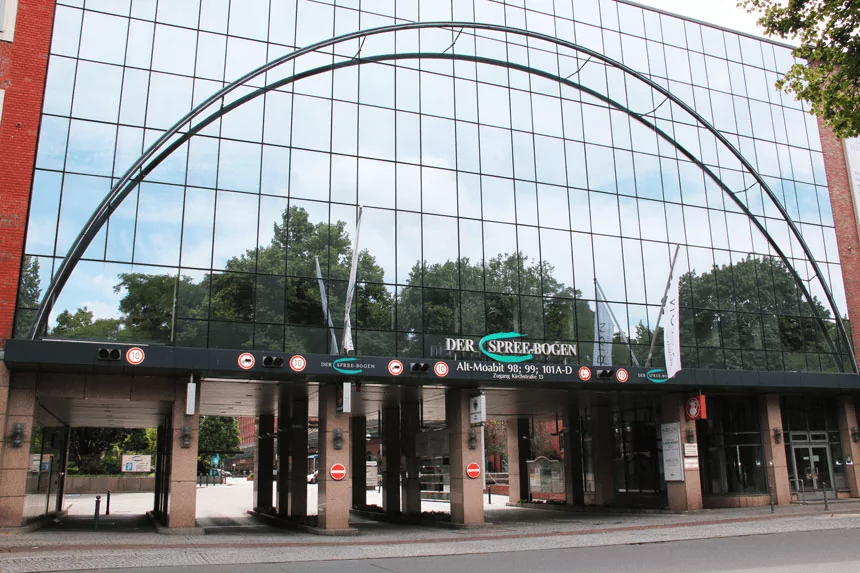



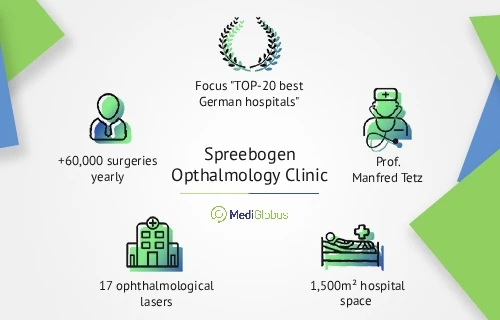
Spreebogen is the best ophthalmology clinic in Germany. This is confirmed by the Focus magazine's ‘Top German Clinics’ ranking, in which Spreebogen appears every year without exaggeration.
The clinic offers its patients early, state-of-the-art diagnosis of eye diseases, as well as modern technologies and treatment methods in the field of ophthalmology. It has specialised equipment that meets the latest standards in medical technology. Spreebogen has undergone extensive renovations, and patients now have access to 1,500 m2 of refurbished interior space.
The Spreebogen Clinic uses some of the most innovative methods of ophthalmological diagnosis and therapy in Berlin. Many of the technologies used in the clinic are unparalleled in Europe.
The clinic's profile includes: highly specialised surgical treatment of cataracts and glaucoma, medical and cosmetic surgery of the eyelids and wrinkles, and specific diagnostic and non-surgical services in the field of ophthalmology.
More than 17 different, highly specialised lasers are used here (e.g. a femtosecond laser for scalpel-free cataract surgery).
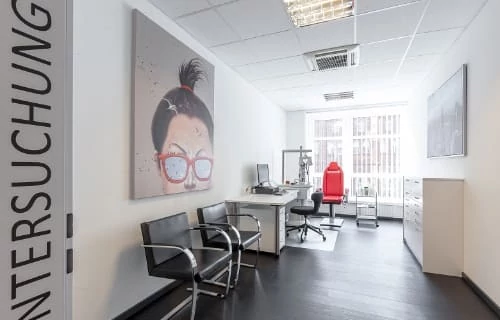
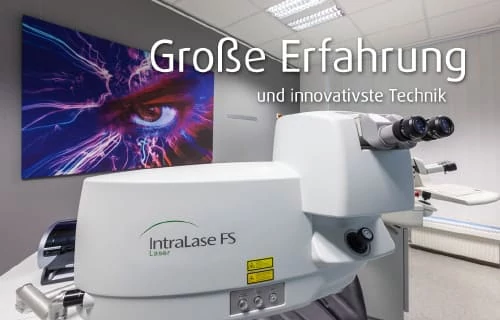
The clinic features modern diagnostic equipment that enables the detection of eye diseases at their earliest stages.
First and foremost, this is Frequency Doubling Technology (FDT) diagnostics. Thanks to FDT, it is possible to detect diseases or damage to the optic nerve even before noticeable vision changes occur. The procedure takes only a few minutes and is an important addition to glaucoma screening. Thanks to the modern Heidelberg Retina Tomograph III device, the clinic is also able to provide high-quality diagnosis of glaucomatous lesions of the optic nerve head.
Furthermore, Spreebogen utilises pachymetry technology – a non-contact measurement of corneal thickness using a painless diagnostic laser. Pachymetry provides important additional information in the diagnosis of glaucoma, as the results of corneal measurements have a direct impact on the assessment of intraocular pressure.
Surgical treatment of cataracts is the most common and safest procedure in ophthalmology. The success rate of the treatment at the Spreebogen clinic exceeds 97%.
The doctors at the Spreebogen Clinic can perform cataract removal and intraocular lens (IOL) implantation. If the disease has affected both eyes, then these operations are usually performed simultaneously.
Cataract removal is performed under local anaesthesia. The operation takes about 30 minutes. In most cases, the affected lens is broken up using ultrasound and removed from the eye through a minimal incision of 2.5-3.2 mm, without affecting the healthy parts of the eye. Instead of a scalpel, the surgeon uses a femtosecond laser. This technique allows for greater safety and stability of the eye.
| Intraocular lens implantation |
| Ophthalmologist examination |
| Individual lens selection |
| Surgery ~30 minutes |
| Post-operative rehabilitation |
Depending on the structure of the eye, the ophthalmologist uses various surgical techniques and different types of intraocular lenses. In some cases, they can implant multifocal lenses to replicate the natural eye function. In other cases, the patient will need to wear reading glasses.
Cataract removal and intraocular lens implantation surgery are usually performed on an outpatient basis. However, if necessary, doctors may hospitalise the patient for 2-3 days.
After the operation, the patient needs to use eye drops and ointments prescribed by the doctor every hour, as well as undergo daily vision checks. A few days after the operation, it will be possible to return to normal life. Usually, patients need 4-6 weeks to adapt. After that, a new prescription for glasses is issued.
Canaloplasty is a minimally invasive surgery for treating glaucoma. The surgeon implants a small catheter into a part of the eye called the venous sinus of the sclera. This is used to insert a tiny implant that increases fluid drainage and reduces intraocular pressure.
Viscocanalostomy is a gentler method of surgical treatment for glaucoma, which restores normal fluid outflow and reduces intraocular pressure. Unlike canaloplasty, only one segment of the venous sinus is widened.
The clinic offers ILASIK technology, which is a modern, technologically innovative laser method of vision correction with the highest degree of medical safety. It combines a femtosecond and wave laser, which leads to ultra-precise results in the correction of vision defects. The painless treatment takes a few minutes on an outpatient basis and under local anaesthesia.
Photorefractive keratectomy is available for the treatment of myopia up to -5 diopters, astigmatism and mild hyperopia. During this procedure, the upper layer of the cornea is removed and the underlying layer is modelled using an excimer laser. As a result, the eye refracts light normally, and the patient can see without glasses. The epithelium of the eye regenerates a few days after the operation. The Spreebogen Clinic also performs Lasek and Epi-Lasek procedures, which use gentler methods of removing the epithelium. As a result, patients experience less postoperative discomfort.
Patients who are contraindicated for laser vision correction can have phakic intraocular lenses implanted. These are placed over the natural lens and correct the angle of refraction. A thorough examination is required before this procedure. It is an outpatient operation that takes 20-30 minutes. The lens is inserted through a 2-2.5 mm incision. The healing process is quick, and normal vision is restored within a few days.
The Spreebogen Clinic uses the most modern and innovative laser therapy options in ophthalmology. Treatment is personally supervised by Professor Manfred Tetz.
Spreeogen also offers ‘facelifts without a scalpel’. This procedure uses innovative Pulse Comfort Technology, which involves gentle vibrations with skin cooling and low pain levels. The results are visible immediately and last for up to 6-8 months.
The innovative Cross-Linker technology, which is also used at Spreebogen, is a method of mechanical tissue stabilisation. Its therapeutic goal is to artificially increase the mechanical stability and resistance of the cornea. The treatment is performed using UV irradiation with the administration of special eye drops.
| Procedure | Cost |
| Ophthalmologist examination | from €200 |
| Photorefractive keratectomy/LASEK | from €1,050 per eye |
| FEMTOLASIK | from €2,250 per eye |
| Procedure | Cost |
| Phakic intraocular lenses | from €2,500 per eye |
| Monofocal lenses | from €1,800 per eye |
| Multifocal lenses | from €2,450 per eye |