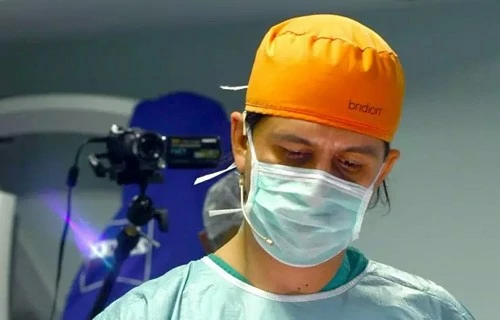
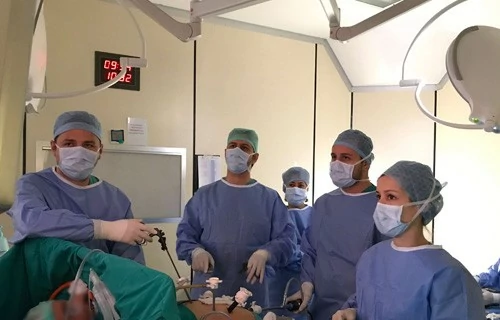
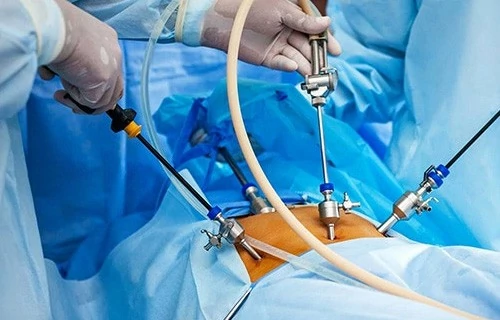
Diabetes surgeries are performed under general anaesthesia. They last about 2 to 3 hours. The intestine is accessed through 5 small openings in the abdominal cavity. During the intervention, part of the stomach and intestines are removed. The small intestine is brought close to the exit hole of the stomach. 2/3 of the food entering the stomach takes this new route.
Other variations of bariatric interventions are also used to control diabetes: gastric bypass or gastric banding. Bypass surgery aims to regulate sugar using a special shunt that divides the stomach into two parts. A small intestine is attached to the smaller part of the stomach. This makes it possible to achieve satiety with minimal amounts of food.
Gastric banding involves placing a bandage on the stomach with adjustable stenosis. This method helps reduce sugar levels by allowing patients to eat less food because the bandage prevents them from eating too much.