


The loss of a limb has a profound impact on a person’s physical and psychological well-being. This loss not only limits mobility but also affects self-esteem and quality of life. With advances in medical technology, new reliable solutions have emerged that can give people back their lost limbs and the ability to live a full life. Modern prosthetics have become so advanced that they can almost completely replace an arm, leg and fingers. These innovative devices give people the ability to not only walk or use a limb for everyday tasks but also to play sports, write, draw and enjoy their favourite hobbies. In this article, we will look into the different types of prosthetic limbs, their features and cost. We will delve into the world of innovation and learn how modern prosthetics are changing people’s lives for the better, giving them new opportunities and hope for the future.
Who needs a prosthetic limb?
Prosthetic limb replacement is an important area of orthopaedics that involves creating and fitting artificial limbs to replace lost or damaged body parts. Orthotists and prosthetic specialists design customised prosthetic limbs to help patients regain mobility and return to an active life.
Some of the most common reasons for the need for prosthetics are injuries that have resulted in the loss of a limb. Prostheses are also fitted to people after an arm or leg has been amputated due to congenital skeletal abnormalities or diseases such as cancer, diabetes or gangrene.
What types of dentures are available
Today, there is a wide range of prostheses for different categories of patients. They can be cosmetic or functional. Cosmetic prostheses fulfil a purely aesthetic function. They cannot be used to perform most everyday activities, such as holding cutlery. Functional ones, depending on the design, help to perform almost all necessary daily and professional tasks. They are divided into several main categories: bionic, mechanical, hybrid and specialised.
Bionic prostheses
They are the pinnacle of engineering and medical art. The prosthetics are developed using advanced technologies – robotisation, artificial intelligence, 3D printing, etc. The main feature of bionic prostheses is their ability to mimic the natural movements and functions of a limb. This is achieved through the use of sensors and microprocessors that interact with the human nervous system and respond to impulses sent by the brain. Such devices can even recreate fine motor skills. Some models are equipped with additional gadgets such as built-in monitors, remote payment systems, torches, heart rate monitors and others.


Mechanical (traction) prostheses
These prostheses are simpler than the bionic ones, but they still provide significant support and functionality. They consist of mechanical components such as plates, cables and joints and respond to contractions of muscle tissue. Mechanical prostheses provide full basic movement. Their advantages are availability, easier maintenance and low cost compared to bionic prostheses.
Hybrid prostheses
These devices combine elements of bionic and mechanical prostheses. For example, a traction principle is used for basic movements and sensors that read neural signals are used for fine motor skills. Such prostheses are customised to individual designs. This can be useful for people who are looking for a compromise between performance and ease of use.
Customised prostheses
These are created for the unique needs of patients. Predominantly, these devices are used by athletes, musicians, or people for specific professional tasks. Typically, prostheses have removable parts (clamps, grippers, hooks, etc.).
As some prosthetic models may become unusable in contact with water, there are special hip prostheses for bathing. It is not recommended to swim in these prostheses, they are intended only for showering and other water procedures.
If you need professional help in choosing a prosthesis, please contact our specialists. We will organise a meeting with a prosthetist as soon as possible and send you to the clinic.
 Read:
Read: What are prosthetic legs and arms made of?
Prosthetic limbs are made up of various components, each of which fulfils a specific function. The base of any prosthesis is the frame or skeleton. This part supports all other components and is fixed to the limb. To ensure freedom of movement and maintain functionality, many prostheses are fitted with artificial joints. These can be mechanical or electronic. In addition, prostheses contain special pads and shock absorbers that help cushion the residual limb and increase comfort when walking and moving. Bionic artificial limbs are battery-operated as they contain electronics and sensors. An important part of the design is the sleeve where the surviving part of the limb (stump) is inserted. It must fit the anatomical structure of the residual limb perfectly. Otherwise, the person will experience discomfort, pain and skin irritations.
Depending on the type of prosthesis and the patient’s needs, different materials are used: silicone, carbon-fibre-reinforced plastic, strong metals and others. Modern technologies make it possible to create lightweight, functional and durable prostheses.
Types of prosthetic legs
Leg prostheses are divided into 2 main types: transtibial and transfemoral.
 The transtibial prosthesis is designed to replace part of the leg while preserving the natural knee joint. It consists of a socket (where the stump is inserted), a removable inner pad, support and foot. The prosthesis is attached using a vacuum system or locking fixation. Today, patients are offered a wide variety of feet with different functionality and design.
A transfemoral prosthesis is used when the leg is amputated above the knee. It includes a receiving sleeve, artificial knee joint, support and foot. These prostheses are more difficult to use because of the loss of the natural knee, making it more difficult to maintain balance. Training under the supervision of a rehabilitation therapist is needed to learn to move normally.
One of the main tasks when creating a prosthetic leg above the knee is to reduce the pressure and strain on the surviving body parts. In this case, a hydraulic prosthesis can be used. It provides a higher level of comfort by using hydraulics to absorb shocks when walking. This reduces the strain on the body and joints. In addition, it is usually equipped with adjustment systems that allow the user to change the angle and bending speed of the prosthesis depending on the situation. Also, such prostheses have a wider support surface and stability, which helps in maintaining balance. Hydraulic prosthetic legs are suitable for running, swimming, cycling, mountaineering, etc.
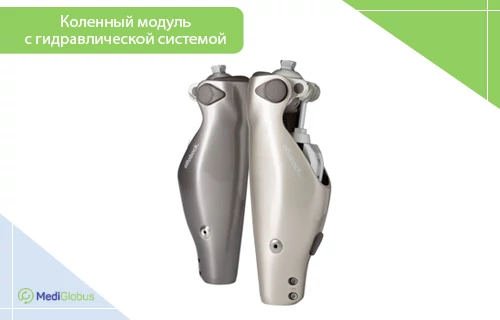
If you need to choose a quality and comfortable prosthetic leg, contact a MediGlobus medical expert. We will make an appointment with a specialist who will choose a prosthesis according to your individual needs and wishes.
Exoskeletal and endoskeletal leg prostheses
Exoskeletal prostheses are worn on top of the remaining limb. This is a reliable option, but less functional and comfortable. Endoskeletal prostheses are integrated directly into the bone, providing better fixation and greater functionality.
The procedure of integrating the prosthesis into the bone is called osseointegration. It is the most advanced method of prosthetics and provides patients with great options for using an artificial limb. The process begins with фт implant being embedded into the bone tissue. The bone implant is then connected directly to the prosthesis. Figuratively speaking, the prosthesis becomes part of the body and works similarly to a natural limb. The person with the prosthesis can feel the contact of the leg or arm with the surface. This improves mobility, stability and the ability to walk and run even on uneven ground. The advantage of osseointegration is that it eliminates the need for a socket. The prosthesis can be put on and taken off quickly and easily, avoiding skin irritations, pinching, muscle weakness and other discomfort.
Bionic prosthetic leg
The bionic prosthetic leg has sensors that read neural signals and transmit the information to a microprocessor. The computer processes the data and transmits the appropriate command to the prosthesis. For example, when a person stumbles, the computer determines the position of the knee, detects the speed and movement of the person, the load on the foot and sends a command that activates the prosthesis and helps the person to prevent a fall. The cyber prosthesis is also able to adjust its speed and switch from running to walking and vice versa, ascend and descend stairs, and walk and run on uneven terrain.

Sports prosthetic leg
Sports prosthetic legs are designed for athletes with disabilities. They have several features that make them unique and essential for successful participation in sports. The prostheses are made from lightweight and durable materials, which is important for speed and manoeuvrability. They also have increased flexibility and the ability to effectively absorb shock when running or jumping. An important feature of sports prostheses is their customisation for different sports, including swimming, mountaineering, cycling, etc.
Choosing a prosthetic is a complex and responsible process. Leave it to the experts. Start by contacting MediGlobus. We will choose a clinic and doctor according to your budget and requirements, help you gather documents and organise your trip.
Hand prostheses
Prosthetic hands are sophisticated technical devices that help people with amputations or birth defects regain some functionality. There are several different types of prosthetic hands, each designed for different needs and levels of amputation:
Cosmetic prosthetic hands
These prosthetic hands are used to restore a natural appearance. They may be made of materials that mimic skin or have a colourful and unconventional design but have no active functionality.
Mechanical (traction) prosthetic hands
These prostheses can perform a limited number of actions, such as bending/flexing the artificial arm and grabbing and holding objects. The prosthesis is placed on the residual limb and secured with a strap. When fixing a prosthetic arm from the shoulder, the strap is fastened around the shoulder of the healthy arm. The user controls the mechanical prosthesis by activating certain muscle groups. Advantages of the product: high strength and durability, the ability to lift heavy objects, and low cost. Disadvantages: limited functionality, some models can be quite heavy.
Bionic prosthetic arm
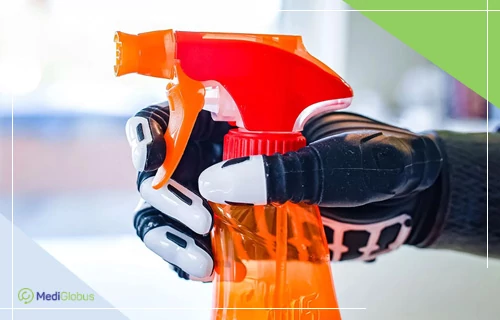
These models are more advanced and have a wide range of functions. First, a pad is placed on the residual limb, and then the prosthesis itself. Sensors read the signals sent by the brain and transmit them to the processor. After processing the information, it transmits the command to the various mechanical parts of the prosthesis. In addition to basic movements, bionic prostheses can gesture, rotate the wrist, move fingers, zip, hold table objects, etc. Grip modes are switched via a button, smartphone or monitor on the prosthesis itself. Depending on the model, prostheses can perform more than 20 commands. Their advantages are a wide range of movements and functions, and low weight. Among the disadvantages are: relatively high cost, fragility of some parts, and the need for recharging.
How is a prosthesis made?
The process of fabricating a prosthesis is complex and multi-step, requiring the involvement of an orthotist, prosthetic technicians and rehabilitation specialists. A general overview of the process:
Consultation with the orthotist | This step involves an assessment of the patient’s medical and physical history, as well as their needs and desires for a prosthesis. |
Fabrication of the mould | To create a prosthetic, an exact impression or mould of the patient’s remaining limb must be taken. |
Design Development | Based on the information gathered and the shape of the limb, experts develop a customised prosthetic design that will meet the patient’s needs and goals. |
Fabrication of the prosthesis | The process of creating a prosthesis involves the use of various materials and technologies. First, a base is created, and then specialised components such as joints, locking mechanisms and shock absorbers are fitted, depending on the type of prosthesis. |
Fitting and testing | The patient tries on the prosthesis and undergoes testing. Depending on the test results, the prosthesis is adjusted and customised to ensure proper alignment with the remaining limb and maximum comfort and functionality. |
Training and rehabilitation | After receiving the prosthesis, the patient undergoes rehabilitation to learn how to use it properly. |
Maintenance and adjustments | The prosthesis may require periodic adjustments and repairs. |
Prosthetics Manufacturers
On 11 January 2023, Research and Markets released a report on the latest trends and advancements in the prosthetics industry. The report recognises the top prosthetics manufacturers. These companies made it to the ranking due to their active innovation, adoption of advanced technologies and constant work on product quality.
Bauerfeind;
Zimmer Biomet;
Ottobock;
Steeper Inc;
Johnson and Johnson;
Stryker;
Smith+Nephew;
Fillauer LLC;
Ossur;
Sarcos Robotics;
Ekso Bionics;
ReWalk Robotics;
Xilloc Medical;
Blatchford Limited;
Cyberdyne.
How much does a limb prosthetic cost?
It is almost impossible to name the exact cost of a prosthesis at once, as the price of the product depends on many factors. First of all, the part of the body that needs prosthetics is taken into account. Complex prostheses with bionic components and advanced technologies are much more expensive than mechanical and cosmetic ones. Also, the cost of prostheses differs depending on the manufacturing company and the country where prosthetics are performed.
Approximate cost of prostheses of some foreign manufacturers:
Ottobock Harmony is a below-the-knee prosthetic leg with prices starting from €4,500. This prosthesis allows you to feel the surface as you move.
The Ottobock Harmony Meridium bionic prosthetic foot costs from €30,000. It has an automatic toggle system and is ideal for driving, cycling, going up and down inclined surfaces.
The Ottobock 3R80 above-knee hydraulic prosthesis costs start from €10,000. This is a waterproof prosthesis, suitable for swimming, walking on inclined surfaces and driving.
The Ottobock Genium x3 is a bionic prosthetic leg, priced from €70,000. Its special feature is that it is fully automated. It is easy to run, go up and down stairs, and swim in the pool and sea.
The Ottobock Bebionic Cyber Arm is a prosthesis with 5 functioning fingers. It can carry out 16 commands. It costs from €27,000.
Össur Touch is a bionic prosthetic hand, priced from €26,000. Depending on the model, the prosthesis can perform up to 36 commands.
Michelangelo’s bionic hand has a design as close to the natural look as possible and a wide range of functionality. Its fingers can grasp small objects and perform complex actions. This prosthesis costs from €62,000.
The MYO prosthetic hand is suitable for most patients as it is easy to use and operate. It can be used to perform basic movements and grasping. The price of the prosthesis is €8,000-€10,000.
Luxmed is a cosmetic hand prosthesis with a price starting at €5,000. The prosthesis is made of high-quality silicone. It is virtually indistinguishable from a natural limb.
When choosing a quality and comfortable prosthetic leg, price is the first thing a person is interested in. The choice of prostheses and the range of prices is huge. Therefore, it is quite easy to get confused. To make it easier to understand this complex issue, contact the experts at MediGlobus. We will make an appointment with an experienced orthopaedic prosthetist who will recommend the right solution for you, taking into account your preferences and possibilities.
Robert’s story of the prosthetic leg that gave him back his joy of life
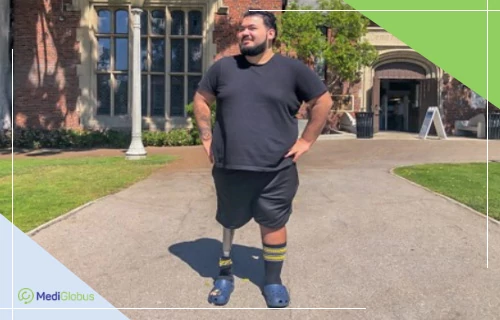
At the age of 28, Robert Johnson suffered bone cancer. As a result, his right leg had to be amputated above the knee. The man was fitted with a prosthesis that was connected to the rest of the limb with the help of a sleeve. However, it did not fit him well, causing painful skin irritations. He had difficulty walking and even standing, sometimes the prosthesis would slip off. Robert couldn’t work, play sports or even lift his young daughter for fear he would fall and drop her. But thanks to an innovative procedure known as osseointegration, Robert’s life changed. He had a metal implant inserted into the bone of the remaining limb and a device attached to it to hold the prosthesis in place. The entire process took about a year. “I started a new life,” he recalls. “Now I can finally hold my daughter in my arms and do a lot of other things that weren’t available before.” After osseointegration, Robert can stand for long periods, rest on his prosthesis, and work out at the gym. He can even feel touch when he puts his artificial leg on a surface. In the future, he plans to take up running and start his own business.
Prosthetics abroad
When choosing a clinic for prosthetics, it is worth paying attention to the reputation of the medical centre, the availability of certificates, and the qualifications of specialists. It is important to make sure that the clinic uses modern technology and equipment. MediGlobus offers a large selection of clinics that specialise in prosthetic limbs. Leave a request on the website to choose a centre according to your needs and requirements.
Summary
The purpose of prosthetic limbs is to restore lost function and mobility in people following amputation. Prostheses allow a return to everyday activities such as walking, running, lifting objects and participating in sports, as well as improving quality of life and independence.
Cosmetic prostheses recreate the appearance of the lost limb, but they do not provide full functionality.
Functional prostheses maximise the restoration of function of the lost limb. They provide a high degree of mobility and the ability to perform a variety of tasks.
A mechanical prosthesis consists of metal and plastic components that are controlled by movement or muscle contractions. Mechanical prostheses provide basic functionality and can be used for everyday tasks such as walking, grasping and holding objects.
A bionic prosthesis is an advanced type of artificial limb developed using modern technology and engineering. The natural nerve impulses control the prosthetic, just like they would a natural limb. Bionic prostheses provide a high degree of functionality and can recreate more complex movements, such as walking and running on uneven surfaces and grasping small objects.
The leading prosthetic manufacturers in the world that create the best prosthetic arms and legs are Ottobock, Ossur, Fillauer LLC, Bauerfeind and others. These companies are known for their high-quality and innovative products focused on improving the quality of life for people with amputations and limited mobility. They are actively developing new technologies and products to provide users with modern and effective prosthetic solutions.
Foreign manufacturers offer a variety of prostheses costing from €5,000 to €70,000 and more.
Modern orthopaedic clinics offer a wide range of prostheses for different parts of the body – be it a cosmetic or bionic prosthetic finger or modern prosthetic legs and arms. The selection and manufacture of prostheses are carried out on an individual basis, taking into account the anatomical features of each patient. Contact MediGlobus to go to the clinic for prosthetics.
Sources:
- 1. Overview of Limb Prosthetics – MSD Manual
- 2. Prosthetics through the ages – NLM
- 3. Prosthetics after amputation – NHS
- 4. Prostheses – Healthdirect
- 5. What is Osseointegration – University of Colorado