NEEDS SUPPORT?




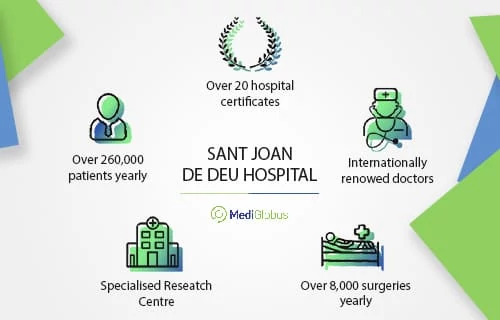
Sant Joan de Déu Hospital is the leading children’s clinic in Barcelona. 98,4% of heart operations performed here are successful, as well as saving the eyes of 90% of patients with advanced retinal cancer and curing 84% of patients with Ewing’s sarcoma.
Every year, specialists at the clinic restore the health of 25,000 inpatients and 235,000 outpatients from all over the world.
Using innovative technology, the hospital successfully treats all types of paediatric illnesses of varying severity. Since 2009, a specialised Research Centre has been developing the latest advances in medicine, innovative drugs and new methods of pain reduction. 44% of the centre’s research has already been incorporated into the clinic’s work.
The hospital holds 20 certificates from the Spanish government organisation of leading hospitals, departments and units (CSUR), nine European Medical Network (ERN) accreditations, and the Quality Label of the Organisation of Healthcare Institutions of Catalonia (XUEC). The hospital is also a member of the National Association of Children’s Hospitals (NACHRI) and the International Healthcare Representation Network (HPH).
Specialists in the hospital’s neurosurgery department diagnose and treat diseases of the brain, spinal cord and nervous system in children using the latest generation of equipment and advanced treatment methods.
The department is recognised as the best in the country for the treatment of refractory epilepsy by the Spanish Ministry of Health.
Minimally invasive surgery under the supervision of neuronavigation was performed for the first time in the country in the hospital Sant Joan de Déu. Neuronavigation is a set of computerised technologies that protect the patient’s healthy tissue, eliminate the possibility of medical error and reduce the length of surgery.
The neurosurgery department at the Hospital San Juan is also the first in Spain to perform deep brain stimulation (DBS) surgery.
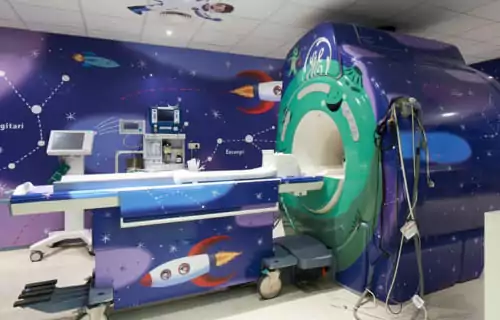
This type of surgery can reduce the dosages of medication taken by Parkinson’s patients by almost half, which is why DBS is most often performed on Parkinson’s patients. The department’s specialists were the first in the country to use endoscopy of the brain and spinal cord to treat malignant tumours and hydrocephalus.
Patients with tumours of the skull base and pituitary gland undergo endonasal endoscopy. This method is used for surgery of hard-to-reach areas of the brain to avoid large incisions and removal of part of the skull. The hospital is considered the most suitable medical institution in Spain for maxillofacial surgery and surgical treatment of premature closure of cranial sutures in infants. Newborns and premature babies are operated on using the most adapted techniques possible.
The hospital’s oncology department is considered to be the best in the country and one of the leading in the world for the treatment of malignant tumours. The clinic is trusted by the parents of more than 2,000 children with cancer a year. All types of cancer of various degrees of severity and rare blood diseases are treated here:
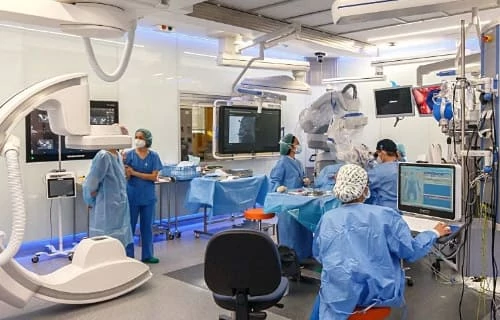
During the treatment of cancer of the sympathetic nervous system, specialists in the department carry out a molecular assessment of the tumour, which helps determine the need for radiation after surgery. This procedure allows the patient to avoid unnecessary doses of radiation if the cancer cells are eliminated during surgery on the malignancy.
Sant Joan de Déu hospital also uses immunotherapy with GD2 antibodies to treat cancer. This type of treatment is indicated for patients in whom the location of the tumour cannot be detected. Immunotherapy makes cancer cells visible to the immune system and helps it to kill them on its own. Antibody therapy also reduces the chance of recurrence by 20% in patients for whom it is suitable.
The Sant Joan de Déu Hospital is one of the only hospitals in Europe to treat retinal cancer with intravitreal virus therapy. This is the kind of eye injection with an anti-cancer virus that affects the tumour and is safe for healthy cells.
Bone marrow transplants and transfusions from the umbilical cord or peripheral blood to children from all over the world are carried out successfully by the centre’s specialists. The survival rate after a bone marrow transplant from a related donor is 90-100%. And after transplantation from an unrelated donor and an incompatible related donor, the survival rate of patients is 70-80%.
The department also carries out haematopoietic progenitor cell transplants from bone marrow or the umbilical cord. This procedure is considered one of the most effective treatments for cancer in children. For the transplant to be successful, specialists do a comprehensive test of the compatibility between the donor of the progenitor cells and the patient. Suitable cells are processed, prepared and stored in a special machine until the transplantation begins.